Cybersecurity researchers report on the security and privacy risks of leaving a Tesla Backup Gateway exposed to the Internet.
from Dark Reading: https://ift.tt/38QcXHL
via IFTTT

Cybersecurity researchers report on the security and privacy risks of leaving a Tesla Backup Gateway exposed to the Internet.
from Dark Reading: https://ift.tt/38QcXHL
via IFTTT
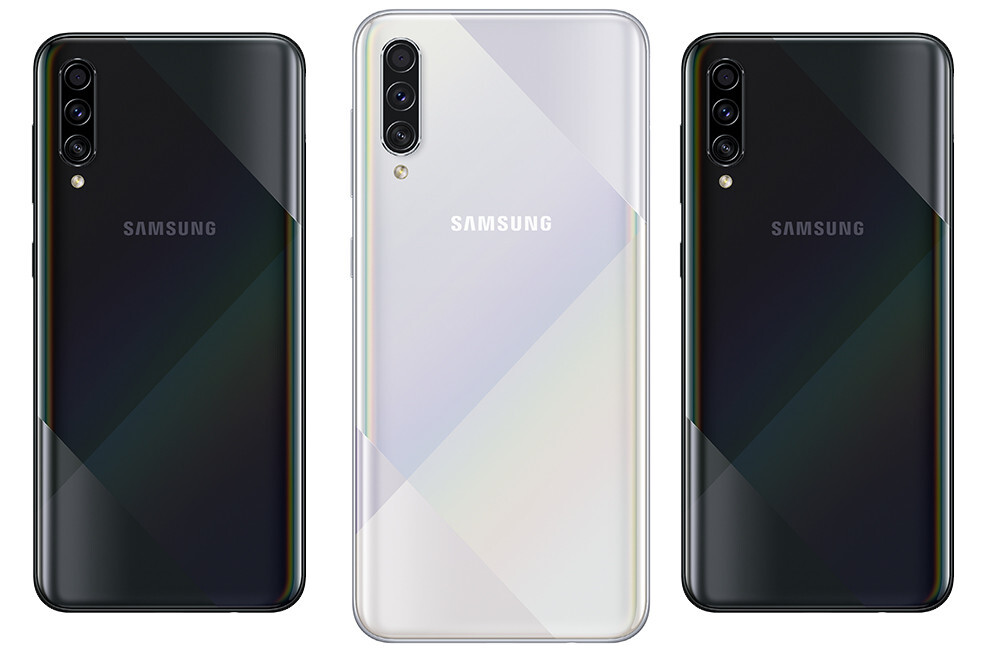
El Samsung Galaxy A50 ha sido uno de los terminales de más éxito de la firma coreana en 2020. Lanzado a finales de 2019, más tarde vio como llegaba una renovación en forma del Galaxy A50s. Un modelo, este último, que sigue siendo foco atención de Samsung, que ahora ha comenzado a actualizarlo con la versión One UI 2.5.
Si ya hemos visto como han actualizado a One IU 2.5 terminales como el Galaxy A51, la evolución lógica del Galaxy A50 original, ahora el Galaxy A50s es el que recibe la penúltima capa personalizadora lanzada por Samsung para sus terminales. Con este modelo la firma prosigue la línea ya iniciada con otros móviles como el ya mencionado Galaxy A51, Galaxy A71, Galaxy M21s o el Galaxy M21. Continue reading
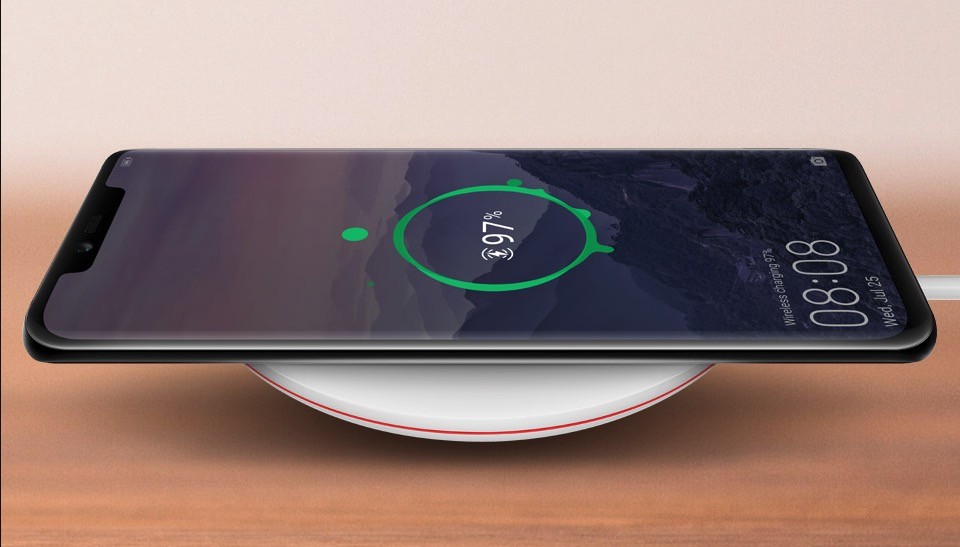
Las baterías pueden ser, casi con total de seguridad, los componentes tecnológicos que menos han evolucionado de los últimos años. Pero aunque la propia batería no evolucione y se sigan fabricando de la misma manera, con matices, sí que avanzan los sistemas de carga y gracias a ello hoy disfrutamos no sólo de cargas rápidas de distintas velocidades, sino también de cargas inalámbricas.
Tal vez no sean las más extendidas a día de hoy, pero las cargas inalámbricas también están en un punto de madurez en el que los fabricantes experimentan con ellas y las personalizan. De ahí el último lanzamiento del Mi 10 Ultra con sus 50W, uno más que sumar a la lista y una de las excusas para que hoy acudamos aquí a comprobar qué tal se portan las cargas inalámbricas que encontramos en el mercado móvil.
AI threat find: Phishing attack slips through email gateway and leads to large-scale compromise.
from Dark Reading: https://ift.tt/3pCehE9
via IFTTT

Xiaomi continua con su ritmo constante en cuanto a terminales que llegan al mercado, y si hace unos días tocaba hablar del Redmi Note 10, ahora otro modelo con el sello Redmi sale a escena. Se trataría al parecer del Redmi Note 9T, un terminal que ha visto filtradas sus principales especificaciones.
Con una terminología que puede recordar a los modelos que OnePlus lanza en la segunda mitad del año (esa “T” es llamativa), Xiaomi apostaría por emplear un panel de tipo LCD IPS junto a un procesador de ocho núcleos y una configuración de triple cámara en este nuevo modelo que acaba de pasar el control del órgano regulador chino. Continue reading
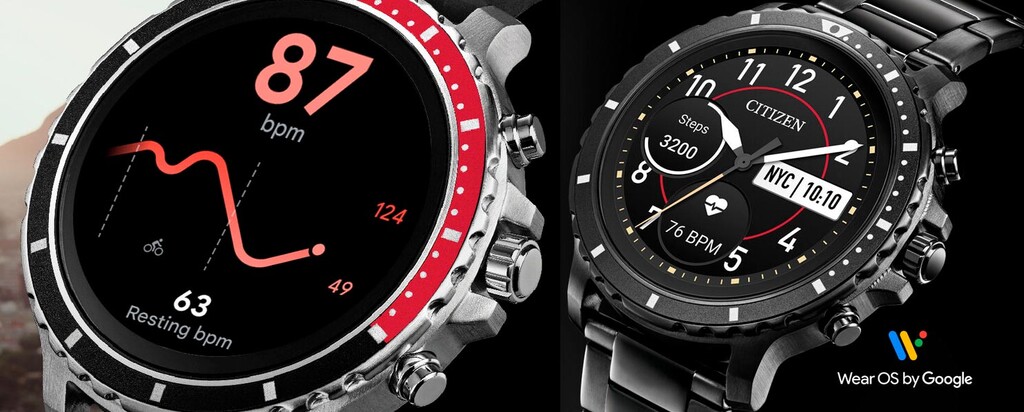
Citizen da el salto a los relojes inteligentes con un primer modelo equipado con Wear OS, el Citizen CZ Smart. Acero inoxidable para la caja de 46 mm, diseño clásico, elegante y preparado para medir la actividad y el ejercicio.
Las marcas clásicas de relojes se vieron inundadas por los smarwatches, una competencia que, lejos de ser residual, ha ido aumentando con el paso de los años. Así que a los fabricantes de siempre les ha tocado adentrarse en el terreno de los relojes inteligentes, como acaba de ocurrir con Citizen: la marca ha presentado su primer smartwatch con Wear OS. No es una mala apuesta para empezar, ni por diseño ni por características.
An increasing number of websites are asking visitors to approve “notifications,” browser modifications that periodically display messages on the user’s mobile or desktop device. In many cases these notifications are benign, but several dodgy firms are paying site owners to install their notification scripts and then selling that communications pathway to scammers and online hucksters.

Notification prompts in Firefox (left) and Google Chrome.
When a website you visit asks permission to send notifications and you approve the request, the resulting messages that pop up appear outside of the browser. For example, on Microsoft Windows systems they typically show up in the bottom right corner of the screen — just above the system clock. These so-called “push notifications” rely on an Internet standard designed to work similarly across different operating systems and web browsers.
But many users may not fully grasp what they are consenting to when they approve notifications, or how to tell the difference between a notification sent by a website and one made to appear like an alert from the operating system or another program that’s already installed on the device.
This is evident by the apparent scale of the infrastructure behind a relatively new company based in Montenegro called PushWelcome, which advertises the ability for site owners to monetize traffic from their visitors. The company’s site currently is ranked by Alexa.com as among the top 2,000 sites in terms of Internet traffic globally.
Website publishers who sign up with PushWelcome are asked to include a small script on their page which prompts visitors to approve notifications. In many cases, the notification approval requests themselves are deceptive — disguised as prompts to click “OK” to view video material, or as “CAPTCHA” requests designed to distinguish automated bot traffic from real visitors.

An ad from PushWelcome touting the money that websites can make for embedding their dodgy push notifications scripts.
Approving notifications from a site that uses PushWelcome allows any of the company’s advertising partners to display whatever messages they choose, whenever they wish to, and in real-time. And almost invariably, those messages include misleading notifications about security risks on the user’s system, prompts to install other software, ads for dating sites, erectile disfunction medications, and dubious investment opportunities.
That’s according to a deep analysis of the PushWelcome network compiled by Indelible LLC, a cybersecurity firm based in Portland, Ore. Frank Angiolelli, vice president of security at Indelible, said rogue notifications can be abused for credential phishing, as well as foisting malware and other unwanted applications on users.
“This method is currently being used to deliver something akin to adware or click fraud type activity,” Angiolelli said. “The concerning aspect of this is that it is so very undetected by endpoint security programs, and there is a real risk this activity can be used for much more nefarious purposes.”
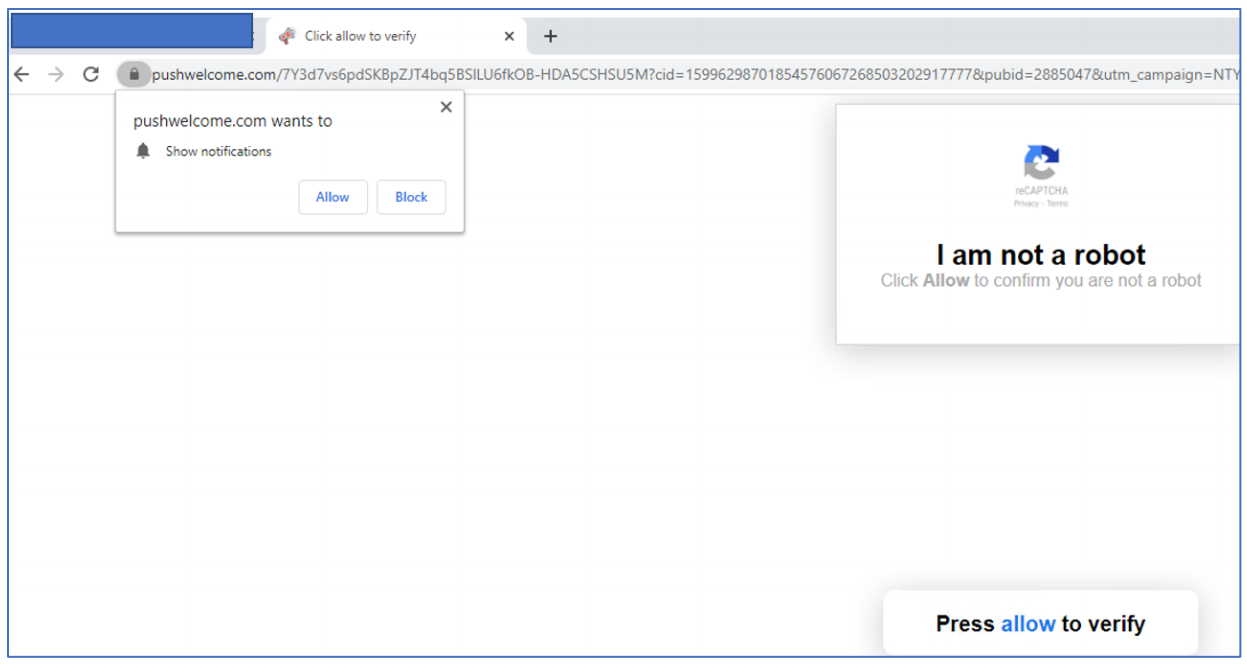
Sites affiliated with PushWelcome often use misleading messaging to trick people into approving notifications.
Angiolelli said the external Internet addresses, browser user agents and other telemetry tied to people who’ve accepted notifications is known to PushWelcome, which could give them the ability to target individual organizations and users with any number of fake system prompts.
Indelible also found browser modifications enabled by PushWelcome are poorly detected by antivirus and security products, although he noted Malwarebytes reliably flags as dangerous publisher sites that are associated with the notifications.
Indeed, Malwarebytes’ Pieter Arntz warned about malicious browser push notifications in a January 2019 blog post. That post includes detailed instructions on how to tell which sites you’ve allowed to send notifications, and how to remove them.
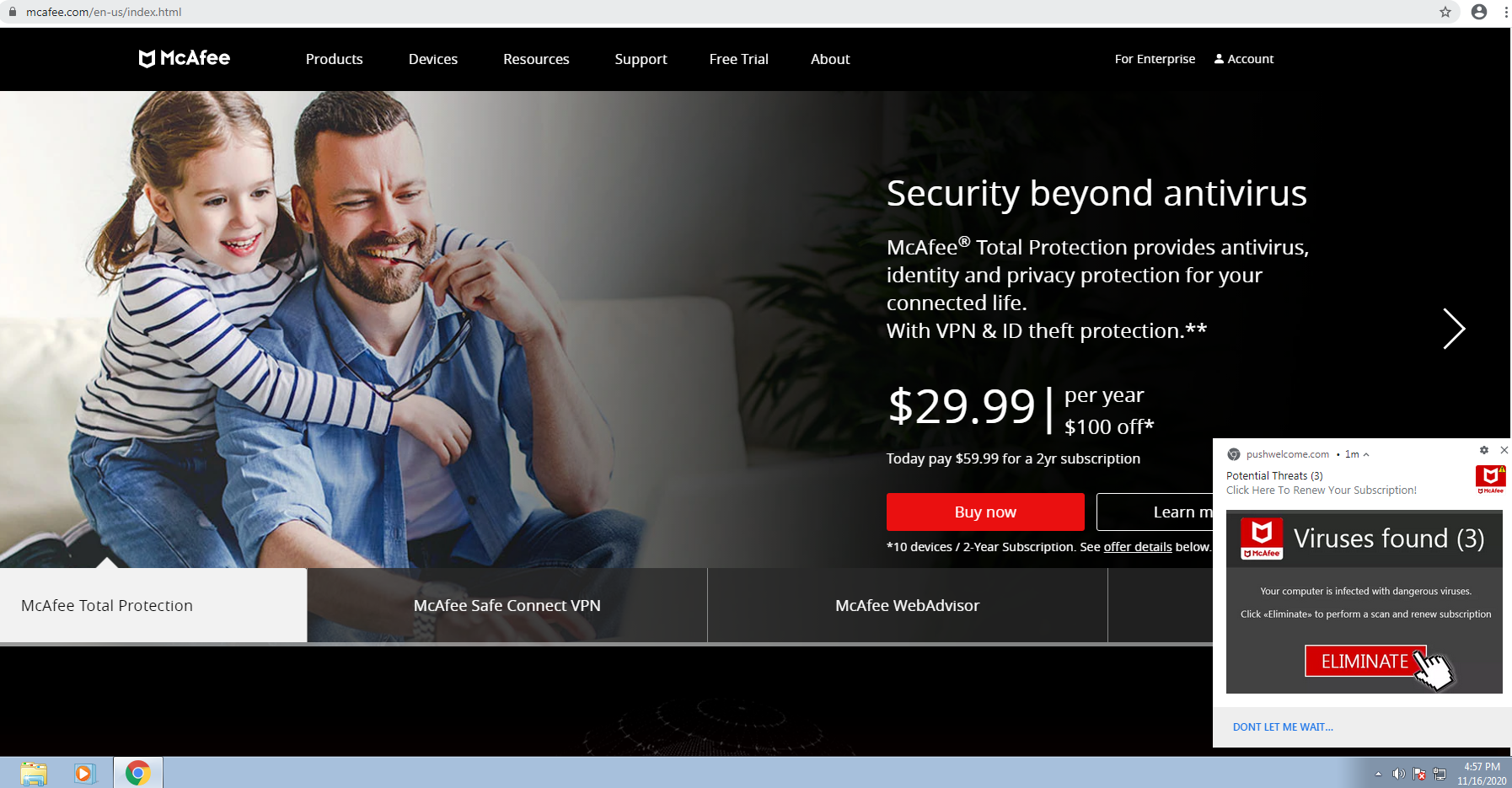
KrebsOnSecurity installed PushWelcome’s notifications on a brand new Windows test machine, and found that very soon after the system was peppered with alerts about malware threats supposedly found on the system. One notification was an ad for Norton antivirus; the other was for McAfee. Clicking either ultimately led to “buy now” pages at either Norton.com or McAfee.com.
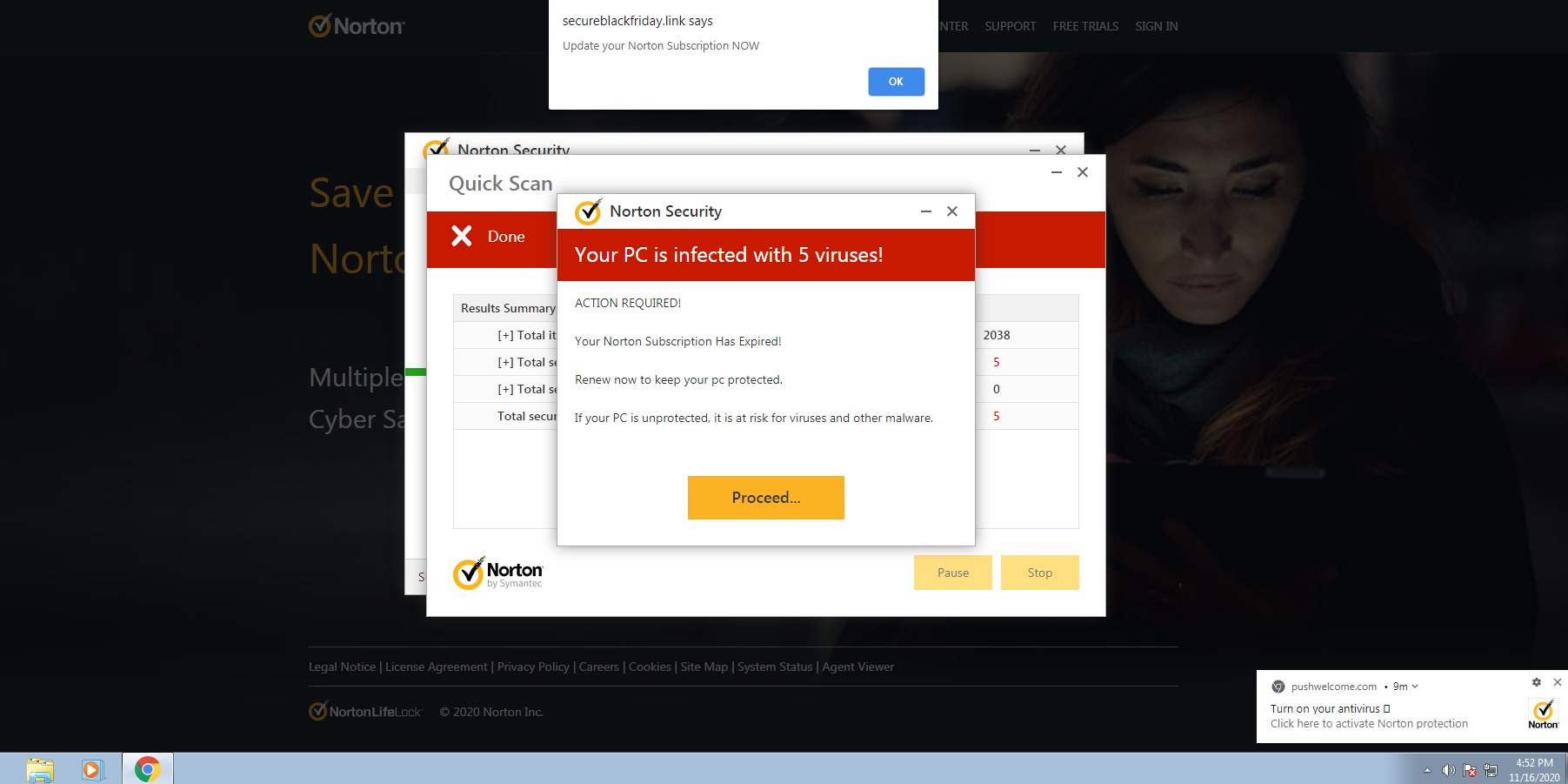
Clicking on the PushWelcome notification in the bottom right corner of the screen opened a Web site claiming my brand new test system was infected with 5 viruses.
It seems likely that PushWelcome and/or some of its advertisers are trying to generate commissions for referring customers to purchase antivirus products at these companies. McAfee has not yet responded to requests for comment. Norton issued the following statement:
“We do not believe this actor to be an affiliate of NortonLifeLock. We are continuing to investigate this matter. NortonLifeLock takes affiliate fraud and abuse seriously and monitors ongoing compliance. When an affiliate partner abuses its responsibilities and violates our agreements, we take necessary action to remove these affiliate partners from the program and swiftly terminate our relationships. Additionally, any potential commissions earned as a result of abuse are not paid. Furthermore, NortonLifeLock sends notification to all of our affiliate partner networks about the affiliate’s abuse to ensure the affiliate is not eligible to participate in any NortonLifeLock programs in the future.”
Requests for comment sent to PushWelcome via email were returned as undeliverable. Requests submitted through the contact form on the company’s website also failed to send.
While scammy notifications may not be the most urgent threat facing Internet users today, most people are probably unaware of how this communications pathway can be abused.
What’s more, dodgy notification networks could be used for less conspicuous and sneakier purposes, including spreading fake news and malware masquerading as update notices from the user’s operating system. I hope it’s clear that regardless of which browser, device or operating system you use, it’s a good idea to be judicious about which sites you allow to serve notifications.
from Krebs on Security https://ift.tt/32UOo8G
via IFTTT

En los últimos meses, los lanzamientos de las nuevas versiones del navegador de Mozilla son noticia, pero no demasiado emocionantes. Está siendo así desde que nos entregan una nueva versión cada cuatro semanas, pero hace unos instantes han lanzado Firefox 83, y creo que de este sí podemos decir que es un lanzamiento importante. Para empezar, los que usamos su PiP agradeceremos los controles que podremos usar desde hoy, algo que personalmente les pedí hace algunas semanas.
Por otra parte, y como era de esperar, Firefox 83 es más seguro que versiones pasadas, pero es que además han añadido una nueva función o modo en el que siempre entraremos a las páginas web por HTTPS. A continuación tenéis una lista con las novedades más destacadas que han llegado junto a esta versión, y hay para todos, incluidos aquellos que lo usen en una pantalla táctil.
Tal y como leemos en la nota del lanzamiento, esto es lo más destacado que llega junto a la 83ª versión de Firefox:
Firefox 83 ya se puede descargar desde la página web del desarrollador. En las próximas horas se actualizará en los repositorios oficiales de la mayoría de distribuciones Linux.
from Linux Adictos https://ift.tt/32ULVuW
via IFTTT
The criminals behind the DarkSide ransomware-as-a-service operation say the system will be harder to take down.
from Dark Reading: https://ift.tt/2IN9pLH
via IFTTT
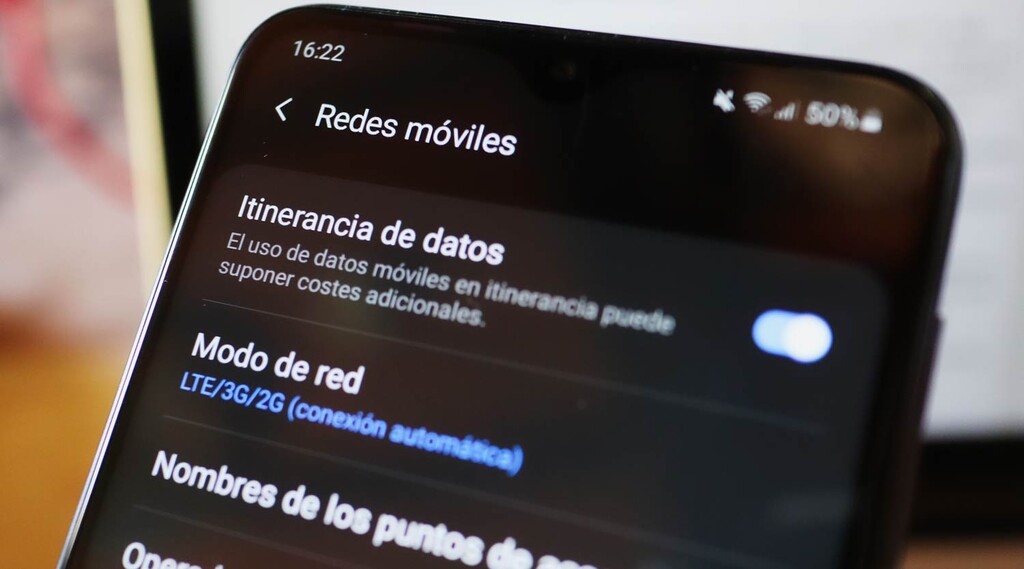
Los móviles Android comparten una gran cantidad de datos con los servidores de Google, también de forma pasiva. Así lo especifica una demanda contra la empresa presentada en Estados Unidos: según comprobaron los demandantes, un móvil Android envía unos 8,8 MB diarios sin que el usuario haga nada y con el teléfono de fábrica. El 94 % de esas comunicaciones son con Google.
Todos sabemos que nuestros smartphones acceden a Internet para mostrarnos información, tanto al usar aplicaciones como cuando apagamos la pantalla. Las apps reciben notificaciones, las copias de seguridad suben sus registros y se sincroniza una gran cantidad de datos con nuestras cuentas, especialmente con la de Google. ¿Cuántos? Una demanda habría puesto cifra a los datos pasivos: 260 MB cada mes.
 Pacosite's Blog