Return o’ the rookit, super-sneaky wireless spyware, credit card skimming, and patches galore. Listen and learn!
from Naked Security https://ift.tt/poHD2j8
via IFTTT

Return o’ the rookit, super-sneaky wireless spyware, credit card skimming, and patches galore. Listen and learn!
from Naked Security https://ift.tt/poHD2j8
via IFTTT
ESET researchers discovered a spearphishing campaign targeting Japanese political entities a few weeks before the House of Councillors elections, and in the process uncovered a previously undescribed MirrorFace credential stealer
The post Unmasking MirrorFace: Operation LiberalFace targeting Japanese political entities appeared first on WeLiveSecurity
from WeLiveSecurity https://ift.tt/nONvD3J
via IFTTT
The U.S. Department of Justice (DOJ) today seized four-dozen domains that sold “booter” or “stresser” services — businesses that make it easy and cheap for even non-technical users to launch powerful Distributed Denial of Service (DDoS) attacks designed knock targets offline. The DOJ also charged six U.S. men with computer crimes related to their alleged ownership of the popular DDoS-for-hire services.
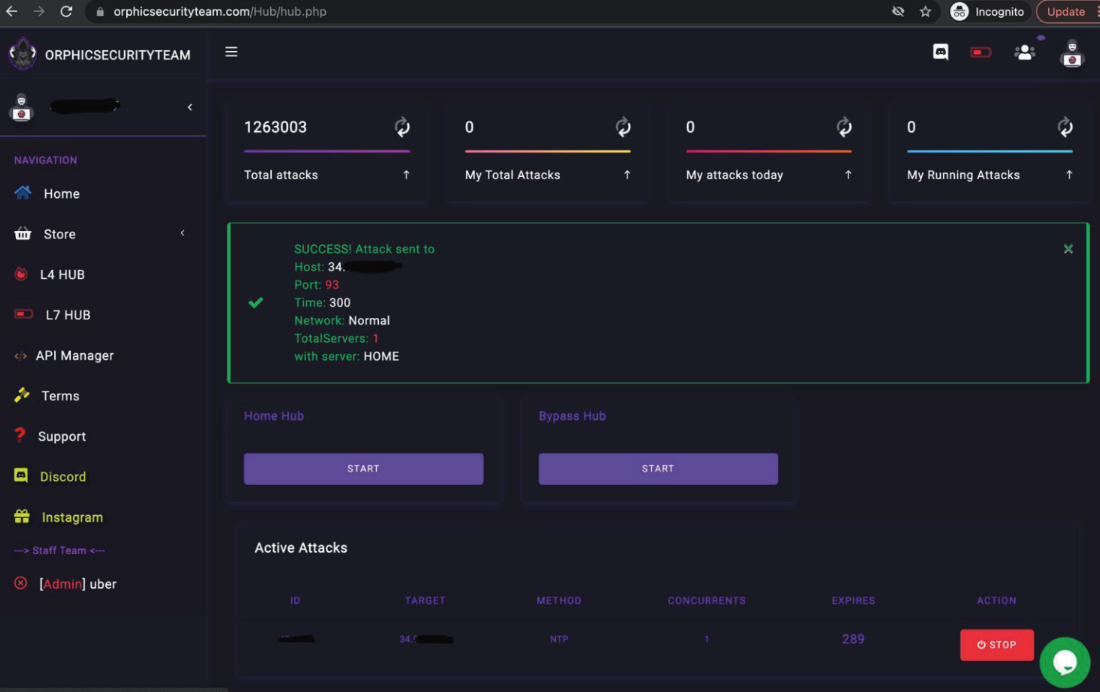
The booter service OrphicSecurityTeam[.]com was one of the 48 DDoS-for-hire domains seized by the Justice Department this week.
The DOJ said the 48 domains it seized helped paying customers launch millions of digital sieges capable of knocking Web sites and even entire network providers offline.
Booter services are advertised through a variety of methods, including Dark Web forums, chat platforms and even youtube.com. They accept payment via PayPal, Google Wallet, and/or cryptocurrencies, and subscriptions can range in price from just a few dollars to several hundred per month. The services are generally priced according to the volume of traffic to be hurled at the target, the duration of each attack, and the number of concurrent attacks allowed.
Prosecutors in Los Angeles say the booter sites supremesecurityteam[.]com and royalstresser[.]com were the brainchild of Jeremiah Sam Evans Miller, a.k.a. “John the Dev,” a 23-year-old from San Antonio, Texas. Miller was charged this week with conspiracy and violations of the Computer Fraud and Abuse Act (CFAA). The complaint against Miller alleges Royalstresser launched nearly 200,000 DDoS attacks between November 2021 and February 2022.
Defendant Angel Manuel Colon Jr., a.k.a Anonghost720 and Anonghost1337, is a 37-year-old from Belleview, Fla. Colon is suspected of running the booter service securityteam[.]io. He was also charged with conspiracy and CFAA violations. The feds say the SecurityTeam stresser service conducted 1.3 million attacks between 2018 and 2022, and attracted some 50,000 registered users.
Charged with conspiracy were Corey Anthony Palmer, 22, of Lauderhill, Fla, for his alleged ownership of booter[.]sx; and Shamar Shattock, 19, of Margate, Fla., for allegedly operating the booter service astrostress[.]com, which had more than 30,000 users and blasted out some 700,000 attacks.
Two other alleged booter site operators were charged in Alaska. John M. Dobbs, 32, of Honolulu, HI is charged with aiding and abetting violations of the CFAA related to the operation of IPStresser[.]com, which he allegedly operated for nearly 13 years until last month. During that time, IPstresser launched approximately 30 million DDoS attacks and garnered more than two million registered users.
Joshua Laing, 32, of Liverpool, NY, also was charged with CFAA infractions tied to his alleged ownership of the booter service TrueSecurityServices[.]io, which prosecutors say had 18,000 users and conducted over 1.2 million attacks between 2018 and 2022.
Purveyors of stressers and booters claim they are not responsible for how customers use their services, and that they aren’t breaking the law because — like most security tools — stresser services can be used for good or bad purposes. For example, all of the above-mentioned booter sites contained wordy “terms of use” agreements that required customers to agree they will only stress-test their own networks — and that they won’t use the service to attack others.
But the DOJ says these disclaimers usually ignore the fact that most booter services are heavily reliant on constantly scanning the Internet to commandeer misconfigured devices that are critical for maximizing the size and impact of DDoS attacks.
“None of these sites ever required the FBI to confirm that it owned, operated, or had any property right to the computer that the FBI attacked during its testing (as would be appropriate if the attacks were for a legitimate or authorized purpose),” reads an affidavit (PDF) filed by Elliott Peterson, a special agent in the FBI’s Anchorage field office.
“Additionally, analysis of data related to the FBI-initiated attacks revealed that the attacks launched by the SUBJECT DOMAINS involved the extensive misuse of third-party services,” Peterson continued. “Specifically, all of the tested services offered ‘amplification’ attacks, where the attack traffic is amplified through unwitting third-party servers in order to increase the overall attack size, and to shift the financial burden of generating and transmitting all of that data away from the booter site administrator(s) and onto third parties.”
According to U.S. federal prosecutors, the use of booter and stresser services to conduct attacks is punishable under both wire fraud laws and the Computer Fraud and Abuse Act (18 U.S.C. § 1030), and may result in arrest and prosecution, the seizure of computers or other electronics, as well as prison sentences and a penalty or fine.
The charges unsealed today stemmed from investigations launched by the FBI’s field offices in Los Angeles and Alaska, which spent months purchasing and testing attack services offered by the booter sites.
A similar investigation initiating from the FBI’s Alaska field office in 2018 culminated in a takedown and arrest operation that targeted 15 DDoS-for-hire sites, as well as three booter store defendants who later pleaded guilty.
The Justice Department says its trying to impress upon people that even buying attacks from DDoS-for-hire services can land Internet users in legal jeopardy.
“Whether a criminal launches an attack independently or pays a skilled contractor to carry one out, the FBI will work with victims and use the considerable tools at our disposal to identify the person or group responsible,” said Donald Alway, the assistant director in charge of the FBI’s Los Angeles field office.
The United Kingdom, which has been battling its fair share of domestic booter bosses, in 2020 started running online ads aimed at young people who search the Web for booter services.
And in Europe, prosecutors have even gone after booter customers.
Here is the full list of booter site domains seized (or in the process of being seized) by the DOJ:
api-sky[.]xyz
astrostress[.]com
blackstresser[.]net
booter[.]sx
booter[.]vip
bootyou[.]net
brrsecurity[.]org
buuter[.]cc
cyberstress[.]us
defconpro[.]net
dragonstresser[.]com
dreams-stresser[.]io
exotic-booter[.]com
freestresser[.]so
instant-stresser[.]com
ipstress[.]org
ipstress[.]vip
ipstresser[.]com
ipstresser[.]us
ipstresser[.]wtf
ipstresser[.]xyz
kraysec[.]com
mcstorm[.]io
nightmarestresser[.]com
orphicsecurityteam[.]com
ovhstresser[.]com
quantum-stresser[.]net
redstresser[.]cc
royalstresser[.]com
securityteam[.]io
shock-stresser[.]com
silentstress[.]net
stresser[.]app
stresser[.]best
stresser[.]gg
stresser[.]is
stresser[.]net/stresser[.]org
stresser[.]one
stresser[.]shop
stresser[.]so
stresser[.]top
stresserai[.]com
sunstresser[.]com
supremesecurityteam[.]com
truesecurityservices[.]io
vdos-s[.]co
zerostresser[.]com
from Krebs on Security https://ift.tt/iT4Z2Ec
via IFTTT
Microsoft has released its final monthly batch of security updates for 2022, fixing more than four dozen security holes in its various Windows operating systems and related software. The most pressing patches include a zero-day in a Windows feature that tries to flag malicious files from the Web, a critical bug in PowerShell, and a dangerous flaw in Windows 11 systems that was detailed publicly prior to this week’s Patch Tuesday.
The security updates include patches for Azure, Microsoft Edge, Office, SharePoint Server, SysInternals, and the .NET framework. Six of the update bundles earned Microsoft’s most dire “critical” rating, meaning they fix vulnerabilities that malware or malcontents can use to remotely commandeer an unpatched Windows system — with little to no interaction on the part of the user.
The bug already seeing exploitation is CVE-2022-44698, which allows attackers to bypass the Windows SmartScreen security feature. The vulnerability allows attackers to craft documents that won’t get tagged with Microsoft’s “Mark of the Web,” despite being downloaded from untrusted sites.
“This means no Protected View for Microsoft Office documents, making it easier to get users to do sketchy things like execute malicious macros,
said Greg Wiseman, product manager at security firm Rapid7. This is the second Mark of the Web flaw Microsoft has patched in as many months; both were first publicly detailed over the past two months on Twitter by security researcher Will Dormann.
Publicly disclosed (but not actively exploited for now) is CVE-2022-44710, which is an elevation of privilege flaw in the DirectX graphics component of Windows 11.
Another notable critical bug is CVE-2022-41076, a remote code execution flaw in PowerShell — a key component of Windows that makes it easier to automate system tasks and configurations.
Kevin Breen at Immersive Labs said while Microsoft doesn’t share much detail about CVE-2022-41076 apart from the designation ‘Exploitation More Likely,’ they also note that successful exploitation requires an attacker to take additional actions to prepare the target environment.
“What actions are required is not clear; however, we do know that exploitation requires an authenticated user level of access,” Breen said. “This combination suggests that the exploit requires a social engineering element, and would likely be seen in initial infections using attacks like MalDocs or LNK files.”
Speaking of malicious documents, Trend Micro’s Zero Day Initiative highlights CVE-2022-44713, a spoofing vulnerability in Outlook for Mac.
“We don’t often highlight spoofing bugs, but anytime you’re dealing with a spoofing bug in an e-mail client, you should take notice,” ZDI’s Dustin Childs wrote. “This vulnerability could allow an attacker to appear as a trusted user when they should not be. Now combine this with the SmartScreen Mark of the Web bypass and it’s not hard to come up with a scenario where you receive an e-mail that appears to be from your boss with an attachment entitled “Executive_Compensation.xlsx”. There aren’t many who wouldn’t open that file in that scenario.”
Microsoft also released guidance on reports that certain software drivers certified by Microsoft’s Windows Hardware Developer Program were being used maliciously in post-exploitation activity.
Three different companies reported evidence that malicious hackers were using these signed malicious driver files to lay the groundwork for ransomware deployment inside victim organizations. One of those companies, Sophos, published a blog post Tuesday detailing how the activity was tied to the Russian ransomware group Cuba, which has extorted an estimated $60 million from victims since 2019.
Of course, not all scary and pressing security threats are Microsoft-based. Also on Tuesday, Apple released a bevy of security updates to iOS, iPadOS, macOS, tvOS and Safari, including a patch for a newly discovered zero-day vulnerability that could lead to remote code execution.
Anyone responsible for maintaining Fortinet or Citrix remote access products probably needs to update, as both are dealing with active attacks on just-patched flaws.
For a closer look at the patches released by Microsoft today (indexed by severity and other metrics) check out the always-useful Patch Tuesday roundup from the SANS Internet Storm Center. And it’s not a bad idea to hold off updating for a few days until Microsoft works out any kinks in the updates: AskWoody.com usually has the lowdown on any patches that may be causing problems for Windows users.
As always, please consider backing up your system or at least your important documents and data before applying system updates. And if you run into any problems with these updates, please drop a note about it here in the comments.
from Krebs on Security https://ift.tt/t1BGnYd
via IFTTT
Telecommunications company says hacker searched for customers’ cryptocurrency and financial information
Telecommunications giant TPG has revealed an email-hosting service used by up to 15,000 iiNet and Westnet customers has been breached, with the hacker looking for cryptocurrency and other financial information.
TPG said in a release to the Australian Securities Exchange (ASX) on Wednesday that cybersecurity firm Mandiant had found evidence of unauthorised access to a Hosted Exchange service used by iiNet and Westnet customers.
from Data and computer security | The Guardian https://ift.tt/jIScoTC
via IFTTT
Think outside the (gift) box. Here are a few ideas for security and privacy gifts to get for your relatives – or even for yourself. Some don’t cost a penny!
The post Top tips for security‑ and privacy‑enhancing holiday gifts appeared first on WeLiveSecurity
from WeLiveSecurity https://ift.tt/rtIxC3n
via IFTTT
There’s an update for everything this time, not just for iOS.
from Naked Security https://ift.tt/e2V1mop
via IFTTT
Tales of derring-do in the cyberunderground! (And some zero-days.)
from Naked Security https://ift.tt/ednXNat
via IFTTT
InfraGard, a program run by the U.S. Federal Bureau of Investigation (FBI) to build cyber and physical threat information sharing partnerships with the private sector, this week saw its database of contact information on more than 80,000 members go up for sale on an English-language cybercrime forum. Meanwhile, the hackers responsible are communicating directly with members through the InfraGard portal online — using a new account under the assumed identity of a financial industry CEO that was vetted by the FBI itself.
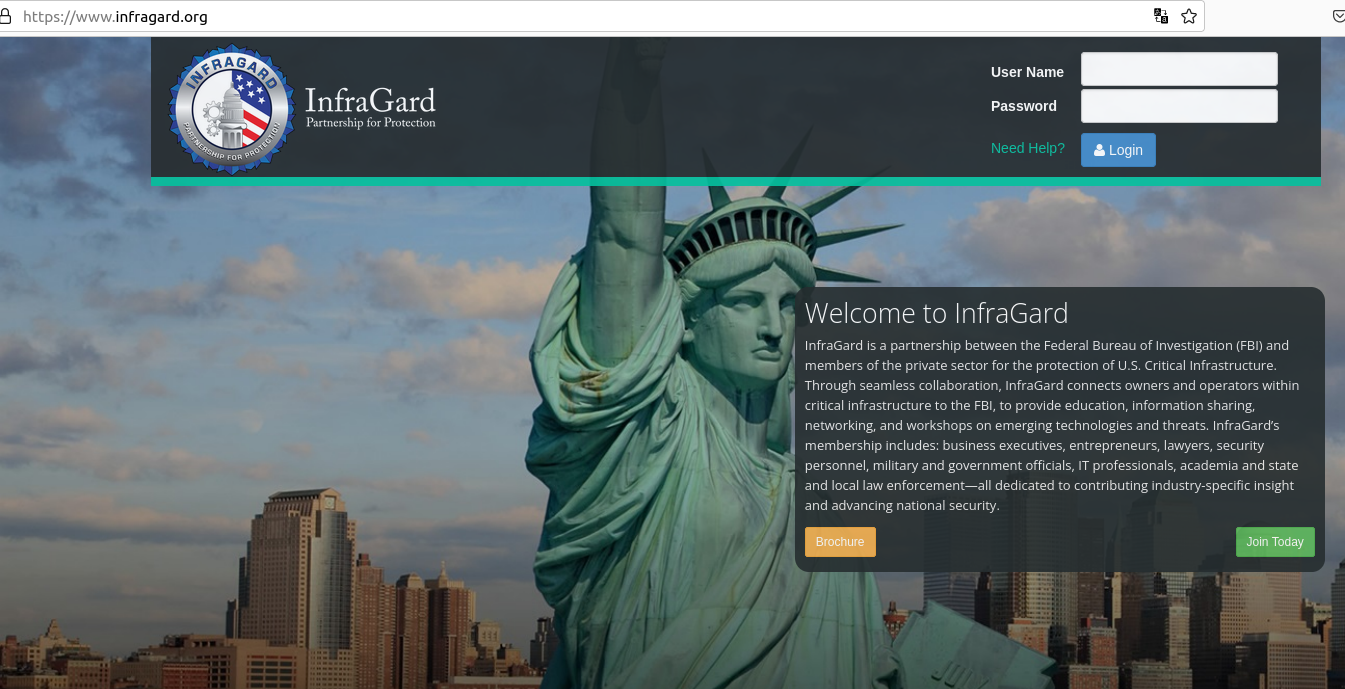
On Dec. 10, 2022, the relatively new cybercrime forum Breached featured a bombshell new sales thread: The user database for InfraGard, including names and contact information for tens of thousands of InfraGard members.
The FBI’s InfraGard program is supposed to be a vetted Who’s Who of key people in private sector roles involving both cyber and physical security at companies that manage most of the nation’s critical infrastructures — including drinking water and power utilities, communications and financial services firms, transportation and manufacturing companies, healthcare providers, and nuclear energy firms.
“InfraGard connects critical infrastructure owners, operators, and stakeholders with the FBI to provide education, networking, and information-sharing on security threats and risks,” the FBI’s InfraGard fact sheet reads.
KrebsOnSecurity contacted the seller of the InfraGard database, a Breached forum member who uses the handle “USDoD” and whose avatar is the seal of the U.S. Department of Defense.
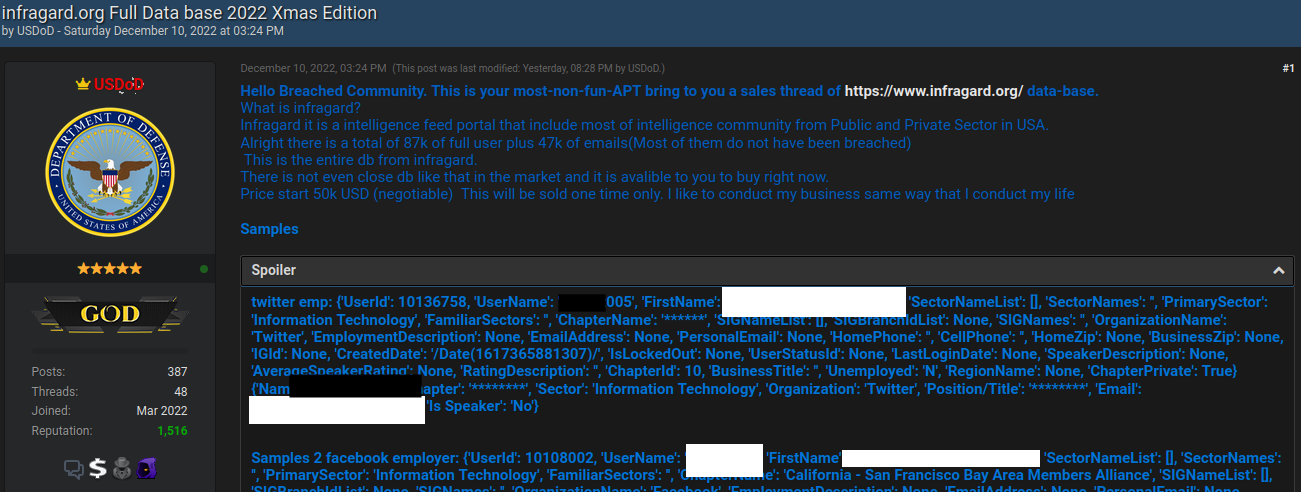
USDoD’s InfraGard sales thread on Breached.
USDoD said they gained access to the FBI’s InfraGard system by applying for a new account using the name, Social Security Number, date of birth and other personal details of a chief executive officer at a company that was highly likely to be granted InfraGard membership.
The CEO in question — currently the head of a major U.S. financial corporation that has a direct impact on the creditworthiness of most Americans — did not respond to requests for comment.
USDoD told KrebsOnSecurity their phony application was submitted in November in the CEO’s name, and that the application included a contact email address that they controlled — but also the CEO’s real mobile phone number.
“When you register they said that to be approved can take at least three months,” USDoD said. “I wasn’t expected to be approve[d].”
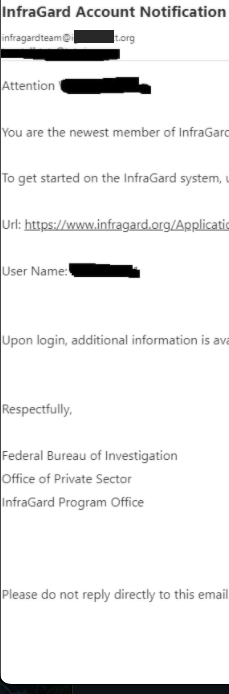 But USDoD said that in early December, their email address in the name of the CEO received a reply saying the application had been approved (see redacted screenshot to the right). While the FBI’s InfraGard system requires multi-factor authentication by default, users can choose between receiving a one-time code via SMS or email.
“If it was only the phone I will be in [a] bad situation,” USDoD said. “Because I used the person[‘s] phone that I’m impersonating.”
USDoD said the InfraGard user data was made easily available via an Application Programming Interface (API) that is built into several key components of the website that help InfraGard members connect and communicate with each other.
USDoD said after their InfraGard membership was approved, they asked a friend to code a script in Python to query that API and retrieve all available InfraGard user data.
“InfraGard is a social media intelligence hub for high profile persons,” USDoD said. “They even got [a] forum to discuss things.”
KrebsOnSecurity shared with the FBI several screenshots and other data that may help isolate the imposter InfraGard account, but the agency declined to comment for this story.
To prove they still had access to InfraGard as of publication time Tuesday evening, USDoD sent a direct message through InfraGard’s messaging system to an InfraGard member whose personal details were initially published as a teaser on the database sales thread.
That InfraGard member, who is head of security at a major U.S. technology firm, confirmed receipt of USDoD’s message but asked to remain anonymous for this story.
USDoD acknowledged that his $50,000 asking price for the InfraGard database may be a tad high, given that it is a fairly basic list of people who are already very security-conscious. Also, only about half of the user accounts contain an email address, and most of the other database fields — like Social Security Number and Date of Birth — are completely empty.
“I don’t think someone will pay that price, but I have to [price it] a bit higher to [negotiate] the price that I want,” they explained.
While the data exposed by the apparent infiltration at InfraGard may be minimal, the user data might not have been the true end game for the intruders.
USDoD said they were hoping the imposter account would last long enough for them to finish sending direct messages as the CEO to other executives using the InfraGuard messaging portal. USDoD shared the following redacted screenshot from what they claimed was one such message, although they provided no additional context about it.
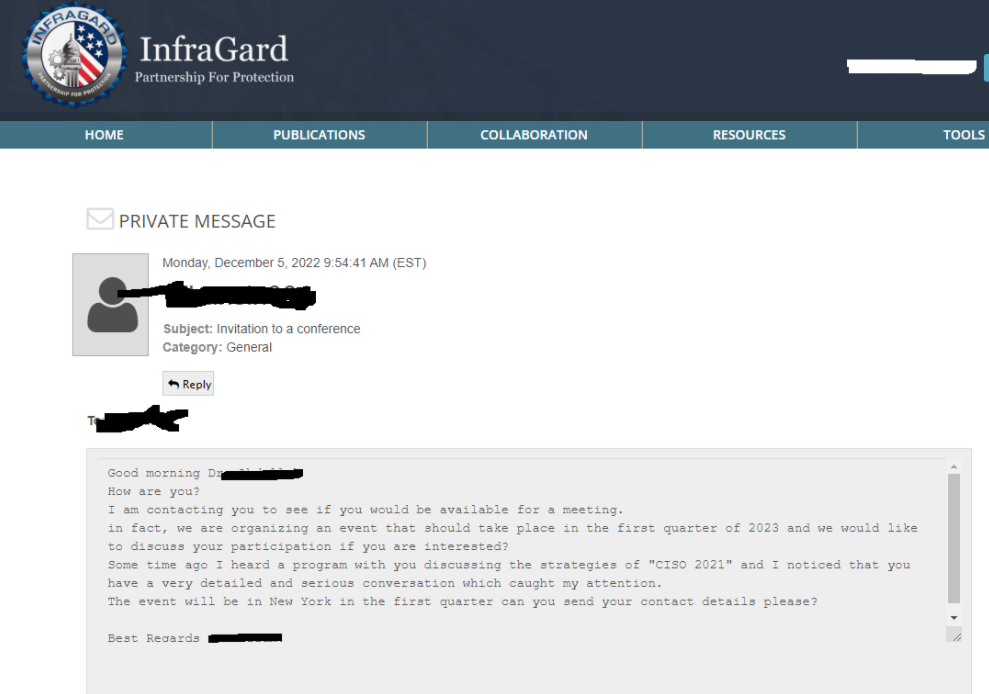
A screenshot shared by USDoD showing a message thread in the FBI’s InfraGard system.
USDoD said in their sales thread that the guarantor for the transaction would be Pompompurin, the administrator of the cybercrime forum Breached. By purchasing the database through the forum administrator’s escrow service, would-be buyers can theoretically avoid getting ripped off and ensure the transaction will be consummated to the satisfaction of both parties before money exchanges hands.
Pompompurin has been a thorn in the side of the FBI for years. Their Breached forum is widely considered to be the second incarnation of RaidForums, a remarkably similar English-language cybercrime forum shuttered by the U.S. Department of Justice in April. Prior to its infiltration by the FBI, RaidForums sold access to more than 10 billion consumer records stolen in some of the world’s largest data breaches.
In November 2021, KrebsOnSecurity detailed how Pompompurin abused a vulnerability in an FBI online portal designed to share information with state and local law enforcement authorities, and how that access was used to blast out thousands of hoax email messages — all sent from an FBI email and Internet address.
This is a developing story. Updates will be noted here with timestamps.
from Krebs on Security https://ift.tt/ZswNSTG
via IFTTT
It’s not the switching that’s the problem, it’s the switching of the switching!
from Naked Security https://ift.tt/28DNgLX
via IFTTT
 Pacosite's Blog