The newest Intel Core vPro mobile platform gives PC hardware a direct role in detecting ransomware attacks.
from Dark Reading: https://ift.tt/3i0KOjS
via IFTTT

The newest Intel Core vPro mobile platform gives PC hardware a direct role in detecting ransomware attacks.
from Dark Reading: https://ift.tt/3i0KOjS
via IFTTT
Cloud provider hosting “certain” IT systems attacked, company says.
from Dark Reading: https://ift.tt/3sd4Hc6
via IFTTT
Ubiquiti, a major vendor of cloud-enabled Internet of Things (IoT) devices such as routers, network video recorders, security cameras and access control systems, is urging customers to change their passwords and enable multi-factor authentication. The company says an incident at a third-party cloud provider may have exposed customer account information and credentials used to remotely manage Ubiquiti gear.
In an email sent to customers today, Ubiquiti Inc. [NYSE: UI] said it recently became aware of “unauthorized access to certain of our information technology systems hosted by a third party cloud provider,” although it declined to name that provider.
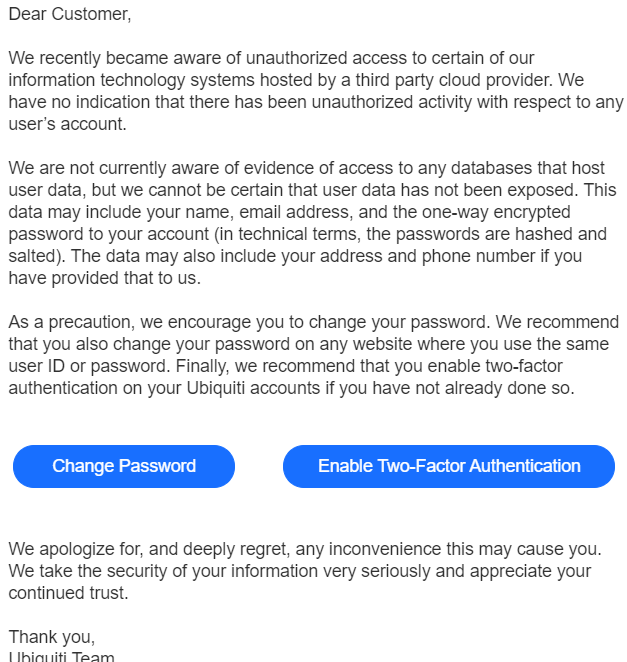
The statement continues:
“We are not currently aware of evidence of access to any databases that host user data, but we cannot be certain that user data has not been exposed. This data may include your name, email address, and the one-way encrypted password to your account (in technical terms, the passwords are hashed and salted). The data may also include your address and phone number if you have provided that to us.”
Ubiquiti has not yet responded to requests for more information, but the notice was confirmed as official in a post on the company’s user support forum.
The warning from Ubiquiti carries particular significance because the company has made it fairly difficult for customers using the latest Ubiquiti firmware to interact with their devices without first authenticating through the company’s cloud-based systems.
This has become a sticking point for many Ubiquiti customers, as evidenced by numerous threads on the topic in the company’s user support forums over the past few months.
“While I and others do appreciate the convenience and option of using hosted accounts, this incident clearly highlights the problem with relying on your infrastructure for authenticating access to our devices,” wrote one Ubiquiti customer today whose sentiment was immediately echoed by other users. “A lot us cannot take your process for granted and need to keep our devices offline during setup and make direct connections by IP/Hostname using our Mobile Apps.”
To manage your security settings on a Ubiquiti device, visit https://account.ui.com and log in. Click on ‘Security’ from the left-hand menu.
1. Change your password
2. Set a session timeout value
3. Enable 2FA
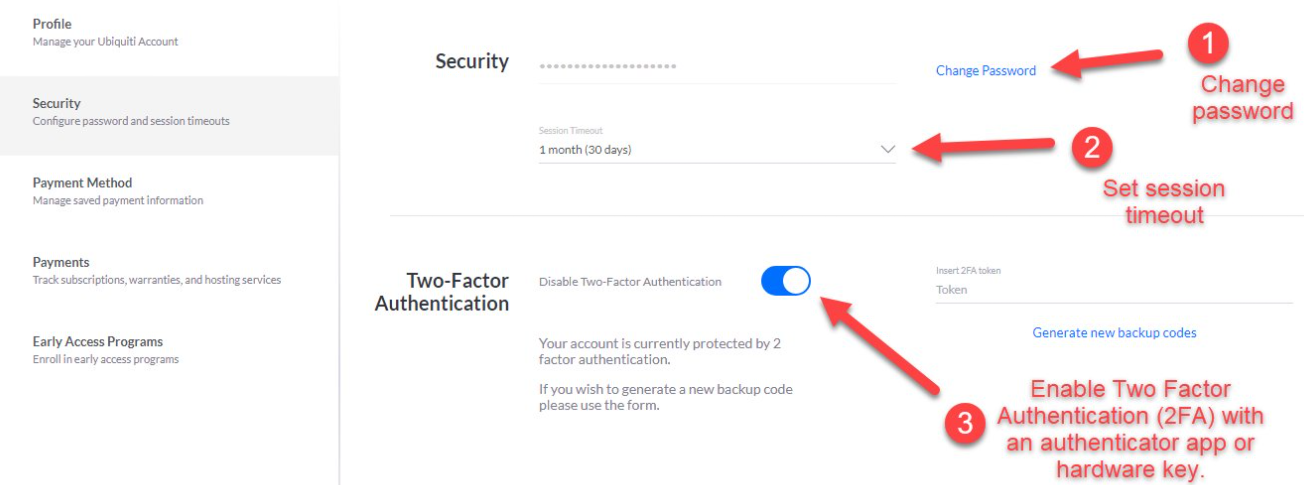
Image: twitter.com/crosstalksol/
According to Ubiquiti’s investment literature, the company has shipped more than 85 million devices that play a key role in networking infrastructure in over 200 countries and territories worldwide.
This is a developing story that may be updated throughout the day.
from Krebs on Security https://ift.tt/2LoNs6X
via IFTTT
The SolarWinds supply chain compromise won’t be the last of its kind. Vendors and enterprises alike must learn and refine their detection efforts to find the next such attack.
from Dark Reading: https://ift.tt/2LG5Zvo
via IFTTT
How two traditionally disparate security disciplines can be united.
from Dark Reading: https://ift.tt/3seqiko
via IFTTT
Technology alone cannot protect you. Bad guys are constantly developing new ways to get past firewalls, anti-virus and filters. You are the best defense against any attacker.
from SANS Institute Security Awareness Tip of the Day https://ift.tt/2XyyePr
via IFTTT
The AEVT decompiler helped researchers analyze a cryptominer campaign that used AppleScript for obfuscation and will help reverse engineers focused on other Mac OS malware.
from Dark Reading: https://ift.tt/3brMAcn
via IFTTT
Here’s the latest Naked Security Live video talk – watch now, and please share with your friends!
from Naked Security https://ift.tt/35MRe1h
via IFTTT
Organizations that focus on optimizing their tools, cutting down on tool sprawl, and taking a strategic approach to transitioning to the cloud are poised for success.
from Dark Reading: https://ift.tt/2XsAwj5
via IFTTT
Researchers can now made software copies of Google’s “unclonable” Titan security keys – but not yet undetectably.
from Naked Security https://ift.tt/3qd59Fg
via IFTTT

