Rankings based on total bounties paid, top single bounty paid, time to respond, and more.
from Dark Reading: https://ift.tt/38b6F3b
via IFTTT

Rankings based on total bounties paid, top single bounty paid, time to respond, and more.
from Dark Reading: https://ift.tt/38b6F3b
via IFTTT
Researchers who found the archived SQL files estimate up to 14 million people could be affected.
from Dark Reading: https://ift.tt/2Zj262B
via IFTTT
SMBs are responsible for nearly 44% of US economic activity, but given the current climate, it can be difficult for them to find available and/or affordable resources.
from Dark Reading: https://ift.tt/3dE1JEV
via IFTTT
Three ways that security teams can improve processes and collaboration, all while creating the common ground needed to sustain them.
from Dark Reading: https://ift.tt/3g7zCQ5
via IFTTT
If you run a website or a blog, watch out for emails promising “DNSSEC upgrades” – these scammers are after your whole site.
from Naked Security https://ift.tt/3eOaDkI
via IFTTT
Kenneth Schuchman, the creator of the massive Satori botnet of enslaved devices, will be spending 13 months behind bars.
from Naked Security https://ift.tt/2BOnyEN
via IFTTT
Get yourself up to date with everything we've written in the last seven days – it's weekly roundup time.
from Naked Security https://ift.tt/3dDgVlH
via IFTTT
Every plugin or add-on you install in your browser can expose you to more danger. Only install the plugins you need and make sure they are always current. If you no longer need a plugin, disable or remove it from your browser via your browser’s plugin preferences.
from SANS Institute Security Awareness Tip of the Day https://ift.tt/3id8mSn
via IFTTT
A well-connected Russian hacker once described as “an asset of supreme importance” to Moscow was sentenced on Friday to nine years in a U.S. prison after pleading guilty to running a site that sold stolen payment card data, and to administering a highly secretive crime forum that counted among its members some of the most elite Russian cybercrooks.
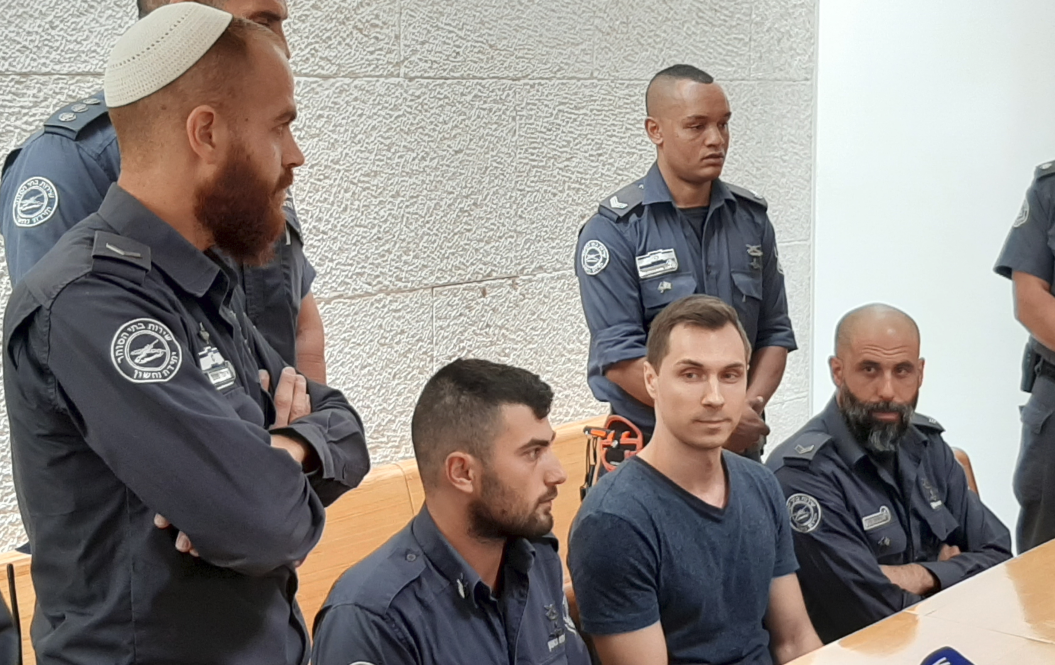
Alexei Burkov, seated second from right, attends a hearing in Jerusalem in 2015. Photo: Andrei Shirokov / Tass via Getty Images.
Aleksei Burkov of St. Petersburg, Russia admitted to running CardPlanet, a site that sold more than 150,000 stolen credit card accounts, and to being a founder of DirectConnection — a closely guarded underground community that attracted some of the world’s most-wanted Russian hackers.
As KrebsOnSecurity noted in a November 2019 profile of Burkov’s hacker nickname ‘k0pa,’ “a deep dive into the various pseudonyms allegedly used by Burkov suggests this individual may be one of the most connected and skilled malicious hackers ever apprehended by U.S. authorities, and that the Russian government is probably concerned that he simply knows too much.”
Burkov was arrested in 2015 on an international warrant while visiting Israel, and over the ensuing four years the Russian government aggressively sought to keep him from being extradited to the United States.
When Israeli authorities turned down requests to send him back to Russia — supposedly to face separate hacking charges there — the Russians then imprisoned Israeli citizen Naama Issachar on trumped-up drug charges in a bid to trade prisoners. Nevertheless, Burkov was extradited to the United States in November 2019. Russian President Vladimir Putin pardoned Issachar in January 2020, just hours after Burkov pleaded guilty.
Arkady Bukh is a New York attorney who has represented a number of accused and convicted cybercriminals from Eastern Europe and Russia. Bukh said he suspects Burkov did not cooperate with the Justice Department investigators apart from agreeing not to take the case to trial.
“Nine years is a huge sentence, and the government doesn’t give nine years to defendants who cooperate,” Bukh said. “Also, the time span [between Burkov’s guilty plea and sentencing] was very short.”
DirectConnection was something of a Who’s Who of major cybercriminals, and many of its most well-known members have likewise been extradited to and prosecuted by the United States. Those include Sergey “Fly” Vovnenko, who was sentenced to 41 months in prison for operating a botnet and stealing login and payment card data. Vovnenko also served as administrator of his own cybercrime forum, which he used in 2013 to carry out a plan to have Yours Truly framed for heroin possession.
As noted in last year’s profile of Burkov, an early and important member of DirectConnection was a hacker who went by the moniker “aqua” and ran the banking sub-forum on Burkov’s site. In December 2019, the FBI offered a $5 million bounty leading to the arrest and conviction of aqua, who’s been identified as Maksim Viktorovich Yakubets. The Justice Department says Yakubets/aqua ran a transnational cybercrime organization called “Evil Corp.” that stole roughly $100 million from victims.
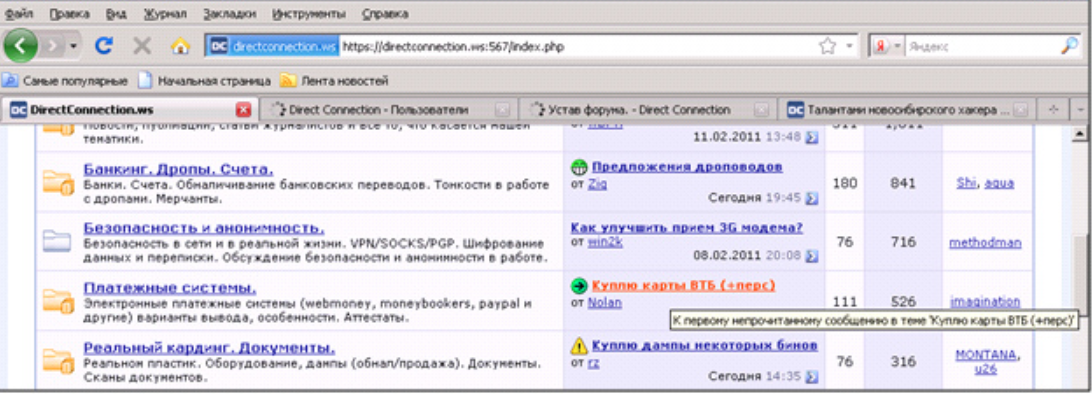
In this 2011 screenshot of DirectConnection, we can see the nickname of “aqua,” who ran the “banking” sub-forum on DirectConecttion. Aqua, a.k.a. Maksim V. Yakubets of Russia, now has a $5 million bounty on his head from the FBI.
According to a statement of facts in Burkov’s case, the author of the infamous SpyEye banking trojan — Aleksandr “Gribodemon” Panin— was personally vouched for by Burkov. Panin was sentenced in 2016 to more than nine years in prison.
Other top DirectConnection members include convicted credit card fraudsters Vladislav “Badb” Horohorin and Sergey “zo0mer” Kozerev, as well as the infamous spammer and botnet master Peter “Severa” Levashov.
Also on Friday, the Justice Department said it obtained a guilty plea from another top cybercrime forum boss — Sergey “Stells” Medvedev — who admitted to administering the Infraud forum. The government says Infraud, whose slogan was “In Fraud We Trust,” attracted more than 10,000 members and inflicted more than $568 million in actual losses from the sale of stolen identity information, payment card data and malware.
A copy of the 108-month judgment entered against Burkov is available here (PDF).
from Krebs on Security https://ift.tt/2Ny3kS3
via IFTTT
A well-connected Russian hacker once described as “an asset of supreme importance” to Moscow was sentenced on Friday to nine years in a U.S. prison after pleading guilty to running a site that sold stolen payment card data, and to administering a highly secretive crime forum that counted among its members some of the most elite Russian cybercrooks.
Alexei Burkov, seated second from right, attends a hearing in Jerusalem in 2015. Photo: Andrei Shirokov / Tass via Getty Images.
Alexsei Burkov of St. Petersburg, Russia admitted to running CardPlanet, a site that sold more than 150,000 stolen credit card accounts, and to being a founder of DirectConnection — a closely guarded underground community that attracted some of the world’s most-wanted Russian hackers.
As KrebsOnSecurity noted in a November 2019 profile of Burkov’s hacker nickname ‘k0pa,’ “a deep dive into the various pseudonyms allegedly used by Burkov suggests this individual may be one of the most connected and skilled malicious hackers ever apprehended by U.S. authorities, and that the Russian government is probably concerned that he simply knows too much.”
Burkov was arrested in 2015 on an international warrant while visiting Israel, and over the ensuing four years the Russian government aggressively sought to keep him from being extradited to the United States.
When Israeli authorities turned down requests to send him back to Russia — supposedly to face separate hacking charges there — the Russians then imprisoned Israeli citizen Naama Issachar on trumped-up drug charges in a bid to trade prisoners. Nevertheless, Burkov was extradited to the United States in November 2019. Russian President Vladimir Putin pardoned Issachar in January 2020, just hours after Burkov pleaded guilty.
Arkady Bukh is a New York attorney who has represented a number of accused and convicted cybercriminals from Eastern Europe and Russia. Bukh said he suspects Burkov did not cooperate with the Justice Department investigators apart from agreeing not to take the case to trial.
“Nine years is a huge sentence, and the government doesn’t give nine years to defendants who cooperate,” Bukh said. “Also, the time span [between Burkov’s guilty plea and sentencing] was very short.”
DirectConnection was something of a Who’s Who of major cybercriminals, and many of its most well-known members have likewise been extradited to and prosecuted by the United States. Those include Sergey “Fly” Vovnenko, who was sentenced to 41 months in prison for operating a botnet and stealing login and payment card data. Vovnenko also served as administrator of his own cybercrime forum, which he used in 2013 to carry out a plan to have Yours Truly framed for heroin possession.
As noted in last year’s profile of Burkov, an early and important member of DirectConnection was a hacker who went by the moniker “aqua” and ran the banking sub-forum on Burkov’s site. In December 2019, the FBI offered a $5 million bounty leading to the arrest and conviction of aqua, who’s been identified as Maksim Viktorovich Yakubets. The Justice Department says Yakubets/aqua ran a transnational cybercrime organization called “Evil Corp.” that stole roughly $100 million from victims.
In this 2011 screenshot of DirectConnection, we can see the nickname of “aqua,” who ran the “banking” sub-forum on DirectConecttion. Aqua, a.k.a. Maksim V. Yakubets of Russia, now has a $5 million bounty on his head from the FBI.
According to a statement of facts in Burkov’s case, the author of the infamous SpyEye banking trojan — Aleksandr “Gribodemon” Panin— was personally vouched for by Burkov. Panin was sentenced in 2016 to more than nine years in prison.
Other top DirectConnection members include convicted credit card fraudsters Vladislav “Badb” Horohorin and Sergey “zo0mer” Kozerev, as well as the infamous spammer and botnet master Peter “Severa” Levashov.
Also on Friday, the Justice Department said it obtained a guilty plea from another top cybercrime forum boss — Sergey “Stells” Medvedev — who admitted to administering the Infraud forum. The government says Infraud, whose slogan was “In Fraud We Trust,” attracted more than 10,000 members and inflicted more than $568 million in actual losses from the sale of stolen identity information, payment card data and malware.
A copy of the 108-month judgment entered against Burkov is available here (PDF).
from Krebs on Security https://ift.tt/2Ny3kS3
via IFTTT

