Advisory addresses active exploitation of vuln in the wild, with no clear solution in sight.
from Dark Reading: https://ift.tt/2PAfxZ3
via IFTTT

Advisory addresses active exploitation of vuln in the wild, with no clear solution in sight.
from Dark Reading: https://ift.tt/2PAfxZ3
via IFTTT
Thieves are combining SMS-based phishing attacks with new “cardless” ATMs to rapidly convert phished bank account credentials into cash. Recent arrests in Ohio shed light on how this scam works.
A number of financial institutions are now offering cardless ATM transactions that allow customers to withdraw cash using nothing more than their mobile phones. But this also creates an avenue of fraud for bad guys, who can leverage phished or stolen account credentials to add a new phone number to the customer’s account and then use that added device to siphon cash from hijacked accounts at cardless ATMs.
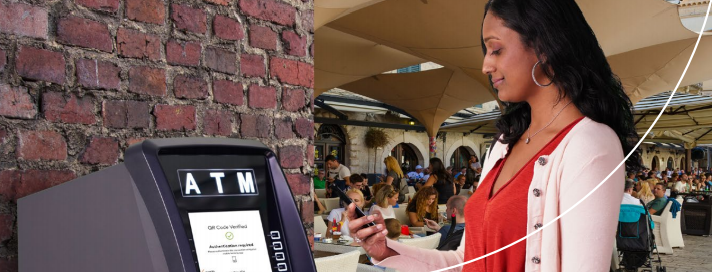
Image: Mastercard.us
In May 2018, Cincinnati, Ohio-based financial institution Fifth Third Bank began hearing complaints from customers who were receiving text messages on their phones that claimed to be from the bank, warning recipients that their accounts had been locked.
The text messages contained a link to unlock their accounts and led customers to a Web site that mimicked the legitimate Fifth Third site. That phishing site prompted visitors to enter their account credentials — including usernames, passwords, one-time passcodes and PIN numbers — to unlock their accounts.
All told, that scam netted credentials for approximately 125 Fifth Third customers — most of them in or around the Cincinnati area. The crooks then used the phished data to withdraw $68,000 from 17 ATMs in Illinois, Michigan, and Ohio in less than two weeks using Fifth Third’s cardless ATM function.
According to court documents, the SMS phishing and fraudulent withdrawals at cardless ATMs continued through October 2018, earning the scammers an additional $40,000. That is, until the bank zeroed in on four individuals suspected of perpetrating the crime spree. Shortly thereafter, four men were arrested in connection with the crimes.
One of them, identified as Ciprian-Raducu Antoche-Grecu, was apprehended in a Cincinnati suburb while standing at the same Fifth Third ATM where he was previously observed conducting fraudulent activity, investigators allege.
In January 2017, KrebsOnSecurity told the story of a California woman who saw nearly $3,000 drained from her account via a cardless ATM operated by Chase Bank. In that incident, the thieves didn’t even need to know her ATM PIN; the thieves were able to use a phone number and mobile device they controlled and associate it with her Chase account simply by supplying her username and password.
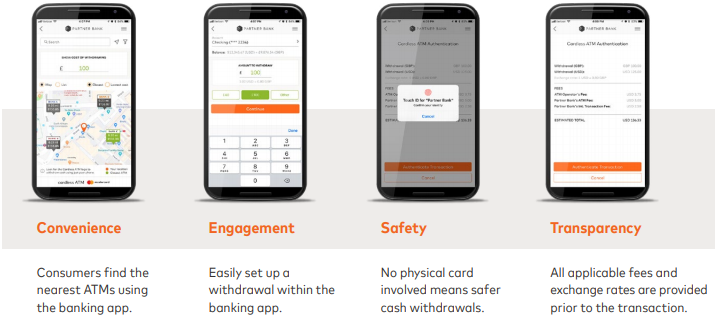
A graphic from Mastercard touting the potential benefits of cardless ATM transactions.
As the January 2017 story illustrates, cardless ATM scams aren’t new, but they are becoming more prevalent as more banks turn to cardless ATM technology as a convenience for customers. This time last year, cardless ATMs were offered mainly by the big banks, and then only at some of their ATMs. Now, many smaller regional and local banks have upgraded their cash machines to enable the new technology.
Card giant Mastercard says its polling (PDF) suggests that 78 percent of consumers would rather use a cardless ATM solution than carry a physical card. I would wager that most U.S. cardholders still haven’t even heard of cardless ATMs, let alone could say whether or not their bank offers such transactions. Curious whether your bank supports cardless transactions? A quick online search for your bank’s name and the term “cardless ATM” should provide some clues.
In the meantime, remember never to respond to requests for personal or financial information sent via email, text message or over the phone. Phone-based phishing attacks are getting way more clever and are even snaring technology experts, as last month’s story shows. When in doubt, contact your financial institution directly either in person or by phone using the number on the back of your card.
from Krebs on Security https://ift.tt/2SG034E
via IFTTT
Stop overwhelming developers and start using real-world attack behavior to prioritize application vulnerability fixes.
from Dark Reading: https://ift.tt/2yOZA7Y
via IFTTT
New online threats require new solutions.
from Dark Reading: https://ift.tt/2CUE9oR
via IFTTT
Halloween has provided a timely opportunity to remind kids that not everything on the Internet is as it seems.
The post Week in security with Tony Anscombe appeared first on WeLiveSecurity
from WeLiveSecurity https://ift.tt/2JyhrnP
via IFTTT
Researcher José Rodríguez beats the lockscreen to display contact phone numbers and email addresses.
from Naked Security https://ift.tt/2AHKh2h
via IFTTT
Only one browser stood fast against a set of new browser history attacks.
from Naked Security https://ift.tt/2QcZkWR
via IFTTT
Celebrated annually on November 3, Antimalware Day is an opportunity to recognize the work of cybersecurity professionals
The post Antimalware Day and the evolution of malicious code appeared first on WeLiveSecurity
from WeLiveSecurity https://ift.tt/2Jzonkr
via IFTTT
Zint Barcode Generator 2.6 – Denial of Service (PoC)
from Exploit-DB.com RSS Feed https://ift.tt/2CV1ZRm
via IFTTT
CdCatalog 2.3.1 – Denial of Service (PoC)
from Exploit-DB.com RSS Feed https://ift.tt/2P3OqGp
via IFTTT

