Malware, spies, and hackers, plus erosion and sharks, pose huge risks to the fiber optics that transmit almost all the world’s data.
from Dark Reading: https://ift.tt/2yuJ2oX
via IFTTT

Malware, spies, and hackers, plus erosion and sharks, pose huge risks to the fiber optics that transmit almost all the world’s data.
from Dark Reading: https://ift.tt/2yuJ2oX
via IFTTT
We’ve listened to a ton of soundbars and these are the best sounding systems from Vizio, Sonos, Yamaha, and more.
from Gear Latest https://ift.tt/2xTEi8F
via IFTTT

This premium electric cruiser is a stylish, spendy ride with top-of-the-line performance.
from Gear Latest https://ift.tt/2xKHwyx
via IFTTT
Millions of Americans now filing for unemployment will receive benefits via a prepaid card issued by U.S. Bank, a Minnesota-based financial institution that handles unemployment payments for more than a dozen U.S. states. Some of these unemployment applications will trigger an automatic letter from U.S. Bank to the applicant. The letters are intended to prevent identity theft, but many people are mistaking these vague missives for a notification that someone has hijacked their identity.
So far this month, two KrebsOnSecurity readers have forwarded scans of form letters they received via snail mail that mentioned an address change associated with some type of payment card, but which specified neither the entity that issued the card nor any useful information about the card itself.
Searching for snippets of text from the letter online revealed pages of complaints from consumers who appear confused about the source and reason for the letter, with most dismissing it as either a scam or considering it a notice of attempted identity theft. Here’s what’s the letter looks like:
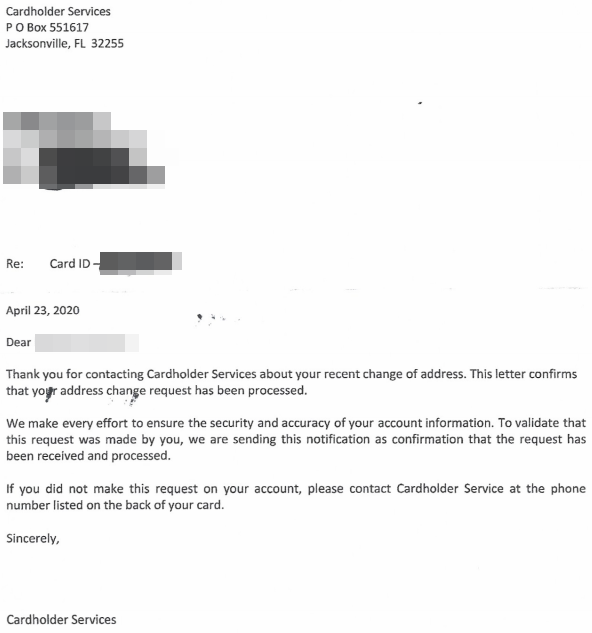
A scan of the form letter sent by U.S. Bank to countless people enrolling in state unemployment benefits.
My first thought when a reader shared a copy of the letter was that he recently had been the victim of identity theft. It took a fair amount of digging online to discover that the nebulously named “Cardholder Services” address in Florida referenced at the top of the letter is an address exclusively used by U.S. Bank.
That digging indicated U.S. Bank currently manages the disbursement of funds for unemployment programs in at least 17 states, including Arkansas, Colorado, Delaware, Idaho, Louisiana, Maine, Minnesota, Nebraska, North Dakota, Ohio, Oregon, Pennsylvania, South Dakota, Texas, Utah, Wisconsin, and Wyoming. The funds are distributed through a prepaid debit card called ReliaCard.
To make matters more confusing, the flood of new unemployment applications from people out of work thanks to the COVID-19 pandemic reportedly has overwhelmed U.S. Bank’s system, meaning that many people receiving these letters haven’t yet gotten their ReliaCard and thus lack any frame of reference for having applied for a new payment card.
Reached for comment about the unhelpful letters, U.S. Bank said it automatically mails them to current and former ReliaCard customers when changes in its system are triggered by a customer – including small tweaks to an address — such as changing “Street” to “St.”
“This can include letters to people who formerly had a ReliaCard account, but whose accounts are now inactive,” the company said in a statement shared with KrebsOnSecurity. “If someone files for unemployment and had a ReliaCard in years past for another claim, we can work with the state to activate that card so the cardholder can use it again.”
U.S. Bank said the letters are designed to confirm with the cardholder that the address change is valid and to combat identity theft. But clearly, for many recipients they are having the opposite effect.
“We encourage any cardholders who have questions about the letters to call the number listed on the back of their cards (or 855-282-6161),” the company said.
That’s nice to know, because it’s not obvious from reading the letter which card is being referenced. U.S. Bank said it would take my feedback under advisement, but that the letters were intended to be generic in nature to protect cardholder privacy.
“We are always seeking to improve our programs, so thank you for bringing this to our attention,” the company said. “Our teams are looking at ways to provide more specific information in our communications with cardholders.”
from Krebs on Security https://ift.tt/3dqullj
via IFTTT
This week, Aarian Marshall joins us to talk about how cities can respond to the coronavirus by redesigning streets to accommodate outdoor dining and changes to transit.
from Gear Latest https://ift.tt/3frNB3Q
via IFTTT
Extreme Networks Aerohive HiveOS 11.0 – Remote Denial of Service (PoC)
from Exploit-DB.com RSS Feed https://ift.tt/2zkZKXI
via IFTTT
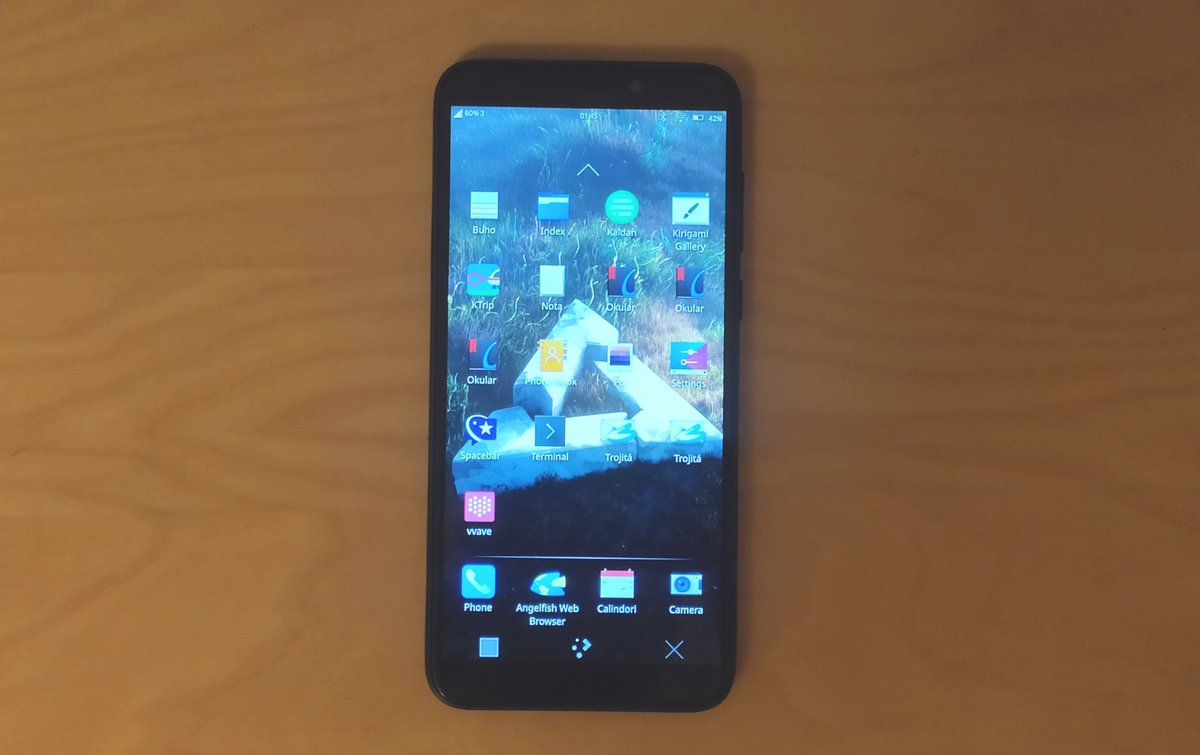
Desde hace ya más de una década, el mercado móvil está dominado por dispositivos que ejecutan iOS y Android. Muchos han intentado arrebatarles el trono, pero de momento, como mucho, han conseguido hacer un poco de ruido. La tendencia parece que puede cambiar un poco en el futuro, gracias a sistemas operativos móviles como postmarketOS, quien usa software de KDE en su mayoría. Y más ahora, que se está expandiendo a más dispositivos.
Según un informe de TuxPhones, postmarketOS puede ejecutarse ahora en más de 200 dispositivos, en lo que se incluyen móviles y tablets. Para entender esta gesta, hay que tener en cuenta que el sistema operativo nació en 2017 y ya se ha convertido en el sistema operativo móvil líder de los que hay disponibles basados en Linux. Aún más, un sistema operativo tan popular como Ubuntu Touch sólo soporta en la actualidad 23 dispositivos, y otros 14 que están en progreso.
(adsbygoogle = window.adsbygoogle || []).push({});
Gran parte de la demanda se debe a los métodos de instalación, herramientas y guías para conseguir instalar postmarketOS en nuestros dispositivos móviles. Además, también nos permite elegir entre entornos gráficos Plasma (Mobile), MATE, GNOME, Xfce y Phosh. Por si fuera poco, también se puede instalar en un iPhone 7/Plus, en donde se incluye Wayland, todo gracias al Project Insanity.
(adsbygoogle = window.adsbygoogle || []).push({});
Si estáis interesados en probar postmarketOS en vuestro dispositivo móvil, lo primero que tenéis que hacer es ir a su página Wiki y ver si vuestro dispositivo está soportado. Si lo está, desde la misma página podemos acceder a la Wiki de cada uno de los dispositivos, en donde habrá un enlace a la guía de instalación.
Como opinión personal, tengo que decir que me llama mucho la atención un sistema operativo como este, pero creo que no será la mejor de las opciones si no podemos ejecutar algunas aplicaciones móviles. En cualquier caso, se está trabajando para que pueda ejecutar aplicaciones de Android, lo que sí podría cambiar las reglas del juego.
from Linux Adictos https://ift.tt/3ciJEwg
via IFTTT
If you enjoy what you read, hear and see from the Naked Security team, please vote for us – it means a lot!
from Naked Security https://ift.tt/35IMXum
via IFTTT
Google deleted more malicious extensions from the Chrome Web Store after they were found to be phishing cryptocurrency users.
from Naked Security https://ift.tt/2WDKsFt
via IFTTT
 Pacosite's Blog