Online Book Store 1.0 – ‘bookisbn’ SQL Injection
from Exploit-DB.com RSS Feed https://ift.tt/35VsCAg
via IFTTT

Online Book Store 1.0 – ‘bookisbn’ SQL Injection
from Exploit-DB.com RSS Feed https://ift.tt/35VsCAg
via IFTTT
Huawei se encuentra ultimando los detalles de la presentación de los nuevos Huawei P40, que se desvelarán al mundo a finales de marzo de 2020 en París. De momento el aspecto de los nuevos teléfonos inteligentes de la firma china es desconocido, ya que la compañía apenas ha ofrecido información sobre ellos. Sin embargo, las filtraciones no cesan en su empeño por desgranar cada característica de los Huawei P40, como
Entra en Andro4all para leer el artículo completo
Puedes unirte a nosotros en Twitter, Facebook o en Google+
¡Suscríbete a nuestro canal de YouTube!
Publicado recientemente en Andro4all
La entrada Un nuevo render revela el diseño del Huawei P40: pantalla con doble agujero y triple cámara trasera se publicó primero en Andro4all.
from Andro4all https://ift.tt/36TllTa
via IFTTT
El Xiaomi Mi 9T Pro fue uno de los smartphones que más recomendamos el año pasado. Su gran relación calidad-precio y su llamativo diseño lo convierte en una muy buena opción. El dispositivo de Xiaomi sigue siendo una gran compra, y te traemos los mejores precios. Gracias a AliExpress y el cupón UBEST200 puedes llevártelo en su versión de 6 GB de memoria RAM y 64 GB de almacenamiento por
Entra en Andro4all para leer el artículo completo
Puedes unirte a nosotros en Twitter, Facebook o en Google+
¡Suscríbete a nuestro canal de YouTube!
Publicado recientemente en Andro4all
La entrada ¿Dónde se puede comprar el Xiaomi Mi 9T Pro al mejor precio? se publicó primero en Andro4all.
from Andro4all https://ift.tt/2RdR6j6
via IFTTT
Si hace unos días Samsung reveló la cantidad de exacta de unidades vendidas del Galaxy Fold, ahora ha sido Huawei quien se ha animado a dar a conocer cuántos Mate X, su móvil plegable, ha conseguido vender. Un dispositivo que se dio a conocer de forma oficial en el pasado Mobile World Congress 2019 y que salió a la venta en China 15 de noviembre batiendo todos los récords. Si
Entra en Andro4all para leer el artículo completo
Puedes unirte a nosotros en Twitter, Facebook o en Google+
¡Suscríbete a nuestro canal de YouTube!
Publicado recientemente en Andro4all
La entrada Después de Samsung, Huawei también se ha animado a revelar cuántos móviles plegables ha conseguido vender se publicó primero en Andro4all.
from Andro4all https://ift.tt/2FRkVko
via IFTTT
Posiblemente, no hay mejor manera de empezar el año que con un móvil nuevo, y más si llevas con el mismo terminal durante bastante tiempo y te apetece renovar el móvil que llevas en el bolsillo para tener uno adecuado al momento tecnológico en el que estamos. Por eso, vamos a enseñarte los mejores dispositivos de gama media, que ahora mismo están rebajados en El Corte Inglés, y que pueden
Entra en Andro4all para leer el artículo completo
Puedes unirte a nosotros en Twitter, Facebook o en Google+
¡Suscríbete a nuestro canal de YouTube!
Publicado recientemente en Andro4all
La entrada Redmi Note 8T, Galaxy A50 y lo mejor de la gama media con descuentos de hasta el 28% se publicó primero en Andro4all.
from Andro4all https://ift.tt/36R3Y5g
via IFTTT
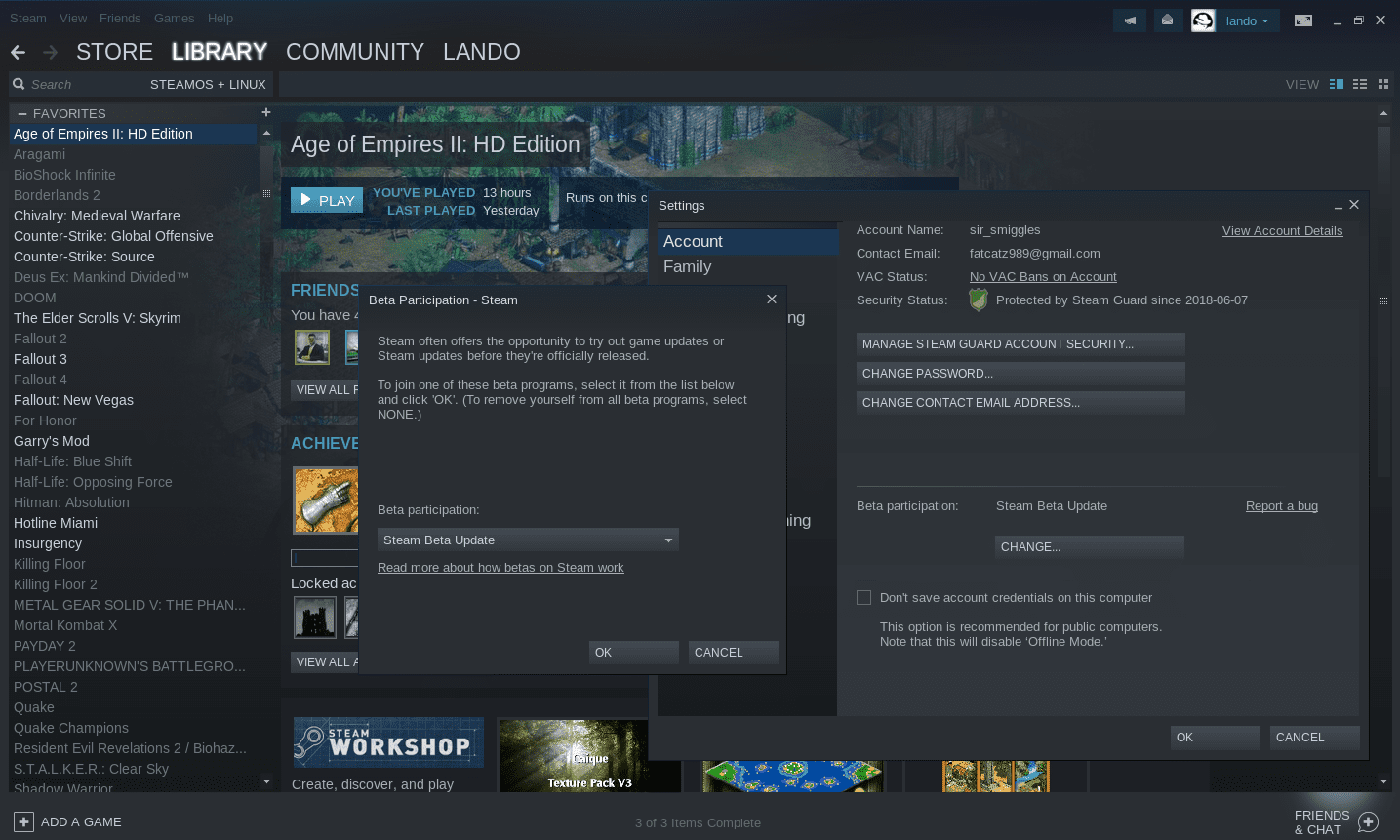
Seguramente ya conozcas el cliente Steam Play, cliente de Steam que también está disponible para GNU/Linux. Este software te permite acceder a la tienda de Valve, comprar y descargar títulos, gestionarlos en tu propia biblioteca de títulos, comunicarte con otros jugadores, etc. Además, posee un modo online, y otro offline para los que no les gusta que este programa esté constantemente conectado.
Pues bien, ahora Steam Play está de enhorabuena, ya que se ha lanzado la nueva versión del cliente disponible con algunas interesantes mejoras y cambios con respecto a la versión anterior. Una de las más destacables para los linuxeros es precisamente el nuevo Proton 4.11-12. Ya sabes que Proton es una implementación mejorada de Valve de Wine para que los videojuegos nativos para Microsoft Windows puedan correr de forma adecuada en tu Linux. Por tanto, puedes comprar los títulos que te gusten para Windows y con Steam Play+Proton, podrás jugar sin problemas (en algunos casos).
(adsbygoogle = window.adsbygoogle || []).push({});
Con Proton 4.11-12 se mejora la compatibilidad con los videojuegos Windows, y se corrigen algunos problemas o errores que pudiera haber con ciertos títulos en las versiones previas. Con ayuda de DXVK, también se están traduciendo las instrucciones de la API gráfica Direct 3D 9/10/11 a instrucciones Vulkan para que puedan correr también en Linux con esta potente API gráfica de código abierto. Entre las mejoras sobre este otro proyecto, verás que los bugs que existían con GTA V se han solventado.
También se han incluido algunos parches para resolver problemas que había con el mando controlador de la consola Xbox con el botón Elex, y se ha mejorado el comportamiento del ratón con IL-2 Sturmovik. Por supuesto, hay nuevo soporte para la API de realidad virtual OpenVR SDK, y mucho más. Si quieres ver toda la lista de cambios completos en Proton, puedes ver el changelog en este enlace.
from Linux Adictos https://ift.tt/3a7XPnk
via IFTTT
Microsoft today released updates to plug 50 security holes in various flavors of Windows and related software. The patch batch includes a fix for a flaw in Windows 10 and server equivalents of this operating system that prompted an unprecedented public warning from the U.S. National Security Agency. This month also marks the end of mainstream support for Windows 7, a still broadly-used operating system that will no longer be supplied with security updates.
 As first reported Monday by KrebsOnSecurity, Microsoft addressed a severe bug (CVE-2020-0601) in Windows 10 and Windows Server 2016/19 reported by the NSA that allows an attacker to spoof the digital signature tied to a specific piece of software. Such a weakness could be abused by attackers to make malware appear to be a benign program that was produced and signed by a legitimate software company.
An advisory (PDF) released today by the NSA says the flaw may have far more wide-ranging security implications, noting that the “exploitation of the vulnerability allows attackers to defeat trusted network connections and deliver executable code while appearing as legitimately trusted entities.”
“NSA assesses the vulnerability to be severe and that sophisticated cyber actors will understand the underlying flaw very quickly and, if exploited, would render the previously mentioned platforms as fundamentally vulnerable,” the advisory continues. “The consequences of not patching the vulnerability are severe and widespread.”
Matthew Green, an associate professor in the computer science department at Johns Hopkins University, said the flaw involves an apparent implementation weakness in a component of recent Windows versions responsible for validating the legitimacy of authentication requests for a panoply of security functions in the operating system.
Green said attackers can use this weakness to impersonate everything from trusted Web sites to the source of software updates for Windows and other programs.
“Imagine if I wanted to pick the lock in your front door,” Green analogized. “It might be hard for me to come up with a key that will open your door, but what if I could tamper with or present both the key and the lock at the same time?”
Kenneth White, security principal at the software company MongoDB, equated the vulnerability to a phone call that gets routed to a party you didn’t intend to reach.
“You pick up the phone, dial a number and assume you’re talking to your bank or Microsoft or whomever, but the part of the software that confirms who you’re talking to is flawed,” White said. “That’s pretty bad, especially when your system is saying download this piece of software or patch automatically and it’s being done in the background.”
Both Green and White said it likely will be a matter of hours or days before security researchers and/or bad guys work out ways to exploit this bug, given the stakes involved. Indeed, already this evening KrebsOnSecurity has seen indications that people are teasing out such methods, which will likely be posted publicly online soon.
According to security vendor Qualys, only eight of the 50 flaws fixed in today’s patch roundup from Microsoft earned the company’s most dire “critical” rating, a designation reserved for bugs that can be exploited remotely by malware or miscreants to seize complete control over the target computer without any help from users.
Once again, some of those critical flaws include security weaknesses in the way Windows implements Remote Desktop connections, a feature that allows systems to be accessed, viewed and controlled as if the user was seated directly in front of the remote computer. Other critical patches include updates for the Web browsers and Web scripting engines built into Windows, as well as fixes for ASP.NET and the .NET Framework.
The security fix for the CVE-2020-0601 bug and others detailed in this post will be offered to Windows users as part of a bundle of patches released today by Microsoft. To see whether any updates are available for your Windows computer, go to the Start menu and type “Windows Update,” then let the system scan for any available patches.
Keep in mind that while staying up-to-date on Windows patches is a must, it’s important to make sure you’re updating only after you’ve backed up your important data and files. A reliable backup means you’re not losing your mind when the odd buggy patch causes problems booting the system. So do yourself a favor and backup your files before installing any patches. Windows 10 even has some built-in tools to help you do that, either on a per-file/folder basis or by making a complete and bootable copy of your hard drive all at once.
Today also marks the last month in which Microsoft will ship security updates for Windows 7 home/personal users. I count myself among some 30 percent of Windows users who still like and (ab)use this operating system in one form or another, and am sad that this day has come to pass. But if you rely on this OS for day-to-day use, it’s probably time to think about upgrading to something newer.
That might be a computer with Windows 10. Or maybe you have always wanted that shiny MacOS computer. If cost is a primary motivator and the user you have in mind doesn’t do much with the system other than browsing the Web, perhaps a Chromebook or an older machine with a recent version of Linux is the answer. Whichever system you choose, it’s important to pick one that fits the owner’s needs and provides security updates on an ongoing basis.
As always, if you experience glitches or problems installing any of these patches this month, please consider leaving a comment about it below; there’s a better-than-even chance other readers have experienced the same and may chime in here with some helpful tips.
from Krebs on Security https://ift.tt/2RfigWV
via IFTTT

By JACK NICAS and KATIE BENNER
The Silicon Valley giant is preparing for a legal fight over encryption, even as it works to reduce tensions with the Justice Department.
Published: January 13, 2020 at 06:00PM
from NYT Technology https://ift.tt/2TmWQJV
via IFTTT
The National Security Agency is publicly acknowledged for its finding and reporting of CVE-2020-0601, marking the start of what it says is a new approach to security.
from Dark Reading: https://ift.tt/385EQb7
via IFTTT
Many companies are struggling to get a handle on risk exposure because of visibility issues, Radware survey shows.
from Dark Reading: https://ift.tt/2NqV2M6
via IFTTT
 Pacosite's Blog