Researchers report Lyceum, otherwise known as Hexane, has targeted organizations in South Africa and the Middle East.
from Dark Reading: https://ift.tt/2ZrBtL3
via IFTTT

Researchers report Lyceum, otherwise known as Hexane, has targeted organizations in South Africa and the Middle East.
from Dark Reading: https://ift.tt/2ZrBtL3
via IFTTT
Adding more security tools might add more security… or just more headaches (and risk).
from Dark Reading: https://ift.tt/2Pi7vW5
via IFTTT
Imperva, a leading provider of Internet firewall services that help Web sites block malicious cyberattacks, alerted customers on Tuesday that a recent data breach exposed email addresses, scrambled passwords, API keys and SSL certificates for a subset of its firewall users.
Redwood Shores, Calif.-based Imperva sells technology and services designed to detect and block various types of malicious Web traffic, from denial-of-service attacks to digital probes aimed at undermining the security of Web-based software applications.
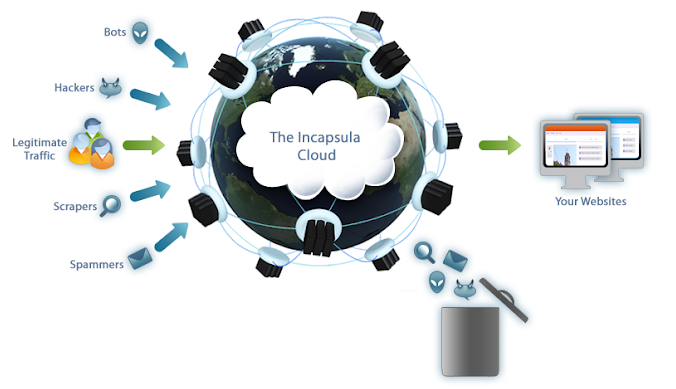
Image: Imperva
Earlier today, Imperva told customers that it learned on Aug. 20 about a security incident that exposed sensitive information for some users of Incapsula, the company’s cloud-based Web Application Firewall (WAF) product.
“On August 20, 2019, we learned from a third party of a data exposure that impacts a subset of customers of our Cloud WAF product who had accounts through September 15, 2017,” wrote Heli Erickson, director of analyst relations at Imperva.
“We want to be very clear that this data exposure is limited to our Cloud WAF product,” Erickson’s message continued. “While the situation remains under investigation, what we know today is that elements of our Incapsula customer database from 2017, including email addresses and hashed and salted passwords, and, for a subset of the Incapsula customers from 2017, API keys and customer-provided SSL certificates, were exposed.”
Companies that use the Incapsula WAF route all of their Web site traffic through the service, which scrubs the communications for any suspicious activity or attacks and then forwards the benign traffic on to its intended destination.
Rich Mogull, founder and vice president of product at Kansas City-based cloud security firm DisruptOps, said Imperva is among the top three Web-based firewall providers in business today.
According to Mogull, an attacker in possession of a customer’s API keys and SSL certificates could use that access to significantly undermine the security of traffic flowing to and from a customer’s various Web sites.
At a minimum, he said, an attacker in possession of these key assets could reduce the security of the WAF settings and exempt or “whitelist” from the WAF’s scrubbing technology any traffic coming from the attacker. A worst-case scenario could allow an attacker to intercept, view or modify traffic destined for an Incapsula client Web site, and even to divert all traffic for that site to or through a site owned by the attacker.
“Attackers could whitelist themselves and begin attacking the site without the WAF’s protection,” Mogull told KrebsOnSecurity. “They could modify any of the security Incapsula security settings, and if they got [the target’s SSL] certificate, that can potentially expose traffic. For a security-as-a-service provider like Imperva, this is the kind of mistake that’s up their with their worst nightmare.”
Imperva urged all of its customers to take several steps that might mitigate the threat from the data exposure, such as changing passwords for user accounts at Incapsula, enabling multi-factor authentication, resetting API keys, and generating/uploading new SSL certificates.
Alissa Knight, a senior analyst at Aite Group, said the exposure of Incapsula users’ scrambled passwords and email addresses was almost incidental given that the intruders also made off with customer API keys and SSL certificates.
Knight said although we don’t yet know the cause of this incident, such breaches at cloud-based firms often come down to small but ultimately significant security failures on the part of the provider.
“The moral of the story here is that people need to be asking tough questions of software-as-a-service firms they rely upon, because those vendors are being trusted with the keys to the kingdom,” Knight said. “Even if the vendor in question is a cybersecurity company, it doesn’t necessarily mean they’re eating their own dog food.”
from Krebs on Security https://ift.tt/2NxrZrj
via IFTTT
Of all of the ransomware variants spotted targeting victims in the first half of 2019, the infamous WannaCry was by far the most prevalent, according to Trend Micro’s detection data.
from Dark Reading: https://ift.tt/2U8inVb
via IFTTT
As recent news can attest, travel and hospitality companies are prime targets for cybercriminals. Here are six privacy and security tips that can help lock down privacy and security.
from Dark Reading: https://ift.tt/2U5A7R8
via IFTTT
As new Internet of Things products enter the market, speed shouldn’t trump concerns about security.
from Dark Reading: https://ift.tt/344FDbl
via IFTTT
Security options for consumers improve as Internet of Things devices invade homes and data on consumers proliferates online.
from Dark Reading: https://ift.tt/2KWCzq1
via IFTTT
Windows 10 – SET_REPARSE_POINT_EX Mount Point Security Feature Bypass
from Exploit-DB.com RSS Feed https://ift.tt/30GVxq8
via IFTTT
GitHub is the latest company to support WebAuthn, a new standard that makes logging into online services using a browser more secure.
from Naked Security https://ift.tt/2Zn3nbd
via IFTTT
Millions of customers of web hosting company Hostinger have received emails bearing the bad news of a data breach.
from Naked Security https://ift.tt/2Pf5VUR
via IFTTT

