A group of wealthy teenagers commit crimes that escalate from petty mischief to dangerous plots, causing chaotic consequences — but not for themselves.
from New On Netflix USA https://ift.tt/Wdi3M6K
via IFTTT

A group of wealthy teenagers commit crimes that escalate from petty mischief to dangerous plots, causing chaotic consequences — but not for themselves.
from New On Netflix USA https://ift.tt/Wdi3M6K
via IFTTT
From chilling betrayals to murder plots, this true-crime docuseries dissects the dark side of love through eyewitness testimonies.
from New On Netflix USA https://ift.tt/qlk7Zyp
via IFTTT

Para poder ejecutar aplicaciones de Windows hacen falta diferentes tecnologías. La más conocida en el mundo Linux es WINE, pero ésta también tira de otro software, como el motor Mono. Es lo que hace funcionar los programas que dependen de .NET (framework) de Microsoft, y hasta hace unas horas lo gestionaba la compañía que también desarrolla el sistema operativo de escritorio más usado del mundo. Esta semana ha decidido soltar lastre, o confiar en otros, como prefiráis, y lo ha cedido.
La compañía que se hará cargo de ahora en adelante es WineHQ, quien también desarrolla WINE. Así se ha anunciado en la página del motor Mono, en donde Microsoft lo describe como «un pionero para la plataforma .NET en muchos sistemas operativos«. Ya hay nuevos repositorios disponibles, y Microsoft mantendrá abiertos la mayoría de los que había hasta hoy. Los binarios seguirán estando disponibles al menos 4 años más.
Hace tiempo, el motor Mono se usaba también en aplicaciones para Linux, pero los desarrolladores han terminado decantándose, en su mayoría, por otro software. Lo importante ahora es esa compatibilidad con software .NET. Microsoft ralentizó el desarrollo de Mono y su última actualización mayor fue en 2019.
Ahora que Mono será mantenido por WineHQ y la patente no es un problema, se podrá avanzar más rápidamente, lo que a buen seguro mejorará aún más la compatibilidad de las aplicaciones de Windows en Linux — y otros sistemas operativos — bajo WINE.
Hay muchas aplicaciones populares que usan .NET, como Visual Studio, Paint.NET, Skype o Microsoft Office. Si se mejora el soporte para Mono, y se mejorará, aplicaciones como estas y muchas otras se ejecutarán mejor en Linux, aunque Skype ofrece una versión nativa en formato snap. El Visual Studio mencionado no es Code, sino el hermano mayor más potente y que también ofrece versiones de pago.
En definitiva, se espera mejor soporte para aplicaciones de Windows en otros sistemas, entre los que está el Linux que tanto nos gusta. Siempre y cuando usen .NET.
from Linux Adictos https://ift.tt/SZCqLpx
via IFTTT

By J. D. Biersdorfer
If your current smartphone can’t make it through the day without needing a recharge, here are a few steps to make it last a little longer.
Published: August 28, 2024 at 03:05AM
from NYT Technology https://ift.tt/ak86KuY
via IFTTT

By Adam Satariano and Cecilia Kang
The arrest of Pavel Durov, Telegram’s founder, as part of an investigation into illicit activities on the messaging app set off worries about the personal liability of tech executives.
Published: August 27, 2024 at 10:00PM
from NYT Technology https://ift.tt/GfxaWis
via IFTTT

By Michael M. Grynbaum
The joint interview will air on CNN at 9 p.m. Eastern.
Published: August 27, 2024 at 03:04PM
from NYT Technology https://ift.tt/LRH46PN
via IFTTT

By David Yaffe-Bellany
When the messaging app’s founder, Pavel Durov, was arrested, he received a flood of support from a multitrillion-dollar industry that relies on it.
Published: August 27, 2024 at 09:22AM
from NYT Technology https://ift.tt/Pv90ehj
via IFTTT
Malicious hackers are exploiting a zero-day vulnerability in Versa Director, a software product used by many Internet and IT service providers. Researchers believe the activity is linked to Volt Typhoon, a Chinese cyber espionage group focused on infiltrating critical U.S. networks and laying the groundwork for the ability to disrupt communications between the United States and Asia during any future armed conflict with China.

Image: Shutterstock.com
Versa Director systems are primarily used by Internet service providers (ISPs), as well as managed service providers (MSPs) that cater to the IT needs of many small to mid-sized businesses simultaneously. In a security advisory published Aug. 26, Versa urged customers to deploy a patch for the vulnerability (CVE-2024-39717), which the company said is fixed in Versa Director 22.1.4 or later.
Versa said the weakness allows attackers to upload a file of their choosing to vulnerable systems. The advisory placed much of the blame on Versa customers who “failed to implement system hardening and firewall guidelines…leaving a management port exposed on the internet that provided the threat actors with initial access.”
Versa’s advisory doesn’t say how it learned of the zero-day flaw, but its vulnerability listing at mitre.org acknowledges “there are reports of others based on backbone telemetry observations of a 3rd party provider, however these are unconfirmed to date.”
Those third-party reports came in late June 2024 from Michael Horka, senior lead information security engineer at Black Lotus Labs, the security research arm of Lumen Technologies, which operates one of the global Internet’s largest backbones.
In an interview with KrebsOnSecurity, Horka said Black Lotus Labs identified a web-based backdoor on Versa Director systems belonging to four U.S. victims and one non-U.S. victim in the ISP and MSP sectors, with the earliest known exploit activity occurring at a U.S. ISP on June 12, 2024.
“This makes Versa Director a lucrative target for advanced persistent threat (APT) actors who would want to view or control network infrastructure at scale, or pivot into additional (or downstream) networks of interest,” Horka wrote in a blog post published today.
Black Lotus Labs said it assessed with “medium” confidence that Volt Typhoon was responsible for the compromises, noting the intrusions bear the hallmarks of the Chinese state-sponsored espionage group — including zero-day attacks targeting IT infrastructure providers, and Java-based backdoors that run in memory only.
In May 2023, the National Security Agency (NSA), the Federal Bureau of Investigation (FBI), and the Cybersecurity Infrastructure Security Agency (CISA) issued a joint warning (PDF) about Volt Typhoon, also known as “Bronze Silhouette” and “Insidious Taurus,” which described how the group uses small office/home office (SOHO) network devices to hide their activity.
In early December 2023, Black Lotus Labs published its findings on “KV-botnet,” thousands of compromised SOHO routers that were chained together to form a covert data transfer network supporting various Chinese state-sponsored hacking groups, including Volt Typhoon.
In January 2024, the U.S. Department of Justice disclosed the FBI had executed a court-authorized takedown of the KV-botnet shortly before Black Lotus Labs released its December report.
In February 2024, CISA again joined the FBI and NSA in warning Volt Typhoon had compromised the IT environments of multiple critical infrastructure organizations — primarily in communications, energy, transportation systems, and water and wastewater sectors — in the continental and non-continental United States and its territories, including Guam.
“Volt Typhoon’s choice of targets and pattern of behavior is not consistent with traditional cyber espionage or intelligence gathering operations, and the U.S. authoring agencies assess with high confidence that Volt Typhoon actors are pre-positioning themselves on IT networks to enable lateral movement to OT [operational technology] assets to disrupt functions,” that alert warned.
In a speech at Vanderbilt University in April, FBI Director Christopher Wray said China is developing the “ability to physically wreak havoc on our critical infrastructure at a time of its choosing,” and that China’s plan is to “land blows against civilian infrastructure to try to induce panic.”
Ryan English, an information security engineer at Lumen, said it’s disappointing his employer didn’t at least garner an honorable mention in Versa’s security advisory. But he said he’s glad there are now a lot fewer Versa systems exposed to this attack.
“Lumen has for the last nine weeks been very intimate with their leadership with the goal in mind of helping them mitigate this,” English said. “We’ve given them everything we could along the way, so it kind of sucks being referenced just as a third party.”
from Krebs on Security https://ift.tt/xBInjvT
via IFTTT
Adam Sandler hits the stage for a thrillingly unpredictable comedy special featuring songs, jokes, party-crashing dogs and plenty of love.
from New On Netflix USA https://ift.tt/1fT86QJ
via IFTTT
In this sports documentary, Connor Stalions addresses the allegations surrounding the Michigan football sign-stealing scandal for the first time.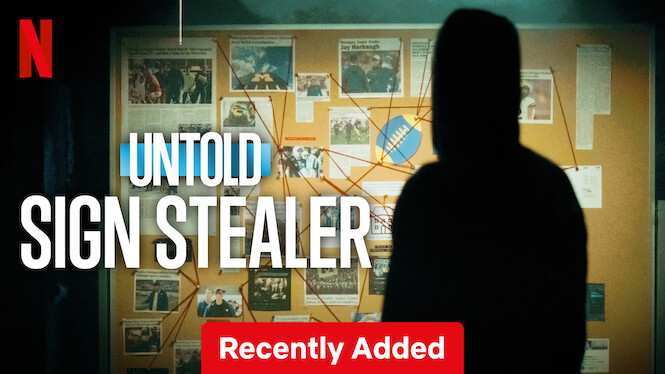
from New On Netflix USA https://ift.tt/HEBrwj8
via IFTTT
 Pacosite's Blog