Valkey, la respuesta de la Fundación Linux al cambio de licencia de Redis

Valkey

Valkey, el fork de la Fundación Linux de Redis

El cambio de licencia de Redis ha generado un gran movimiento por parte de la comunidad open source, y es que aunque pareciera que el cambio «superficialmente» solo afectaba a los proyectos comerciales, tal parece que distintos proyectos se ven afectados por el hecho de que hay una incompatibilidad de su proyecto con las licencias que manejan.

Y es que hace poco la Fundación Linux, dio a conocer hace poco el lanzamiento del proyecto Valkey, el cual está destinado a seguir avanzando en el desarrollo de Redis DBMS, una base de datos de código abierto distribuida bajo la licencia BSD.

El equipo de Valkey está integrado por destacados desarrolladores como Madelyn Olson, antigua responsable de Redis en Amazon; Ping Xie, desarrollador de Redis en Google y otros desarrolladores de renombre.

Sobre Valkey

Valkey es una bifurcación de Redis que se originó como respuesta a un cambio en la política de licencias de Redis Ltd, la empresa detrás del desarrollo de Redis. A partir de Redis 7.4, la empresa decidió cesar la incorporación de nuevas funciones bajo la licencia BSD, optando por distribuir el código del proyecto bajo dos licencias propietarias: RSALv2 y SSPLv1. Estas nuevas licencias imponen restricciones adicionales, especialmente en lo que respecta al uso gratuito del producto para servicios en la nube.

Valkey está diseñado para ser compatible con sistemas operativos como Linux, macOS, OpenBSD, NetBSD y FreeBSD y se menciona que sus planes de desarrollo abarcan la implementación de un mecanismo más robusto para la migración de slots, mejoras significativas en la escalabilidad, mayor estabilidad en las configuraciones de clúster, rendimiento optimizado en entornos multiproceso, soporte para activadores, introducción de nuevos comandos y la implementación de búsquedas vectoriales.

“Valkey es un esfuerzo impresionante realizado por colaboradores de larga data en la comunidad de Redis para defender los principios de código abierto en los que se fundó el proyecto. Aplaudo su compromiso con una verdadera colaboración y espero con interés las innovaciones que aportan a la comunidad tecnológica en general como un proyecto en la Fundación Linux”, dijo Jim Zemlin, Director Ejecutivo de la Fundación Linux. 

Cabe mencionar que con el lanzamiento dé Valkey, este se convierte en el tercer open fork de Redis, ya que en días anteriores habíamos compartido aquí en el blog la noticia del fork creado por el fundador del entorno de usuario Sway y del lenguaje de programación Hare, Redict, un fork de Redis 7.2.4 que se distribuirá bajo la licencia LGPLv3. Además, desde 2019, Snapchat ha estado trabajando en el desarrollo de KeyDB, otro fork de Redis basado en la versión 5. KeyDB se destaca por su adopción de una arquitectura multiproceso, implementando métodos más eficientes de gestión de memoria y ofreciendo características adicionales como replicación activa, almacenamiento optimizado en Flash, y soporte para configuración separada de la vida útil de las claves secundarias.

Ademas de ello, se menciona que este proyecto será gestionado por la Fundación Linux en una plataforma independiente, contando con la participación activa de una comunidad de desarrolladores y empresas comprometidas en preservar la naturaleza de código abierto de Redis. Importantes empresas como Amazon Web Services (AWS), Google Cloud, Oracle, Ericsson y Snap se han sumado a esta iniciativa.

Finalmente y como comentario personal, me gustaría mencionar que los movimientos dé la comunidad por sustituir un proyecto (producto) nos muestra la rapidez con la que se puede responder, pero como comento de «manera personal» el hecho de hacerlo porque ahora el proyecto ha respondido a los abusos de proyectos comerciales y se está dejando de lado el apoyo, si deja mucho que pensar (claro no es un movimiento 100% noble, pero al final es eso, es poner un alto al abuso).

Y el que vean mal (cof, cof, Fedora…) que un proyecto quiere que todos esos proyectos que si generan una ganancia sin dar nada a cambio (o muy poco) vuelve a poner sobre la mesa el tema que muchos desarrolladores mencionan y es el de una licencia open source que obligue a los proyectos comerciales ya séa a dar una parte de sus ingresos a los proyectos open source que utilizan para sus productos o realizar la contribución en especie (destinando desarrolladores a contribuir en el proyecto).

Para entender un poco, es importante tomar en cuenta que las diferencias fundamentales entre RSALv2 y SSPLv1 radican en que SSPLv1 se basa en la licencia copyleft AGPLv3, mientras que RSALv2 se fundamenta en la licencia BSD permisiva. Bajo la licencia RSALv2, se permite usar, modificar, distribuir e integrar el código en aplicaciones, salvo en el caso de aplicaciones comerciales o servicios de pago administrados en la nube (aunque se permite su uso gratuito para servicios internos; la restricción se aplica únicamente a servicios pagos que brinden acceso a Redis). Por otro lado, la licencia SSPLv1 incluye el requisito de que, bajo esa misma licencia, se entregue no solo el código de la aplicación en sí, sino también el código fuente de todos los componentes implicados en la prestación del servicio en la nube.

Fuente: https://www.linuxfoundation.org

from Linux Adictos https://ift.tt/Mc3g56a
via IFTTT
Senior Tory ‘mortified’ after reportedly passing MPs’ data to dating app contact

William Wragg says he was pressed for colleagues’ details after sharing compromising photos of himself

A senior Conservative MP has reportedly admitted to giving out the personal phone numbers of colleagues to a person he met on a dating app.

William Wragg told the Times that he gave the information after he had sent intimate pictures of himself, saying he was “scared” and “mortified”.

Continue reading…

from Data and computer security | The Guardian https://ift.tt/9oNmT5b
via IFTTT

Police launch inquiry after MPs targeted in apparent ‘spear-phishing’ attack

At least a dozen people working in Westminster have been sent suspicious messages, with senior figures suggesting a foreign state could be the culprit

A police investigation has been launched after MPs were apparently targeted in a “spear-phishing” attack, in what security experts believe could be an attempt to compromise parliament.

A police force said it hasstarted an inquiry after receiving a complaint from an MP who was sent a number of unsolicited messages last month.

Continue reading…

from Data and computer security | The Guardian https://ift.tt/Vs98w0h
via IFTTT

Fake Lawsuit Threat Exposes Privnote Phishing Sites

A cybercrook who has been setting up websites that mimic the self-destructing message service privnote.com accidentally exposed the breadth of their operations recently when they threatened to sue a software company. The disclosure revealed a profitable network of phishing sites that behave and look like the real Privnote, except that any messages containing cryptocurrency addresses will be automatically altered to include a different payment address controlled by the scammers.

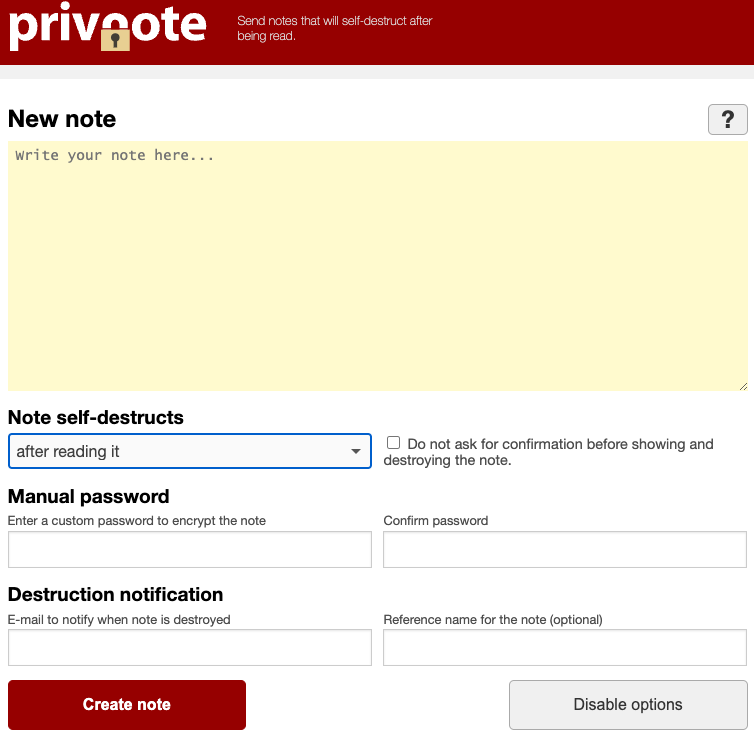
The real Privnote, at privnote.com.

Launched in 2008, privnote.com employs technology that encrypts each message so that even Privnote itself cannot read its contents. And it doesn’t send or receive messages. Creating a message merely generates a link. When that link is clicked or visited, the service warns that the message will be gone forever after it is read.

Privnote’s ease-of-use and popularity among cryptocurrency enthusiasts has made it a perennial target of phishers, who erect Privnote clones that function more or less as advertised but also quietly inject their own cryptocurrency payment addresses when a note is created that contains crypto wallets.

Last month, a new user on GitHub named fory66399 lodged a complaint on the “issues” page for MetaMask, a software cryptocurrency wallet used to interact with the Ethereum blockchain. Fory66399 insisted that their website — privnote[.]co — was being wrongly flagged by MetaMask’s “eth-phishing-detect” list as malicious.

“We filed a lawsuit with a lawyer for dishonestly adding a site to the block list, damaging reputation, as well as ignoring the moderation department and ignoring answers!” fory66399 threatened. “Provide evidence or I will demand compensation!”

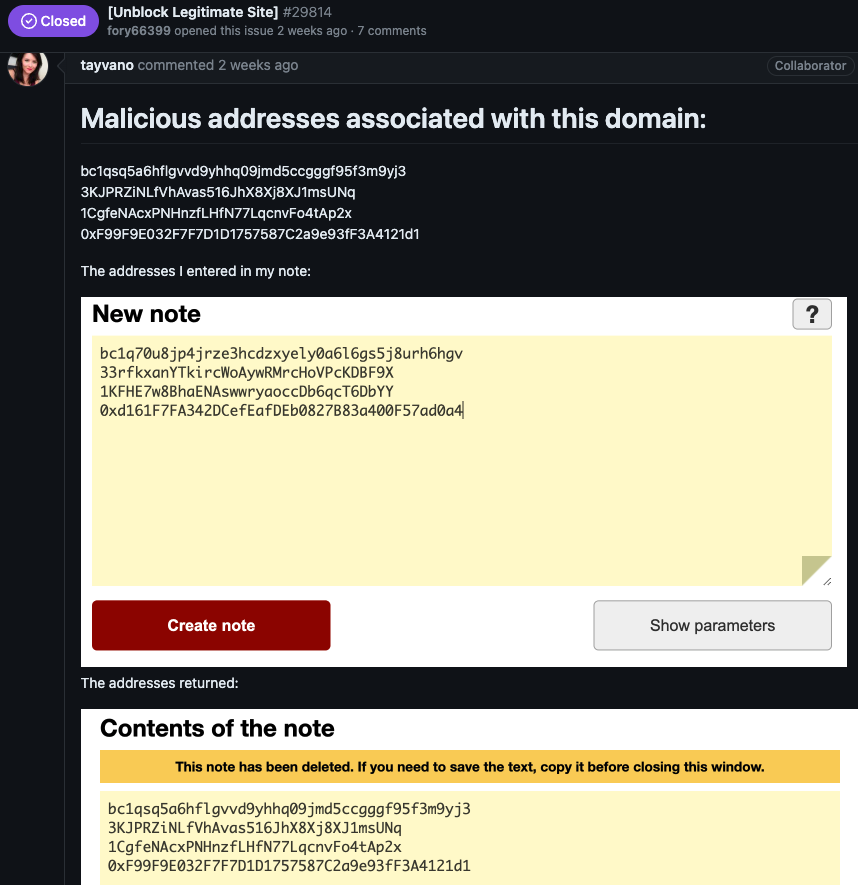
MetaMask’s lead product manager Taylor Monahan replied by posting several screenshots of privnote[.]co showing the site did indeed swap out any cryptocurrency addresses.

After being told where they could send a copy of their lawsuit, Fory66399 appeared to become flustered, and proceeded to mention a number of other interesting domain names:

You sent me screenshots from some other site! It’s red!!!!
The tornote.io website has a different color altogether
The privatenote,io website also has a different color! What’s wrong?????

A search at DomainTools.com for privatenote[.]io shows it has been registered to two names over as many years, including Andrey Sokol from Moscow and Alexandr Ermakov from Kiev. There is no indication these are the real names of the phishers, but the names are useful in pointing to other sites targeting Privnote since 2020.

DomainTools says other domains registered to Alexandr Ermakov include pirvnota[.]com, privatemessage[.]net, privatenote[.]io, and tornote[.]io.

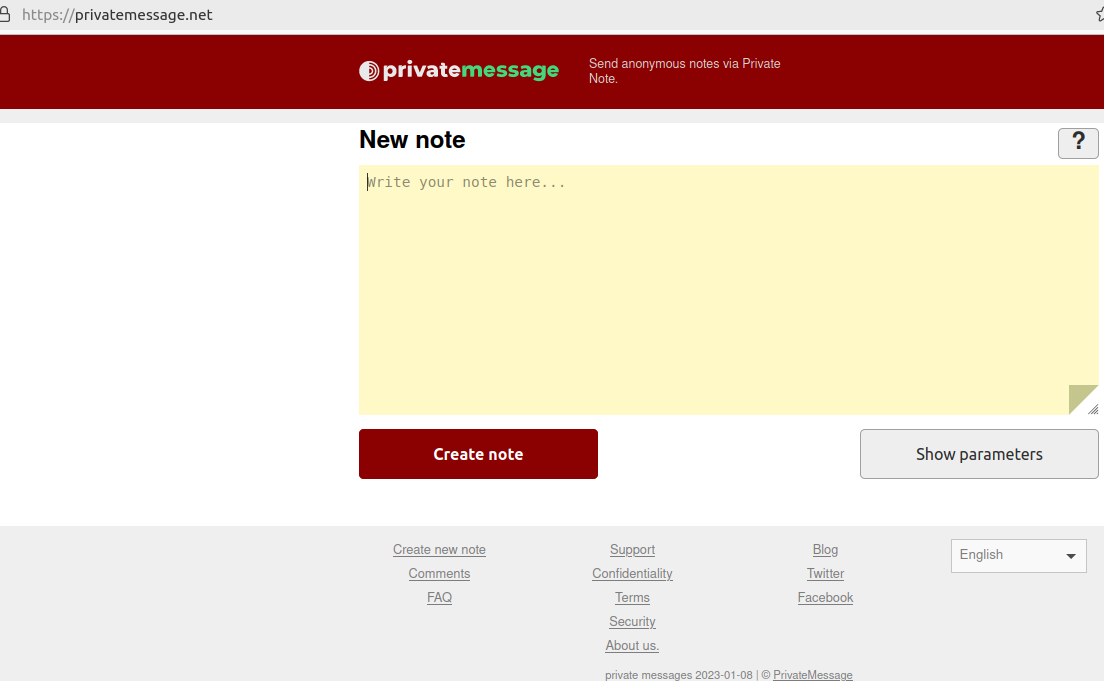
A screenshot of the phishing domain privatemessage dot net.

The registration records for pirvnota[.]com at one point were updated from Andrey Sokol to “BPW” as the registrant organization, and “Tambov district” in the registrant state/province field. Searching DomainTools for domains that include both of these terms reveals pirwnote[.]com.

Other Privnote phishing domains that also phoned home to the same Internet address as pirwnote[.]com include privnode[.]com, privnate[.]com, and prevnóte[.]com. Pirwnote[.]com is currently selling security cameras made by the Chinese manufacturer Hikvision, via an Internet address based in Hong Kong.

It appears someone has gone to great lengths to make tornote[.]io seem like a legitimate website. For example, this account at Medium has authored more than a dozen blog posts in the past year singing the praises of Tornote as a secure, self-destructing messaging service. However, testing shows tornote[.]io will also replace any cryptocurrency addresses in messages with their own payment address.

These malicious note sites attract visitors by gaming search engine results to make the phishing domains appear prominently in search results for “privnote.” A search in Google for “privnote” currently returns tornote[.]io as the fifth result. Like other phishing sites tied to this network, Tornote will use the same cryptocurrency addresses for roughly 5 days, and then rotate in new payment addresses.

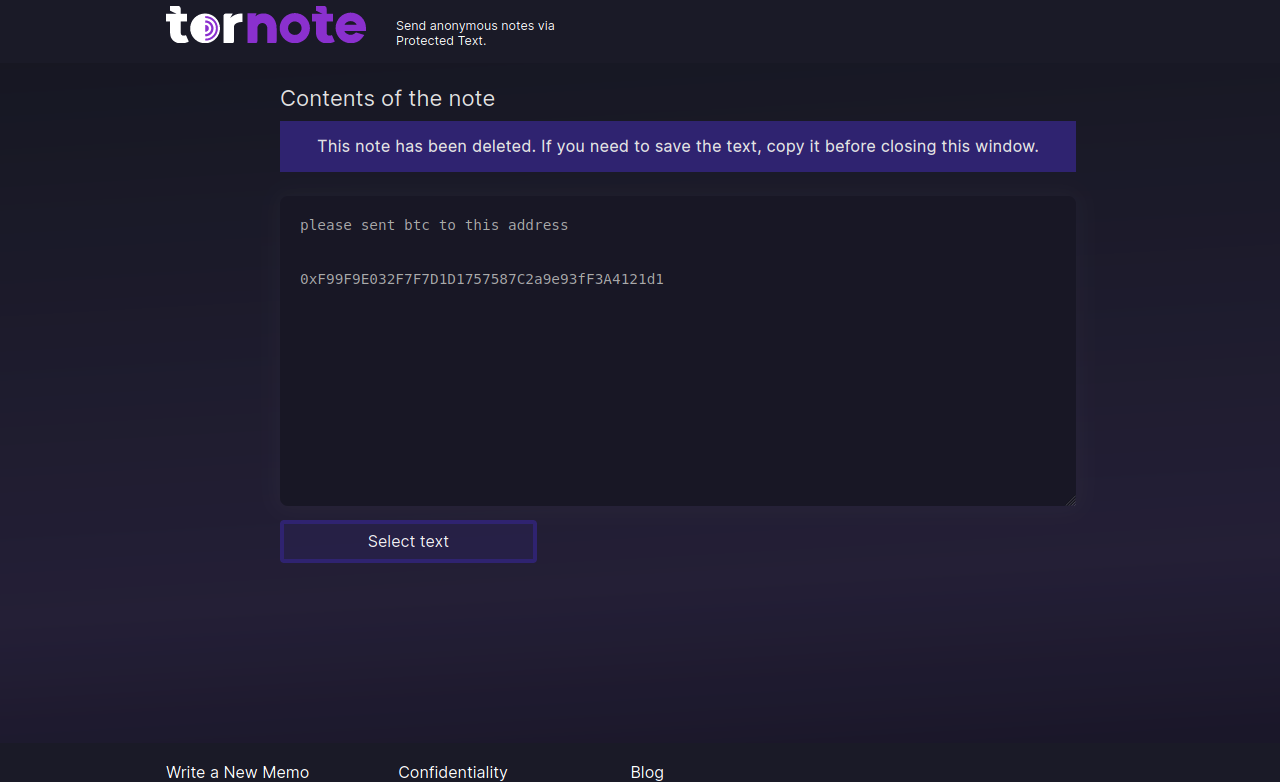
Tornote changed the cryptocurrency address entered into a test note to this address controlled by the phishers.

Throughout 2023, Tornote was hosted with the Russian provider DDoS-Guard, at the Internet address 186.2.163[.]216. A review of the passive DNS records tied to this address shows that apart from subdomains dedicated to tornote[.]io, the main other domain at this address was hkleaks[.]ml.

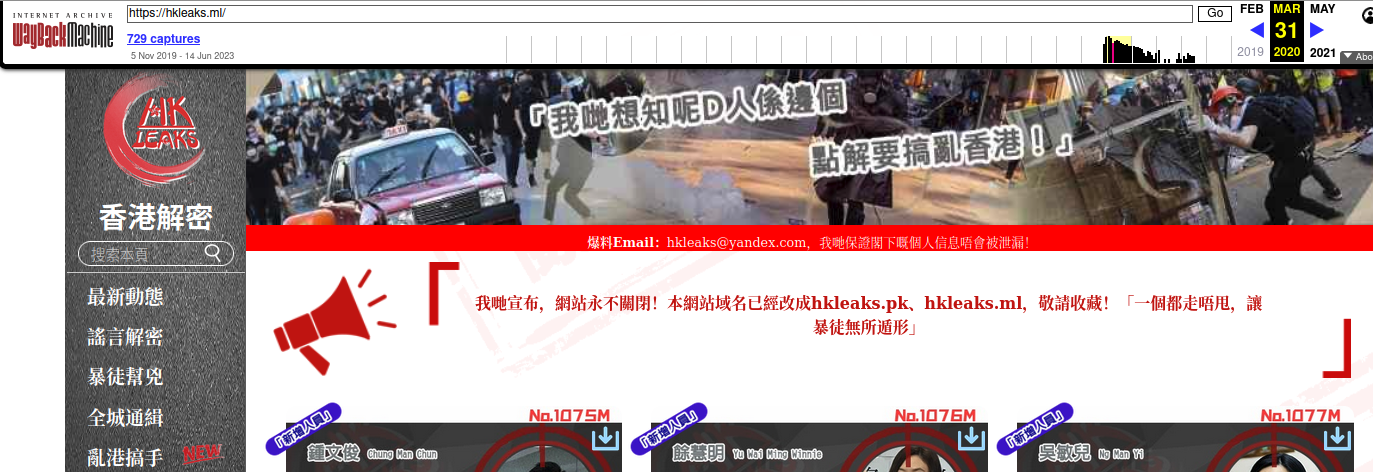
In August 2019, a slew of websites and social media channels dubbed “HKLEAKS” began doxing the identities and personal information of pro-democracy activists in Hong Kong. According to a report (PDF) from Citizen Lab, hkleaks[.]ml was the second domain that appeared as the perpetrators began to expand the list of those doxed.

HKleaks, as indexed by The Wayback Machine.

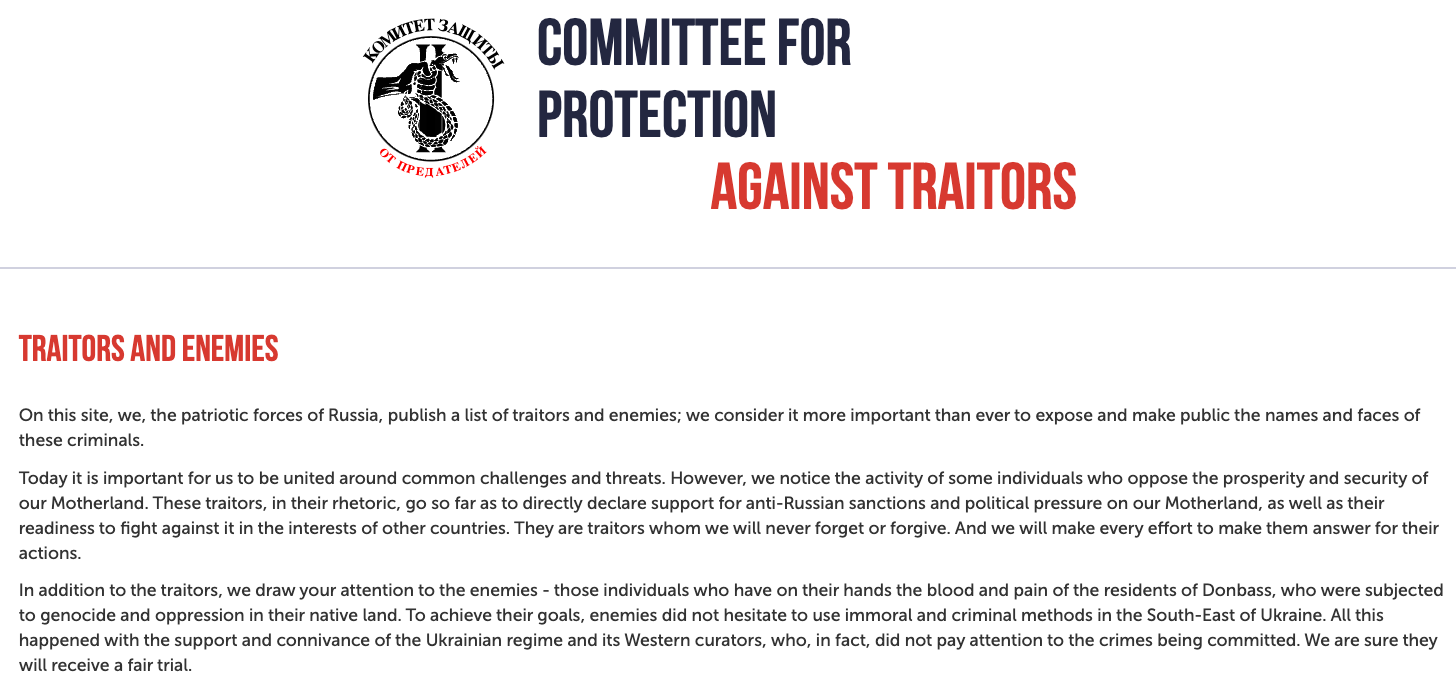
The address 186.2.163[.]216 also is home to the website rustraitor[.]info, a website erected after Russia invaded Ukraine in early 2022 that doxed Russians perceived to have helped the Ukrainian cause.

An archive.org copy of Rustraitor.

DomainTools shows there are more than 1,000 other domains whose registration records include the organization name “BPW” and “Tambov District” as the location. Virtually all of those domains were registered through one of two registrars — Hong Kong-based Nicenic and Singapore-based WebCC — and almost all appear to be phishing or pill-spam related.

In keeping with the overall theme, these phishing domains appear focused on stealing usernames and passwords to some of the cybercrime underground’s busiest shops, including Brian’s Club. What do all the phished sites have in common? They all accept payment via virtual currencies.

It appears MetaMask’s Monahan made the correct decision in forcing these phishers to tip their hand: Among the websites at that DDoS-Guard address are multiple MetaMask phishing domains, including metarrnask[.]com, meternask[.]com, and rnetamask[.]com.

How profitable are these private note phishing sites? Reviewing the four malicious cryptocurrency payment addresses that the attackers swapped into notes passed through privnote[.]co (as pictured in Monahan’s screenshot above) shows that between March 15 and March 19, 2024, those address raked in and transferred out nearly $18,000 in cryptocurrencies. And that’s just one of their phishing websites.

from Krebs on Security https://ift.tt/PTWeMFt
via IFTTT