
By Yiwen Lu
The human work of teaching A.I. is getting a lot more complex as the technology improves.
Published: April 10, 2024 at 09:06AM
from NYT Technology https://ift.tt/CAwB9tY
via IFTTT

By Yiwen Lu
The human work of teaching A.I. is getting a lot more complex as the technology improves.
Published: April 10, 2024 at 09:06AM
from NYT Technology https://ift.tt/CAwB9tY
via IFTTT
On April 9, Twitter/X began automatically modifying links that mention “twitter.com” to redirect to “x.com” instead. But over the past 48 hours, dozens of new domain names have been registered that demonstrate how this change could be used to craft convincing phishing links — such as fedetwitter[.]com, which is currently rendered as fedex.com in tweets.

The message currently displayed when one visits carfatwitter.com, which Twitter/X will now display as carfax.com in tweets and messages.
A search at DomainTools.com shows at least 60 domain names have been registered over the past two days for domains ending in “twitter.com,” although research so far shows the majority of these domains have been registered “defensively” by private individuals to prevent the domains from being purchased by scammers.
Those include carfatwitter.com, which Twitter/X will now truncate to carfax.com when the domain appears in user messages or tweets. Visiting this domain currently displays a message that begins, “Are you serious, X Corp?”
The same message is on other newly registered domains, including goodrtwitter.com (goodrx.com), neobutwitter.com (neobux.com), roblotwitter.com (roblox.com), square-enitwitter.com (square-enix.com) and yandetwitter.com (yandex.com). The message left on these domains indicates they were defensively registered by a user on Mastodon whose bio says they are a systems admin/engineer. That profile has not responded to requests for comment.
A number of these new domains including “twitter.com” appear to be registered defensively by Twitter/X users in Japan. The domain netflitwitter.com (netflix.com, to Twitter/X users) now displays a message saying it was “acquired to prevent its use for malicious purposes,” along with a Twitter/X username.
The domain mentioned at the beginning of this story — fedetwitter.com — redirects users to the blog of a Japanese technology enthusiast. A user with the handle “amplest0e” appears to have registered space-twitter.com, which Twitter/X users will now see as the CEO’s “space-x.com.” The domain “ametwitter.com” already redirects to the real americanexpress.com.
Some of the domains registered recently and ending in “twitter.com” currently do not resolve and contain no useful contact information in their registration records. Those include firefotwitter[.]com (firefox.com), ngintwitter[.]com (nginx.com), and webetwitter[.]com (webex.com).
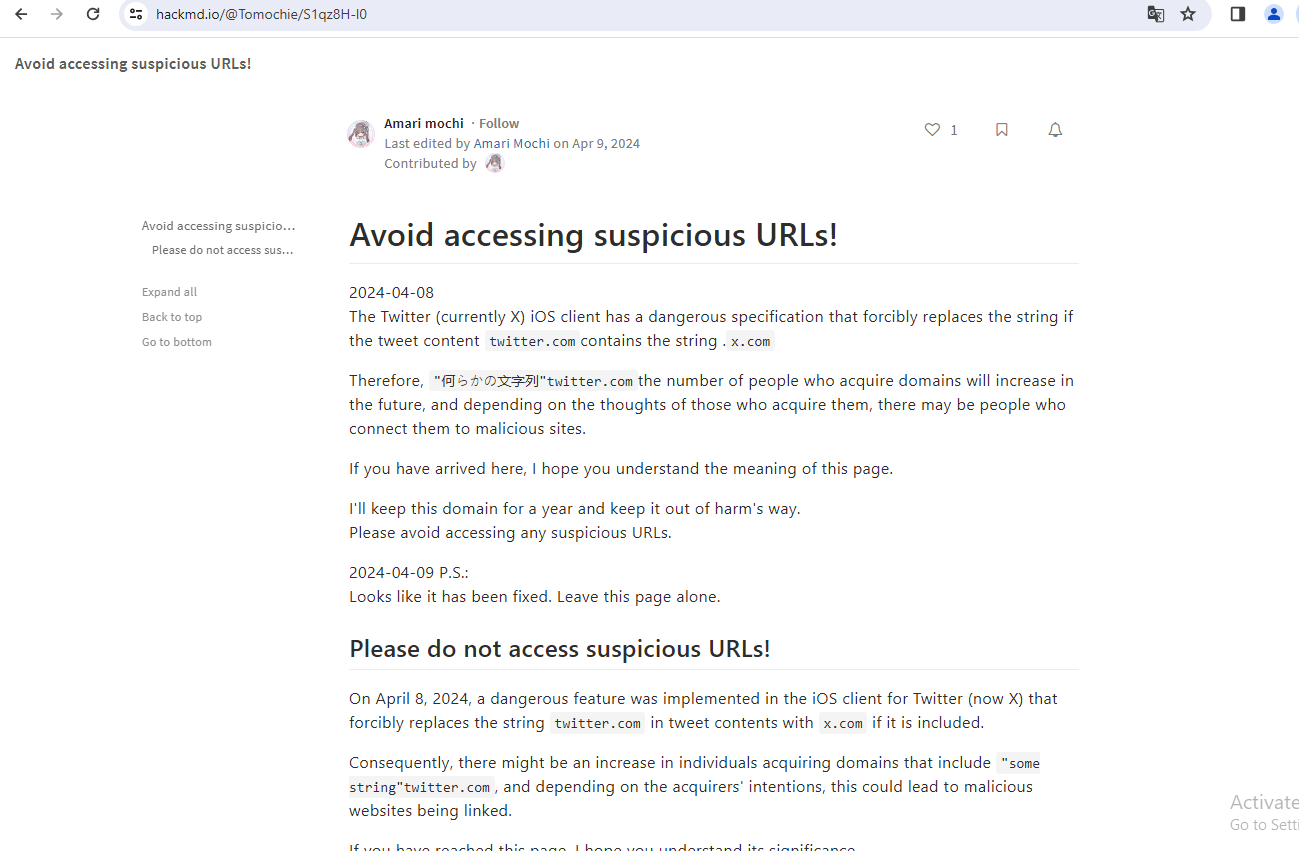
The domain setwitter.com, which Twitter/X will currently render as “sex.com,” redirects to this blog post warning about the recent changes and their potential use for phishing.
Sean McNee, vice president of research and data at DomainTools, told KrebsOnSecurity it appears Twitter/X did not properly limit its redirection efforts.
“Bad actors could register domains as a way to divert traffic from legitimate sites or brands given the opportunity — many such brands in the top million domains end in x, such as webex, hbomax, xerox, xbox, and more,” McNee said. “It is also notable that several other globally popular brands, such as Rolex and Linux, were also on the list of registered domains.”
The apparent oversight by Twitter/X was cause for amusement and amazement from many former users who have migrated to other social media platforms since the new CEO took over. Matthew Garrett, a lecturer at U.C. Berkeley’s School of Information, summed up the Schadenfreude thusly:
“Twitter just doing a “redirect links in tweets that go to x.com to twitter.com instead but accidentally do so for all domains that end x.com like eg spacex.com going to spacetwitter.com” is not absolutely the funniest thing I could imagine but it’s high up there.”
from Krebs on Security https://ift.tt/j1oBhc4
via IFTTT
WHO sounds alarm on viral hepatitis infections claiming 3500 lives each day
Cristina Mitchell
from PAHO/WHO | Pan American Health Organization https://ift.tt/hXytuBx
via IFTTT

Mozilla introdujo la función de traducción de páginas web en su navegador web Firefox, comenzando por la versión 118. Esta función, diseñada para mejorar la privacidad del usuario, opera localmente, lo que significa que no se realizan traducciones a través de servidores externos. Sin embargo, para que esta característica funcione correctamente, los usuarios debemos descargar un archivo por idioma para ser traducido. Recientemente, Mozilla ha estado probando una extensión de esta funcionalidad, que ahora se puede probar en Firefox 126, actualmente disponible en el canal Nightly.
Otros navegadores, como Chrome y Vivaldi, también ofrecen funciones de traducción de selección, aunque con enfoques y consideraciones diferentes. Chrome utiliza Google Translate, lo que puede plantear preocupaciones sobre la privacidad del usuario, mientras que Vivaldi utiliza Lingvanex, una opción más privada pero no tan precisa como DeepL.
Mozilla tiene previsto implementar su propia herramienta de traducción de texto seleccionado, manteniendo el enfoque en la privacidad del usuario y realizando las traducciones localmente.
Para activar la función de traducción de texto seleccionado en Firefox 126, sólo hay seguir estos pasos:

Es importante tener en cuenta que, al tratarse de una característica en fase de pruebas en una versión preliminar del navegador (Firefox 126), no se puede garantizar su inclusión en la versión estable o cuándo ocurrirá esto. Sin embargo, dado que es una evolución lógica de una función existente, es probable que se implemente en futuras versiones del navegador.
from Linux Adictos https://ift.tt/Av9gaVQ
via IFTTT
[Streaming Again] A 2014 Oscar nominee for Best Documentary Feature, this film follows two former Indonesian death squad leaders as they reenact war atrocities.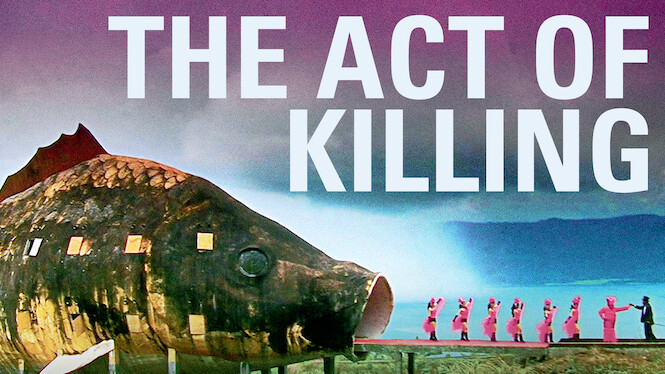
from New On Netflix USA https://ift.tt/gSvXH1C
via IFTTT
[Streaming Again] In a society terrorized into silence, the brother of a 1960s Indonesian genocide victim learns the identity of his murderers and confronts them.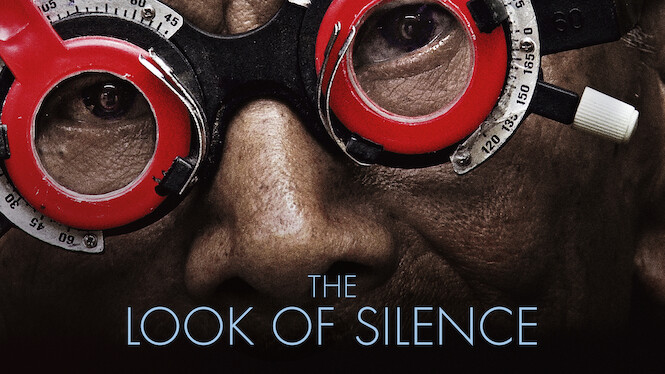
from New On Netflix USA https://ift.tt/ZH4XkwO
via IFTTT
When a bloodthirsty spirit possesses a young girl in a remote village, her older brother leads the charge to banish it before she’s consumed by evil.
from New On Netflix USA https://ift.tt/ysuPDVJ
via IFTTT
An old case is wrenched open when a reporter goes missing, leading his web sleuth daughter to a small mountain town haunted by a sect, secrecy and death.
from New On Netflix USA https://ift.tt/0yKS9mu
via IFTTT
After a plane is hijacked, two flight attendants must outwit their assailants amid intense negotiations in the air and on the ground. Based on real events.
from New On Netflix USA https://ift.tt/2JHixcs
via IFTTT
At an Arkansas detention facility, a sheriff implements a radical social experiment to grant men who are incarcerated more agency in this reality series.
from New On Netflix USA https://ift.tt/goGLtvf
via IFTTT
 Pacosite's Blog