The data privacy company Onerep.com bills itself as a Virginia-based service for helping people remove their personal information from almost 200 people-search websites. However, an investigation into the history of onerep.com finds this company is operating out of Belarus and Cyprus, and that its founder has launched dozens of people-search services over the years.
Onerep’s “Protect” service starts at $8.33 per month for individuals and $15/mo for families, and promises to remove your personal information from nearly 200 people-search sites. Onerep also markets its service to companies seeking to offer their employees the ability to have their data continuously removed from people-search sites.

A testimonial on onerep.com.
Customer case studies published on onerep.com state that it struck a deal to offer the service to employees of Permanente Medicine, which represents the doctors within the health insurance giant Kaiser Permanente. Onerep also says it has made inroads among police departments in the United States.
But a review of Onerep’s domain registration records and that of its founder reveal a different side to this company. Onerep.com says its founder and CEO is Dimitri Shelest from Minsk, Belarus, as does Shelest’s profile on LinkedIn. Historic registration records indexed by DomainTools.com say Mr. Shelest was a registrant of onerep.com who used the email address dmitrcox2@gmail.com.
A search in the data breach tracking service Constella Intelligence for the name Dimitri Shelest brings up the email address dimitri.shelest@onerep.com. Constella also finds that Dimitri Shelest from Belarus used the email address d.sh@nuwber.com, and the Belarus phone number +375-292-702786.
Nuwber.com is a people search service whose employees all appear to be from Belarus, and it is one of dozens of people-search companies that Onerep claims to target with its data-removal service. Onerep.com’s website disavows any relationship to Nuwber.com, stating quite clearly, “Please note that OneRep is not associated with Nuwber.com.”
However, there is an abundance of evidence suggesting Mr. Shelest is in fact the founder of Nuwber. Constella found that Minsk telephone number (375-292-702786) has been used multiple times in connection with the email address dmitrcox@gmail.com. Recall that Onerep.com’s domain registration records in 2018 list the email address dmitrcox2@gmail.com.
It appears Mr. Shelest sought to reinvent his online identity in 2015 by adding a “2” to his email address. A search on the Belarus phone number tied to Nuwber.com shows up in the domain records for askmachine.org, and DomainTools says this domain is tied to both dmitrcox@gmail.com and dmitrcox2@gmail.com.
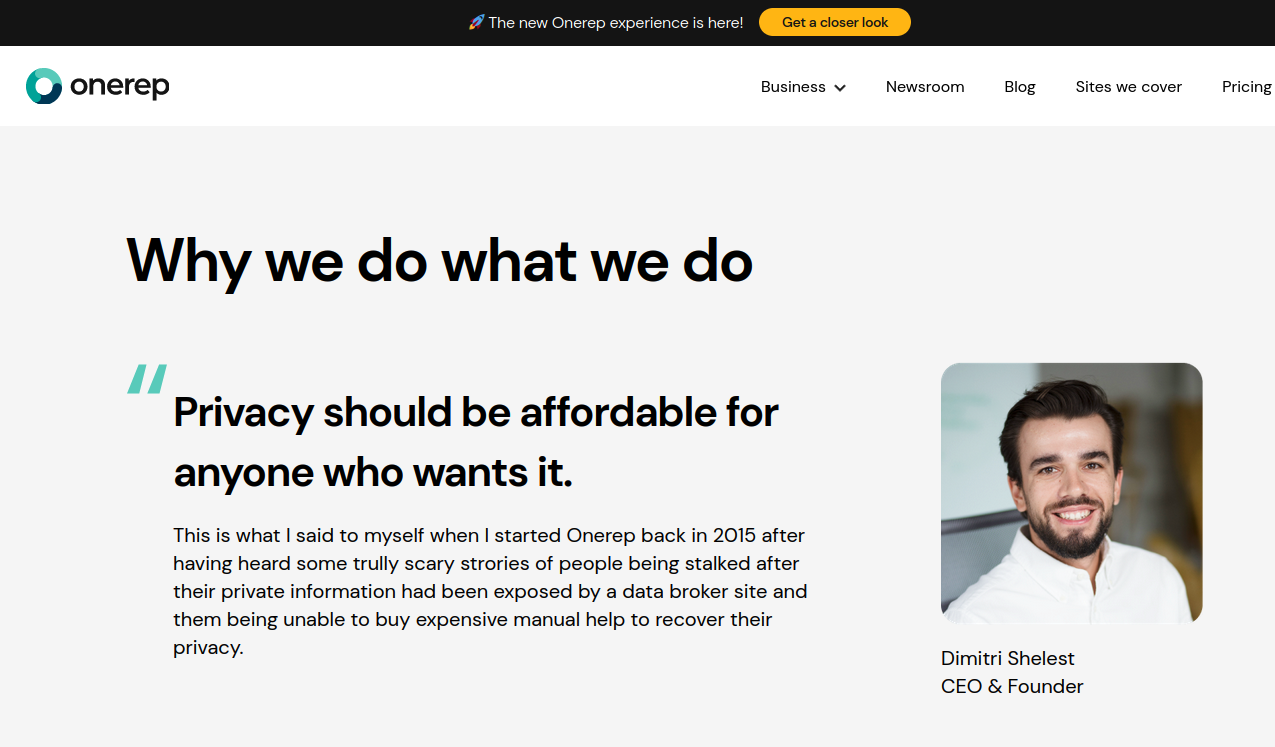
Onerep.com CEO and founder Dimitri Shelest, as pictured on the “about” page of onerep.com.
A search in DomainTools for the email address dmitrcox@gmail.com shows it is associated with the registration of at least 179 domain names, including dozens of mostly now-defunct people-search companies targeting citizens of Argentina, Brazil, Canada, Denmark, France, Germany, Hong Kong, Israel, Italy, Japan, Latvia and Mexico, among others.
Those include nuwber.fr, a site registered in 2016 which was identical to the homepage of Nuwber.com at the time. DomainTools shows the same email and Belarus phone number are in historic registration records for nuwber.at, nuwber.ch, and nuwber.dk (all domains linked here are to their cached copies at archive.org, where available).
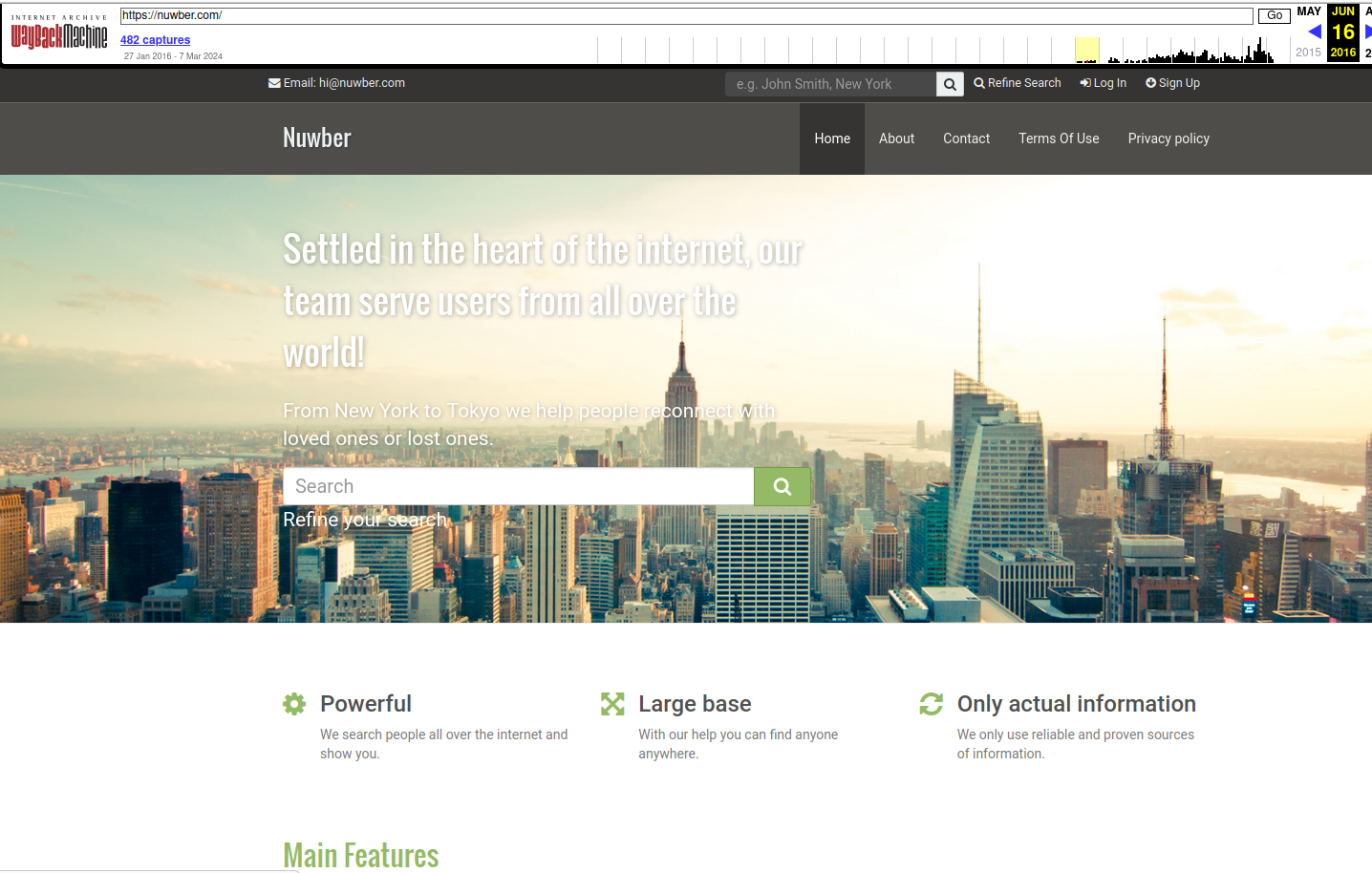
Nuwber.com, circa 2015. Image: Archive.org.
A review of historic WHOIS records for onerep.com show it was registered for many years to a resident of Sioux Falls, SD for a completely unrelated site. But around Sept. 2015 the domain switched from the registrar GoDaddy.com to eNom, and the registration records were hidden behind privacy protection services. DomainTools indicates around this time onerep.com started using domain name servers from DNS provider constellix.com. Likewise, Nuwber.com first appeared in late 2015, was also registered through eNom, and also started using constellix.com for DNS at nearly the same time.
Listed on LinkedIn as a former product manager at OneRep.com between 2015 and 2018 is Dimitri Bukuyazau, who says their hometown is Warsaw, Poland. While this LinkedIn profile (linkedin.com/in/dzmitrybukuyazau) does not mention Nuwber, a search on this name in Google turns up a 2017 blog post from privacyduck.com, which laid out a number of reasons to support a conclusion that OneRep and Nuwber.com were the same company.
“Any people search profiles containing your Personally Identifiable Information that were on Nuwber.com were also mirrored identically on OneRep.com, down to the relatives’ names and address histories,” Privacyduck.com wrote. The post continued:
“Both sites offered the same immediate opt-out process. Both sites had the same generic contact and support structure. They were – and remain – the same company (even PissedConsumer.com advocates this fact: https://ift.tt/M5sKZkV;
“Things changed in early 2016 when OneRep.com began offering privacy removal services right alongside their own open displays of your personal information. At this point when you found yourself on Nuwber.com OR OneRep.com, you would be provided with the option of opting-out your data on their site for free – but also be highly encouraged to pay them to remove it from a slew of other sites (and part of that payment was removing you from their own site, Nuwber.com, as a benefit of their service).”
Reached via LinkedIn, Mr. Bukuyazau declined to answer questions, such as whether he ever worked at Nuwber.com. However, Constella Intelligence finds two interesting email addresses for employees at nuwber.com: d.bu@nuwber.com, and d.bu+figure-eight.com@nuwber.com, which was registered under the name “Dzmitry.”
PrivacyDuck’s claims about how onerep.com appeared and behaved in the early days are not readily verifiable because the domain onerep.com has been completely excluded from the Wayback Machine at archive.org. The Wayback Machine will honor such requests if they come directly from the owner of the domain in question.
Still, Mr. Shelest’s name, phone number and email also appear in the domain registration records for a truly dizzying number of country-specific people-search services, including pplcrwlr.in, pplcrwlr.fr, pplcrwlr.dk, pplcrwlr.jp, peeepl.br.com, peeepl.in, peeepl.it and peeepl.co.uk.
The same details appear in the WHOIS registration records for the now-defunct people-search sites waatpp.de, waatp1.fr, azersab.com, and ahavoila.com, a people-search service for French citizens.
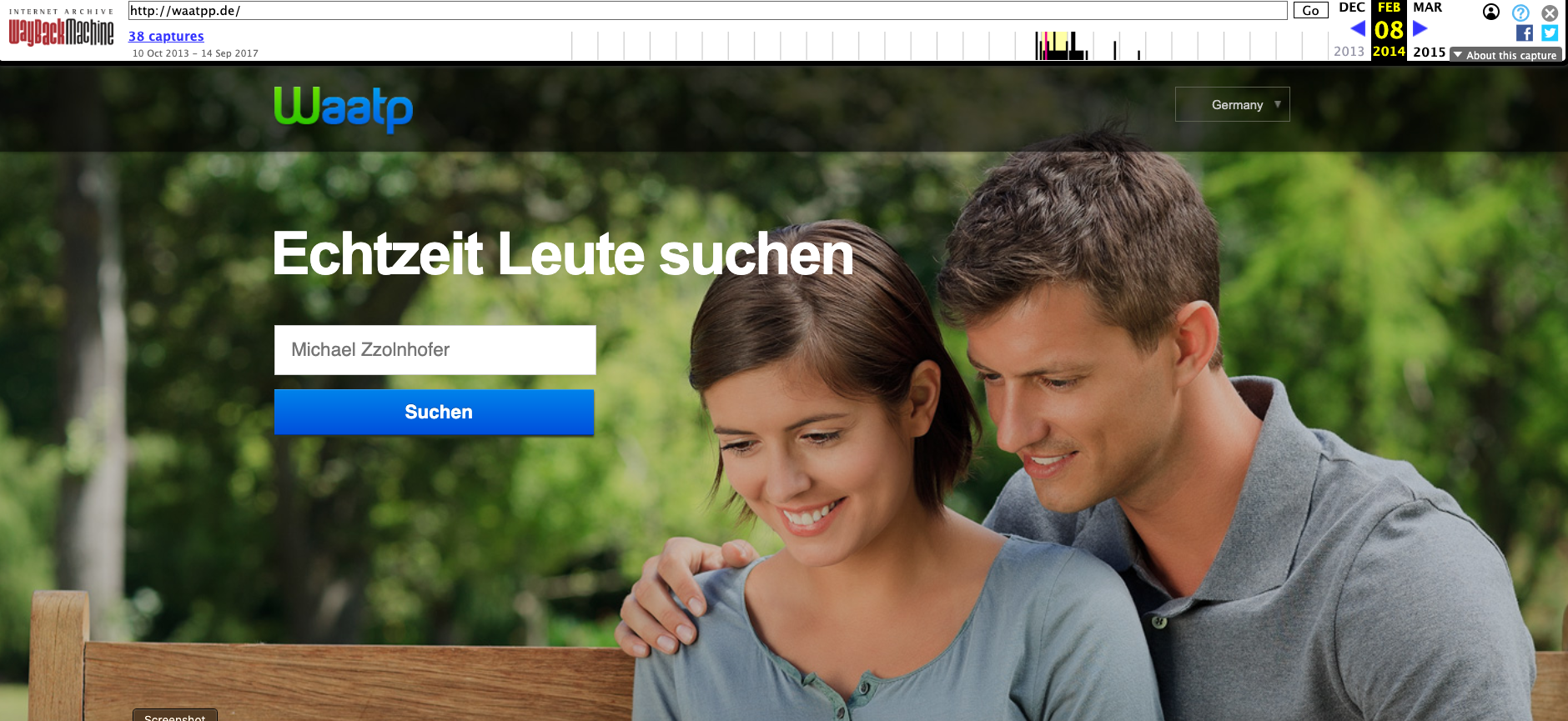
The German people-search site waatp.de.
A search on the email address dmitrcox@gmail.com suggests Mr. Shelest was previously involved in rather aggressive email marketing campaigns. In 2010, an anonymous source leaked to KrebsOnSecurity the financial and organizational records of Spamit, which at the time was easily the largest Russian-language pharmacy spam affiliate program in the world.
Spamit paid spammers a hefty commission every time someone bought male enhancement drugs from any of their spam-advertised websites. Mr. Shelest’s email address stood out because immediately after the Spamit database was leaked, KrebsOnSecurity searched all of the Spamit affiliate email addresses to determine if any of them corresponded to social media accounts at Facebook.com (at the time, Facebook allowed users to search profiles by email address).
That mapping, which was done mainly by generous graduate students at my alma mater George Mason University, revealed that dmitrcox@gmail.com was used by a Spamit affiliate, albeit not a very profitable one. That same Facebook profile for Mr. Shelest is still active, and it says he is married and living in Minsk (last update: 2021).
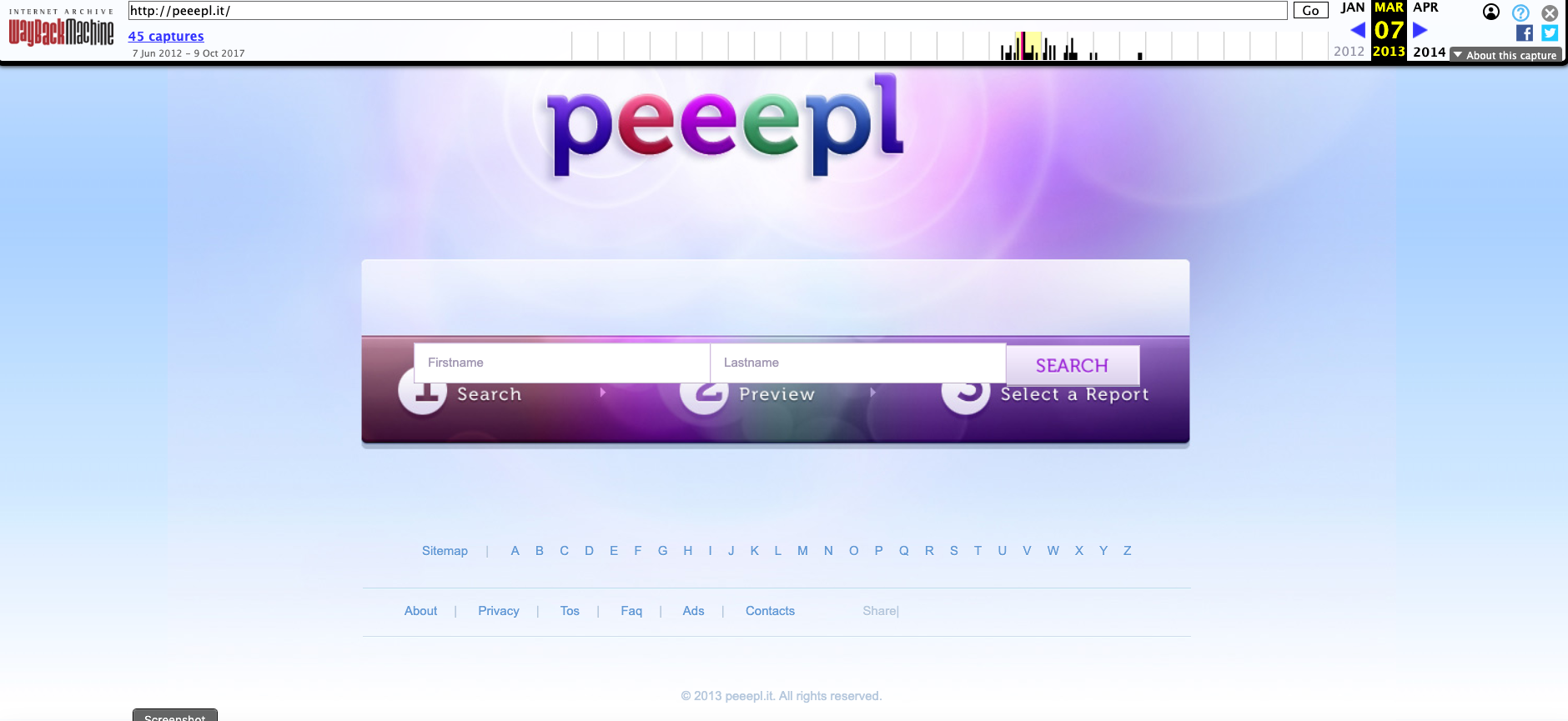
The Italian people-search website peeepl.it.
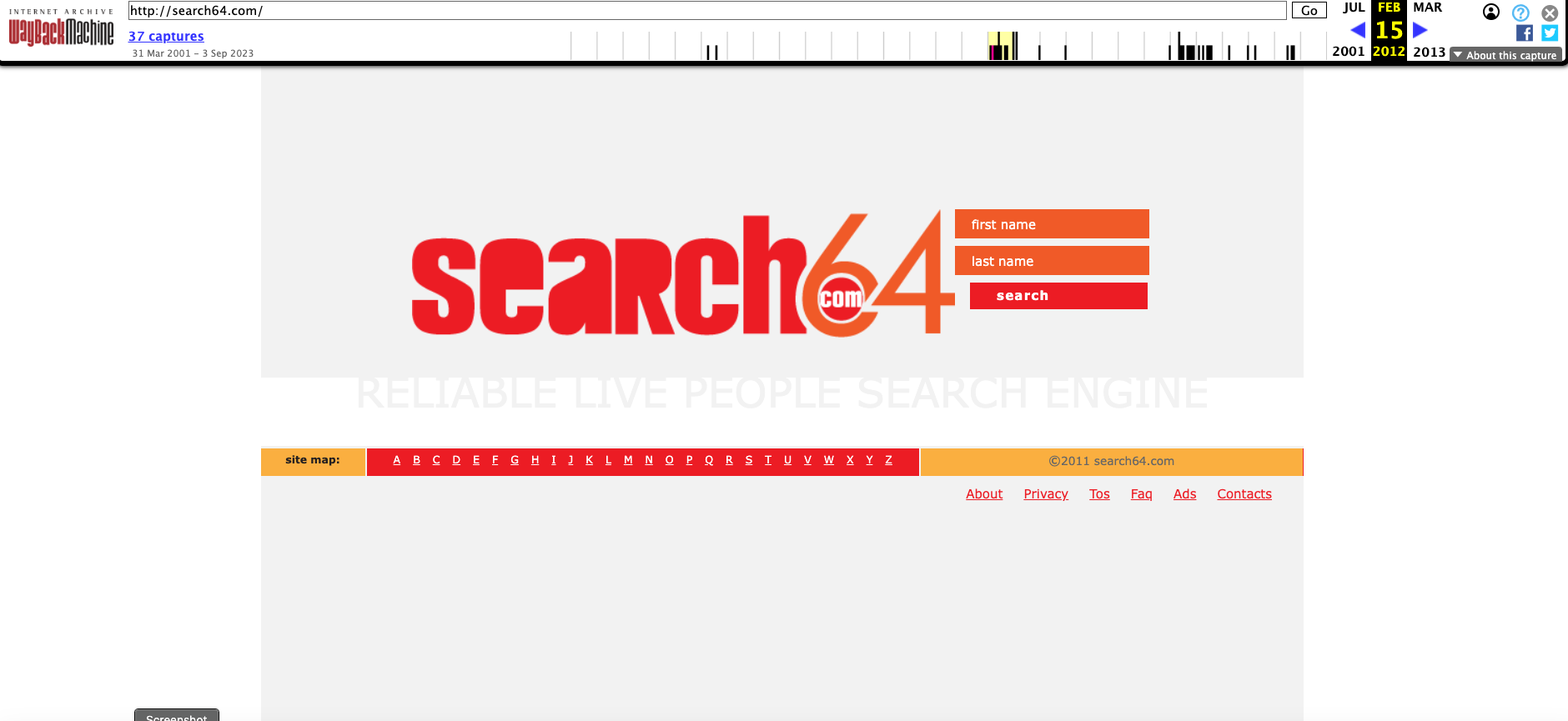
Scrolling down Mr. Shelest’s Facebook page to posts made more than ten years ago show him liking the Facebook profile pages for a large number of other people-search sites, including findita.com, findmedo.com, folkscan.com, huntize.com, ifindy.com, jupery.com, look2man.com, lookerun.com, manyp.com, peepull.com, perserch.com, persuer.com, pervent.com, piplenter.com, piplfind.com, piplscan.com, popopke.com, pplsorce.com, qimeo.com, scoutu2.com, search64.com, searchay.com, seekmi.com, selfabc.com, socsee.com, srching.com, toolooks.com, upearch.com, webmeek.com, and many country-code variations of viadin.ca (e.g. viadin.hk, viadin.com and viadin.de).
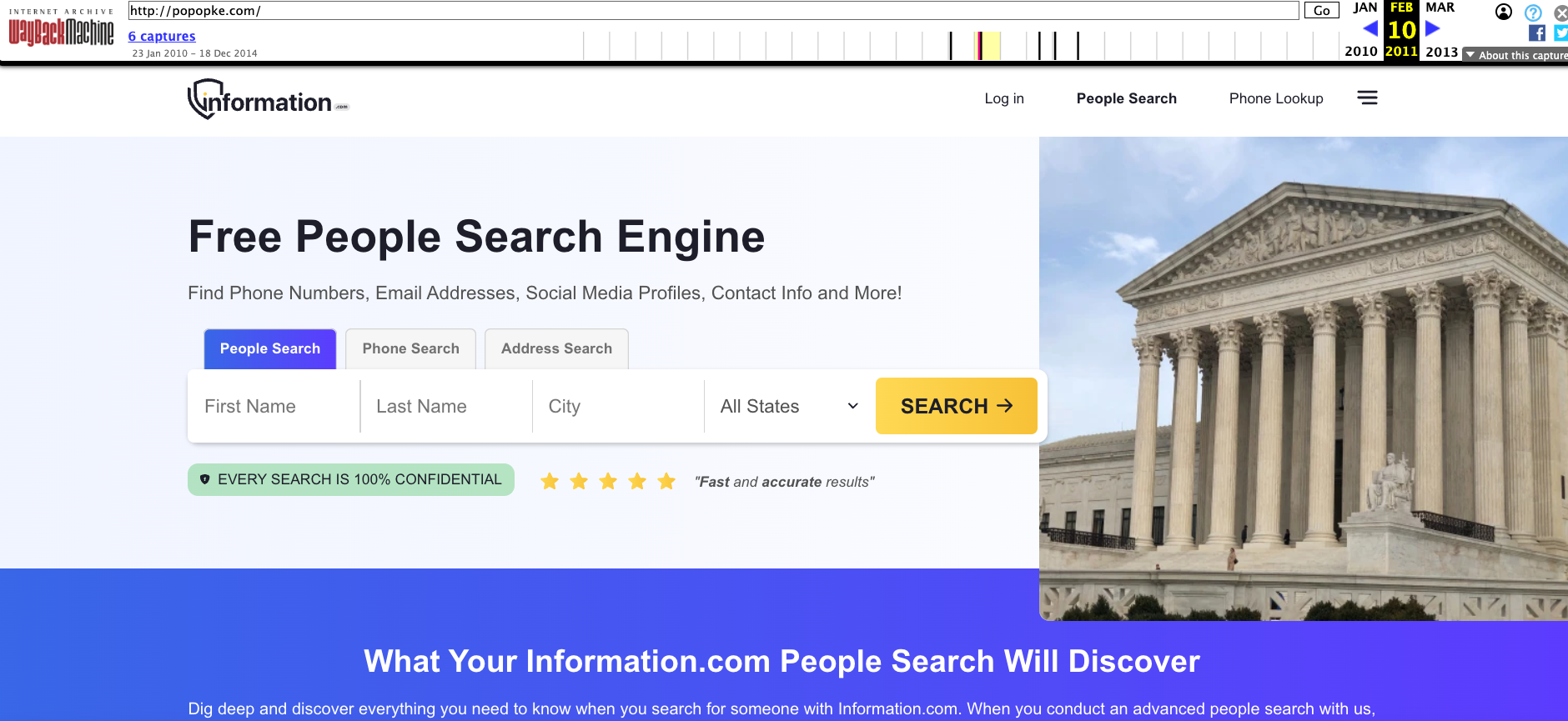
The people-search website popopke.com.
Domaintools.com finds that all of the domains mentioned in the last paragraph were registered to the email address dmitrcox@gmail.com.
Mr. Shelest has not responded to multiple requests for comment. KrebsOnSecurity also sought comment from onerep.com, which likewise has not responded to inquiries about its founder’s many apparent conflicts of interest. In any event, these practices would seem to contradict the goal Onerep has stated on its site: “We believe that no one should compromise personal online security and get a profit from it.”
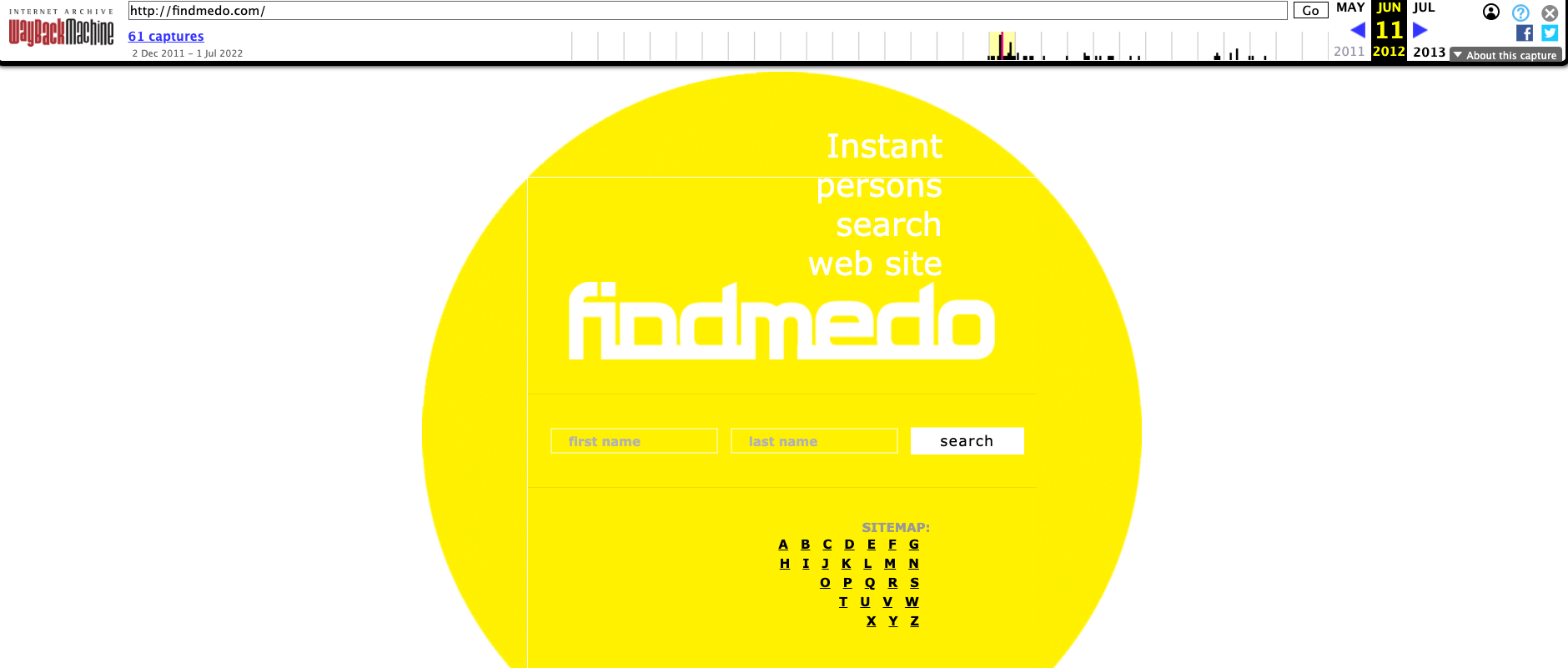
The people-search website findmedo.com.
Last week, KrebsOnSecurity published an analysis of the people-search data broker giant Radaris, whose consumer profiles are deep enough to rival those of far more guarded data broker resources available to U.S. police departments and other law enforcement personnel.
That story revealed that the co-founders of Radaris are two native Russian brothers who operate multiple Russian-language dating services and affiliate programs. It also appears many of the Radaris founders’ businesses have ties to a California marketing firm that works with a Russian state-run media conglomerate currently sanctioned by the U.S. government.
KrebsOnSecurity will continue investigating the history of various consumer data brokers and people-search providers. If any readers have inside knowledge of this industry or key players within it, please consider reaching out to krebsonsecurity at gmail.com.
from Krebs on Security https://ift.tt/k1iHVyX
via IFTTT





 Pacosite's Blog