ZLUDA, una implementación que permite ejecutar aplicaciones CUDA en GPUs AMD

ZLUDA

ZLUDA funciona sobre la pila ROCm de AMD

Se ha dado a conocer la noticia de que AMD ha tomado la decisión dejar de financiar el desarrollo de ZLUDA, la cual es una implementación abierta de la tecnología CUDA para GPU AMD, lo que permite ejecutar aplicaciones CUDA sin modificarlas con un rendimiento cercano al de las aplicaciones que se ejecutan sin capas adicionales.

Durante los últimos dos años, se ha trabajado en el desarrollo de esta capa para facilitar la ejecución de aplicaciones CUDA en sistemas con GPU AMD. Pero hasta hace poco AMD ha tomado la decisión que ejecutar aplicaciones CUDA en las GPU AMD no era de interés comercial, lo que permitió al desarrollador abrir sus desarrollos según lo acordado en el contrato.

Sobre ZLUDA

El proyecto inicialmente se creó para admitir el trabajo CUDA en GPU Intel y el cambio en la política de soporte de GPU se debe a que, inicialmente el desarrollador de ZLUDA era un empleado de Intel. En 2021, Intel decidió que no era comercialmente viable proporcionar la capacidad para ejecutar aplicaciones CUDA en las GPU de Intel, lo que llevó a la interrupción del desarrollo de la iniciativa.

A principios de 2022, el desarrollador dejó Intel y firmó un contrato con AMD para continuar el desarrollo de la capa de compatibilidad CUDA. Durante el desarrollo, AMD solicitó que no se promocionara el interés de la empresa en el proyecto ZLUDA y que no se comprometiera con el repositorio público de ZLUDA.

ZLUDA proporciona compatibilidad binaria con aplicaciones CUDA existentes compiladas con el compilador CUDA para GPU NVIDIA, sin necesidad de realizar cambios a nivel de código fuente. La implementación opera sobre la pila ROCm de AMD y el runtime del HIP.

En su estado actual, el nivel de calidad de conversión de ZLUDA se considera una versión alfa. Aunque cabe mencionar que ya es capaz de ejecutar muchas aplicaciones CUDA, además se proporciona soporte mínimo para primitivas y bibliotecas, también cuenta con implementaciones prototipo del marco OptiX.

ZLUDA

Gráfica comparativa de ZLUDA

Durante la primera ejecución de aplicaciones CUDA bajo el control de ZLUDA experimenta retrasos notables debido a que ZLUDA compila el código para la GPU. Sin embargo, en ejecuciones posteriores, este retraso desaparece, ya que el código compilado se almacena en la memoria caché, lo que resulta en un rendimiento casi nativo al ejecutar el código compilado. Por ejemplo, al ejecutar Geekbench en una GPU AMD Radeon 6800 XT, la versión basada en ZLUDA del conjunto de pruebas CUDA mostró un rendimiento significativamente mejor que la versión basada en OpenCL.

Además de ello, se menciona que la compatibilidad con la API del controlador CUDA oficial y la ingeniería inversa de la API CUDA no documentada se implementa en ZLUDA mediante la sustitución de las llamadas a funciones con funciones análogas proporcionadas en el tiempo de ejecución de HIP, que es muy similar a CUDA.

Por ejemplo, la función cuDeviceGetAttribute() se reemplaza por hipDeviceGetAttribute(). ZLUDA también garantiza la compatibilidad con bibliotecas de NVIDIA como NVML, cuBLAS y cuSPARSE. Para estas bibliotecas, ZLUDA proporciona bibliotecas de traducción con el mismo nombre y el mismo conjunto de funciones, construidas sobre bibliotecas AMD similares. El código de la aplicación GPU, compilado en representación PTX (Parallel Thread Execution), se traduce mediante un compilador especial a una representación intermedia LLVM IR, a partir de la cual se genera el código binario para la GPU AMD.

Finalmente, cabe mencionar que el futuro del proyecto depende del interés de la comunidad y de posibles propuestas de cooperación por parte de otras empresas. Sin apoyo externo, el proyecto continuará desarrollándose únicamente en áreas de interés personal del autor, como DLSS.

Para los interesados en el código del proyecto, deben saber que está escrito en Rust y se distribuye bajo las licencias MIT y Apache 2.0, además el proyecto es compatible con Linux y Windows. Si estás interesado en poder conocer más al respecto, puedes consultar los detalles en el siguiente enlace.

from Linux Adictos https://ift.tt/1AkuvJd
via IFTTT
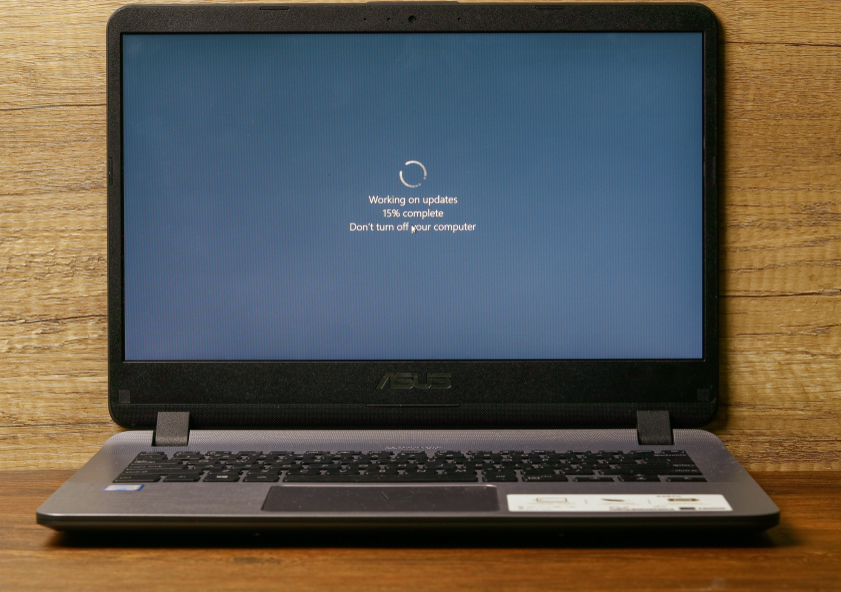
Fat Patch Tuesday, February 2024 Edition

Microsoft Corp. today pushed software updates to plug more than 70 security holes in its Windows operating systems and related products, including two zero-day vulnerabilities that are already being exploited in active attacks.

Top of the heap on this Fat Patch Tuesday is CVE-2024-21412, a “security feature bypass” in the way Windows handles Internet Shortcut Files that Microsoft says is being targeted in active exploits. Redmond’s advisory for this bug says an attacker would need to convince or trick a user into opening a malicious shortcut file.

Researchers at Trend Micro have tied the ongoing exploitation of CVE-2024-21412 to an advanced persistent threat group dubbed “Water Hydra,” which they say has being using the vulnerability to execute a malicious Microsoft Installer File (.msi) that in turn unloads a remote access trojan (RAT) onto infected Windows systems.

The other zero-day flaw is CVE-2024-21351, another security feature bypass — this one in the built-in Windows SmartScreen component that tries to screen out potentially malicious files downloaded from the Web. Kevin Breen at Immersive Labs says it’s important to note that this vulnerability alone is not enough for an attacker to compromise a user’s workstation, and instead would likely be used in conjunction with something like a spear phishing attack that delivers a malicious file.

Satnam Narang, senior staff research engineer at Tenable, said this is the fifth vulnerability in Windows SmartScreen patched since 2022 and all five have been exploited in the wild as zero-days. They include CVE-2022-44698 in December 2022, CVE-2023-24880 in March 2023, CVE-2023-32049 in July 2023 and CVE-2023-36025 in November 2023.

Narang called special attention to CVE-2024-21410, an “elevation of privilege” bug in Microsoft Exchange Server that Microsoft says is likely to be exploited by attackers. Attacks on this flaw would lead to the disclosure of NTLM hashes, which could be leveraged as part of an NTLM relay or “pass the hash” attack, which lets an attacker masquerade as a legitimate user without ever having to log in.

“We know that flaws that can disclose sensitive information like NTLM hashes are very valuable to attackers,” Narang said. “A Russian-based threat actor leveraged a similar vulnerability to carry out attacks – CVE-2023-23397 is an Elevation of Privilege vulnerability in Microsoft Outlook patched in March 2023.”

Microsoft notes that prior to its Exchange Server 2019 Cumulative Update 14 (CU14), a security feature called Extended Protection for Authentication (EPA), which provides NTLM credential relay protections, was not enabled by default.

“Going forward, CU14 enables this by default on Exchange servers, which is why it is important to upgrade,” Narang said.

Rapid7’s lead software engineer Adam Barnett highlighted CVE-2024-21413, a critical remote code execution bug in Microsoft Office that could be exploited just by viewing a specially-crafted message in the Outlook Preview pane.

“Microsoft Office typically shields users from a variety of attacks by opening files with Mark of the Web in Protected View, which means Office will render the document without fetching potentially malicious external resources,” Barnett said. “CVE-2024-21413 is a critical RCE vulnerability in Office which allows an attacker to cause a file to open in editing mode as though the user had agreed to trust the file.”

Barnett stressed that administrators responsible for Office 2016 installations who apply patches outside of Microsoft Update should note the advisory lists no fewer than five separate patches which must be installed to achieve remediation of CVE-2024-21413; individual update knowledge base (KB) articles further note that partially-patched Office installations will be blocked from starting until the correct combination of patches has been installed.

It’s a good idea for Windows end-users to stay current with security updates from Microsoft, which can quickly pile up otherwise. That doesn’t mean you have to install them on Patch Tuesday. Indeed, waiting a day or three before updating is a sane response, given that sometimes updates go awry and usually within a few days Microsoft has fixed any issues with its patches. It’s also smart to back up your data and/or image your Windows drive before applying new updates.

For a more detailed breakdown of the individual flaws addressed by Microsoft today, check out the SANS Internet Storm Center’s list. For those admins responsible for maintaining larger Windows environments, it often pays to keep an eye on Askwoody.com, which frequently points out when specific Microsoft updates are creating problems for a number of users.

from Krebs on Security https://ift.tt/CTHfuPX
via IFTTT