
The rapper and social media personality Punchmade Dev is perhaps best known for his flashy videos singing the praises of a cybercrime lifestyle. With memorable hits such as “Internet Swiping” and “Million Dollar Criminal” earning millions of views, Punchmade has leveraged his considerable following to peddle tutorials on how to commit financial crimes online. But until recently, there wasn’t much to support a conclusion that Punchmade was actually doing the cybercrime things he promotes in his songs.
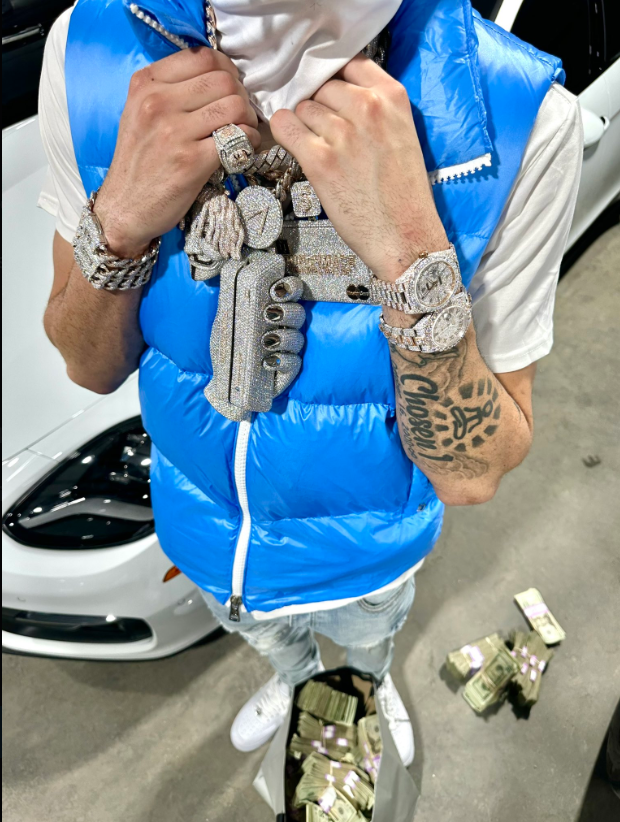
Images from Punchmade Dev’s Twitter/X account show him displaying bags of cash and wearing a functional diamond-crusted payment card skimmer.
Punchmade Dev’s most controversial mix — a rap called “Wire Fraud Tutorial” — was taken down by Youtube last summer for violating the site’s rules. Punchmade shared on social media that the video’s removal was prompted by YouTube receiving a legal process request from law enforcement officials.
The 24-year-old rapper told reporters he wasn’t instructing people how to conduct wire fraud, but instead informing his fans on how to avoid being victims of wire fraud. However, this is difficult to discern from listening to the song, which sounds very much like a step-by-step tutorial on how to commit wire fraud.
“Listen up, I’m finna show y’all how to hit a bank,” Wire Fraud Tutorial begins. “Just pay attention, this is a quick way to jug in any state. First you wanna get a bank log from a trusted site. Do your research because the information must be right.”
And even though we’re talking about an individual who regularly appears in videos wearing a half-million dollars worth of custom jewelry draped around his arm and neck (including the functional diamond-encrusted payment card skimming device pictured above), there’s never been much evidence that Punchmade was actually involved in committing cybercrimes himself. Even his most vocal critics acknowledged that the whole persona could just be savvy marketing.
That changed recently when Punchmade’s various video and social media accounts began promoting a new web shop that is selling stolen payment cards and identity data, as well as hacked financial accounts and software for producing counterfeit checks.
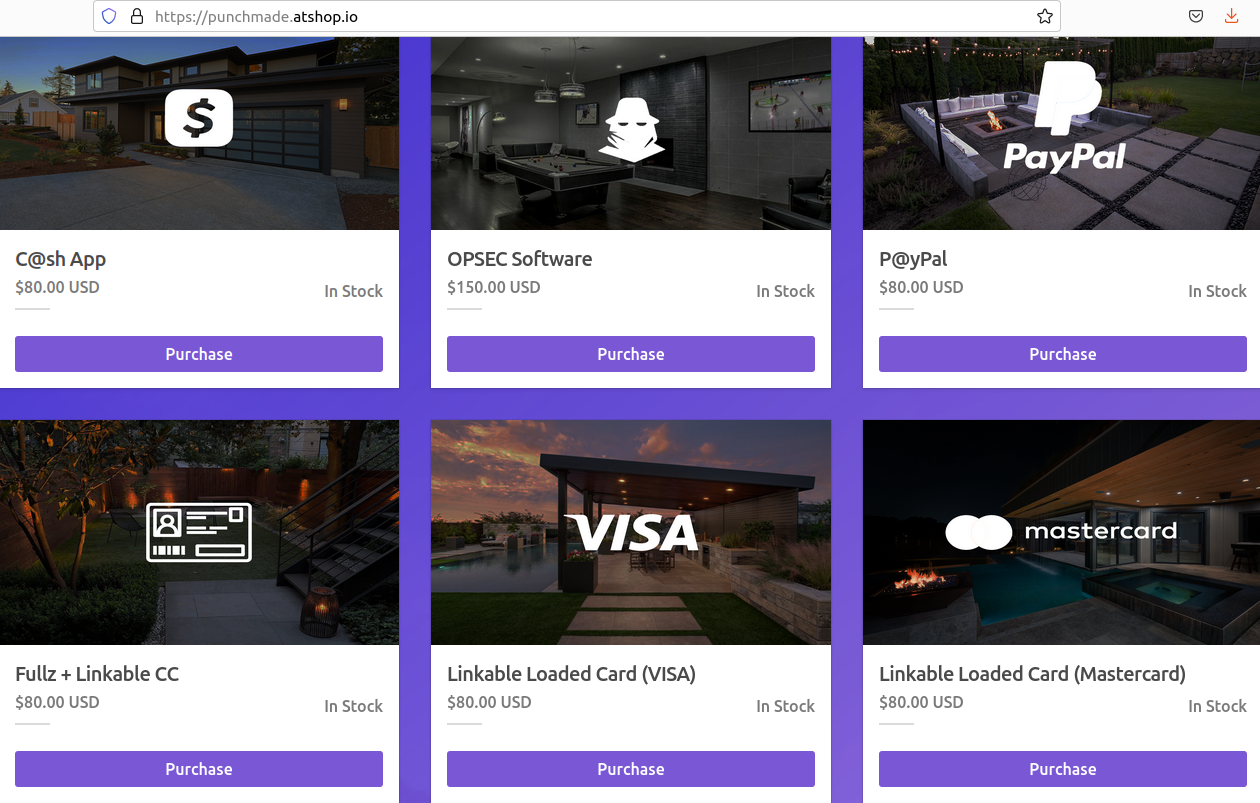
Punchmade Dev’s shop.
The official Punchmadedev account on Instagram links to many of the aforementioned rap videos and tutorials on cybercriming, as well as to Punchmadedev’s other profiles and websites. Among them is mainpage[.]me/punchmade, which includes the following information for “Punchmade Empire ®”
-212,961 subscribers
#1 source on Telegram
Contact: @whopunchmade
24/7 shop: https://punchmade%5B.%5Datshop%5B.%5Dio
Visiting that @whopunchmade Telegram channel shows this user is promoting punchmade[.]atshop[.]io, which is currently selling hacked bank accounts and payment cards with high balances.
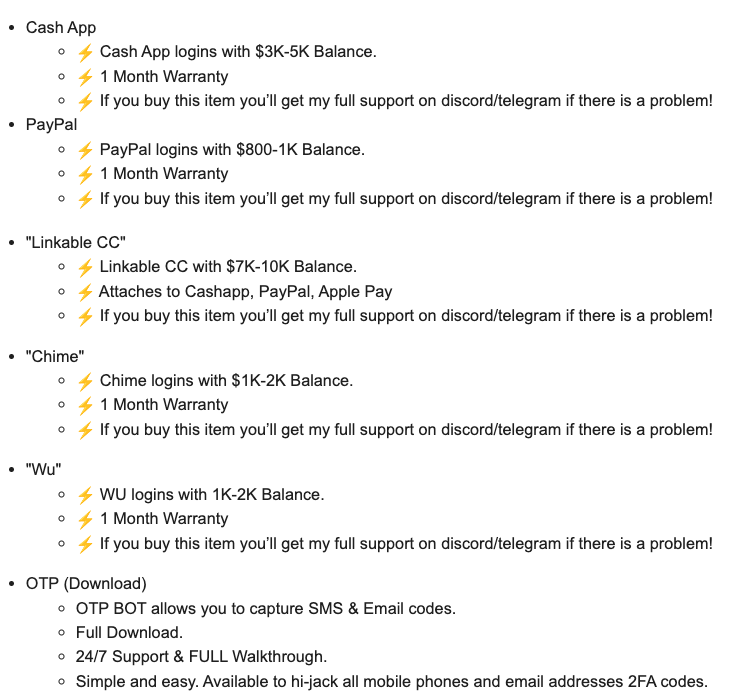
Clicking “purchase” on the C@sh App offering, for example, shows that for $80 the buyer will receive logins to Cash App accounts with balances between $3,000 and $5,000. “If you buy this item you’ll get my full support on discord/telegram if there is a problem!,” the site promises. Purchases can be made in cryptocurrencies, and checking out prompts one to continue payment at Coinbase.com.
Another item for sale, “Fullz + Linkable CC,” promises “ID Front + Back, SSN with 700+ Credit Score, and Linkable CC” or credit card. That also can be had for $80 in crypto.
WHO IS PUNCHMADE DEV?
Punchmade has fashioned his public persona around a collection of custom-made, diamond-covered necklaces that are as outlandish and gaudy as they are revelatory. My favorite shot from one of Punchmade’s videos features at least three of these monstrosities: One appears to be a boring old diamond and gold covered bitcoin, but the other two necklaces tell us something about where Punchmade is from:
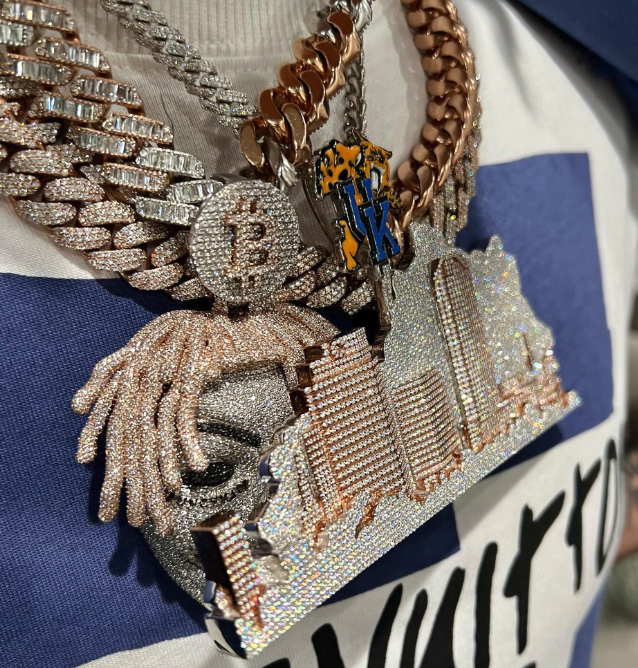
Notice the University of Kentucky logo, and the Lexington, Ky skyline.
One of them includes the logo and mascot of the University of Kentucky. The other, an enormous diamond studded skyline, appears to have been designed based on the skyline in Lexington, Ky:

The “About” page on Punchmade Dev’s Spotify profile describes him as “an American artist, rapper, musician, producer, director, entrepreneur, actor and investor.” “Punchmade Dev is best known for his creative ways to use technology, video gaming, and social media to build a fan base,” the profile continues.
The profile explains that he launched his own record label in 2021 called Punchmade Records, where he produces his own instrumentals and edits his own music videos.
A search on companies that include the name “punchmade” at the website of the Kentucky Secretary of State brings up just one record: OBN Group LLC, in Lexington, Ky. This November 2021 record includes a Certificate of Assumed Name, which shows that Punchmade LLC is the assumed name of OBN Group LLC.
The president of OBN Group LLC is listed as Devon Turner. A search on the Secretary of State website for other businesses tied to Devon Turner reveals just one other record: A now-defunct entity called DevTakeFlightBeats Inc.
The breach tracking service Constella Intelligence finds that Devon Turner from Lexington, Ky. used the email address obndevpayments@gmail.com. A lookup on this email at DomainTools.com shows it was used to register the domain foreverpunchmade[.]com, which is registered to a Devon Turner in Lexington, Ky. A copy of this site at archive.org indicates it once sold Punchmade Dev-branded t-shirts and other merchandise.
Mr. Turner did not respond to multiple requests for comment.
Searching online for Devon Turner and “Punchmade” brings up a video from @brainjuiceofficial, a YouTube channel that focuses on social media celebrities. @Brainjuiceofficial says Turner was born in October 2000, the oldest child of a single mother of five whose husband was not in the picture.
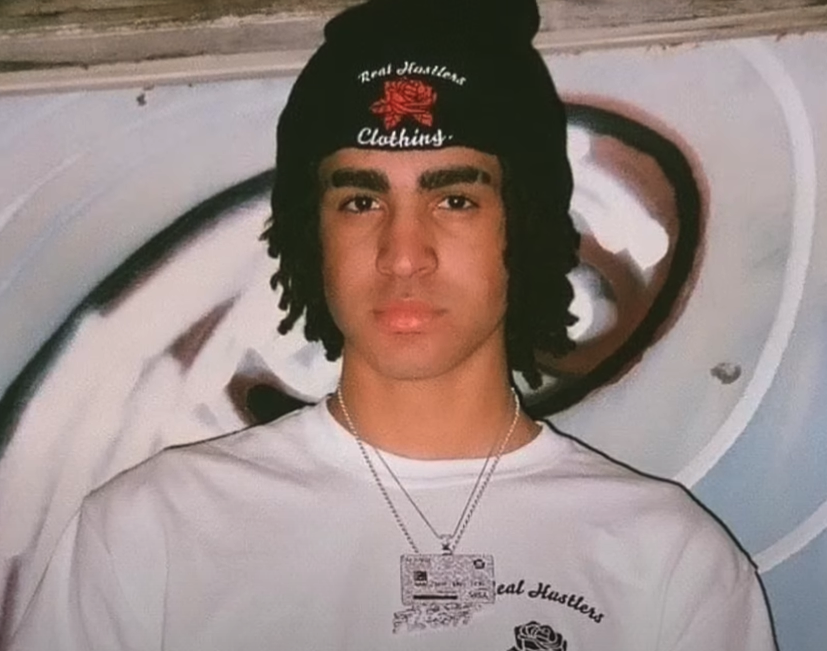
Devon Turner, a.k.a. “Punchmade Dev,” in an undated photo.
The video says the six-foot five Turner played basketball, track and football in high school, but that he gradually became obsessed with playing the video game NBA 2K17 and building an online following of people watching him play the game competitively online.
According to this brief documentary, Turner previously streamed his NBA 2K17 videos on a YouTube channel called DevTakeFlight, although he originally went by the nickname OBN Dev.
“Things may eventually catch up to Devon if he isn’t careful,” @Brainjuiceofficial observed, noting that Turner has been shot at before, and also robbed at an ATM while flexing a bunch of cash for a picture and wearing $500k in jewelry. “Although you have a lot of people that are into what you do, there are a lot of people waiting for you to slip up.”
from Krebs on Security https://ift.tt/w9270I4
via IFTTT





 Pacosite's Blog