Formula 1 drivers and PGA Tour golfers team up for a star-studded sports competition at the Wynn Las Vegas golf course. Live event in English.
from New On Netflix USA https://ift.tt/j2G9c1p
via IFTTT

Formula 1 drivers and PGA Tour golfers team up for a star-studded sports competition at the Wynn Las Vegas golf course. Live event in English.
from New On Netflix USA https://ift.tt/j2G9c1p
via IFTTT
Microsoft today released updates to fix more than five dozen security holes in its Windows operating systems and related software, including three “zero day” vulnerabilities that Microsoft warns are already being exploited in active attacks.
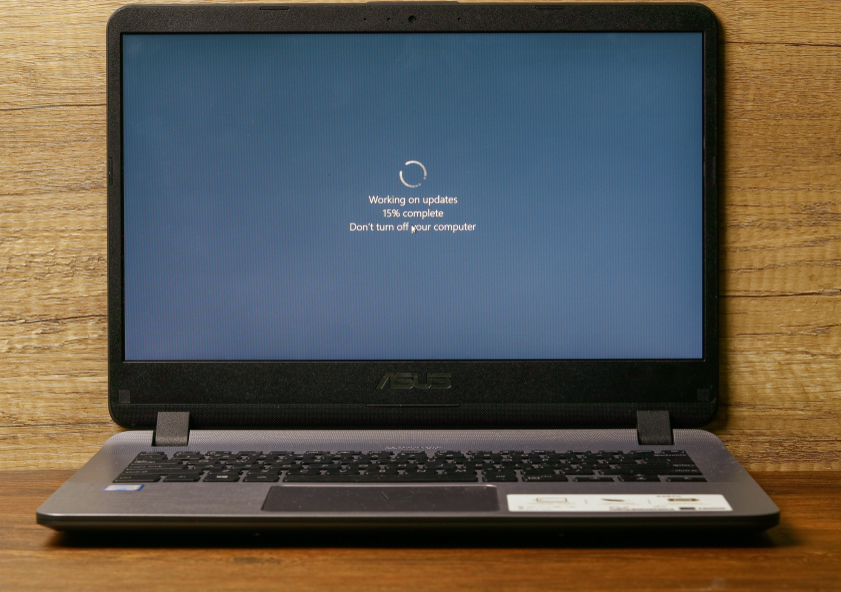
The zero-day threats targeting Microsoft this month include CVE-2023-36025, a weakness that allows malicious content to bypass the Windows SmartScreen Security feature. SmartScreen is a built-in Windows component that tries to detect and block malicious websites and files. Microsoft’s security advisory for this flaw says attackers could exploit it by getting a Windows user to click on a booby-trapped link to a shortcut file.
Kevin Breen, senior director of threat research at Immersive Labs, said emails with .url attachments or logs with processes spawning from .url files “should be a high priority for threat hunters given the active exploitation of this vulnerability in the wild.”
The second zero day this month is CVE-2023-36033, which is a vulnerability in the “DWM Core Library” in Microsoft Windows that was exploited in the wild as a zero day and publicly disclosed prior to patches being available. It affects Microsoft Windows 10 and later, as well as Microsoft Windows Server 2019 and subsequent versions.
“This vulnerability can be exploited locally, with low complexity and without needing high-level privileges or user interaction,” said Mike Walters, president and co-founder of the security firm Action1. “Attackers exploiting this flaw could gain SYSTEM privileges, making it an efficient method for escalating privileges, especially after initial access through methods like phishing.”
The final zero day in this month’s Patch Tuesday is a problem in the “Windows Cloud Files Mini Filter Driver” tracked as CVE-2023-36036 that affects Windows 10 and later, as well as Windows Server 2008 at later. Microsoft says it is relatively straightforward for attackers to exploit CVE-2023-36036 as a way to elevate their privileges on a compromised PC.
Beyond the zero day flaws, Breen said organizations running Microsoft Exchange Server should prioritize several new Exchange patches, including CVE-2023-36439, which is a bug that would allow attackers to install malicious software on an Exchange server. This weakness technically requires the attacker to be authenticated to the target’s local network, but Breen notes that a pair of phished Exchange credentials will provide that access nicely.
“This is typically achieved through social engineering attacks with spear phishing to gain initial access to a host before searching for other vulnerable internal targets – just because your Exchange Server doesn’t have internet-facing authentication doesn’t mean it’s protected,” Breen said.
Breen said this vulnerability goes hand in hand with three other Exchange bugs that Microsoft designated as “exploitation more likely:” CVE-2023-36050, CVE-2023-36039 and CVE-2023-36035.
Finally, the SANS Internet Storm Center points to two additional bugs patched by Microsoft this month that aren’t yet showing signs of active exploitation but that were made public prior to today and thus deserve prioritization. Those include: CVE-2023-36038, a denial of service vulnerability in ASP.NET Core, with a CVSS score of 8.2; and CVE-2023-36413: A Microsoft Office security feature bypass. Exploiting this vulnerability will bypass the protected mode when opening a file received via the web.
Windows users, please consider backing up your data and/or imaging your system before applying any updates. And feel free to sound off in the comments if you experience any difficulties as a result of these patches.
from Krebs on Security https://ift.tt/bNKDML0
via IFTTT
PAHO calls for strengthening primary care services to provide timely and quality care for people with diabetes
Cristina Mitchell
14 Nov 2023
from PAHO/WHO | Pan American Health Organization https://ift.tt/Qv13O0q
via IFTTT
Former PM denies lying to French president when securing the nuclear sub deal; signals directorate records huge jump in attacks on networks. Follow the day’s news live
Good morning and welcome to our rolling news coverage. I’m Martin Farrer and I’ll be bringing you the best of our overnight and breaking news before Amy Remeikis takes the helm for a day of politics.
The rising cost of living is eating away at Australians’ treasured way of life, but it’s also costing the country in togetherness. According to our top story this morning, a running index of social cohesion is at its lowest ebb since it began to be tracked 16 years ago. At the same time, banks are making massive profits and our Full Story podcast asks how they’re doing it.
from Data and computer security | The Guardian https://ift.tt/qvAQJTh
via IFTTT

By Nico Grant and David McCabe
The tech giant, which is wrapping up its arguments in the federal monopoly trial, has framed itself as a good corporate citizen that has pushed innovation and helped consumers.
Published: November 14, 2023 at 04:03AM
from NYT Technology https://ift.tt/ht4lrUg
via IFTTT

By Isabella Kwai
Meta’s rival to Twitter will now offer users — who signed up in droves at its launch — the option to delete.
Published: November 14, 2023 at 11:12AM
from NYT Technology https://ift.tt/q0Z4EIg
via IFTTT

Unos cinco meses después de la anterior 3.6 que fue una versión LTS, hace unas horas se ha lanzado Blender 4.0, lo que es una actualización mayor de este popular software de modelado 3D, entre otras cosas. En el momento de empezar a escribir este artículo no aparece en su página web oficial, pero el lanzamiento se puede tomar como oficial porque hay notas de lanzamiento, disponibles en este enlace. Cuando se publique la nota habitual con información más clara e incluso capturas, añadiremos enlazaremos en este post.
Siendo una actualización tan grande como lo es este Blender 4.0, es difícil hacer un resumen de todo lo que trae debajo del brazo. En las notas de lanzamiento hay varios apartados, y cada uno tiene una extensa explicación de qué es lo que aporta. Aquí nos vamos a limitar a hablar de la disponibilidad de la nueva actualización mayor e incluir un resumen (muy resumido) con las novedades más destacadas.
Ahora mismo, el proyecto está actualizando la información y pronto anunciarán el lanzamiento de Blender 4.0 en su página web oficial, en donde también añadirán enlaces de descarga. Por el momento se puede obtener su código desde aquí.
from Linux Adictos https://ift.tt/Xv9tBco
via IFTTT
There are many kinds of mothers, but these are our favorite picks for the WIRED mom in your life.
from Gear Latest https://ift.tt/ERC3gSY
via IFTTT
This darkly satirical how-to guide explores the rise and fall of history’s most notorious mob bosses and their tactics for success.
from New On Netflix USA https://ift.tt/WOVFoys
via IFTTT
To crack the code of an investigation into a larger-than-life robbery, federal agents need to get creative.
from New On Netflix USA https://ift.tt/p790dsl
via IFTTT
 Pacosite's Blog