Piped, el frontend de YouTube de código abierto que ni te espía ni bombardea con publicidad

Piped

Hace algunas semanas os hablé de Nitter, un frontend de X/Twitter que permitía navegar por la red social de Elon Musk sin registro ni publicidad. Está basada en Invidious, que a su vez en un frontend alternativo y de código abierto para YouTube. Desde hace ya algún tiempo, también existe otra alternativa de nombre Piped, y por lo que he probado esta sí merece la pena, lo que no quiere decir que Invidious sea una mala opción.

Lo que pasa con estos frontends es que se pueden modificar y alojar en cualquier equipo o servidor. Si se hace bien, el servicio puede ofrecer muchas posibilidades, como la capacidad de reproducir vídeos en 4K, pero si no es probable que topemos con vídeos con una calidad máxima de 720p. Yo he estado probando Piped en varios aparatos y, por lo menos en este, el primero que me funcionó para una app, sí se ve con buena calidad.

Piped vídeo es una alternativa a Invidious

Hablar un poco más a fondo de Piped sin hablar de las instancias sería un poco difícil. En esta página web hay una lista. Los enlaces son de las APIs, pero haciendo clic sobre ellos iremos directamente a su versión del servicio de vídeo. Por ejemplo, Garuda Linux tiene su propia instancia que aparece en su página de Servicios, pero mirad el diseño de la instancia de piped.mha.fi, comparadlo con la de Garuda y comprobaréis que, aunque similares, son diferentes.

Lo que sí se puede decir es que en general permite suscribirse a canales, hacer algo parecido a través de un feed RSS, compartir enlaces, añadir a la cola y casi de todo. Hay instancias que permiten registrarse, pero sólo con usuario y contraseña, sin correo. Este tipo de registro permite aprovechar el contenido personalizado, pero no tenemos que dar ningún dato. Al darle a «registro», lo que hace (me imagino) es añadir una entrada a una base de datos con nuestro usuario y contraseña cifrada. Si queremos darnos de baja, lo único que hay que hacer es clic en un botón. Aún los hay más sencillos, ya que DuckDuckGo permite guardar la configuración personal usando sólo una clave.

Sobre las opciones de Piped, pues decir que hay instancias que las tienen e instancias que no. La de piped.mha.fi permite cambiar el idioma, tiene diferentes temas y en fase beta sonidos de la interfaz, copias de seguridad y capas 3D. A mí que no me gusta tocar mucho las opciones por defecto me parece que están de más, o son un extra que no usaré demasiado, pero si el navegador no detecta bien nuestro idioma y se muestra en inglés, esta instancia sí permite cambiar el idioma al español. También podemos indicarle nuestro país de residencia, pero por algún motivo he llegado a ver como los vídeos no cargaban si le ponía España, por lo que merece la pena no tocar demasiado.

Una lanza a favor de YouTube, o mejor dicho, a los creadores de contenidos

A mí, que me gusta «trampear» algunos servicios, también me gusta hacer las cosas con cierta ética. Creo que hay que pagar por cualquier contenido si de verdad nos gusta (y podemos), y yo estoy suscrito a un servicio de música en streaming. YouTube es gratis, y no voy a decir que no se haga nada para evitar ver dos o tres anuncios en un vídeo de 15min, pero sí que estaría bien ver los vídeos de los creadores de contenidos en un servicio que puede pagarles por su trabajo. Si preocupa la privacidad, para eso existe Piped, pero creo que apoyar a los YouTubers que de verdad nos gustan sí deberíamos hacerlo.

Y si no, pues todo en Piped. Tiene menos tiempo que Invidious, pero ha crecido mucho más en los últimos meses/años. Esperemos que Google no se marque un Musk y se lo cargue como parece que han hecho con Nitter.

from Linux Adictos https://ift.tt/2gM8eV1
via IFTTT

Karma Catches Up to Global Phishing Service 16Shop

You’ve probably never heard of “16Shop,” but there’s a good chance someone using it has tried to phish you.

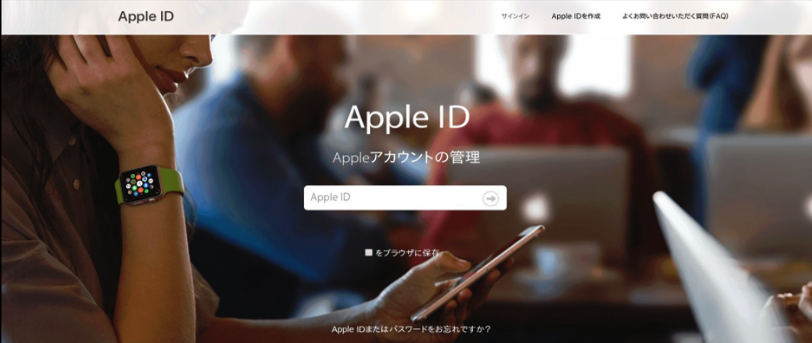
A 16Shop phishing page spoofing Apple and targeting Japanese users. Image: Akamai.com.

The international police organization INTERPOL said last week it had shuttered the notorious 16Shop, a popular phishing-as-a-service platform launched in 2017 that made it simple for even complete novices to conduct complex and convincing phishing scams. INTERPOL said authorities in Indonesia arrested the 21-year-old proprietor and one of his alleged facilitators, and that a third suspect was apprehended in Japan.

The INTERPOL statement says the platform sold hacking tools to compromise more than 70,000 users in 43 countries. Given how long 16Shop has been around and how many paying customers it enjoyed over the years, that number is almost certainly highly conservative.

Also, the sale of “hacking tools” doesn’t quite capture what 16Shop was all about: It was a fully automated phishing platform that gave its thousands of customers a series of brand-specific phishing kits to use, and provided the domain names needed to host the phishing pages and receive any stolen credentials.

Security experts investigating 16Shop found the service used an application programming interface (API) to manage its users, an innovation that allowed its proprietors to shut off access to customers who failed to pay a monthly fee, or for those attempting to copy or pirate the phishing kit.

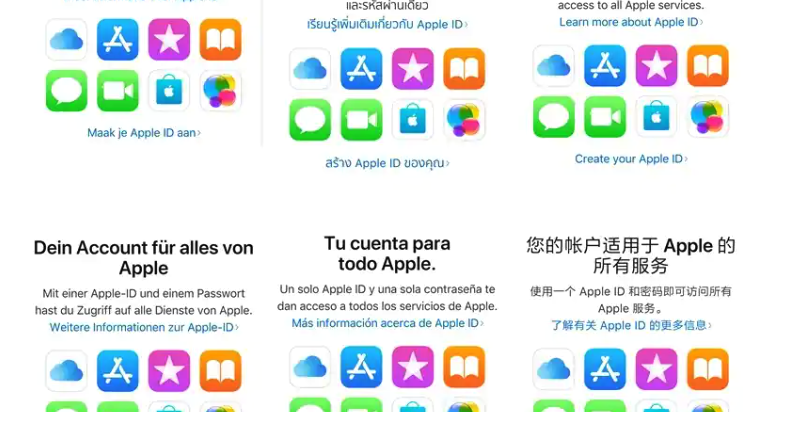
16Shop also localized phishing pages in multiple languages, and the service would display relevant phishing content depending on the victim’s geolocation.

Various 16Shop lures for Apple users in different languages. Image: Akamai.

For example, in 2019 McAfee found that for targets in Japan, the 16Shop kit would also collect Web ID and Card Password, while US victims will be asked for their Social Security Number.

“Depending on location, 16Shop will also collect ID numbers (including Civil ID, National ID, and Citizen ID), passport numbers, social insurance numbers, sort codes, and credit limits,” McAfee wrote.

In addition, 16Shop employed various tricks to help its users’ phishing pages stay off the radar of security firms, including a local “blacklist” of Internet addresses tied to security companies, and a feature that allowed users to block entire Internet address ranges from accessing phishing pages.

The INTERPOL announcement does not name any of the suspects arrested in connection with the 16Shop investigation. However, a number of security firms — including Akamai, McAfee and ZeroFox, previously connected the service to a young Indonesian man named Riswanda Noor Saputra, who sold 16Shop under the hacker handle “Devilscream.”

According to the Indonesian security blog Cyberthreat.id, Saputra admitted being the administrator of 16Shop, but told the publication he handed the project off to others by early 2020.

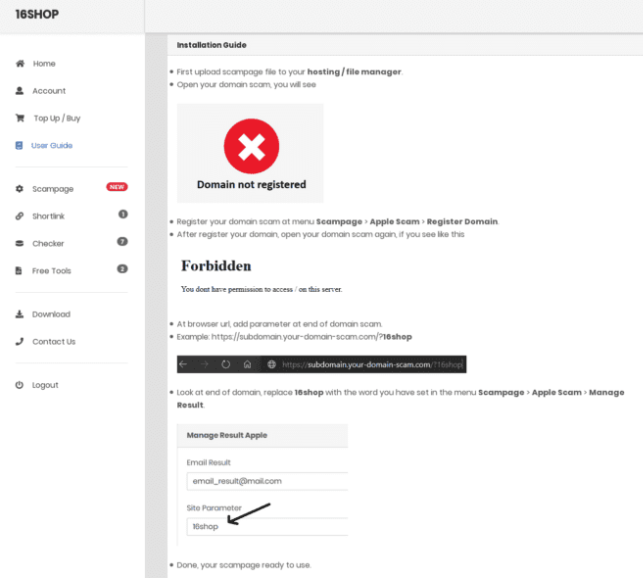
16Shop documentation instructing operators on how to deploy the kit. Image: ZeroFox.

Nevertheless, Cyberthreat reported that Devilscream was arrested by Indonesian police in late 2021 as part of a collaboration between INTERPOL and the U.S. Federal Bureau of Investigation (FBI). Still, researchers who tracked 16Shop since its inception say Devilscream was not the original proprietor of the phishing platform, and he may not be the last.

RIZKY BUSINESS

It is not uncommon for cybercriminals to accidentally infect their own machines with password-stealing malware, and that is exactly what seems to have happened with one of the more recent administrators of 16Shop.

Constella Intelligence, a data breach and threat actor research platform, now allows users to cross-reference popular cybercrime websites and denizens of these forums with inadvertent malware infections by information-stealing trojans. A search in Constella on 16Shop’s domain name shows that in mid-2022, a key administrator of the phishing service infected their Microsoft Windows desktop computer with the Redline information stealer trojan — apparently by downloading a cracked (and secretly backdoored) copy of Adobe Photoshop.

Redline infections steal gobs of data from the victim machine, including a list of recent downloads, stored passwords and authentication cookies, as well as browser bookmarks and auto-fill data. Those records indicate the 16Shop admin used the nicknames “Rudi” and “Rizki/Rizky,” and maintained several Facebook profiles under these monikers.

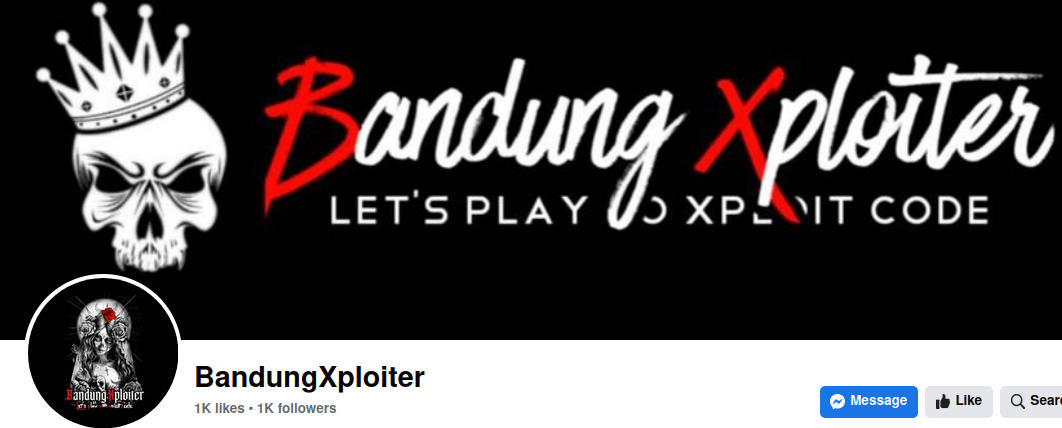
It appears this user’s full name (or at least part of it) is Rizky Mauluna Sidik, and they are from Bandung in West Java, Indonesia. One of this user’s Facebook pages says Rizky is the chief executive officer and founder of an entity called BandungXploiter, whose Facebook page indicates it is a group focused mainly on hacking and defacing websites.

A LinkedIn profile for Rizky says he is a backend Web developer in Bandung who earned a bachelor’s degree in information technology in 2020. Mr. Rizky did not respond to requests for comment.

from Krebs on Security https://ift.tt/zXasBvy
via IFTTT