WHO calls for better hand hygiene and other infection control practices
mitchelc
5 May 2021
from PAHO/WHO | Pan American Health Organization https://ift.tt/2Rq4X9V
via IFTTT

WHO calls for better hand hygiene and other infection control practices
mitchelc
5 May 2021
from PAHO/WHO | Pan American Health Organization https://ift.tt/2Rq4X9V
via IFTTT
These bugs date back to 2009, and they could give crooks who are already in your network access to sysadmin superpowers.
from Naked Security https://ift.tt/3h51AzQ
via IFTTT

Si tienes un móvil de última generación de gama media premium o alta probablemente no tengas problema, pero en otras gamas es más difícil encontrar una de esas cosas que no te das cuenta de que faltan hasta que las necesitas: cambiar de cámara mientras grabas un vídeo.
Si quieres grabar un vídeo en el que pases de la cámara trasera a la frontal sin tener que grabar dos vídeos distintos y unirlos más tarde, y la aplicación de cámara de tu móvil no incluye la opción, puedes usar Flipcam, una aplicación gratis muy sencilla y que cumple con lo prometido.
Another in our occasional series demystifying Latin American banking trojans
The post Ousaban: Private photo collection hidden in a CABinet appeared first on WeLiveSecurity
from WeLiveSecurity https://ift.tt/2QTjoDe
via IFTTT
The Patch Tuesday security update due in July should hammer the last nail in the coffin of Adobe Flash Player
The post Microsoft will soon remove Flash Player from Windows 10 devices appeared first on WeLiveSecurity
from WeLiveSecurity https://ift.tt/3nM9hw8
via IFTTT

Phishers targeting Microsoft Office 365 users increasingly are turning to specialized links that take users to their organization’s own email login page. After a user logs in, the link prompts them to install a malicious but innocuously-named app that gives the attacker persistent, password-free access to any of the user’s emails and files, both of which are then plundered to launch malware and phishing scams against others.
These attacks begin with an emailed link that when clicked loads not a phishing site but the user’s actual Office 365 login page — whether that be at microsoft.com or their employer’s domain. After logging in, the user might see a prompt that looks something like this:
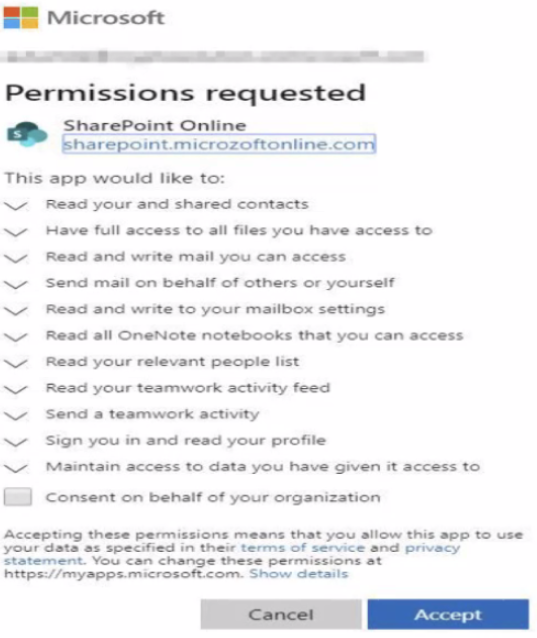
These malicious apps allow attackers to bypass multi-factor authentication, because they are approved by the user after that user has already logged in. Also, the apps will persist in a user’s Office 365 account indefinitely until removed, and will survive even after an account password reset.
This week, messaging security vendor Proofpoint published some new data on the rise of these malicious Office 365 apps, noting that a high percentage of Office users will fall for this scheme [full disclosure: Proofpoint is an advertiser on this website].
Ryan Kalember, Proofpoint’s executive vice president of cybersecurity strategy, said 55 percent of the company’s customers have faced these malicious app attacks at one point or another.
“Of those who got attacked, about 22 percent — or one in five — were successfully compromised,” Kalember said.
Kalember said Microsoft last year sought to limit the spread of these malicious Office apps by creating an app publisher verification system, which requires the publisher to be a valid Microsoft Partner Network member.
That approval process is cumbersome for attackers, so they’ve devised a simple work around. “Now, they’re compromising accounts in credible tenants first,” Proofpoint explains. “Then, they’re creating, hosting and spreading cloud malware from within.”
The attackers responsible for deploying these malicious Office apps aren’t after passwords, and in this scenario they can’t even see them. Rather, they’re hoping that after logging in users will click yes to a approve the installation of a malicious but innocuously-named app into their Office365 account.
Kalember said the crooks behind these malicious apps typically use any compromised email accounts to conduct “business email compromise” or BEC fraud, which involves spoofing an email from someone in authority at an organization and requesting the payment of a fictitious invoice. Other uses have included the sending of malware-laced emails from the victim’s email account.
Last year, Proofpoint wrote about a service in the cybercriminal underground where customers could access various Office 365 accounts without a username or password. The service also advertised the ability to extract and filter emails and files based on selected keywords, as well as attach malicious macros to all documents in a user’s Microsoft OneDrive.
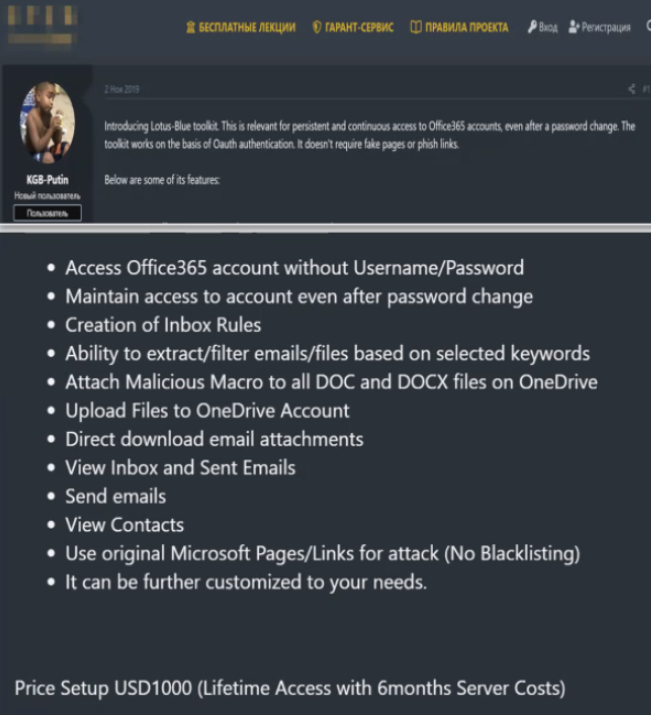
A cybercriminal service advertising the sale of access to hacked Office365 accounts. Image: Proofpoint.
“You don’t need a botnet if you have Office 365, and you don’t need malware if you have these [malicious] apps,” Kalember said. “It’s just easier, and it’s a good way to bypass multi-factor authentication.”
KrebsOnSecurity first warned about this trend in January 2020. That story cited Microsoft saying that while organizations running Office 365 could restrict users from installing apps, doing so was a “drastic step” that “severely impairs your users’ ability to be productive with third-party applications.”
Since then, Microsoft added a policy that allows Office 365 administrators to block users from consenting to an application from a non-verified publisher. Also, applications published after November 8, 2020, are coupled with a consent screen warning in case the publisher is not verified, and the tenant policy allows the consent.
Proofpoint says O365 administrators should limit or block which non-administrators can create applications, and enable Microsoft’s verified publisher policy — as a majority of cloud malware is still coming from Office 365 tenants that are not part of Microsoft’s partner network.
from Krebs on Security https://ift.tt/3tlHSm3
via IFTTT
From his rise in the auto industry to his fall from grace, John DeLorean’s legacy of power, fast cars and drugs comes to life in this documentary.
from New On Netflix USA https://ift.tt/3h3uBvW
via IFTTT

De la vuelta de Xiaomi al mercado de los tablets Android tras varios años de ausencia ya hemos tenido diversas filtraciones. En dichas filtraciones se describen al menos tres tablets con diferentes especificaciones para recuperar la marca Mi Pad y continuar creciendo. No olvidemos que Xiaomi es ya el tercer fabricante del mundo en materia de teléfonos móviles.
Pero ahora, la propia marca parece confirmar la existencia de estas tablets, o al menos de una de ellas, a través del código fuente de MIUI 12.5, la última versión de su capa propietaria. En el interior de su código se encuentra un menú secreto (o sin activar aún) para configurar la navegación del sistema en tablets.
Whether you want to battle Star Wars spaceships or shoot a cinematic masterpiece, one of these picks is going to be perfect for you.
from Gear Latest https://ift.tt/38axi7E
via IFTTT

