Microsoft: Chinese Cyberspies Used 4 Exchange Server Flaws to Plunder Emails

Microsoft Corp. today released software updates to plug four critical security holes that attackers have been using to plunder email communications at companies that use its Exchange Server products. The company says all four flaws are being actively exploited as part of a complex attack chain deployed by a previously unidentified Chinese cyber espionage group.

The software giant typically releases security updates on the second Tuesday of each month, but it occasionally deviates from that schedule when addressing active attacks that target newly identified and serious vulnerabilities in its products.

The patches released today fix security problems in Microsoft Exchange Server 2013, 2016 and 2019. Microsoft said its Exchange Online service — basically hosted email for businesses — is not impacted by these flaws.

Microsoft credited researchers at Reston, Va. based Volexity for reporting the attacks. Volexity President Steven Adair told KrebsOnSecurity it first spotted the attacks on Jan. 6, 2021.

Adair said while the exploits used by the group may have taken great skills to develop, they require little technical know-how to use and can give an attacker easy access to all of an organization’s email if their vulnerable Exchange Servers are directly exposed to the Internet.

“These flaws are very easy to exploit,” Adair said. “You don’t need any special knowledge with these exploits. You just show up and say ‘I would like to break in and read all their email.’ That’s all there is to it.”

Microsoft says the flaws are being used by a previously unknown Chinese espionage group that’s been dubbed “Hafnium,” which is known to launch its attacks using hosting companies based in the United States.

“Hafnium primarily targets entities in the United States across a number of industry sectors, including infectious disease researchers, law firms, higher education institutions, defense contractors, policy think tanks, and NGOs,” Microsoft said. “HAFNIUM has previously compromised victims by exploiting vulnerabilities in internet-facing servers. Once they’ve gained access to a victim network, HAFNIUM typically exfiltrates data to file sharing sites like MEGA.”

According to Microsoft, Hafnium attackers have been observed combining all four zero-day flaws to target organizations running vulnerable Exchange Server products.

CVE-2021-26855 is a “server-side request forgery” (SSRF) flaw, in which a server (in this case, an on-premises Exchange Server) can be tricked into running commands that it should never have been permitted to run, such as authenticating as the Exchange server itself.

The attackers used CVE-2021-26857 to run code of their choice under the “system” account on a targeted Exchange server. The other two zero-day flaws — CVE-2021-26858 and CVE-2021-27065 — could allow an attacker to write a file to any part of the server.

After exploiting these vulnerabilities to gain initial access, Hafnium operators deployed web shells on the compromised server, Microsoft said. Web shells are essentially software backdoors that allow attackers to steal data and perform additional malicious actions that lead to further compromise.

Neither Microsoft nor Volexity is aware of publicly available code that would allow other cybercriminals to exploit these Exchange vulnerabilities. But given that these attackers are in the wild now, it may only be a matter of days before exploit code is publicly available online.

Microsoft stressed that the exploits detailed today were in no way connected to the separate SolarWinds-related attacks. “We continue to see no evidence that the actor behind SolarWinds discovered or exploited any vulnerability in Microsoft products and services,” the company said.

from Krebs on Security https://ift.tt/3bbKJIp
via IFTTT
Payroll/HR Giant PrismHR Hit by Ransomware?

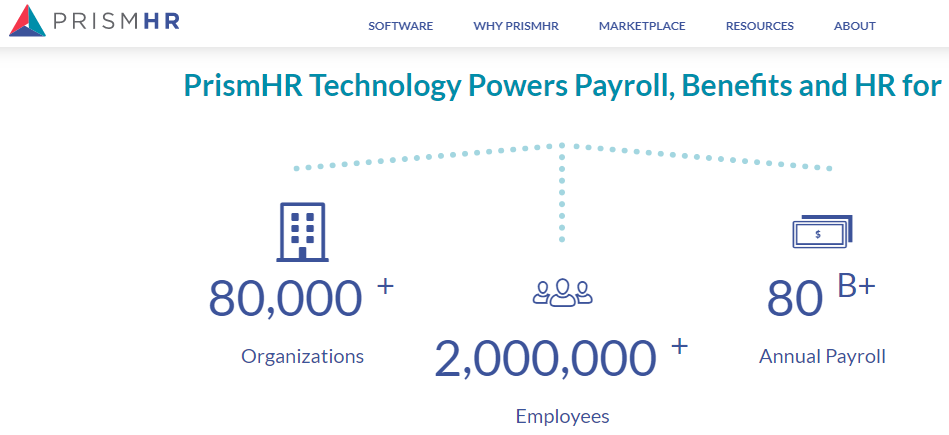
PrismHR, a company that sells technology used by other firms to help more than 80,000 small businesses manage payroll, benefits, and human resources, has suffered what appears to be an ongoing ransomware attack that is disrupting many of its services.

Hopkinton, Mass.-based PrismHR handles everything from payroll processing and human resources to health insurance and tax forms for hundreds of “professional employer organizations” (PEOs) that serve more than two million employees. The company processes more than $80 billion payroll payments annually on behalf of PEOs and their clients.

Countless small businesses turn to PEOs in part because they simplify compliance with various state payroll taxes, and because PEOs are the easiest way for small businesses to pool their resources and obtain more favorable health insurance rates for their employees.

PrismHR has not yet responded to requests for comment. But in a notice sent to its PEO partners, PrismHR said it detected suspicious activity within its networks on Feb. 28, and that it disabled access to its platform for all users in an effort to contain the security incident.

The company said the disruption has affected 200 PEO clients across the country, and that the most immediate concern is helping PEOs ensure their customers can process payrolls this week.

“The outage may extend throughout today and possibly later, with potential impact on payroll processing,” Prism explained in a template email it suggested PEO partners share with their customers. “We are committed to ensuring everyone receives their pay as timely and as accurately as possible. For this payroll period, we will use estimates from the last available payroll period. Once the software platform is back online, we will perform a reconciliation and correct any discrepancies as soon as possible.”

Jacob Cloran is co-founder of Decimal, a company that does accounting for small businesses, many of whom rely on PEOs affected by the PrismHR outage. Decimal itself uses a PEO that relies on PrismHR.

“We don’t have a good option to run our payroll this week, and the message we’ve received from our PEO doesn’t give me a lot of confidence we’ll be able to do that,” Cloran said.

Cloran said while there are other cloud-based companies that work with multiple PEOs, PrismHR is by far the largest.

“Prism is the only real option on the PEO software market,” he said. “Everyone I know who has tried any of the others ends up back at Prism. It’s the best of all bad available options.”

PrismHR did not specify what was responsible for the suspicious network activity, but their actions so far are straight out of the textbook recommendations for responding to a ransomware outbreak. A notice from the PEO working with some of Cloran’s clients stated that PrismHR was in the process of rebuilding its entire system from data backups in a new environment.

Also, the crooks behind ransomware attacks typically wait until the weekend to unleash their malware within victim organizations, knowing that most targets will be short-staffed or out of the office at this time. PrismHR said it detected the activity on Sunday.

Ransomware victims perhaps in the toughest spot include those providing cloud data hosting and software-as-service offerings, as these businesses are often unable to serve their customers while a ransomware infestation is active.

Ransomware renders any files it touches unreadable unless and until a victim pays for a digital key needed to unlock the encryption on them. Worse, it has become almost a best practice among ransomware criminal groups to steal as much data as possible from the victim organization prior to unleashing the ransom malware within a target environment.

Some of that data is often then published on dark web victim shaming sites in a bid to force the victim company into paying up. Some companies victimized by ransomware even face dual ransom demands: One for a digital key needed to unlock access to files, and a second payment in exchange for a promise not to publish all of the stolen data. Those that refuse to be extorted are told to expect that huge amounts of sensitive company data will be published online or sold on the dark web (or both).

PrismHR said in a statement to its PEO customers that while its investigation and response to the incident is ongoing, the company “is not aware of any sensitive data being breached or compromised.”

Given the volume and sensitive nature of the data PrismHR managed on behalf of PEO clients, it’s no doubt those clients and their customers are hoping that statement is accurate as well.

from Krebs on Security https://ift.tt/3qdXSEW
via IFTTT

Chrome 89 llega con mejoras en la instalación de PWAs entre otras novedades poco destacadas

Chrome 89

A mediados de enero, y como también hizo Firefox, Google lanzó la última versión de su navegador en soportar Flash Player, entre otras novedades. Hoy dos de marzo ha lanzado una nueva actualización, un Chrome 89 del que yo no diría que es una versión con cambios emocionantes, pero sí que incluye alguna que otra novedad que merece la pena, como que el Web Share de Google ha llegado al escritorio.

Pete LePage, quien se ha encargado de dar la noticia, destaca tres novedades sobre el resto, como Web Serial, HID, NFC y cambios en la manera de instalar las PWA, pero también nos habla de más funciones. A continuación tenéis una lista con las novedades más destacadas, junto a un vídeo promocional de casi 5min para el que prefiera este tipo de contenido.

Novedades más destacadas de Chrome 89

  • Nuevas APIs, como las de WebHID, WebNFC y Web Serial.
  • Mejorado el soporte para el cifrado AV1 para WebRTC.
  • Web Share y Web Share Target ha llegado al escritorio.
  • Cambios en los criterios de instalación de las PWA.
  • Chrome ahora permite la espera de nivel superior dentro de los módulos de JavaScript.
  • Se ha modificado el icono de instalación de las PWA.
  • Más detalles, en la nota de su lanzamiento, disponible en este enlace.

Recordamos que, desde hace un mes, Chrome es el único navegador basado en Chromium que puede usar todas las APIs de Google y que, por ese motivo, muchos desarrolladores han recomendado dar el salto a Firefox. Otra opción es usar un navegador como por ejemplo Brave que ofrece opciones similares, como su propia sincronización.

El lanzamiento de Chrome 89 ya es oficial, por lo que ya está disponible para su descarga desde la web habitual, o haciendo clic aquí. Los usuarios de sistemas operativos como Ubuntu, en donde se instala el repositorio al mismo tiempo que el navegador, verán el nuevo paquete como actualización muy pronto, si no lo han visto ya. En otros sistemas operativos, o por ejemplo en Arch Linux/Manjaro que se puede instalar desde AUR, la actualización aún tardará un poco más en llegar.

from Linux Adictos https://ift.tt/3dZGiC3
via IFTTT

Los mejores móviles para mayores con WhatsApp de 2021

Los mejores móviles para mayores con WhatsApp de 2021

Año tras año, las llamadas de WhatsApp le comen terreno a las tradicionales, de modo que es cada vez más importante tener un móvil compatible con WhatsApp para no quedarte incomunicado. Esto incluye también a las personas mayores, que tienen sus propios requisitos en cuanto a las funciones y características que necesitan.

Si bien WhatsApp está disponible en otros móviles sencillos con KaiOS, la ventaja de Android es que se puede modificar para adaptarlo a las necesidades de las personas mayores. En esta lista, te traemos móviles sencillos, baratos y con WhatsApp para personas mayores.


Continue reading