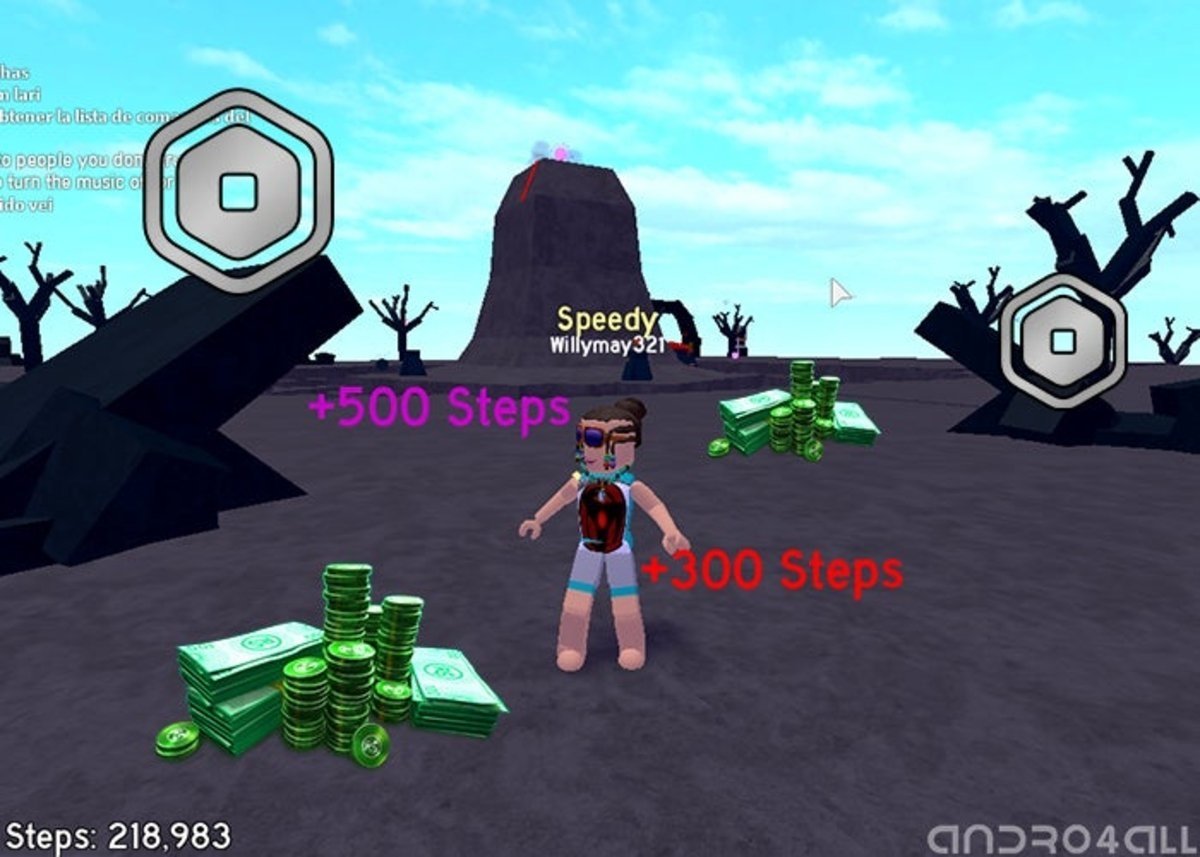
Todas las formas de conseguir Robux gratis en Roblox

Roblox es un videojuego para jóvenes menores de 18 años similar a Minecraft que tiene a todos encantados. Y no es para menos, es un título muy adictivo, fácil y con características únicas que lo hacen resaltar frente al resto.

Su sistema multiplataforma le da acceso a cualquier persona para jugar en sus universos, ya sea desde Xbox One, PC y móviles totalmente gratis.

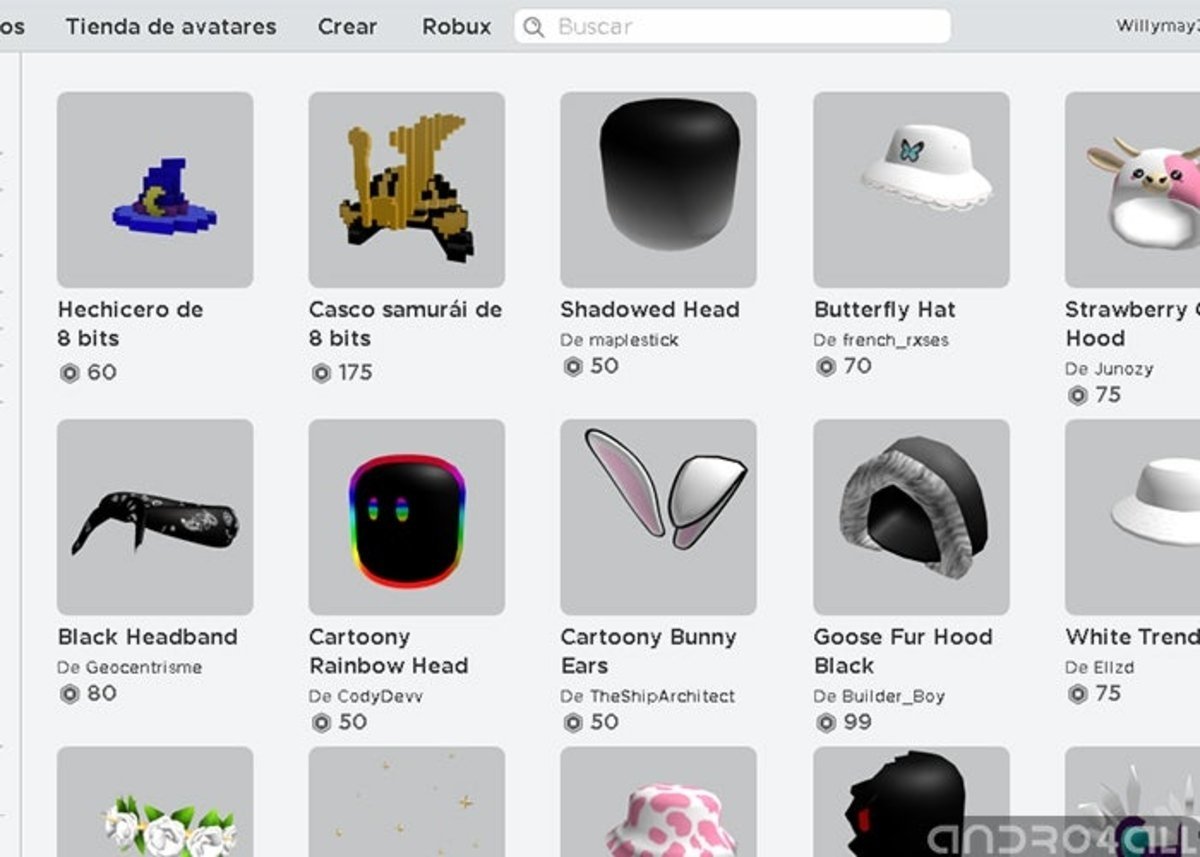
Una de las particularidades especiales del sistema, es que te da la posibilidad de personalizar tu personaje e incluso crear tus propias prendas y diseños. Sin embargo, en algunos casos es necesario invertir Robux (moneda oficial del juego).

Si eres fans de Roblox y quieres equipar tu personaje con ropa exclusiva pero no tienes dinero, no te alarmes. En esta oportunidad te mostraremos todas las formas de conseguir Robux gratis en Roblox este 2020.

Trucos para tener Robux gratis para Roblox 100% real

Sabemos lo importante que es ser acreedor de muchas monedas dentro de la plataforma, pero para adquirirla necesitas realizar una inversión o al menos suscribirte a un plan Premium.

Trucos para tener Robux gratis para Roblox

Las mejores formas y trucos de conseguir Robux gratis este 2020

Pero antes de mostrarte algunos métodos, es importante que sepas que existen páginas web que aseguran ser generadoras de Robux a cambio de cierta información personal o datos de tu cuenta.

Estos sitios son falsos y nada seguros, por lo que debes estar al pendiente, ya que Roblox Corporation en varias ocasiones ha declarado que no hay ninguna forma de tener la moneda del juego a menos de que la compres.

Afortunadamente, recopilamos los mejores trucos para tener Robux gratis para Roblox y con métodos 100% reales. Estas son algunos de ellos:

Comparte el link de referidos y enlaces de la tienda

Esta quizá es la forma mas segura de ir acumulando algunos Robux gratis para Roblox. Para ello, lo único que deberás hacer será copiar tu link de referidos y compartir en tus redes sociales, ya sea Facebook, Instagram, twitter o redes de mensajería como WhatsApp y Telegram.

Comparte el link de referidos y enlaces de la tienda

Copia el enlace de referidos y comparte entre amigos para ganar Robux gratis

Entra en un grupo, coloca un mensaje atractivo e invita a tus amigos a suscribirse en el juego o incítalos para que compren algún producto de la tienda a través de tu enlace y recibe una recompensa.

Diseña y crea tu propio universo

En Roblox no solo tendrás la posibilidad de jugar en varios servidores, sino que también podrás crear tu propia sala de juego y empezar a jugar con amigos.

Disena y crea tu propio universo

Crea universos únicos para miembros de Roblox y cobra entrada en Robux

Lo bueno de esta plataforma, es que puedes diseñar mapas exclusivos y cobrar entrada en Robux para que pueden acceder otras personas. Esto es una forma honesta y rentable de tener Robux gratis para Roblox 100% real.

Coloca ropa en venta

Hace poco te mostramos como conseguir ropa gratis y crear la tuya propia. Ahora es bueno que sepas, que la mayoría de estas prendas la puedes poner en venta en la tienda oficial del sistema.

Crea ropa y colOcala en venta

Si te gusta estar a la moda y crear tus propios diseños esta es tu oportunidad

¡Así como lees! el sistema te dará la oportunidad de diseñar ropa y accesorios exclusivos para la venta y ganar un 70% de las ganancia por cada compra.

Pases especiales con habilidades

Si eres desarrollador dentro de la plataforma, puedes crear Game Pasees especiales que otorgan cierta habilidad y poderes a los avatars dentro de tu mundo.

Al ser habilidades especiales, la podrás colocar en venta para los usuarios y sacar beneficios en Robux. Ya solo queda esperar que algunos miembros se interesen en tener poderes o aumentar la velocidad dentro de la sala para que puedan comprar el ticket al precio estimado.

Pases para juegos

Otra de las ventajas de ser desarrollador, es que podrás diseñar tickets de entrada y colocarles un precio alrededor de 25 o 1000 Robux.

Pases para juegos para conseguir robux gratis en Roblox

Con cada Game Access puedes ganar entre 25-1000 Robux gratis

Cada pase le dará entrada libre a miembros a tus universos en Roblox. Ten en cuenta que cada sala debe ser atractiva y entretenida para que muchas personas quieran unirse a ellas. Mientras mas personas compren los Game Access, más Robux gratis para Roblox tendrás en tu cuenta este 2020.

Aplicaciones de terceros

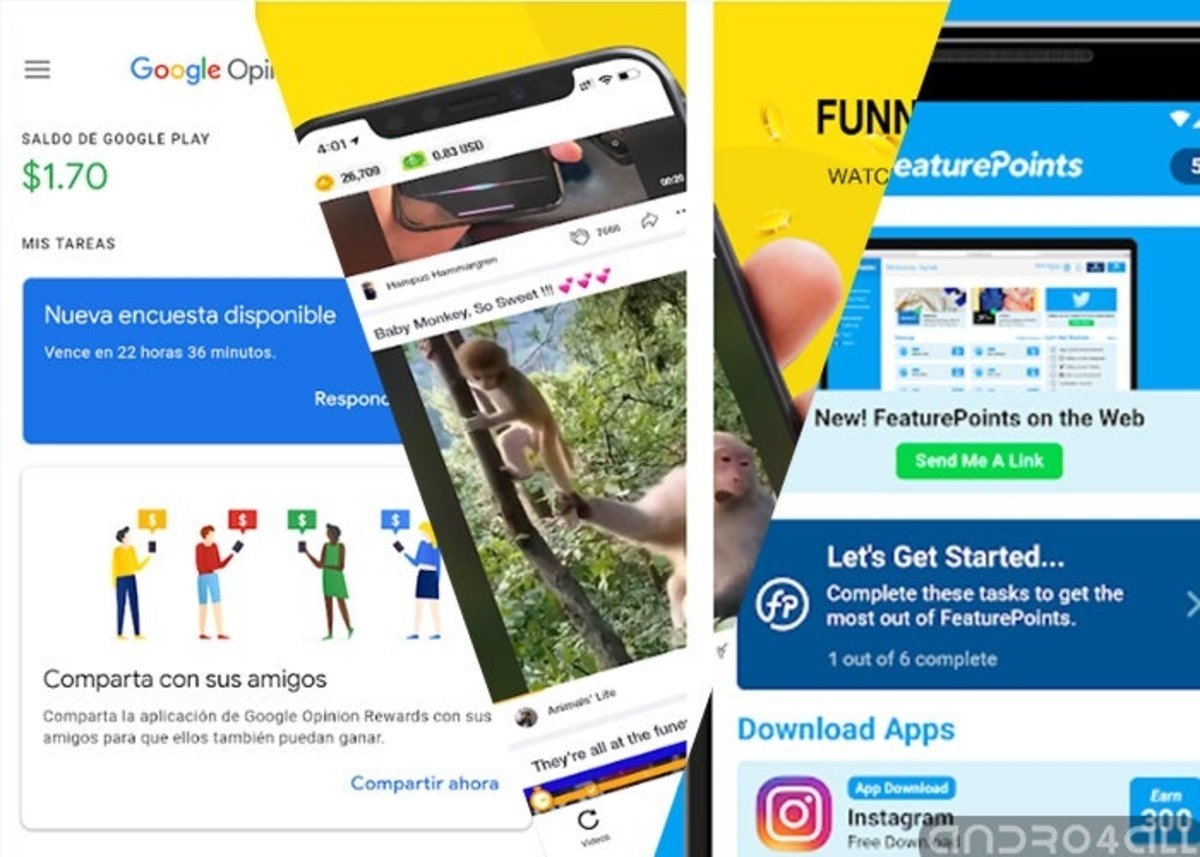
No podíamos dejar pasar esta lista de trucos para tener Robux gratis en Roblox sin antes mencionar las aplicaciones móviles para ganar dinero. Las mismas están disponibles para dispositivos Android e iOS y te dan la oportunidad de acumular puntos realizando tareas y actividades simples como: rellenar encuestas, visualizar vídeos, jugar minijuegos, girar ruletas y más.

Aplicaciones de terceros para tener robux gratis este 2020

Instala en tu Smartphone alguna de estas apps para ganar dinero y canjear Robux

Algunas de ellas realizan sorteos y rifas semanales para probar tu suerte y alcanzar mas rápido la meta. Una vez acumules la cantidad mínima establecida por cada app, podrás canjear por PayPal o tarjetas Google Play y conseguir Robux gratis en la plataforma de Roblox. Las mas usadas y mejor valoradas son:

Páginas para ganar dinero

No solo podrás conseguir puntos utilizando apps en tu smatphone, sino que además existen páginas para Robux gratis que disponen de una gran variedad de actividades entretenidas y de ocio para acumular puntos.

Una de ellas es Gamehag, un portal web donde podrás participar en Giveaway, jugar y probar minijuegos, abrir cofres de recompensas, realizar review de títulos a cambio de gemas que luego podrás intercambiar en su propia tienda de Robux.

Te recomendamos | Promocodes de Roblox en agosto de 2020

Estos son todos los trucos fiables y seguros de conseguir Robux gratis en Roblox y así tener acceso a toda una variedad de opciones, ropa, objetos y accesorios para tu personaje. ¡Anímate a probar uno!

Entra en Andro4all para leer el artículo completo

Puedes unirte a nosotros en Twitter, Facebook o en Google+

¡Suscríbete a nuestro canal de YouTube!

Publicado recientemente en Andro4all

La entrada Todas las formas de conseguir Robux gratis en Roblox se publicó primero en Andro4all.

from Andro4all https://ift.tt/31a5rmG
via IFTTT

Voice Phishers Targeting Corporate VPNs

The COVID-19 epidemic has brought a wave of email phishing attacks that try to trick work-at-home employees into giving away credentials needed to remotely access their employers’ networks. But one increasingly brazen group of crooks is taking your standard phishing attack to the next level, marketing a voice phishing service that uses a combination of one-on-one phone calls and custom phishing sites to steal VPN credentials from employees.
According to interviews with several sources, this hybrid phishing gang has a remarkably high success rate, and operates primarily through paid requests or “bounties,” where customers seeking access to specific companies or accounts can hire them to target employees working remotely at home.

And over the past six months, the criminals responsible have created dozens if not hundreds of phishing pages targeting some of the world’s biggest corporations. For now at least, they appear to be focusing primarily on companies in the financial, telecommunications and social media industries.

“For a number of reasons, this kind of attack is really effective,” said Allison Nixon, chief research officer at New York-based cyber investigations firm Unit 221B. “Because of the Coronavirus, we have all these major corporations that previously had entire warehouses full of people who are now working remotely. As a result the attack surface has just exploded.”

TARGET: NEW HIRES

A typical engagement begins with a series of phone calls to employees working remotely at a targeted organization. The phishers will explain that they’re calling from the employer’s IT department to help troubleshoot issues with the company’s virtual private networking (VPN) technology.
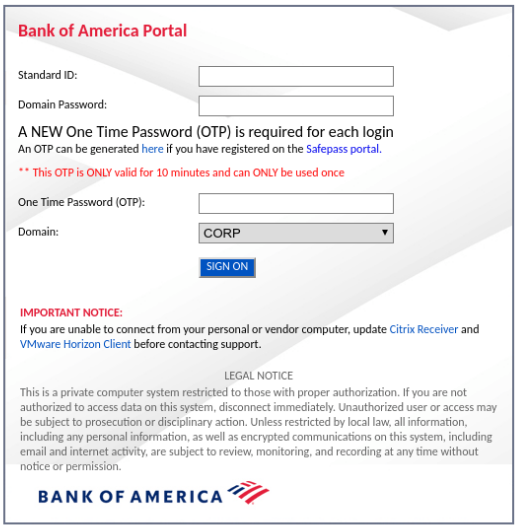
The employee phishing page bofaticket[.]com. Image: urlscan.io

The goal is to convince the target either to divulge their credentials over the phone or to input them manually at a website set up by the attackers that mimics the organization’s corporate email or VPN portal.

Zack Allen is director of threat intelligence for ZeroFOX, a Baltimore-based company that helps customers detect and respond to risks found on social media and other digital channels. Allen has been working with Nixon and several dozen other researchers from various security firms to monitor the activities of this prolific phishing gang in a bid to disrupt their operations.

Allen said the attackers tend to focus on phishing new hires at targeted companies, and will often pose as new employees themselves working in the company’s IT division. To make that claim more believable, the phishers will create LinkedIn profiles and seek to connect those profiles with other employees from that same organization to support the illusion that the phony profile actually belongs to someone inside the targeted firm.

“They’ll say ‘Hey, I’m new to the company, but you can check me out on LinkedIn’ or Microsoft Teams or Slack, or whatever platform the company uses for internal communications,” Allen said. “There tends to be a lot of pretext in these conversations around the communications and work-from-home applications that companies are using. But eventually, they tell the employee they have to fix their VPN and can they please log into this website.”

SPEAR VISHING

The domains used for these pages often invoke the company’s name, followed or preceded by hyphenated terms such as “vpn,” “ticket,” “employee,” or “portal.” The phishing sites also may include working links to the organization’s other internal online resources to make the scheme seem more believable if a target starts hovering over links on the page.

Allen said a typical voice phishing or “vishing” attack by this group involves at least two perpetrators: One who is social engineering the target over the phone, and another co-conspirator who takes any credentials entered at the phishing page and quickly uses them to log in to the target company’s VPN platform in real-time.

Time is of the essence in these attacks because many companies that rely on VPNs for remote employee access also require employees to supply some type of multi-factor authentication in addition to a username and password — such as a one-time numeric code generated by a mobile app or text message. And in many cases, those codes are only good for a short duration — often measured in seconds or minutes.

But these vishers can easily sidestep that layer of protection, because their phishing pages simply request the one-time code as well.

A phishing page (helpdesk-att[.]com) targeting AT&T employees. Image: urlscan.io

Allen said it matters little to the attackers if the first few social engineering attempts fail. Most targeted employees are working from home or can be reached on a mobile device. If at first the attackers don’t succeed, they simply try again with a different employee.

And with each passing attempt, the phishers can glean important details from employees about the target’s operations, such as company-specific lingo used to describe its various online assets, or its corporate hierarchy.

Thus, each unsuccessful attempt actually teaches the fraudsters how to refine their social engineering approach with the next mark within the targeted organization, Nixon said.

“These guys are calling companies over and over, trying to learn how the corporation works from the inside,” she said.

NOW YOU SEE IT, NOW YOU DON’T

All of the security researchers interviewed for this story said the phishing gang is pseudonymously registering their domains at just a handful of domain registrars that accept bitcoin, and that the crooks typically create just one domain per registrar account.

“They’ll do this because that way if one domain gets burned or taken down, they won’t lose the rest of their domains,” Allen said.

More importantly, the attackers are careful to do nothing with the phishing domain until they are ready to initiate a vishing call to a potential victim. And when the attack or call is complete, they disable the website tied to the domain.

This is key because many domain registrars will only respond to external requests to take down a phishing website if the site is live at the time of the abuse complaint. This requirement can stymie efforts by companies like ZeroFOX that focus on identifying newly-registered phishing domains before they can be used for fraud.

“They’ll only boot up the website and have it respond at the time of the attack,” Allen said. “And it’s super frustrating because if you file an abuse ticket with the registrar and say, ‘Please take this domain away because we’re 100 percent confident this site is going to be used for badness,’ they won’t do that if they don’t see an active attack going on. They’ll respond that according to their policies, the domain has to be a live phishing site for them to take it down. And these bad actors know that, and they’re exploiting that policy very effectively.”
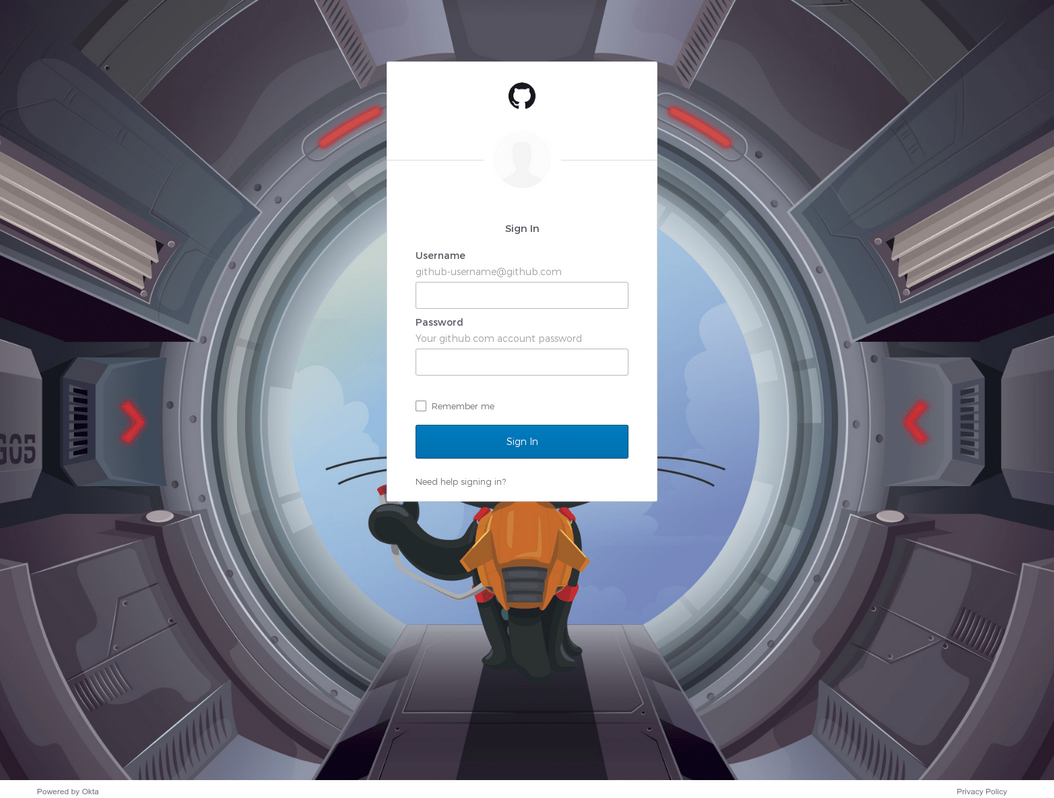
A phishing page (github-ticket[.]com) aimed at siphoning credentials for a target organization’s access to the software development platform Github. Image: urlscan.io

SCHOOL OF HACKS

Both Nixon and Allen said the object of these phishing attacks seems to be to gain access to as many internal company tools as possible, and to use those tools to seize control over digital assets that can quickly be turned into cash. Primarily, that includes any social media and email accounts, as well as associated financial instruments such as bank accounts and any cryptocurrencies.

Nixon said she and others in her research group believe the people behind these sophisticated vishing campaigns hail from a community of young men who have spent years learning how to social engineer employees at mobile phone companies and social media firms into giving up access to internal company tools.

Traditionally, the goal of these attacks has been gaining control over highly-prized social media accounts, which can sometimes fetch thousands of dollars when resold in the cybercrime underground. But this activity gradually has evolved toward more direct and aggressive monetization of such access.

On July 15, a number of high-profile Twitter accounts were used to tweet out a bitcoin scam that earned more than $100,000 in a few hours. According to Twitter, that attack succeeded because the perpetrators were able to social engineer several Twitter employees over the phone into giving away access to internal Twitter tools.

Nixon said it’s not clear whether any of the people involved in the Twitter compromise are associated with this vishing gang, but she noted that the group showed no signs of slacking off after federal authorities charged several people with taking part in the Twitter hack.

“A lot of people just shut their brains off when they hear the latest big hack wasn’t done by hackers in North Korea or Russia but instead some teenagers in the United States,” Nixon said. “When people hear it’s just teenagers involved, they tend to discount it. But the kinds of people responsible for these voice phishing attacks have now been doing this for several years. And unfortunately, they’ve gotten pretty advanced, and their operational security is much better now.”
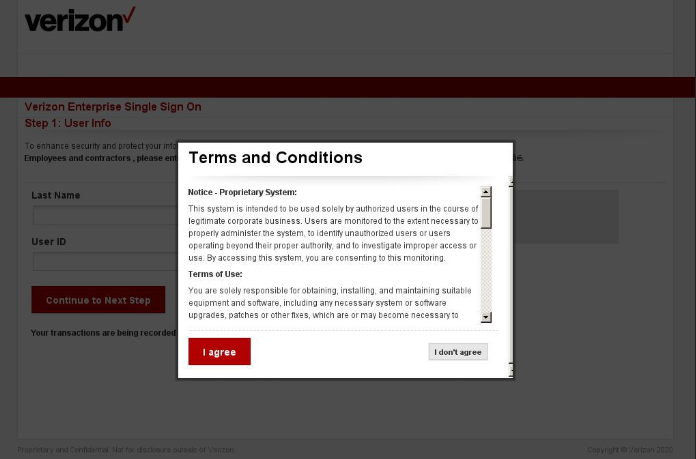
A phishing page (vzw-employee[.]com) targeting employees of Verizon. Image: DomainTools

PROPER ADULT MONEY-LAUNDERING

While it may seem amateurish or myopic for attackers who gain access to a Fortune 100 company’s internal systems to focus mainly on stealing bitcoin and social media accounts, that access — once established — can be re-used and re-sold to others in a variety of ways.

“These guys do intrusion work for hire, and will accept money for any purpose,” Nixon said. “This stuff can very quickly branch out to other purposes for hacking.”

For example, Allen said he suspects that once inside of a target company’s VPN, the attackers may try to add a new mobile device or phone number to the phished employee’s account as a way to generate additional one-time codes for future access by the phishers themselves or anyone else willing to pay for that access.

Nixon and Allen said the activities of this vishing gang have drawn the attention of U.S. federal authorities, who are growing concerned over indications that those responsible are starting to expand their operations to include criminal organizations overseas.

“What we see now is this group is really good on the intrusion part, and really weak on the cashout part,” Nixon said. “But they are learning how to maximize the gains from their activities. That’s going to require interactions with foreign gangs and learning how to do proper adult money laundering, and we’re already seeing signs that they’re growing up very quickly now.”

WHAT CAN COMPANIES DO?

Many companies now make security awareness and training an integral part of their operations. Some firms even periodically send test phishing messages to their employees to gauge their awareness levels, and then require employees who miss the mark to undergo additional training.

Such precautions, while important and potentially helpful, may do little to combat these phone-based phishing attacks that tend to target new employees. Both Allen and Nixon — as well as others interviewed for this story who asked not to be named — said the weakest link in most corporate VPN security setups these days is the method relied upon for multi-factor authentication.
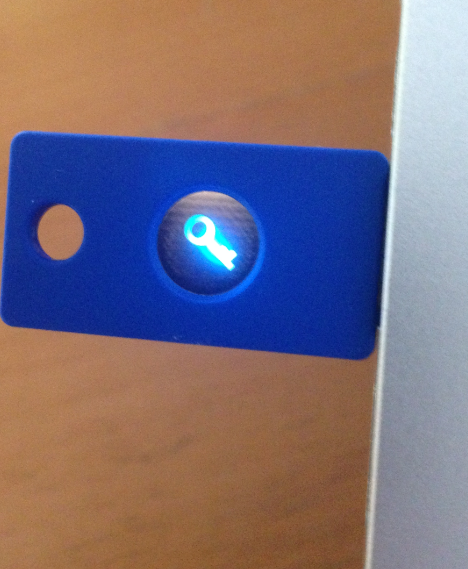
A U2F device made by Yubikey, plugged into the USB port on a computer.

One multi-factor option — physical security keys — appears to be immune to these sophisticated scams. The most commonly used security keys are inexpensive USB-based devices. A security key implements a form of multi-factor authentication known as Universal 2nd Factor (U2F), which allows the user to complete the login process simply by inserting the USB device and pressing a button on the device. The key works without the need for any special software drivers.

The allure of U2F devices for multi-factor authentication is that even if an employee who has enrolled a security key for authentication tries to log in at an impostor site, the company’s systems simply refuse to request the security key if the user isn’t on their employer’s legitimate website, and the login attempt fails. Thus, the second factor cannot be phished, either over the phone or Internet.

In July 2018, Google disclosed that it had not had any of its 85,000+ employees successfully phished on their work-related accounts since early 2017, when it began requiring all employees to use physical security keys in place of one-time codes.

Probably the most popular maker of security keys is Yubico, which sells a basic U2F Yubikey for $20. It offers regular USB versions as well as those made for devices that require USB-C connections, such as Apple’s newer Mac OS systems. Yubico also sells more expensive keys designed to work with mobile devices. [Full disclosure: Yubico was recently an advertiser on this site].

Nixon said many companies will likely balk at the price tag associated with equipping each employee with a physical security key. But she said as long as most employees continue to work remotely, this is probably a wise investment given the scale and aggressiveness of these voice phishing campaigns.

“The truth is some companies are in a lot of pain right now, and they’re having to put out fires while attackers are setting new fires,” she said. “Fixing this problem is not going to be simple, easy or cheap. And there are risks involved if you somehow screw up a bunch of employees accessing the VPN. But apparently these threat actors really hate Yubikey right now.”

from Krebs on Security https://ift.tt/34fK9Gm
via IFTTT

El mejor móvil que puedes comprar ahora mismo por 300 euros

Uno de los móviles de gama alta más potentes de este año puede ser tuyo por poco más de 300 euros, convirtiéndose así en el móvil más recomendable dentro de su categoría.

No es otro que el POCO F2 Pro, un terminal que destaca por contar con una de las fichas técnicas más abultadas del mercado, gracias a un procesador Snapdragon 865 sumado a una pantalla AMOLED de 6,67 pulgadas que destaca por alcanzar un brillo máximo que supera los 1.000 nits.

Si quieres hacerte con él, hoy tienes una oportunidad inmejorable: puedes hacerlo a un precio de solo 313 euros, una de las mayores rebajas que hayamos visto hasta ahora para este modelo, cuyo precio original es de 529 euros.

Poco F2 Pro launcher

El POCO F2 Pro es el mejor móvil de 300 euros que puedes comprar ahora mismo.

El POCO F2 Pro puede ser tuyo por 313 euros

Dicha oferta corresponde al modelo de 6 GB de memoria RAM con 128 GB de almacenamiento, que me temo será más que suficiente para la mayoría. Para aprovecharla, únicamente hay que seleccionar el envío desde China y la versión “Official Standard”.

En cualquier caso, el terminal cuenta con la misma pantalla, el mismo procesador y las mismas cámaras que las versiones más caras.

Algunos de los rasgos más característicos de este terminal son la inclusión de una batería de 4.700 mAh con carga rápida de 30W, o su cámara frontal de 20 megapíxeles en formato pop-up, que deja un frontal totalmente libre de recortes.

POCO F2 Pro
Especificaciones
Dimensiones 163,3 x 75,4 x 8,9 mm
218 gramos
Pantalla AMOLED de 6,67 pulgadas
Hasta 1200 nits de brillo máximo / 800 nits de brillo típico
100% DCI-P3 Wide Color Gamut
Corning Gorilla Glass 5
HDR10+
Frecuencia de muestreo de 180 Hz
Resolución Full HD+ (2400 × 1080 píxeles)
Procesador Qualcomm Snapdragon 865
GPU Adreno 650
LiquidCool Technology 2.0
RAM 6 GB LPDDR4x / 8 GB LPPDDR5
Sistema operativo MIUI 11 basado en Android 10
Almacenamiento 128 GB UFS 3.0 / 256 GB UFS 3.1
Cámaras Trasera de 64 MP 1/1.7″ Sony IMX686, 0.8μm, f/1.69 , 7P lens, OIS + 5 MP (50mm) “telemacro” + 2 MP depth sensor + 13 MP 123° ultra-wide-angle. Grabación de vídeo 8K Frontal pop-up de 20 MP con vídeo a 120 FPS
Batería 4.700 mAh con carga rápida de 30 W
Otros Lector de huellas óptico en pantalla, NFC, protección IP53, emisor de infrarrojos, Wi-Fi 6, motor de vibración Z-Axis, puerto para auriculares de 3,5 mm, USB
Tipo C, sensor de luz ambiental 360º

Vale la pena mencionar que, en este caso, el terminal no se envía a Latinoamérica. En el caso de España, el envío es totalmente gratuito.

Entra en Andro4all para leer el artículo completo

Puedes unirte a nosotros en Twitter, Facebook o en Google+

¡Suscríbete a nuestro canal de YouTube!

Publicado recientemente en Andro4all

La entrada El mejor móvil que puedes comprar ahora mismo por 300 euros se publicó primero en Andro4all.

from Andro4all https://ift.tt/2Fu8vlh
via IFTTT

Los códigos QR universales ya están en Instagram: así funcionan

Facebook ha decidido simplificar al extremo el proceso para seguir a otras personas en Instagram, o permitir a otras persosnas que nos sigan. Del mismo modo que ya lo hizo en WhatsApp, la compañía ha decidido incluir los códigos QR universales en Instagram, que estaban en fase de pruebas desde 2018.

Gracias a ellos, los usuarios de la plataforma pueden compartir su perfil con otras personas rápidamente a través de sus códigos únicos, que llegan para sustituir a los anticuados “Nametags”.

Una de las grandes ventajas de este sistema es que los códigos pueden ser escaneados con cualquier app para leer códigos QR, y no solo con la herramienta integrada en Instagram.

Codigos QR en Instagram

Así son los nuevos códigos QR de Instagram.

Cómo compartir tu código QR de Instagram con otras personas

El proceso para compartir tu código QR con otras personas es simple. Para ello, tan solo debes asegurarte de haber descargado la última versión de Instagram en tu móvil. Con ella instalada, solo tienes que seguir estos pasos:

  1. Abre Instagram y dirígete al apartado de tu perfil.

  2. Toca el botón de menú de la esquina superior derecha para acceder a las opciones, y toca sobre “Código QR”.

  3. Puedes modificar el estilo del código, a través del botón de la parte superior. Si quieres compartirlo, toca sobre el botón de la esquina superior derecha.

Mira la galería en Andro4all

Cómo leer los códigos QR de otras personas

Si lo que quieres es acceder a los perfiles de otras personas a través de sus códigos QR, el proceso es similar. Solo debes acceder de nuevo a la pantalla de códigos QR de la app de Instagram, y tocar sobre el texto de “Escanear código QR” de la parte inferior.

Ahora, solo tienes que apuntar con la cámara del móvil a un código QR de Instagram y esperar a que aparezca una ventana emergente con el perfil del usuario en cuestión. Aparecerá la opción de seguir o ver el perfil de la otra persona.

Recuerda que, si no tienes Instagram a mano, puedes usar cualquier otro lector de códigos QR para escanear los códigos de otras personas. Algunos móviles incluso tienen un escaner integrado en sus apps de cámara, de modo que no es necesario usar aplicacione sde terceros.

Entra en Andro4all para leer el artículo completo

Puedes unirte a nosotros en Twitter, Facebook o en Google+

¡Suscríbete a nuestro canal de YouTube!

Publicado recientemente en Andro4all

La entrada Los códigos QR universales ya están en Instagram: así funcionan se publicó primero en Andro4all.

from Andro4all https://ift.tt/3aDijVH
via IFTTT

BlackBerry está de vuelta: lanzará nuevos móviles con teclado físico y 5G

Hablar de marcas que resisten a morir es hablar de BlackBerry. La firma, que parecía desaparecida en combate después de dos años sin lanzar un móvil, ha decidido sorprender al mundo anunciando su regreso con nuevos smartphones.

El resurgir de la compañía canadiense se produce meses después de que la mismísima TCL decidiese dejar de producir móviles bajo esta marca en lo que parecía la muerte definitiva de BlackBerry.

No obstante, la compañía ha conseguido llegar a un acuerdo con las firmas with OnwardMobility y FIH Mobile Limited para producir nuevos terminales bajo la firma BlackBerry.

Blackberry Key2

BlackBerry Key2, uno de los últimos móviles Android de BlackBerry.

Confirmado: habrá nuevos móviles BlackBerry en 2021

El regreso de BlackBerry aún se hará esperar un poco más: la compañía ha confirmado que sus nuevos terminales aterrizarán en 2021.

A través de una nota de prensa, la propia compañía ha señalado que sus nuevos terminales mantendrán el clásico teclado físico QWERTY que un día llevó a sus modelos a lo más alto. Además, adoptarán el soporte para redes 5G con el propósito de sumarse a la tendencia del año 2020.

BlackBerry vuelve en 2021

Con este cartel, BlackBerry anuncia su regreso en 2021.

Si bien no se ha hecho mención al sistema operativo que ejecutarán los dispositivos, es muy probable que Android sea la plataforma elegida para dar vida a estos terminales. En cualquier caso, habrá que esperar hasta 2021 para poder salir de dudas y conocerlo todo sobre esta nueva serie de teléfonos BlackBerry.

Entra en Andro4all para leer el artículo completo

Puedes unirte a nosotros en Twitter, Facebook o en Google+

¡Suscríbete a nuestro canal de YouTube!

Publicado recientemente en Andro4all

La entrada BlackBerry está de vuelta: lanzará nuevos móviles con teclado físico y 5G se publicó primero en Andro4all.

from Andro4all https://ift.tt/3aB5fQI
via IFTTT