FEMA IT Specialist Charged in ID Theft, Tax Refund Fraud Conspiracy

An information technology specialist at the Federal Emergency Management Agency (FEMA) was arrested this week on suspicion of hacking into the human resource databases of University of Pittsburgh Medical Center (UPMC) in 2014, stealing personal data on more than 65,000 UPMC employees, and selling the data on the dark web.

On June 16, authorities in Michigan arrested 29-year-old Justin Sean Johnson in connection with a 43-count indictment on charges of conspiracy, wire fraud and aggravated identity theft.

Federal prosecutors in Pittsburgh allege that in 2013 and 2014 Johnson hacked into the Oracle PeopleSoft databases for UPMC, a $21 billion nonprofit health enterprise that includes more than 40 hospitals.

According to the indictment, Johnson stole employee information on all 65,000 then current and former employees, including their names, dates of birth, Social Security numbers, and salaries.

The stolen data also included federal form W-2 data that contained income tax and withholding information, records that prosecutors say Johnson sold on dark web marketplaces to identity thieves engaged in tax refund fraud and other financial crimes. The fraudulent tax refund claims made in the names of UPMC identity theft victims caused the IRS to issue $1.7 million in phony refunds in 2014.

Johnson could not be reached for comment. At a court hearing in Pittsburgh this week, a judge ordered the defendant to be detained pending trial. Johnson’s attorney declined to comment on the charges.

Prosecutors allege Johnson’s intrusion into UPMC was not an isolated occurrence, and that for several years after the UPMC hack he sold personally identifiable information (PII) to buyers on dark web forums.

“The information was sold by Johnson on dark web forums for use by conspirators, who promptly filed hundreds of false form 1040 tax returns in 2014 using UPMC employee PII,” reads a statement from U.S. Attorney Scott Brady. “These false 1040 filings claimed hundreds of thousands of dollars of false tax refunds, which they converted into Amazon.com gift cards, which were then used to purchase Amazon merchandise which was shipped to Venezuela.”

The indictment says Johnson used the hacker aliases “DS and “TDS” to market the stolen records to identity thieves on the Evolution and AlphaBay dark web marketplaces. However, archived copies of the now-defunct dark web forums indicate those aliases are merely abbreviations that stand for “DearthStar” and “TheDearthStar,” respectively.

“You can expect good things come tax time as I will have lots of profiles with verified prior year AGIs to make your refund filing 10x easier,” TheDearthStar advertised in an August 2015 message to AlphaBay members.

In some cases, it appears these DearthStar identities were actively involved in not just selling PII and tax refund fraud, but also stealing directly from corporate payrolls.

In an Aug. 2015 post to AlphaBay titled “I’d like to stage a heist but…,” TheDearthStar solicited people to help him cash out access he had to the payroll systems of several different companies:

“… I have nowhere to send the money. I’d like to leverage the access I have to payroll systems of a few companies and swipe a chunk of their payroll. Ideally, I’d like to find somebody who has a network of trusted individuals who can receive ACH deposits.”

When another AlphaBay member asks how much he can get, TheDearthStar responds, “Depends on how many people end up having their payroll records ‘adjusted.’ Could be $1,000 could be $100,000.”

2014 and 2015 were particularly bad years for tax refund fraud, a form of identity theft which cost taxpayers and the U.S. Treasury billions of dollars. In April 2014, KrebsOnSecurity wrote about a spike in tax refund fraud perpetrated against medical professionals that caused many to speculate that one or more major healthcare providers had been hacked.

A follow-up story that same month examined the work of a cybercrime gang that was hacking into HR departments at healthcare organizations across the country and filing fraudulent tax refund requests with the IRS on employees of those victim firms.

The Justice Department’s indictment quotes from Johnson’s online resume as stating that he is proficient at installing and administering Oracle PeopleSoft systems. A LinkedIn resume for a Justin Johnson from Detroit says the same, and that for the past five months he has served as an information technology specialist at FEMA. A Facebook profile with the same photo belongs to a Justin S. Johnson from Detroit.

Johnson’s resume also says he was self-employed for seven years as a “cyber security researcher / bug bounty hunter” who was ranked in the top 1,000 by reputation on Hacker One, a program that rewards security researchers who find and report vulnerabilities in software and web applications.

from Krebs on Security https://ift.tt/2Ye5egY
via IFTTT

FEMA IT Specialist Charged in ID Theft, Tax Refund Fraud Conspiracy

An information technology specialist at the Federal Emergency Management Agency (FEMA) was arrested this week on suspicion of hacking into the human resource databases of University of Pittsburgh Medical Center (UPMC) in 2014, stealing personal data on more than 65,000 UPMC employees, and selling the data on the dark web.

On June 16, authorities in Michigan arrested 29-year-old Justin Sean Johnson in connection with a 43-count indictment on charges of conspiracy, wire fraud and aggravated identity theft.

Federal prosecutors in Pittsburgh allege that in 2013 and 2014 Johnson hacked into the Oracle PeopleSoft databases for UPMC, a $21 billion nonprofit health enterprise that includes more than 40 hospitals.

According to the indictment, Johnson stole employee information on all 65,000 then current and former employees, including their names, dates of birth, Social Security numbers, and salaries.

The stolen data also included federal form W-2 data that contained income tax and withholding information, records that prosecutors say Johnson sold on dark web marketplaces to identity thieves engaged in tax refund fraud and other financial crimes. The fraudulent tax refund claims made in the names of UPMC identity theft victims caused the IRS to issue $1.7 million in phony refunds in 2014.

Johnson could not be reached for comment. At a court hearing in Pittsburgh this week, a judge ordered the defendant to be detained pending trial. Johnson’s attorney declined to comment on the charges.

Prosecutors allege Johnson’s intrusion into UPMC was not an isolated occurrence, and that for several years after the UPMC hack he sold personally identifiable information (PII) to buyers on dark web forums.

“The information was sold by Johnson on dark web forums for use by conspirators, who promptly filed hundreds of false form 1040 tax returns in 2014 using UPMC employee PII,” reads a statement from U.S. Attorney Scott Brady. “These false 1040 filings claimed hundreds of thousands of dollars of false tax refunds, which they converted into Amazon.com gift cards, which were then used to purchase Amazon merchandise which was shipped to Venezuela.”

The indictment says Johnson used the hacker aliases “DS and “TDS” to market the stolen records to identity thieves on the Evolution and AlphaBay dark web marketplaces. However, archived copies of the now-defunct dark web forums indicate those aliases are merely abbreviations that stand for “DearthStar” and “TheDearthStar,” respectively.

“You can expect good things come tax time as I will have lots of profiles with verified prior year AGIs to make your refund filing 10x easier,” TheDearthStar advertised in an August 2015 message to AlphaBay members.

In some cases, it appears these DearthStar identities were actively involved in not just selling PII and tax refund fraud, but also stealing directly from corporate payrolls.

In an Aug. 2015 post to AlphaBay titled “I’d like to stage a heist but…,” TheDearthStar solicited people to help him cash out access he had to the payroll systems of several different companies:

“… I have nowhere to send the money. I’d like to leverage the access I have to payroll systems of a few companies and swipe a chunk of their payroll. Ideally, I’d like to find somebody who has a network of trusted individuals who can receive ACH deposits.”

When another AlphaBay member asks how much he can get, TheDearthStar responds, “Depends on how many people end up having their payroll records ‘adjusted.’ Could be $1,000 could be $100,000.”

2014 and 2015 were particularly bad years for tax refund fraud, a form of identity theft which cost taxpayers and the U.S. Treasury billions of dollars. In April 2014, KrebsOnSecurity wrote about a spike in tax refund fraud perpetrated against medical professionals that caused many to speculate that one or more major healthcare providers had been hacked.

A follow-up story that same month examined the work of a cybercrime gang that was hacking into HR departments at healthcare organizations across the country and filing fraudulent tax refund requests with the IRS on employees of those victim firms.

The Justice Department’s indictment quotes from Johnson’s online resume as stating that he is proficient at installing and administering Oracle PeopleSoft systems. A LinkedIn resume for a Justin Johnson from Detroit says the same, and that for the past five months he has served as an information technology specialist at FEMA. A Facebook profile with the same photo belongs to a Justin S. Johnson from Detroit.

Johnson’s resume also says he was self-employed for seven years as a “cyber security researcher / bug bounty hunter” who was ranked in the top 1,000 by reputation on Hacker One, a program that rewards security researchers who find and report vulnerabilities in software and web applications.

from Krebs on Security https://ift.tt/2Ye5egY
via IFTTT

Más novedades en WhatsApp: búsqueda de mensajes por fecha, uso de la app en 4 dispositivos a la vez y mucho más

Aunque la aplicación se ha actualizado recientemente para recibir novedades tan importantes como un servicio de pagos integrado o la opción de compartir nuestro perfil a través de un código QR, WhatsApp aún tiene pendiente recibir un buen número de funciones nuevas, que todo apunta a que irán llegando a lo largo de las próximas semanas.

A través de filtraciones e indicios descubiertos en el código de la aplicación, ha sido posible descubrir qué cambios van a llegar tarde o temprano a la app de mensajería más usada en el mundo. Entre ellas, se encuentran funciones como el uso de una misma cuenta en varios dispositivos de manera simultánea, novedades en la interfaz de usuario, una mejor gestión del almacenamiento de los dispositivos, y más cambios que pasamos a ver a continuación.

Trucos básicos y esenciales de WhatsApp

En 2020, WhatsApp sigue siendo la app de mensajería más usada del mundo

Usar la misma cuenta de WhatsApp en varios dispositivos, mucho más cerca

Desde hace ya tiempo sabemos que será posible usar la misma cuenta de WhatsApp en varios dispositivos de manera simultánea, e incluso hemos podido ver cómo funcionará esta característica. Si bien seguimos sin tener pistas sobre su fecha de llegada, desde el portal WABetaInfo han confirmado que su llegada parece ser inminente, y una vez disponible permitirá utilizar la misma cuenta en hasta cuatro dispositivos a la vez.

https://platform.twitter.com/widgets.js

Nuevo color en las burbujas de mensajes

Ya han pasado algunos meses desde que WhatsApp introdujo por fin el tema oscuro en Android y iOS. Aún así, la compañía sigue trabajando en pulir la apariencia de esta característica. Para ello, uno de los próximos cambios que se llevarán a cabo es la modificación del tono de verde de las burbujas que albergan los mensajes enviados, pasando a ser de un tono más claro y con un tinte azulado. La diferencia se puede apreciar en la imagen bajo estas líneas:

Nuevas burbujas en el tema oscuro de WhatsApp

En la parte inferior, se puede ver el nuevo color de las burbujas de WhatsApp

Llega la búsqueda de mensajes por fecha

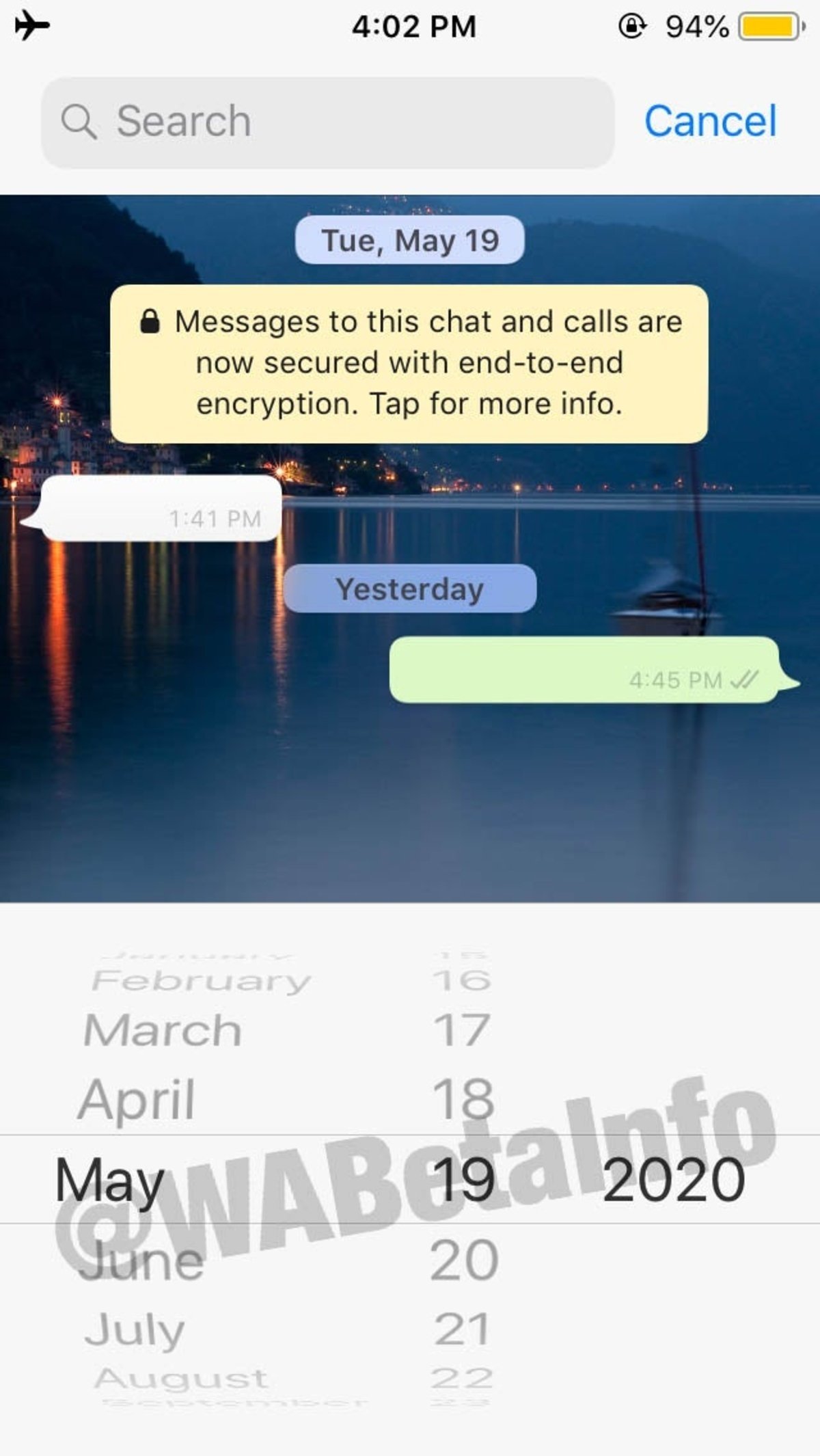
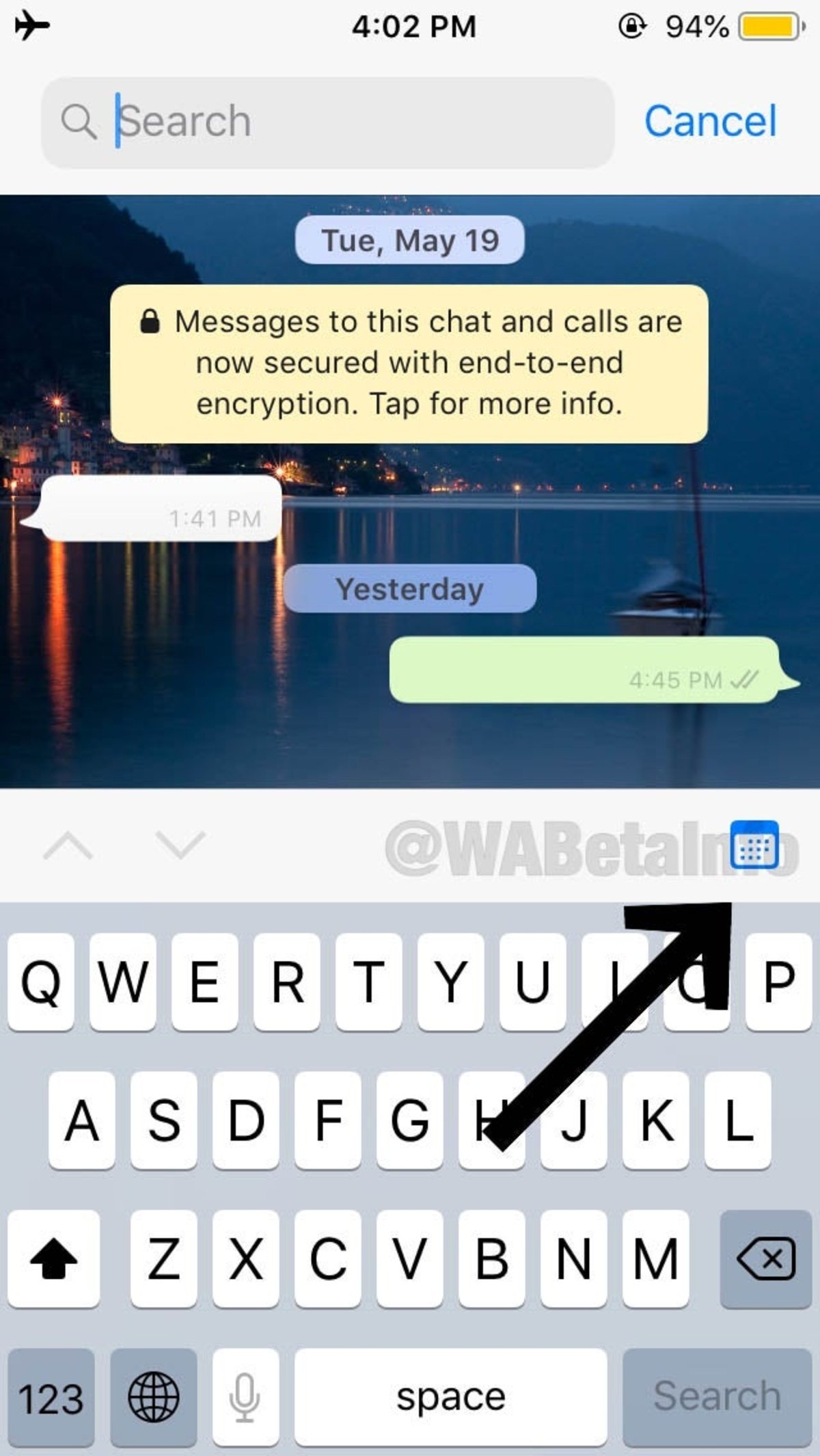
Una de las funciones más útiles de Telegram es la posibilidad de buscar mensajes según la fecha en la que fueron enviados o recibidos. Ahora, sabemos que esta función va a llegar a WhatsApp, y pese a encontrarse en fase de desarrollo, ya hemos podido ver capturas que muestran su funcionamiento:

Más novedades en WhatsApp: búsqueda de mensajes por fecha, uso de la app en 4 dispositivos a la vez y mucho más

Nuevas funciones de gestión de almacenamiento

A día de hoy, ya existen formas de liberar espacio de almacenamiento a través de WhatsApp, ya sea eliminando archivos almacenados por la app, o bien restringiendo qué tipo de documentos pueden ser descargados de manera automática. No obstante, estas medidas no siempre son suficientes.

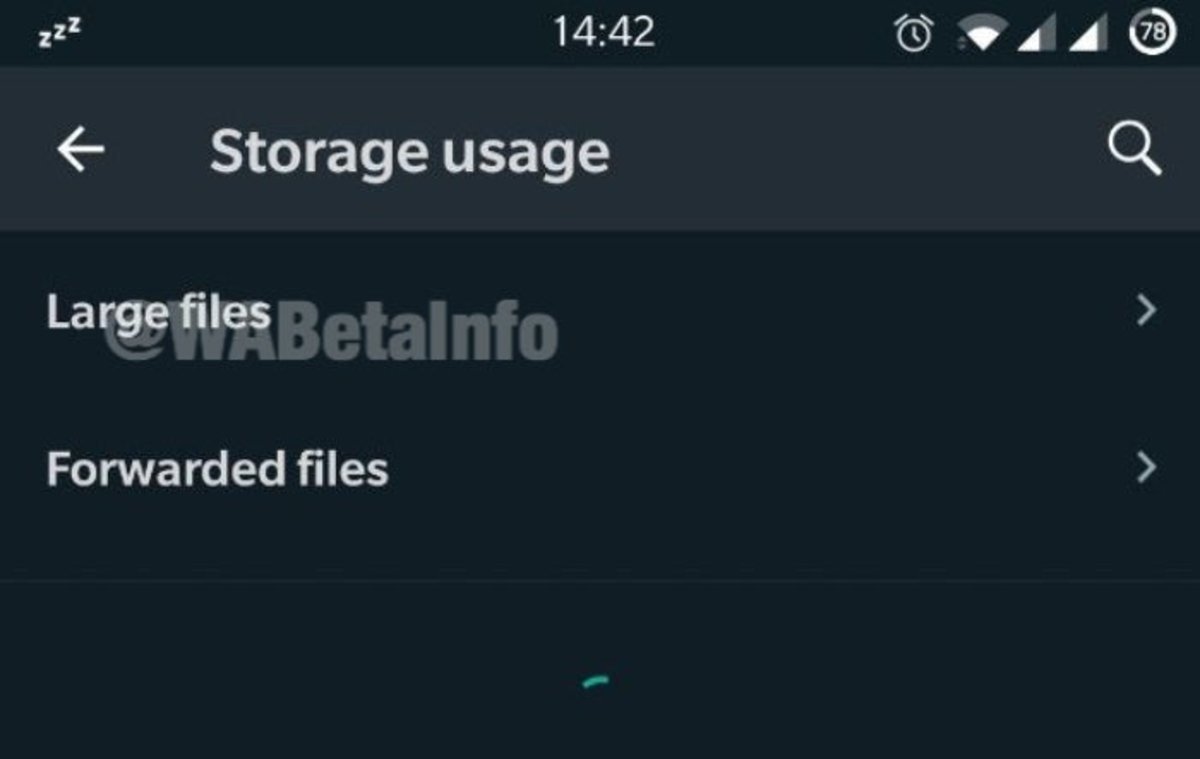
Por ello, WhatsApp planea introducir nuevas funciones de gestión de almacenamiento, que llegarán junto a un rediseño completo del panel de ajustes de almacenamiento de la app. Una vez disponibles, estas herramientas permitirán filtrar los archivos de WhatsApp según su tamaño para facilitar así la eliminación de archivos grandes. En ese sentido, también se va a incluir una opción para ordenar los archivos compartidos en las conversaciones, ya sea por fecha de llegada o por peso.

NUevas herramientas de almacenamiento en WhatsApp

Así aparecerán las nuevas herramientas de almacenamiento en WhatsApp

Por otro lado, una función aún en pruebas es la posibilidad de eliminar todos los mensajes de una conversación en concreto, a excepción de aquellos que hayan sido marcados como favoritos**. De este modo, es posible limpiar conversaciones con muchos mensajes, dejando únicamente lo importante.

Buscar el origen de las fotos recibidas será más fácil

En su misión de evitar la propagación de fake news a través de la plataforma, WhatsApp también tiene planeado incluir una función que permitirá buscar el origen de las imágenes recibidas en la web. Según se ha podido descubrir, esta herramienta –que estará disponible tanto en Android como en iOS–, llegará en forma de **un icono de lupa que reemplazará al icono de reenviar mensaje, siempre y cuando la imagen haya sido reenviada en más de cuatro ocasiones. Al tocar sobre este icono, se utilizará la búsqueda inversa de imágenes de Google Search, con el objetivo de encontrar su origen.

Busqueda de imagenes en la web en WhatsApp

El icono de búsqueda aparecerá a la derecha de las imágenes reenviadas

Estas son algunas de las novedades que están cerca de llegar a WhatsApp. Todas ellas se encuentran en fase de desarrollo en el momento de la publicación de este artículo, y no están visibles de cara a los usuarios. No obstante, es de esperar que algunas no tarden demasiado en hacer presencia, probablemente comenzando por la versión beta de WhatsApp antes de dar el salto a la variante estable de la aplicación.

Entra en Andro4all para leer el artículo completo

Puedes unirte a nosotros en Twitter, Facebook o en Google+

¡Suscríbete a nuestro canal de YouTube!

Publicado recientemente en Andro4all

La entrada Más novedades en WhatsApp: búsqueda de mensajes por fecha, uso de la app en 4 dispositivos a la vez y mucho más se publicó primero en Andro4all.

from Andro4all https://ift.tt/2Z1ucj1
via IFTTT

Desperados III: confirmación de que llegará a Linux

Desperados III

Desperados III es un videojuego de Mimimi Games y THQ Nordic que está ambientado en el lejano oeste. Actualmente se encuentra disponible de forma nativa para Windows, pero ahora se ha confirmado que está siendo desarrollado también para Linux y macOS. Una gran noticia que ha podido ser confirmada desde la cuenta oficial de THQ Nordic en Twitter.

En el tweet se podía leer que llegarían actualizaciones del contenido para julio o agosto y «Además, habrá una actualización este verano, agregando soporte para Mac y Linux«. Una buena noticia para los que les guste este tipo de videojuegos y usa la plataforma del pingüino. De hecho, si vemos el gran trabajo que hicieron en Shadow Tactics: Blades of the Shogun, seguro que también será maravilloso en el caso de Desperados III.

Por cierto, parece que Feral Interactive está un poco apagada últimamente, sin traer ports a Linux como solía hacer… ¿por qué será? Bueno, a falta de ésta, buenas son estas noticias.

En cuanto a las características del videojuego, si aún no lo conoces, están:

  • Puedes jugar con cinco personajes únicos, con sus habilidades y particularidades. Algo así como Commandos, de hecho, se parece mucho a ese videojuego, solo que de pistoleros.
  • Puedes elegir libremente varias formas de superar los obstáculos.
  • Combatir con grandes grupos de enemigos de forma planificada y cuidadosa.
  • Un sin fin de escenarios del Salvaje Oeste, con pueblos fronterizos típicos de esta época, pantanos misteriosos, estaciones de ferrocarril, ciudades en expansión, y más.
  • Puedes elegir entre ataques letales y algunos no mortales. Con sigilo y armas diversas.
  • Con varias dificultades y desafíos.
  • Modo Showdown que permite usar la pausa en cualquier momento y reaccionar ante emboscadas o ataques sorpresas.

Cuando esté disponible para Linux, ya sabes que lo puedes encontrar en tu tienda de juegos favorita, Steam de Valve

from Linux Adictos https://ift.tt/30ULj8H
via IFTTT

Convierte tu coche en inteligente por menos de 60 euros gracias a lo nuevo de Amazon

A día de hoy los coches tienen prácticamente de todo. Como los ordenadores de navegación para que nunca nos perdamos en la carretera o en la ciudad e incluso que nos permiten poner nuestra música favorita. Ahora bien, no todos tenemos coches tan nuevos y tenemos que acudir a dispositivos externos para poder realizar estas tareas.

Amazon nos sorprende con un nuevo dispositivo para nuestro coche. Porque si su Amazon Echo es posiblemente uno de los mejores altavoces inteligentes que podemos comprar a día de hoy, ¿por qué no poder trasladarlo del salón de casa a nuestro automóvil?

Del salón de tu casa a tu coche: así es Echo Auto

Echo Auto

Con el Echo Auto nuestro coche será inteligente y todo ello a muy poco precio. ¡Alexa! ¿Cuánto falta para llegar a mi destino?

Si las ventajas de tener Alexa en el salón de casa o incluso en nuestra habitación son muchas, también lo son tenerlo conectado en nuestro automóvil. Por eso mismo Amazon nos presenta su Echo Auto, un altavoz inteligente diseñado específicamente para colocarlo en nuestro vehículo.

¿Y qué sentido tiene? Pues el de escuchar nuestra música favorita de Amazon Music, Apple Music, Spotify, Deezer e incluso TuneIn. Porque es posible que no nos guste ninguna de las emisoras de radio convencionales, por lo que siempre es mejor escuchar nuestras playlist favoritas. Además de eso, contamos con Alexa, por lo que podremos consultar noticias, el tiempo que va a hacer en nuestro viaje o que directamente nos recuerdo cualquier otra cosa. Un asistente personal a nuestra entera disposición.

Su funcionamiento es muy sencillo. El Echo Auto se conecta a la app Alexa de nuestro dispositivo móvil y suena a través de los altavoces de nuestro coche. Cuenta con 8 micrófonos y tecnología de largo alcance para que pueda escuchar nuestra voz incluso con la música a tope o el ruido del aire acondicionado.

Y respecto a su precio, el Echo Auto puede ser nuestro por tan solo 59,99 euros. Un precio bastante interesante teniendo en cuenta todo lo que el asistente virtual Alexa puede hacer por nosotros. ¡Alexa, pon mi playslist favorita para viajar!

Entra en Andro4all para leer el artículo completo

Puedes unirte a nosotros en Twitter, Facebook o en Google+

¡Suscríbete a nuestro canal de YouTube!

Publicado recientemente en Andro4all

La entrada Convierte tu coche en inteligente por menos de 60 euros gracias a lo nuevo de Amazon se publicó primero en Andro4all.

from Andro4all https://ift.tt/37HZaRa
via IFTTT