
Microsoft’s ‘Stranger Things’ Gag Doesn’t Make Sense Because No One Used Windows 1.0
Windows may be the winner now, but it was a cultural nonentity in 1985.
July 8, 2019 at 12:59PM
via Digg https://ift.tt/32elq1A

Microsoft’s ‘Stranger Things’ Gag Doesn’t Make Sense Because No One Used Windows 1.0
Windows may be the winner now, but it was a cultural nonentity in 1985.
July 8, 2019 at 12:59PM
via Digg https://ift.tt/32elq1A
The crooks behind an affiliate program that paid cybercriminals to install the destructive and wildly successful GandCrab ransomware strain announced on May 31, 2019 they were terminating the program after allegedly having earned more than $2 billion in extortion payouts from victims. What follows is a deep dive into who may be responsible for recruiting new members to help spread the contagion.
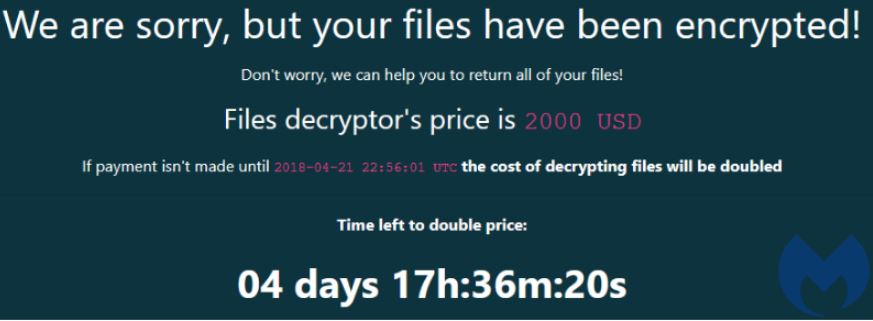
Image: Malwarebytes.
Like most ransomware strains, the GandCrab ransomware-as-a-service offering held files on infected systems hostage unless and until victims agreed to pay the demanded sum. But GandCrab far eclipsed the success of competing ransomware affiliate programs largely because its authors worked assiduously to update the malware so that it could evade antivirus and other security defenses.
In the 15-month span of the GandCrab affiliate enterprise beginning in January 2018, its curators shipped five major revisions to the code, each corresponding with sneaky new features and bug fixes aimed at thwarting the efforts of computer security firms to stymie the spread of the malware.
“In one year, people who worked with us have earned over US $2 billion,” read the farewell post by the eponymous GandCrab identity on the cybercrime forum Exploit[.]in, where the group recruited many of its distributors. “Our name became a generic term for ransomware in the underground. The average weekly income of the project was equal to US $2.5 million.”
The message continued:
“We ourselves have earned over US $150 million in one year. This money has been successfully cashed out and invested in various legal projects, both online and offline ones. It has been a pleasure to work with you. But, like we said, all things come to an end. We are getting a well-deserved retirement. We are a living proof that you can do evil and get off scot-free. We have proved that one can make a lifetime of money in one year. We have proved that you can become number one by general admission, not in your own conceit.”
Evil indeed, when one considers the damage inflicted on so many individuals and businesses hit by GandCrab — easily the most rapacious and predatory malware of 2018 and well into 2019.
The GandCrab identity on Exploit[.]in periodically posted updates about victim counts and ransom payouts. For example, in late July 2018, GandCrab crowed that a single affiliate of the ransomware rental service had infected 27,031 victims in the previous month alone, receiving about $125,000 in commissions.
The following month, GandCrab bragged that the program in July 2018 netted almost 425,000 victims and extorted more than one million dollars worth of cryptocurrencies, much of which went to affiliates who helped to spread the infections.
Russian security firm Kaspersky Lab estimated that by the time the program ceased operations, GandCrab accounted for up to half of the global ransomware market.
It remains unclear how many individuals were active in the core GandCrab malware development team. But KrebsOnSecurity located a number of clues that point to the real-life identity of a Russian man who appears to have been put in charge of recruiting new affiliates for the program.
In November 2018, a GandCrab affiliate posted a screenshot on the Exploit[.]in cybercrime forum of a private message between himself and a forum member known variously as “oneiilk2” and “oneillk2” that showed the latter was in charge of recruiting new members to the ransomware earnings program.
Oneiilk2 also was a successful GandCrab affiliate in his own right. In May 2018, he could be seen in multiple Exploit[.]in threads asking for urgent help obtaining access to hacked businesses in South Korea. These solicitations go on for several weeks that month — with Oneiilk2 saying he’s willing to pay top dollar for the requested resources. At the same time, Oneiilk2 can be seen on Exploit asking for help figuring out how to craft a convincing malware lure using the Korean alphabet.
Later in the month, Oneiilk2 says he no longer needs assistance on that request. Just a few weeks later, security firms began warning that attackers were staging a spam campaign to target South Korean businesses with version 4.3 of GandCrab.
When Oneiilk2 registered on Exploit in January 2015, he used the email address hottabych_k2@mail.ru. That email address and nickname had been used since 2009 to register multiple identities on more than a half dozen cybercrime forums.
In 2010, the hottabych_k2 address was used to register the domain name dedserver[.]ru, a site which marketed dedicated Web servers to individuals involved in various cybercrime projects. That domain registration record included the Russian phone number +7-951-7805896, which mail.ru’s password recovery function says is indeed the phone number used to register the hottabych_k2 email account.
At least four posts made in 2010 to the hosting review service makeserver.ru advertise Dedserver and include images watermarked with the nickname “oneillk2.”
Dedserver also heavily promoted a virtual private networking (VPN) service called vpn-service[.]us to help users obfuscate their true online locations. It’s unclear how closely connected these businesses were, although a cached copy of the Dedserver homepage at Archive.org from 2010 suggests the site’s owners claimed it as their own.
Vpn-service[.]us was registered to the email address sec-service@mail.ru by an individual who used the nickname (and sometimes password) — “Metall2” — across multiple cybercrime forums.
Around the same time the GandCrab affiliate program was kicking into high gear, Oneiilk2 had emerged as one of the most trusted members of Exploit and several other forums. This was evident by measuring the total “reputation points” assigned to him, which are positive or negative feedback awarded by other members with whom the member has previously transacted.
In late 2018, Oneiilk2 was one of the top 20 highest-rated members among thousands of denizens on the Exploit forum, thanks in no small part to his association with the GandCrab enterprise.
Searching on Oneiilk2’s registration email address hottabych_k2@mail.ru via sites that track hacked or leaked databases turned up some curious results. Those records show this individual routinely re-used the same password across multiple accounts: 16061991.
For instance, that email address and password shows up in hacked password databases for an account “oneillk2” at zismo[.]biz, a Russian-language forum dedicated to news about various online money-making affiliate programs.
In a post made on Zismo in 2017, Oneiilk2 states that he lives in a small town with a population of around 400,000, and is engaged in the manufacture of furniture.
Further digging revealed that the hottabych_k2@mail.ru address had also been used to register at least two accounts on the social networking site Vkontakte, the Russian-language equivalent of Facebook.
One of those accounts was registered to a “Igor Kashkov” from Magnitogorsk, Russia, a metal-rich industrial town in southern Russia of around 410,000 residents which is home to the largest iron and steel works in the country.
The Kashkov account used the password “hottabychk2,” the phone number 890808981338, and at one point provided the alternative email address “prokopenko_k2@bk.ru.” However, this appears to have been simply an abandoned account, or at least there are only a couple of sparse updates to the profile.
The more interesting Vkontakte account tied to the hottabych_k2@mail.ru address belongs to a profile under the name “Igor Prokopenko,” who says he also lives in Magnitogorsk. The Igor Prokopenko profile says he has studied and is interested in various types of metallurgy.
There is also a Skype voice-over-IP account tied to an “Igor” from Magnitogorsk whose listed birthday is June 16, 1991. In addition, there is a fairly active Youtube account dating back to 2015 — youtube.com/user/Oneillk2 — that belongs to an Igor Prokopenko from Magnitogorsk.
That Youtube account includes mostly short videos of Mr. Prokopenko angling for fish in a local river and diagnosing problems with his Lada Kalina — a Russian-made automobile line that is quite common across Russia. An account created in January 2018 using the Oneillk2 nickname on a forum for Lada enthusiasts says its owner is 28 years old and lives in Magnitogorsk.
Sources with the ability to check Russian citizenship records identified an Igor Vladimirovich Prokopenko from Magnitogorsk who was born on June 16, 1991. Recall that “16061991” was the password used by countless online accounts tied to both hottabych_k2@mail.ru and the Oneiilk2/Oneillk2 identities.
To bring all of the above research full circle, Vkontakte’s password reset page shows that the Igor Prokopenko profile is tied to the mobile phone number +7-951-7805896, which is the same number used to set up the email account hottabych_k2@mail.ru almost 10 years ago.
Mr. Prokopenko did not respond to multiple requests for comment.
It is entirely possible that whoever is responsible for operating the GandCrab affiliate program developed an elaborate, years-long disinformation campaign to lead future would-be researchers to an innocent party.
At the same time, it is not uncommon for many Russian malefactors to do little to hide their true identities — at least early on in their careers — perhaps in part because they perceive that there is little likelihood that someone will bother connecting the dots later on, or because maybe they don’t fear arrest and/or prosecution while they reside in Russia. Anyone doubtful about this dynamic would do well to consult the Breadcrumbs series on this blog, which used similar methods as described above to unmask dozens of other major malware purveyors.
It should be noted that the GandCrab affiliate program took measures to prevent the installation of its ransomware on computers residing in Russia or in any of the countries that were previously part of the Soviet Union — referred to as the Commonwealth of Independent States and including Armenia, Belarus, Kazakhstan, Kyrgyzstan, Moldova, Russia, Tajikistan, Turkmenistan, Ukraine and Uzbekistan. This is a typical precaution taken by cybercriminals running malware operations from one of those countries, as they try to avoid making trouble in their own backyards that might attract attention from local law enforcement.
KrebsOnSecurity would like to thank domaintools.com (an advertiser on this site), as well as cyber intelligence firms Intel471, Hold Security and 4IQ for their assistance in researching this post.
from Krebs on Security https://ift.tt/2Jrl1QY
via IFTTT
Los Google Pixel 4 y Pixel 4 XL no verán la luz hasta octubre. Al menos si damos por hecho que Google no tiene intención de modificar su programación habitual de lanzamientos. Y aunque nos separan aún varios meses de la presentación de esta pareja de teléfonos, como ya ha sucedido en años anteriores, Google ha vuelto a demostrar no ser una de las mejores a la hora de guardar
Entra en Andro4all para leer el artículo completo
Puedes unirte a nosotros en Twitter, Facebook o en Google+
¡Suscríbete a nuestro canal de YouTube!
Publicado recientemente en Andro4all
from Andro4all https://ift.tt/2Xwp8Al
via IFTTT
El desarrollo de Hongmeng OS, el nuevo sistema operativo propio de Huawei, parece avanzar por el buen camino. Solo unos días atrás supimos que la marca tendría intención de presentar esta alternativa a Android durante el evento de presentación de la nueva familia Huawei Mate 30 que se llevará a cabo entre septiembre y octubre de este año, y a estas alturas ya hemos recopilado bastante información al respecto de
Entra en Andro4all para leer el artículo completo
Puedes unirte a nosotros en Twitter, Facebook o en Google+
¡Suscríbete a nuestro canal de YouTube!
Publicado recientemente en Andro4all
from Andro4all https://ift.tt/2JkLIbd
via IFTTT
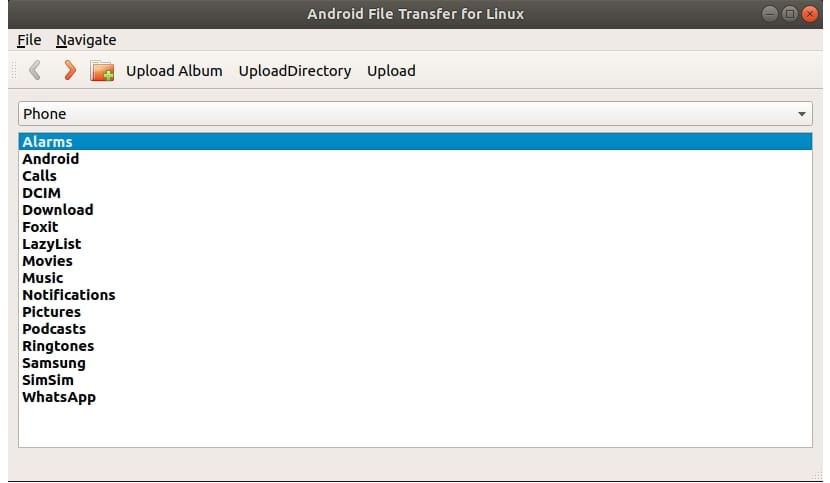
Fuera de estupideces (título), Android File Transfer es un programa MTP que te ayudará como intermediario entre tu distro GNU/Linux favorita y tus dispositivos Android conectados a tu equipo. Aunque no se necesite nada para hacer transferencias entre ambos, con esta herramienta basada en un una GUI te resultará todo mucho más sencillo y evitarás algunos problemas que podrías tener si no lo usas.
Android File Transfer permite montar los dispositivos Android como un medio más en tu distribución Linux favorita. Solo tienes que instalarla desde tu gestor de aplicaciones. Una vez instalado, contarás con una app con una interfaz gráfica muy intuitiva para transferir archivos entre dispositivos vía USB de forma fiable, segura y rápida. Solo debes conectar el dispositivo Android con el cable USB a tu equipo y dejar que el software haga su magia…
(adsbygoogle = window.adsbygoogle || []).push({});
Este cliente MTP es similar al programa que hay disponible en macOS para este tipo de operaciones, con una interfaz muy minimalista y sencilla. Entre las funciones que permite, tiene la de poder subir archivos a tu dispositivo Android o descargarlos a tu PC, crear nuevos directorios dentro de los medios de Android, soporta también funciones para cortar y pegar en los medios disponibles, puedes eliminar archivos del dispositivo Android y tiene una caja de diálogo donde ver el progreso de la transferencia.
También podrás acceder tanto a la memoria interna del dispositivo Android como a la tarjeta de memoria si es que la tiene. Podrás ver todos los directorios principales y navegar por ellos fácilmente para localizar lo que buscas o llegar a donde deseas. Incluso tiene una opción para administrar álbumes de forma muy sencilla. Sin duda todo lo que necesitas para administrar tus archivos y realizar copias o tener todo a tu disposición justo en el dispositivo que lo quieres…
El artículo Android File Transfer: tu “interventor” entre Android y GNU/Linux ha sido originalmente publicado en Linux Adictos.
from Linux Adictos https://ift.tt/2XBMKDL
via IFTTT
Reports indicate a deal could be made by mid-July as Broadcom secures financing for the purchase.
from Dark Reading: https://ift.tt/2L8hNoQ
via IFTTT
Huawei por fin está libre de todo problema con el gobierno de Estados Unidos, tras unas semanas en las que la compañía ha sufrido un gran número de acusaciones, lo cual incluso le ha provocado ser expulsada de algunas asociaciones, con el gran daño a su imagen que eso supone. Sin embargo, ahora ha pasado la tempestad, y el fundador de la compañía china ha hablado ahora acerca de la
Entra en Andro4all para leer el artículo completo
Puedes unirte a nosotros en Twitter, Facebook o en Google+
¡Suscríbete a nuestro canal de YouTube!
Publicado recientemente en Andro4all
from Andro4all https://ift.tt/2Juyck1
via IFTTT
 Hace apenas unas horas publicábamos un artículo hablando de la disponibilidad de Linux 5.2, la última versión del kernel de Linux. Su creador, Linus Torvalds, la lanzó ayer por la tarde-noche, lo que significa que aún no está disponible ni 24 horas, pero ya hay un sistema operativo que lo pone a disponibilidad de sus usuarios. Como viene siendo habitual, se trata de Linux Lite, una versión basada en Debian y en Ubuntu (y no, no es lo mismo aunque Ubuntu esté basado en Debian).
De lo que os hablamos en este artículo no es de la disponibilidad de Linux 5.2; os hablamos de que Linux Lite lo ofrece a sus usuarios de manera oficial, por lo que se puede instalar desde el terminal escribiendo unos comandos que detallaremos a continuación. Lo mejor es que se trata de una actualización no obligatoria, por lo que los que no lo tengan claro pueden quedarse en la versión que ya están usando.
(adsbygoogle = window.adsbygoogle || []).push({});
Para instalar Linux 5.2 en Linux Lite bastará con abrir una ventana del terminal y escribir lo siguiente:
sudo apt update && sudo apt install linux-headers-linuxlite-5.2.0 linux-image-linuxlite-5.2.0 -y
Si queremos eliminar los restos del kernel anterior, también tenemos que usar el comando sudo apt autoremove, pero esto es algo que yo solo recomendaría una vez comprobado que todo funciona correctamente.
Una vez más, Jerry Bezencon se ha convertido en noticia por darse prisa en empaquetar el código de Linux 5.2 y ser el primero en ofrecerlo en su Linux Lite. Yo, que soy alguien a quien le gusta tener siempre el software a la última, no soy un gran fan de actualizar el kernel tan pronto en cuanto lo lanza Torvalds, puesto que cualquier cosa podría salir mal. Yo prefiero quedarme en el kernel que trae el sistema operativo por defecto, siempre y cuando no experimente fallos de hardware molestos que me imposibiliten trabajar con mi ordenador. En cualquier caso, los usuarios de Linux Lite ya puede instalar Linux 5.2 si lo desean.
El artículo Linux Lite, el primer sistema operativo en poder instalar Linux 5.2. Te explicamos cómo ha sido originalmente publicado en Linux Adictos.
from Linux Adictos https://ift.tt/2LczMdI
via IFTTT

La gran apuesta de Microsoft en el sector de la telefonía ya no tiene nada que ver con Windows Phone. Desde la “muerte” del sistema operativo móvil de Microsoft, los de Redmond han centrado sus esfuerzos en inundar las tiendas de aplicaciones del resto de ecosistemas de apps y utilidades propias, en muchos casos alternativas a las soluciones ofrecidas por Google o Apple. No obstante, y pese a que la
Entra en Andro4all para leer el artículo completo
Puedes unirte a nosotros en Twitter, Facebook o en Google+
¡Suscríbete a nuestro canal de YouTube!
Publicado recientemente en Andro4all
from Andro4all https://ift.tt/2YP5SQ5
via IFTTT
 Pacosite's Blog