“FudCo” Spam Empire Tied to Pakistani Software Firm

In May 2015, KrebsOnSecurity briefly profiledThe Manipulaters,” the name chosen by a prolific cybercrime group based in Pakistan that was very publicly selling spam tools and a range of services for crafting, hosting and deploying malicious email. Six years later, a review of the social media postings from this group shows they are prospering, while rather poorly hiding their activities behind a software development firm in Lahore that has secretly enabled an entire generation of spammers and scammers.

The Web site in 2015 for the “Manipulaters Team,” a group of Pakistani hackers behind the dark web identity “Saim Raza,” who sells spam and malware tools and services.

The Manipulaters’ core brand in the underground is a shared cybercriminal identity named “Saim Raza,” who for the past decade across dozens of cybercrime sites and forums has peddled a popular spamming and phishing service variously called “Fudtools,” “Fudpage,” “Fudsender,” etc.

The common acronym in nearly all of Saim Raza’s domains over the years — “FUD” — stands for “Fully Un-Detectable,” and it refers to cybercrime resources that will evade detection by security tools like antivirus software or anti-spam appliances.
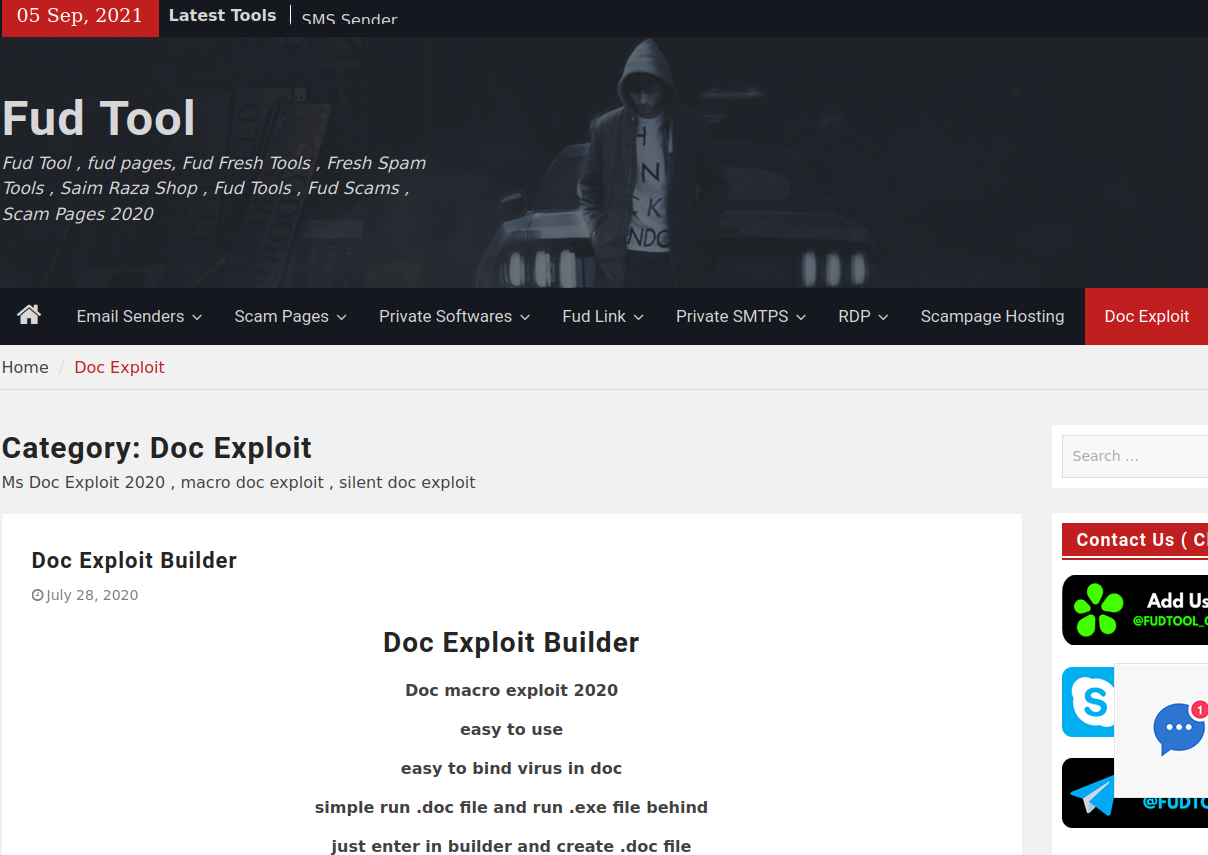
One of several current Fudtools sites run by The Manipulaters.

The current website for Saim Raza’s Fud Tools (above) offers phishing templates or “scam pages” for a variety of popular online sites like Office365 and Dropbox. They also sell “Doc Exploit” products that bundle malicious software with innocuous Microsoft Office documents; “scampage hosting” for phishing sites; a variety of spam blasting tools like HeartSender; and software designed to help spammers route their malicious email through compromised sites, accounts and services in the cloud.

For years leading up to 2015, “admin@manipulaters.com” was the name on the registration records for thousands of scam domains that spoofed some of the world’s top banks and brand names, but particularly Apple and Microsoft. When confronted about this, The Manipulaters founder Madih-ullah Riaz replied, “We do not deliberately host or allow any phishing or any other abusive website. Regarding phishing, whenever we receive complaint, we remove the services immediately. Also we are running business since 2006.”
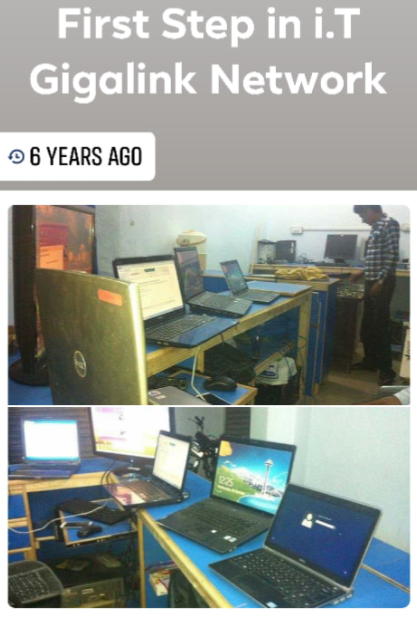
The IT network of The Manipulaters, circa 2013. Image: Facebook

Two years later, KrebsOnSecurity received an email from Riaz asking to have his name and that of his business partner removed from the 2015 story, saying it had hurt his company’s ability to maintain stable hosting for their stable of domains.

“We run web hosting business and due to your post we got very serious problems especially no data center was accepting us,” Riaz wrote in a May 2017 email. “I can see you post on hard time criminals we are not criminals, at least it was not in our knowledge.”

Riaz said the problem was his company’s billing system erroneously used The Manipulators’ name and contact information instead of its clients in WHOIS registration records. That oversight, he said, caused many researchers to erroneously attribute to them activity that was coming from just a few bad customers.

“We work hard to earn money and it is my request, 2 years of my name in your wonderful article is enough punishment and we learned from our mistakes,” he concluded.

The Manipulaters have indeed learned a few new tricks, but keeping their underground operations air-gapped from their real-life identities is mercifully not one of them.

ZERO OPERATIONAL SECURITY

Phishing domain names registered to The Manipulaters included an address in Karachi, with the phone number 923218912562. That same phone number is shared in the WHOIS records for 4,000+ domains registered through domainprovider[.]work, a domain controlled by The Manipulaters that appears to be a reseller of another domain name provider.

One of Saim Raza’s many ads in the cybercrime underground for his Fudtools service promotes the domain fudpage[.]com, and the WHOIS records for that domain share the same Karachi phone number. Fudpage’s WHOIS records list the contact as “admin@apexgrand.com,” which is another email address used by The Manipulaters to register domains.
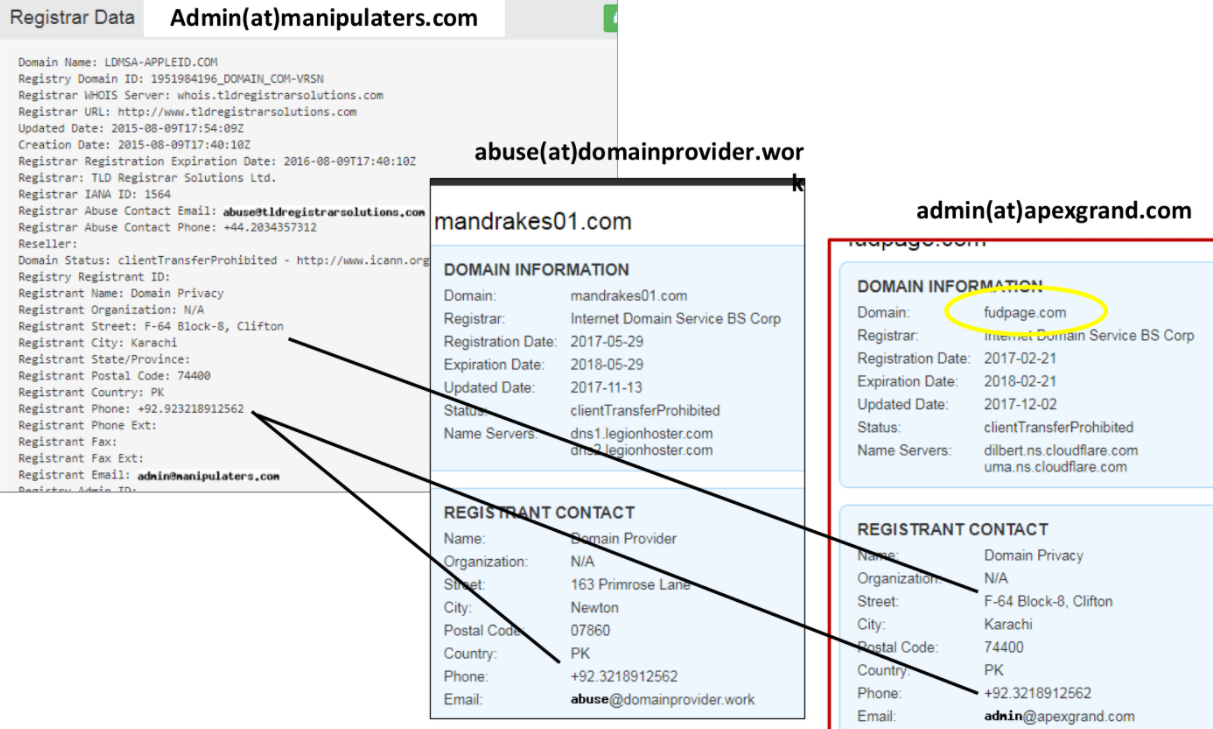
As I noted in 2015, The Manipulaters Team used domain name service (DNS) settings from another blatantly fraudulent service called ‘FreshSpamTools[.]eu,’ which was offered by a fellow Pakistani who also conveniently sold phishing toolkits targeting a number of big banks.

The WHOIS records for FreshSpamTools briefly list the email address bilal.waddaich@gmail.com, which corresponds to the email address for a Facebook account of a Bilal “Sunny” Ahmad Warraich (a.k.a. Bilal Waddaich).

Bilal Waddaich’s current Facebook profile photo includes many current and former employees of We Code Solutions.

Warraich’s Facebook profile says he works as an IT support specialist at a software development company in Lahore called We Code Solutions.

The We Code Solutions website.

A review of the hosting records for the company’s website wecodesolutions[.]pk show that over the past three years it has shared a server with just a handful of other domains, including:

-saimraza[.]tools
-fud[.]tools
-heartsender[.]net
-fudspampage[.]com
-fudteam[.]com
-autoshopscript[.]com
-wecodebilling[.]com
-antibotspanel[.]com
-sellonline[.]tools

FUD CO

The profile image atop Warraich’s Facebook page is a group photo of current and former We Code Solutions employees. Helpfully, many of the faces in that photo have been tagged and associated with their respective Facebook profiles.

For example, the Facebook profile of Burhan Ul Haq, a.k.a. “Burhan Shaxx” says he works in human relations and IT support for We Code Solutions. Scanning through Ul Haq’s endless selfies on Facebook, it’s impossible to ignore a series of photos featuring various birthday cakes and the words “Fud Co” written in icing on top.

Burhan Ul Haq’s photos show many Fud Co-themed cakes the We Code Solutions employees enjoyed on the anniversary of the Manipulaters Team.

Yes, from a review of the Facebook postings of We Code Solutions employees, it appears that for at least the last five years this group has celebrated an anniversary every May with a Fud Co cake, non-alcoholic sparkling wine, and a Fud Co party or group dinner. Let’s take a closer look at that delicious cake:

The head of We Code Solutions appears to be a guy named Rameez Shahzad, the older individual at the center of the group photo in Warraich’s Facebook profile. You can tell Shahzad is the boss because he is at the center of virtually every group photo he and other We Code Solutions employees posted to their respective Facebook pages.

We Code Solutions boss Rameez Shahzad (in sunglasses) is in the center of this group photo, which was posted by employee Burhan Ul Haq, pictured just to the right of Shahzad.

Shahzad’s postings on Facebook are even more revelatory: On Aug. 3, 2018, he posted a screenshot of someone logged into a WordPress site under the username Saim Raza — the same identity that’s been pimping Fud Co spam tools for close to a decade now.

“After [a] long time, Mailwizz ready,” Shahzad wrote as a caption to the photo:
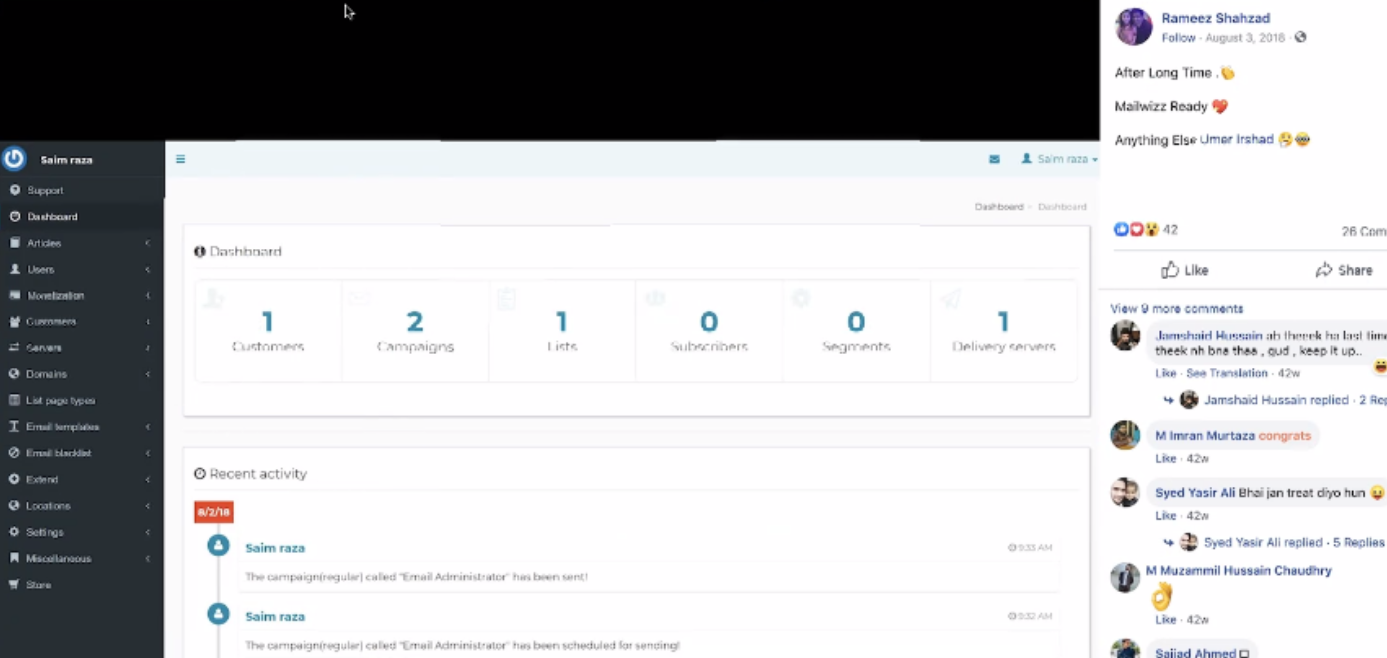
We Code Solutions boss Rameez Shahzad posted on Facebook a screenshot of someone logged into a WordPress site with the username Saim Raza, the same cybercriminal identity that has peddled the FudTools spam empire for more than 10 years.

Whoever controlled the Saim Raza cybercriminal identity had a penchant for re-using the same password (“lovertears”) across dozens of Saim Raza email addresses. One of Saim Raza’s favorite email address variations was “game.changer@[pick ISP here]”. Another email address advertised by Saim Raza was “bluebtcus@gmail.com.”

So it was not surprising to see Rameez Shahzad post a screenshot to his Facebook account of his computer desktop, which shows he is logged into a Skype account that begins with the name “game.” and a Gmail account beginning with “bluebtc.”
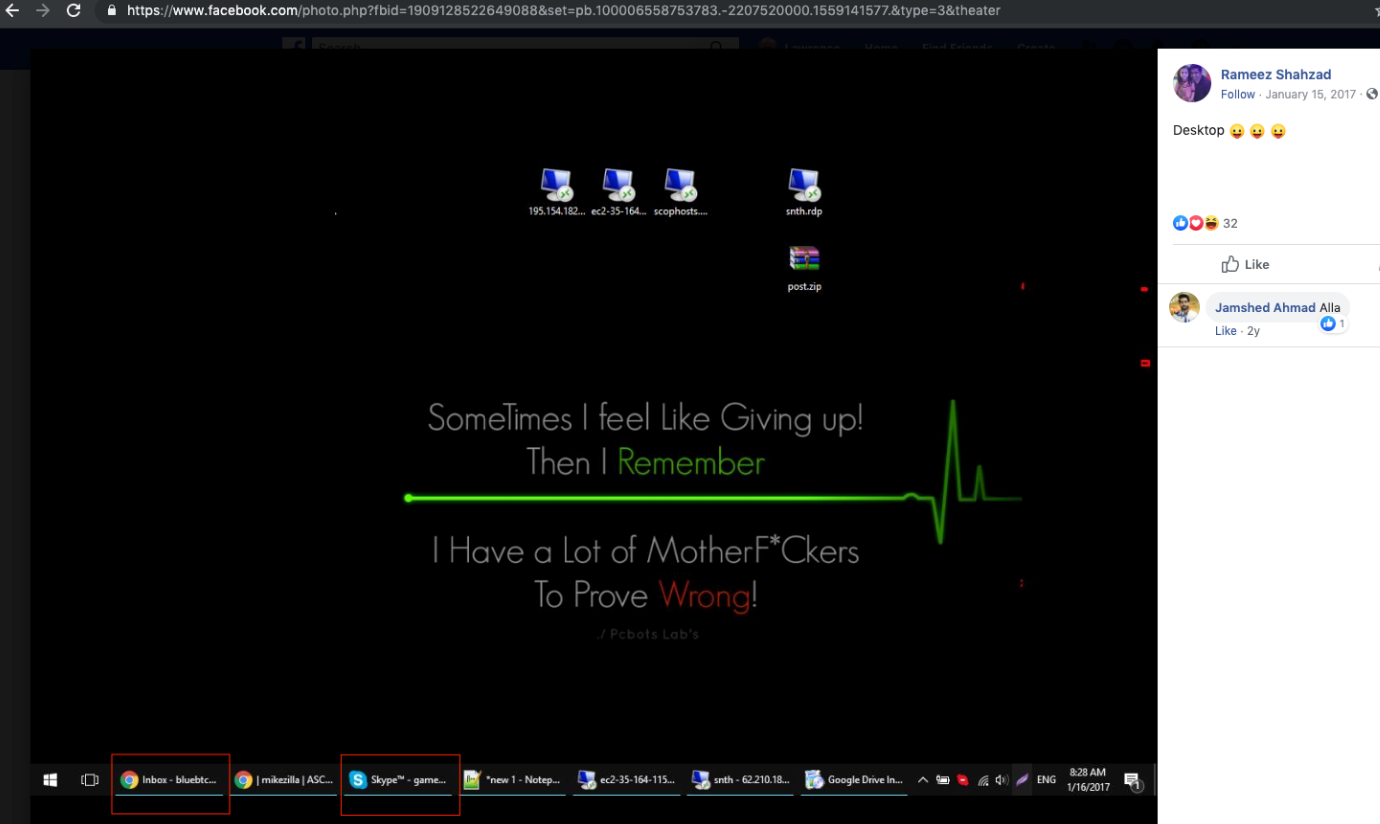
Image: Scylla Intel

KrebsOnSecurity attempted to reach We Code Solutions via the contact email address on its website — info@wecodesolutions[.]pk — but the message bounced back, saying there was no such address. Similarly, a call to the Lahore phone number listed on the website produced an automated message saying the number is not in service. None of the We Code Solutions employees contacted directly via email or phone responded to requests for comment.

FAIL BY NUMBERS

This open-source research on The Manipulaters and We Code Solutions is damning enough. But the real icing on the Fud Co cake is that sometime in 2019, The Manipulaters failed to renew their core domain name — manipulaters[.]com — the same one tied to so many of the company’s past and current business operations.

That domain was quickly scooped up by Scylla Intel, a cyber intelligence firm that specializes in connecting cybercriminals to their real-life identities. Whoops.

Scylla co-founder Sasha Angus said the messages that flooded their inbox once they set up an email server on that domain quickly filled in many of the details they didn’t already have about The Manipulaters.

“We know the principals, their actual identities, where they are, where they hang out,” Angus said. “I’d say we have several thousand exhibits that we could put into evidence potentially. We have them six ways to Sunday as being the guys behind this Saim Raza spammer identity on the forums.”

Angus said he and a fellow researcher briefed U.S. prosecutors in 2019 about their findings on The Manipulaters, and that investigators expressed interest but also seemed overwhelmed by the volume of evidence that would need to be collected and preserved about this group’s activities.

“I think one of the things the investigators found challenging about this case was not who did what, but just how much bad stuff they’ve done over the years,” Angus said. “With these guys, you keep going down this rabbit hole that never ends because there’s always more, and it’s fairly astonishing. They are prolific. If they had halfway decent operational security, they could have been really successful. But thankfully, they don’t.”

from Krebs on Security https://ift.tt/3tgDJkQ
via IFTTT

Gift Card Gang Extracts Cash From 100k Inboxes Daily

Some of the most successful and lucrative online scams employ a “low-and-slow” approach — avoiding detection or interference from researchers and law enforcement agencies by stealing small bits of cash from many people over an extended period. Here’s the story of a cybercrime group that compromises up to 100,000 email inboxes per day, and apparently does little else with this access except siphon gift card and customer loyalty program data that can be resold online.

The data in this story come from a trusted source in the security industry who has visibility into a “proxy” network of hacked machines that fraudsters in just about every corner of the Internet are using to anonymize their malicious Web traffic. For the past three years, the source — we’ll call him “Bill” to preserve his requested anonymity — has been watching one group of threat actors that is mass-testing millions of usernames and passwords against the world’s major email providers each day.

Bill said he’s not sure where the passwords are coming from, but he assumes they are tied to various databases for compromised websites that get posted to password cracking and hacking forums on a regular basis. Bill said this criminal group averages between five and ten million email authentication attempts daily, and comes away with anywhere from 50,000 to 100,000 of working inbox credentials.

In about half the cases the credentials are being checked via “IMAP,” which is an email standard used by email software clients like Mozilla’s Thunderbird and Microsoft Outlook. With his visibility into the proxy network, Bill can see whether or not an authentication attempt succeeds based on the network response from the email provider (e.g. mail server responds “OK” = successful access).

You might think that whoever is behind such a sprawling crime machine would use their access to blast out spam, or conduct targeted phishing attacks against each victim’s contacts. But based on interactions that Bill has had with several large email providers so far, this crime gang merely uses custom, automated scripts that periodically log in and search each inbox for digital items of value that can easily be resold.

And they seem particularly focused on stealing gift card data.

“Sometimes they’ll log in as much as two to three times a week for months at a time,” Bill said. “These guys are looking for low-hanging fruit — basically cash in your inbox. Whether it’s related to hotel or airline rewards or just Amazon gift cards, after they successfully log in to the account their scripts start pilfering inboxes looking for things that could be of value.”

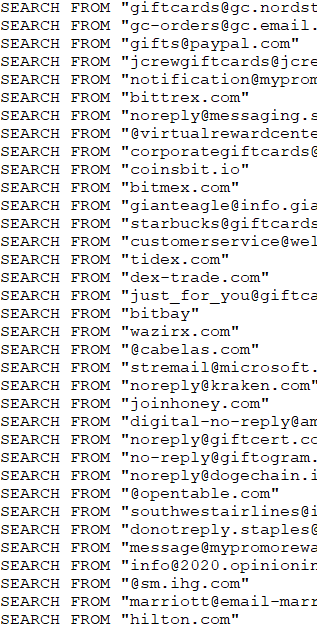
A sample of some of the most frequent search queries made in a single day by the gift card gang against more than 50,000 hacked inboxes.

According to Bill, the fraudsters aren’t downloading all of their victims’ emails: That would quickly add up to a monstrous amount of data. Rather, they’re using automated systems to log in to each inbox and search for a variety of domains and other terms related to companies that maintain loyalty and points programs, and/or issue gift cards and handle their fulfillment.

Why go after hotel or airline rewards? Because these accounts can all be cleaned out and deposited onto a gift card number that can be resold quickly online for 80 percent of its value.

“These guys want that hard digital asset — the cash that is sitting there in your inbox,” Bill said. “You literally just pull cash out of peoples’ inboxes, and then you have all these secondary markets where you can sell this stuff.”

Bill’s data also shows that this gang is so aggressively going after gift card data that it will routinely seek new gift card benefits on behalf victims, when that option is available.  For example, many companies now offer employees a “wellness benefit” if they can demonstrate they’re keeping up with some kind of healthy new habit, such as daily gym visits, yoga, or quitting smoking.

Bill said these crooks have figured out a way to tap into those benefits as well.

“A number of health insurance companies have wellness programs to encourage employees to exercise more, where if you sign up and pledge to 30 push-ups a day for the next few months or something you’ll get five wellness points towards a $10 Starbucks gift card, which requires 1000 wellness points,” Bill explained. “They’re actually automating the process of replying saying you completed this activity so they can bump up your point balance and get your gift card.”

The Gift Card Gang’s Footprint

How do the compromised email credentials break down in terms of ISPs and email providers? There are victims on nearly all major email networks, but Bill said several large Internet service providers (ISPs) in Germany and France are heavily represented in the compromised email account data.

“With some of these international email providers we’re seeing something like 25,000 to 50,000 email accounts a day get hacked,” Bill said.  “I don’t know why they’re getting popped so heavily.”

That may sound like a lot of hacked inboxes, but Bill said some of the bigger ISPs represented in his data have tens or hundreds of millions of customers.

Measuring which ISPs and email providers have the biggest numbers of compromised customers is not so simple in many cases, nor is identifying companies with employees whose email accounts have been hacked.

This kind of mapping is often more difficult than it used to be because so many organizations have now outsourced their email to cloud services like Gmail and Microsoft Office365 — where users can access their email, files and chat records all in one place.

“It’s a little complicated with Office 365 because it’s one thing to say okay how many Hotmail connections are you seeing per day in all this credential-stuffing activity, and you can see the testing against Hotmail’s site,” Bill said. “But with the IMAP traffic we’re looking at, the usernames being logged into are any of the million or so domains hosted on Office365, many of which will tell you very little about the victim organization itself.”

On top of that, it’s also difficult to know how much activity you’re not seeing.

Looking at the small set of Internet address blocks he knows are associated with Microsoft 365 email infrastructure, Bill examined the IMAP traffic flowing from this group to those blocks. Bill said that in the first week of April 2021, he identified 15,000 compromised Office365 accounts being accessed by this group, spread over 6,500 different organizations that use Office365.

“So I’m seeing this traffic to just like 10 net blocks tied to Microsoft, which means I’m only looking at maybe 25 percent of Microsoft’s infrastructure,” Bill explained. “And with our puny visibility into probably less than one percent of overall password stuffing traffic aimed at Microsoft, we’re seeing 600 Office accounts being breached a day. So if I’m only seeing one percent, that means we’re likely talking about tens of thousands of Office365 accounts compromised daily worldwide.”

In a December 2020 blog post about how Microsoft is moving away from passwords to more robust authentication approaches, the software giant said an average of one in every 250 corporate accounts is compromised each month. As of last year, Microsoft had nearly 240 million active users, according to this analysis.

“To me, this is an important story because for years people have been like, yeah we know email isn’t very secure, but this generic statement doesn’t have any teeth to it,” Bill said. “I don’t feel like anyone has been able to call attention to the numbers that show why email is so insecure.”

Bill says that in general companies have a great many more tools available for securing and analyzing employee email traffic when that access is funneled through a Web page or VPN, versus when that access happens via IMAP.

“It’s just more difficult to get through the Web interface because on a website you have a plethora of advanced authentication controls at your fingertips, including things like device fingerprinting, scanning for http header anomalies, and so on,” Bill said. “But what are the detection signatures you have available for detecting malicious logins via IMAP?”

Microsoft declined to comment specifically on Bill’s research, but said customers can block the overwhelming majority of account takeover efforts by enabling multi-factor authentication.

“For context, our research indicates that multi-factor authentication prevents more than 99.9% of account compromises,” reads a statement from Microsoft. “Moreover, for enterprise customers, innovations like Security Defaults, which disables basic authentication and requires users to enroll a second factor, have already significantly decreased the proportion of compromised accounts. In addition, for consumer accounts, adding a second authentication factor is required on all accounts.”

A Mess That’s Likely to Stay That Way

Bill said he’s frustrated by having such visibility into this credential testing botnet while being unable to do much about it. He’s shared his data with some of the bigger ISPs in Europe, but says months later he’s still seeing those same inboxes being accessed by the gift card gang.

The problem, Bill says, is that many large ISPs lack any sort of baseline knowledge of or useful data about customers who access their email via IMAP. That is, they lack any sort of instrumentation to be able to tell the difference between legitimate and suspicious logins for their customers who read their messages using an email client.

“My guess is in a lot of cases the IMAP servers by default aren’t logging every search request, so [the ISP] can’t go back and see this happening,” Bill said.

Confounding the challenge, there isn’t much of an upside for ISPs interested in voluntarily monitoring their IMAP traffic for hacked accounts.

“Let’s say you’re an ISP that does have the instrumentation to find this activity and you’ve just identified 10,000 of your customers who are hacked. But you also know they are accessing their email exclusively through an email client. What do you do? You can’t flag their account for a password reset, because there’s no mechanism in the email client to affect a password change.”

Which means those 10,000 customers are then going to start receiving error messages whenever they try to access their email.

“Those customers are likely going to get super pissed off and call up the ISP mad as hell,” Bill said. “And that customer service person is then going to have to spend a bunch of time explaining how to use the webmail service. As a result, very few ISPs are going to do anything about this.”

Indictators of Compromise (IoCs)

It’s not often KrebsOnSecurity has occasion to publish so-called “indicators of compromise” (IoC)s, but hopefully some ISPs may find the information here useful. This group automates the searching of inboxes for specific domains and trademarks associated with gift card activity and other accounts with stored electronic value, such as rewards points and mileage programs.

This file includes the top inbox search terms used in a single 24 hour period by the gift card gang. The numbers on the left in the spreadsheet represent the number of times during that 24 hour period where the gift card gang ran a search for that term in a compromised inbox.

Some of the search terms are focused on specific brands — such as Amazon gift cards or Hilton Honors points; others are for major gift card networks like CashStar, which issues cards that are white-labeled by dozens of brands like Target and Nordstrom. Inboxes hacked by this gang will likely be searched on many of these terms over the span of just a few days.

from Krebs on Security https://ift.tt/3mXwmxC
via IFTTT

15-Year-Old Malware Proxy Network VIP72 Goes Dark

Over the past 15 years, a cybercrime anonymity service known as VIP72 has enabled countless fraudsters to mask their true location online by routing their traffic through millions of malware-infected systems. But roughly two week ago, VIP72’s online storefront — which ironically enough has remained at the same U.S.-based Internet address for more than a decade — simply vanished.

Like other anonymity networks marketed largely on cybercrime forums online, VIP72 routes its customers’ traffic through computers that have been hacked and seeded with malicious software. Using services like VIP72, customers can select network nodes in virtually any country, and relay their traffic while hiding behind some unwitting victim’s Internet address.

The domain Vip72[.]org was originally registered in 2006 to “Corpse,” the handle adopted by a Russian-speaking hacker who gained infamy several years prior for creating and selling an extremely sophisticated online banking trojan called A311 Death, a.k.a. “Haxdoor,” and “Nuclear Grabber.” Haxdoor was way ahead of its time in many respects, and it was used in multiple million-dollar cyberheists long before multi million-dollar cyberheists became daily front page news.

An ad circa 2005 for A311 Death, a powerful banking trojan authored by “Corpse,” the administrator of the early Russian hacking clique Prodexteam. Image: Google Translate via Archive.org.

Between 2003 and 2006, Corpse focused on selling and supporting his Haxdoor malware. Emerging in 2006, VIP72 was clearly one of his side hustles that turned into a reliable moneymaker for many years to come. And it stands to reason that VIP72 was launched with the help of systems already infected with Corpse’s trojan malware.

The first mention of VIP72 in the cybercrime underground came in 2006 when someone using the handle “Revive” advertised the service on Exploit, a Russian language hacking forum. Revive established a sales presence for VIP72 on multiple other forums, and the contact details and messages shared privately by that user with other forum members show Corpse and Revive are one and the same.

When asked in 2006 whether the software that powered VIP72 was based on his Corpse software, Revive replied that “it works on the new Corpse software, specially written for our service.”

One denizen of a Russian language crime forum who complained about the unexplained closure of VIP72 last month said they noticed a change in the site’s domain name infrastructure just prior to the service’s disappearance. But that claim could not be verified, as there simply are no signs that any of that infrastructure changed prior to VIP72’s demise.

In fact, until mid-August VIP72’s main home page and supporting infrastructure had remained at the same U.S.-based Internet address for more than a decade — a remarkable achievement for such a high-profile cybercrime service.

Cybercrime forums in multiple languages are littered with tutorials about how to use VIP72 to hide one’s location while engaging in financial fraud. From examining some of those tutorials, it is clear that VIP72 is quite popular among cybercriminals who engage in “credential stuffing” — taking lists of usernames and passwords stolen from one site and testing how many of those credentials work at other sites.

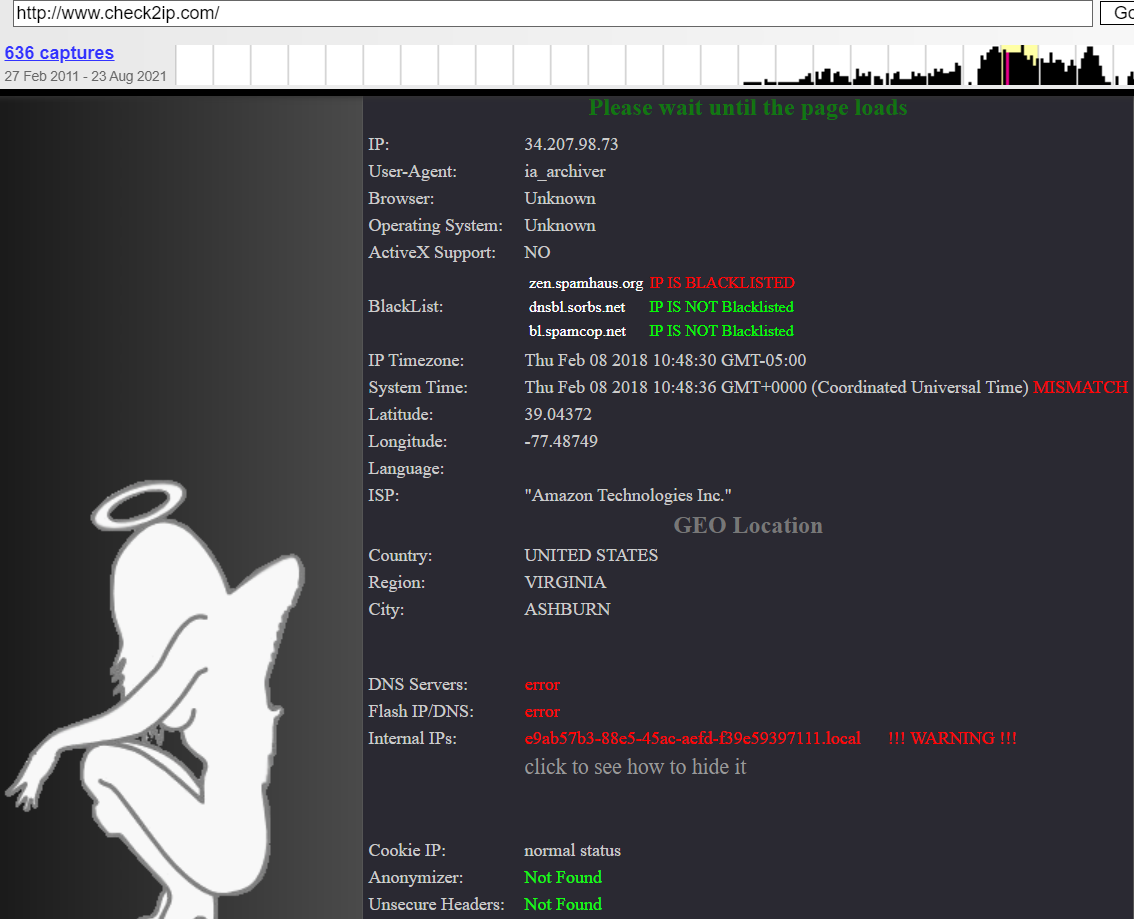
Corpse/Revive also long operated an extremely popular service called check2ip[.]com, which promised customers the ability to quickly tell whether a given Internet address is flagged by any security companies as malicious or spammy.

Hosted on the same Internet address as VIP72 for the past decade until mid-August 2021, Check2IP also advertised the ability to let customers detect “DNS leaks,” instances where configuration errors can expose the true Internet address of hidden cybercrime infrastructure and services online.

Check2IP is so popular that it has become a verbal shorthand for basic due diligence in certain cybercrime communities. Also, Check2IP has been incorporated into a variety of cybercrime services online — but especially those involved in mass-mailing malicious and phishous email messages.

Check2IP, an IP reputation service that told visitors whether their Internet address was flagged in any spam or malware block lists.

It remains unclear what happened to VIP72; users report that the anonymity network is still functioning even though the service’s website has been gone for two weeks. That makes sense since the infected systems that get resold through VIP72 are still infected and will happily continue to forward traffic so long as they remain infected. Perhaps the domain was seized in a law enforcement operation.

But it could be that the service simply decided to stop accepting new customers because it had trouble competing with an influx of newer, more sophisticated criminal proxy services, as well as with the rise of “bulletproof” residential proxy networks. For most of its existence until recently, VIP72 normally had several hundred thousand compromised systems available for rent. By the time its website vanished last month — that number had dwindled to fewer than 25,000 systems globally.

from Krebs on Security https://ift.tt/3BCTOnX
via IFTTT

Man Robbed of 16 Bitcoin Sues Young Thieves’ Parents

In 2018, Andrew Schober was digitally mugged for approximately $1 million worth of bitcoin. After several years of working with investigators, Schober says he’s confident he has located two young men in the United Kingdom responsible for developing a clever piece of digital clipboard-stealing malware that let them siphon his crypto holdings. Schober is now suing each of their parents in a civil case that seeks to extract what their children would not return voluntarily.

In a lawsuit filed in Colorado, Schober said the sudden disappearance of his funds in January 2018 prompted him to spend more than $10,000 hiring experts in the field of tracing cryptocurrency transactions. After months of sleuthing, his investigators identified the likely culprits: Two young men in Britain who were both minors at the time of the crime.

A forensic investigation of Schober’s computer found he’d inadvertently downloaded malicious software after clicking a link posted on Reddit for a purported cryptocurrency wallet application called “Electrum Atom.” Investigators determined that the malware was bundled with the benign program, and was designed to lie in wait for users to copy a cryptocurrency address to their computer’s temporary clipboard.

When Schober went to move approximately 16.4 bitcoins from one account to another — by pasting the lengthy payment address he’d just copied — the malware replaced his bitcoin payment address with a different address controlled by the young men.

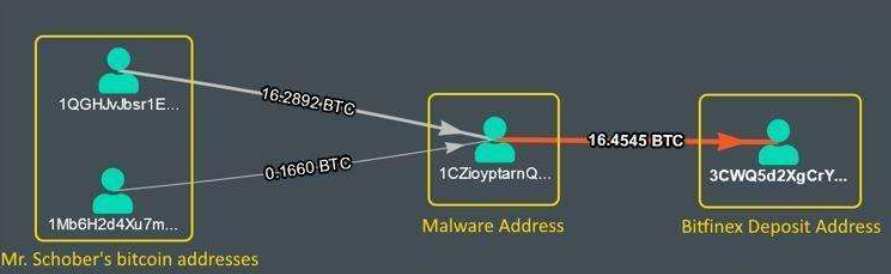
Schober’s lawsuit lays out how his investigators traced the stolen funds through cryptocurrency exchanges and on to the two youths in the United Kingdom. In addition, they found one of the defendants — just hours after Schober’s bitcoin was stolen — had posted a message to GitHub asking for help accessing the private key corresponding to the public key of the bitcoin address used by the clipboard-stealing malware.

Investigators found the other defendant had the malware code that was bundled with the Electrum Atom application in his Github code library.

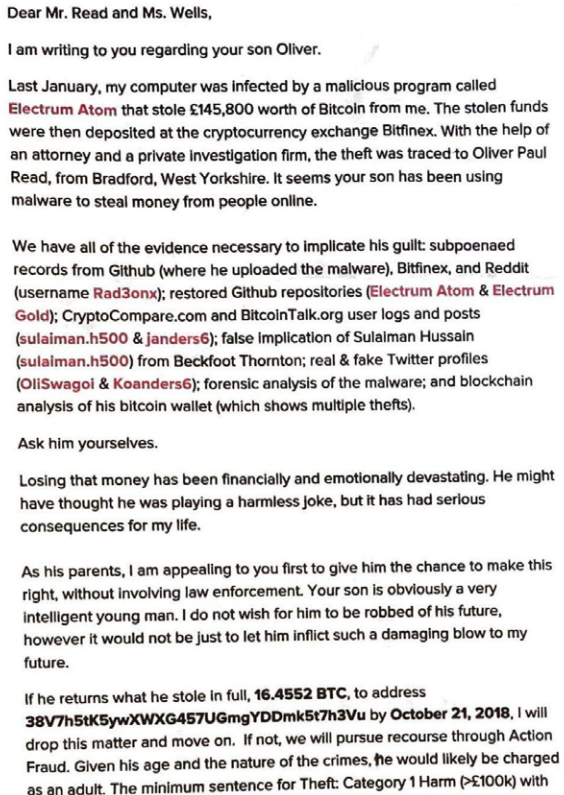
Initially, Schober hoped that the parents of the thieving teens would listen to reason, and simply return the money. So he wrote a letter to the parents of both boys:

“It seems your son has been using malware to steal money from people online,” reads the opening paragraph of the letter Schober emailed to the parents of the boys, both of whom are studying computer science at U.K. universities. “Losing that money has been financially and emotionally devastating. He might have thought he was playing a harmless joke, but it has had serious consequences for my life.”

A portion of the letter than Schober sent to two of the defendants in 2018, after investigators determined their sons were responsible for stealing nearly $1 million in cryptocurrency from Schober.

Met with continued silence from the parents for many months, Schober filed suit against the kids and their parents in a Colorado court. A copy of the May 2021 complaint is here (PDF).

Now they are responding. One of the defendants —Hazel D. Wells — just filed a motion with the court to represent herself and her son in lieu of hiring an attorney. In a filing on Aug. 9, Wells helpfully included the letter in the screenshot above, and volunteered that her son had been questioned by U.K. authorities in connection with the bitcoin theft.

Neither of the defendants’ families are disputing the basic claim that their kids stole from Mr. Schober. Rather, they’re claiming that time has run out on Schober’s legal ability to claim a cause of action against them.

“Plaintiff alleges two common law causes of action (conversation and trespass to chattel), for which a three-year statute of limitations applies,” an attorney for the defendants argued in a filing on Aug. 6 (PDF). “Plaintiff further alleges a federal statutory cause of action, for which a two-year statute of limitations applies. Because plaintiff did not file his lawsuit until May 21, 2021, three years and five months after his injury, his claims should be dismissed.”

Schober’s attorneys argue (PDF) that “the statute of limitations begins to run when the Plaintiff knows or has reason to know of the existence and cause of the injury which is the base of his action,” and that inherent in this concept is the discovery rule, namely: That the statute of limitations does not begin to run until the plaintiff knows or has reason to know of both the existence and cause of his injury.

The plaintiffs point out that Schober’s investigators didn’t pinpoint one of the young men’s involvement until more than a year after they’d identified his co-conspirator, saying Schober notified the second boy’s parents in December 2019.

None of the parties to this lawsuit responded to requests for comment.

Image: Complaint, Schober v. Thompson, et. al.

Mark Rasch, a former prosecutor with the U.S. Justice Department, said the plaintiff is claiming the parents are liable because he gave them notice of a crime committed by their kids and they failed to respond.

“A lot of these crimes are being committed by juveniles, and we don’t have a good juvenile justice system that’s well designed to both civilly and criminally go after kids,” Rasch said.

Rasch said he’s currently an attorney in a number of lawsuits involving young men who’ve been accused of stealing and laundering millions of dollars of cryptocurrency — specifically crimes involving SIM swapping — where the fraudsters trick or bribe an employee at a mobile phone store into transferring control of a target’s phone number to a device they control.

In those cases, the plaintiffs have sought to extract compensation for their losses from the mobile phone companies — but so far those lawsuits have largely failed to yield results and are often pushed into arbitration.

Rasch said it makes sense that some victims of cryptocurrency theft are spending some serious coin to track down their assailants and sue them civilly. But he said the legwork needed to make that case is tremendous and costly, and there’s no guarantee those investments will pay off down the road.

“These crimes can be monumentally difficult and expensive to track down,” he said. “It’s designed to be difficult to do, but it’s also not designed to be impossible to do.”

As evidenced by this week’s CNBC story on a marked rise in reports of people having their Coinbase accounts emptied by fraudsters, many people investing in cryptocurrencies find out the hard way that unlike traditional banking transactions — funds lost to theft are likely to stay lost because the transactions are irreversible.

Traditionally, the major crypto exchanges have said they’re not responsible for lost or stolen funds. But perhaps in response to the CNBC story, Coinbase said it was introducing a new pilot “guarantee” for U.K. customers only, wherein they will be eligible for a reimbursement of up £150,000 if someone gains unauthorized access to their account and steals funds.

However, it seems unlikely Coinbase’s new guarantee would cover cases like Schober’s — even if he’d been a U.K. resident and the theft occurred today. One of the caveats that is not covered in the guarantee is sending funds to the wrong address by accident.

from Krebs on Security https://ift.tt/3gATLke
via IFTTT

Wanted: Disgruntled Employees to Deploy Ransomware

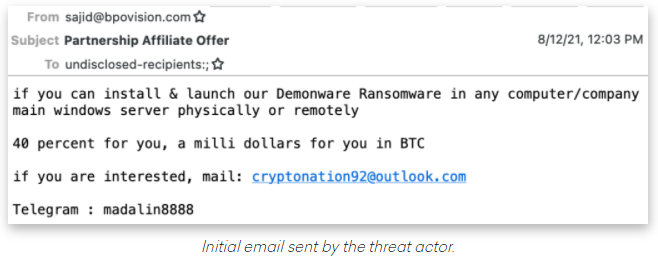
Criminal hackers will try almost anything to get inside a profitable enterprise and secure a million-dollar payday from a ransomware infection. Apparently now that includes emailing employees directly and asking them to unleash the malware inside their employer’s network in exchange for a percentage of any ransom amount paid by the victim company.

Image: Abnormal Security.

Crane Hassold, director of threat intelligence at Abnormal Security, described what happened after he adopted a fake persona and responded to the proposal in the screenshot above. It offered to pay him 40 percent of a million-dollar ransom demand if he agreed to launch their malware inside his employer’s network.

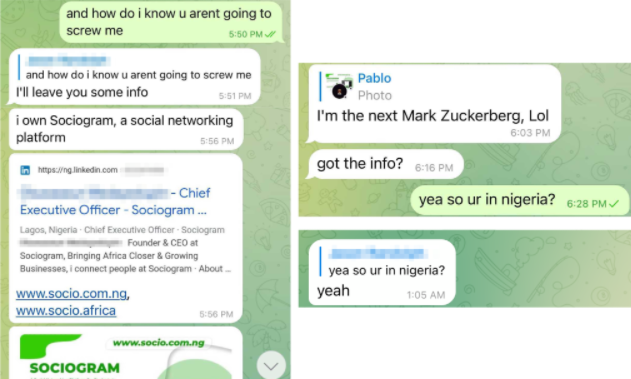
This particular scammer was fairly chatty, and over the course of five days it emerged that Hassold’s correspondent was forced to change up his initial approach in planning to deploy the DemonWare ransomware strain, which is freely available on GitHub.

“According to this actor, he had originally intended to send his targets—all senior-level executives—phishing emails to compromise their accounts, but after that was unsuccessful, he pivoted to this ransomware pretext,” Hassold wrote.

Abnormal Security documented how it tied the email back to a young man in Nigeria who acknowledged he was trying to save up money to help fund a new social network he is building called Sociogram.

Image: Abnormal Security.

This attacker’s approach may seem fairly amateur, but it would be a mistake to dismiss the threat from West African cybercriminals dabbling in ransomware. While multi-million dollar ransomware payments are hogging the headlines, by far the biggest financial losses tied to cybercrime each year stem from so-called Business Email Compromise (BEC) or CEO Scams, in which crooks mainly based in Africa and Southeast Asia will spoof communications from executives at the target firm in a bid to initiate unauthorized international wire transfers.

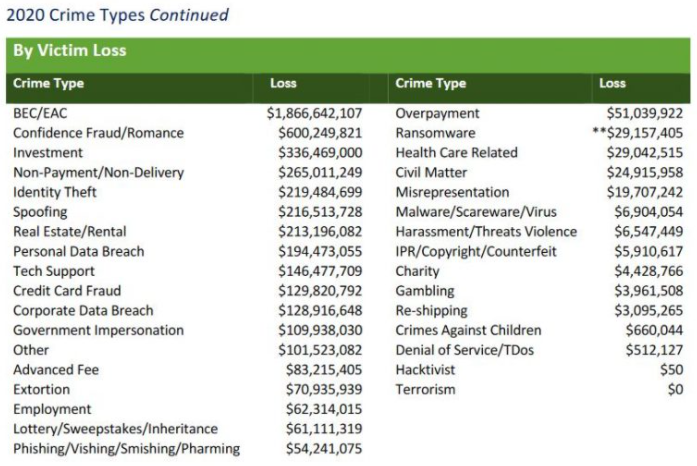
According to the latest figures (PDF) released by the FBI Internet Crime Complaint Center (IC3), the reported losses from BEC scams continue to dwarf other cybercrime loss categories, increasing to $1.86 billion in 2020.

Image: FBI

“Knowing the actor is Nigerian really brings the entire story full circle and provides some notable context to the tactics used in the initial email we identified,” Hassold wrote. “For decades, West African scammers, primarily located in Nigeria, have perfected the use of social engineering in cybercrime activity.”

“While the most common cyber attack we see from Nigerian actors (and most damaging attack globally) is business email compromise (BEC), it makes sense that a Nigerian actor would fall back on using similar social engineering techniques, even when attempting to successfully deploy a more technically sophisticated attack like ransomware,” Hassold concluded.

DON’T QUIT YOUR DAY JOB

Cybercriminals trolling for disgruntled employees is hardly a new development. Big companies have long been worried about the very real threat of disgruntled employees creating identities on darknet sites and then offering to trash their employer’s network for a fee (for more on that, see my 2016 story, Rise of the Darknet Stokes Fear of the Insider).

Indeed, perhaps this enterprising Nigerian scammer is just keeping up with current trends. Several established ransomware affiliate gangs that have recently rebranded under new banners seem to have done away with the affiliate model in favor of just buying illicit access to corporate networks.

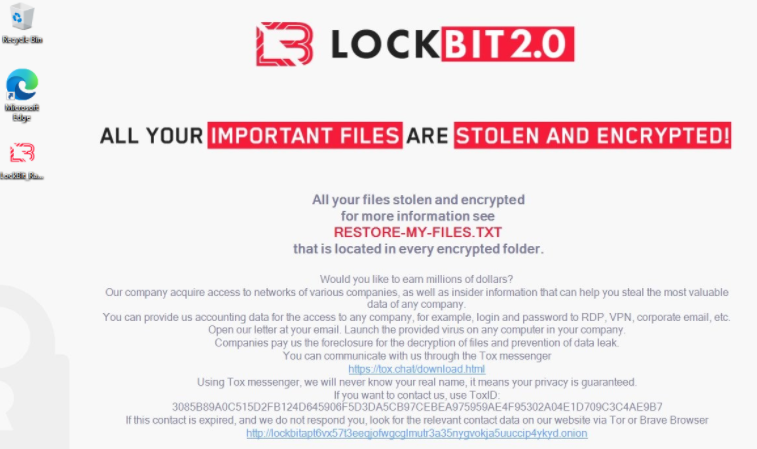
For example, the Lockbit 2.0 ransomware-as-a-service gang actually includes a solicitation for insiders in the desktop wallpaper left behind on systems encrypted with the malware.

“Would you like to earn millions of dollars? Our company acquires access to networks of various companies, as well as insider information that can help you steal the most valuable data of any company,” LockBit’s unusual ad reads. “You can provide us accounting data for the access to any company, for example, login and password to RDP, VPN, corporate email, etc. Open our letter at your email. Launch the provided virus on any computer in your company. Companies pay us the foreclosure for the decryption of files and prevention of data leak.”

Image: Sophos.

Likewise, the newly formed DarkMatter ransomware gang kicked off its presence on the cybercrime forums with the unassuming thread, “Buying/monetizing your access to corporate networks.” The rest of the post reads:

We are looking for access to corporate networks in the following countries:
– the USA
– Canada
– Australia
– the UK

All lines of business except for:
– Healthcare
– Government entities.

Requirements:
– Revenue according to ZoomInfo: over 100 million.
– Number of hosts: 500 to 15,000.
– We do not accept networks that anybody else has already tried to work on.

Two options of cooperation:
– We buy networks: 3 to 100k.
– We monetize them (subject to negotiation on a case-by-case basis).

How we work:
You select an option of cooperation. -> You provide access to the network. -> We check it. -> We take it or not (depending on whether it meets the requirements).

from Krebs on Security https://ift.tt/3j6MP0d
via IFTTT

T-Mobile: Breach Exposed SSN/DOB of 40M+ People

T-Mobile warned Monday that a data breach has exposed the names, date of birth, Social Security number and driver’s license/ID information of more than 40 million current, former or prospective customers. The acknowledgment came less than 48 hours after millions of the stolen T-Mobile customer records went up for sale in the cybercrime underground.

On Monday evening, T-Mobile said a “highly sophisticated” attack against its network led to the breach of data on millions of customers.

“Our preliminary analysis is that approximately 7.8 million current T-Mobile postpaid customer accounts’ information appears to be contained in the stolen files, as well as just over 40 million records of former or prospective customers who had previously applied for credit with T-Mobile,” the company wrote in a blog post. “Importantly, no phone numbers, account numbers, PINs, passwords, or financial information were compromised in any of these files of customers or prospective customers.”

Nevertheless, T-Mobile is urging all T-Mobile postpaid customers to proactively change their account PINs by going online into their T-Mobile account or calling customer care at 611. “This precaution is despite the fact that we have no knowledge that any postpaid account PINs were compromised,” the advisory reads.

It is not clear how many people total may be impacted by this breach. T-Mobile hasn’t yet responded to requests for clarification regarding how many of the 7.8 million current customers may also have been affected by the credit application breach.

The intrusion first came to light on Twitter when the account @und0xxed started tweeting the details, and someone on a cybercrime forum began selling what they claimed were more than 100 million freshly hacked records from T-Mobile. The hackers claimed one of those databases held the name, date of birth, SSN, drivers license information, plaintext security PIN, address and phone number of 36 million T-Mobile customers in the United States — all going back to the mid-1990s.

T-Mobile said it was also able to confirm approximately 850,000 active T-Mobile prepaid customer names, phone numbers and account PINs were also exposed.

“We have already proactively reset ALL of the PINs on these accounts to help protect these customers, and we will be notifying accordingly right away. No Metro by T-Mobile, former Sprint prepaid, or Boost customers had their names or PINs exposed,” T-Mobile said. “We have also confirmed that there was some additional information from inactive prepaid accounts accessed through prepaid billing files. No customer financial information, credit card information, debit or other payment information or SSN was in this inactive file.”

T-Mobile said it would pay for two years of identity theft protection services for any affected customers, and that it was offering “an extra step to protect your mobile account with our Account Takeover Protection capabilities for postpaid customers, which makes it harder for customer accounts to be fraudulently ported out and stolen.” Why it wouldn’t make that extra protection standard for all accounts all the time is not entirely clear.

This stolen data is being actively sold, but if the past is any teacher much of it will wind up posted online soon. It is interesting that T-Mobile is saying no phone numbers were exposed in the 40 million records of former or prospective customers who applied for credit with T-Mobile; Some of the data and screenshots shared by the hackers certainly seem to suggest otherwise. Regardless, it is a safe bet that scammers will use some of this information to target T-Mobile users with phishing messages, account takeovers and harassment.

Data stolen and exposed in this breach may also be used for identity theft. Credit monitoring and ID theft protection services can help you recover from having your identity stolen, but most will do nothing to stop the ID theft from happening. If you want the maximum control over who should be able to view your credit or grant new lines of credit in your name, then a security freeze is your best option.

If you’re a current T-Mobile customer, by all means change your account PIN as instructed. But regardless of which mobile provider you patronize, consider removing your phone number from as many online accounts as you can. Many online services require you to provide a phone number upon registering an account, but in many cases that number can be removed from your profile afterwards.

Why do I suggest this? Many online services allow users to reset their passwords just by clicking a link sent via SMS, and this unfortunately widespread practice has turned mobile phone numbers into de facto identity documents. Which means losing control over your phone number thanks to an unauthorized SIM swap or mobile number port-out, divorce, job termination or financial crisis can be devastating.

from Krebs on Security https://ift.tt/3y1unKm
via IFTTT

T-Mobile Investigating Claims of Massive Data Breach

Communications giant T-Mobile said today it is investigating the extent of a data breach that hackers claim has exposed sensitive personal data on 100 million T-Mobile USA customers, in many cases including the name, Social Security number, address, date of birth, phone number, security PINs and details that uniquely identify each customer’s mobile device.

On Sunday, Vice.com broke the news that someone was selling data on 100 million people, and that the data came from T-Mobile. In a statement published on its website today, T-Mobile confirmed it had suffered an intrusion involving customer data, but said it was too soon in its investigation to know what was stolen and how many customers may be affected.

A sales thread tied to the allegedly stolen T-Mobile customer data.

“We have determined that unauthorized access to some T-Mobile data occurred, however we have not yet determined that there is any personal customer data involved,” T-Mobile wrote.

“We are confident that the entry point used to gain access has been closed, and we are continuing our deep technical review of the situation across our systems to identify the nature of any data that was illegally accessed,” the statement continued. “This investigation will take some time but we are working with the highest degree of urgency. Until we have completed this assessment we cannot confirm the reported number of records affected or the validity of statements made by others.”

The intrusion came to light on Twitter when the account @und0xxed started tweeting the details. Reached via direct message, Und0xxed said they were not involved in stealing the databases but was instead in charge of finding buyers for the stolen T-Mobile customer data.

Und0xxed said the hackers found an opening in T-Mobile’s wireless data network that allowed access to two of T-Mobile’s customer data centers. From there, the intruders were able to dump a number of customer databases totaling more than 100 gigabytes.

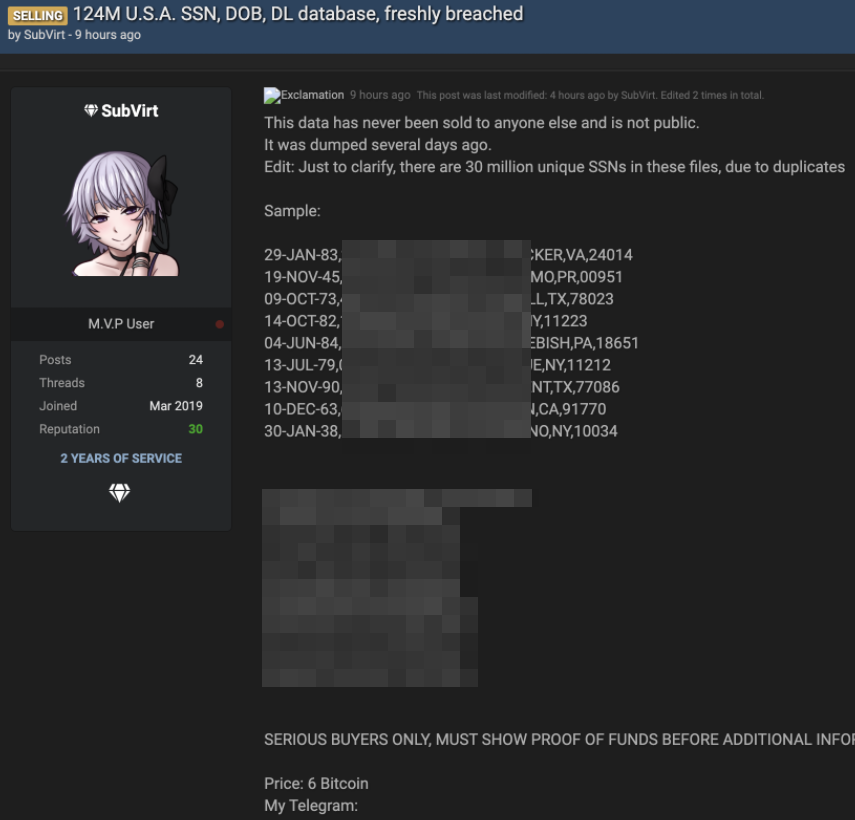
They claim one of those databases holds the name, date of birth, SSN, drivers license information, plaintext security PIN, address and phone number of 36 million T-Mobile customers in the United States — all going back to the mid-1990s.

The hacker(s) claim the purloined data also includes IMSI and IMEI data for 36 million customers. These are unique numbers embedded in customer mobile devices that identify the device and the SIM card that ties that customer’s device to a telephone number.

“If you want to verify that I have access to the data/the data is real, just give me a T-Mobile number and I’ll run a lookup for you and return the IMEI and IMSI of the phone currently attached to the number and any other details,” @und0xxed said. “All T-Mobile USA prepaid and postpaid customers are affected; Sprint and the other telecoms that T-Mobile owns are unaffected.”

Other databases allegedly accessed by the intruders included one for prepaid accounts, which had far fewer details about customers.

“Prepaid customers usually are just phone number and IMEI and IMSI,” Und0xxed said. “Also, the collection of databases includes historical entries, and many phone numbers have 10 or 20 IMEIs attached to them over the years, and the service dates are provided. There’s also a database that includes credit card numbers with six digits of the cards obfuscated.”

T-Mobile declined to comment beyond what the company said in its blog post today.

In 2015, a computer breach at big three credit bureau Experian exposed the Social Security numbers and other data on 15 million people who applied for financing from T-Mobile.

Like other mobile providers, T-Mobile is locked in a constant battle with scammers who target its own employees in SIM swapping attacks and other techniques to wrest control over employee accounts that can provide backdoor access to customer data. In at least one case, retail store employees were complicit in the account takeovers.

WHO HACKED T-MOBILE?

The Twitter profile for the account @Und0xxed includes a shout out to @IntelSecrets, the Twitter account of a fairly elusive hacker who also has gone by the handles IRDev and V0rtex. Asked if @IntelSecrets was involved in the T-Mobile intrusion, @und0xxed confirmed that it was.

Speaking to the researcher Alon Gal (@underthebreach), the hackers responsible for the T-Mobile intrusion said they did it to “retaliate against the US for the kidnapping and torture of John Erin Binns in Germany by the CIA and Turkish intelligence agents in 2019. We did it to harm US infrastructure.”

The IntelSecrets nicknames correspond to an individual who has claimed responsibility for modifying the source code for the Mirai “Internet of Things” botnet to create a variant known as “Satori,” and supplying it to others who used it for criminal gain and were later caught and prosecuted. Like Kenny “NexusZeta” Schuchmann, who pleaded guilty in 2019 to operating the Satori botnet. Two other young men have been charged in connection with Satori — but not IntelSecrets.

How do we know all this about IntelSecrets/IRDev/V0rtex? That identity has acknowledged as much in a series of bizarre lawsuits filed by a person who claims their real name is John Erin Binns. The same Binns identity operates the website intelsecrets[.]ru. 

On that site, Binns claims he fled to Germany and Turkey to evade prosecution in the Satori case, only to be kidnapped in Turkey and subjected to various forms of psychological and physical torture. According to Binns, the U.S. Central Intelligence Agency (CIA) falsely told their counterparts in Turkey that he was a supporter or member of the Islamic State (ISIS), a claim he says led to his alleged capture and torture by the Turks.

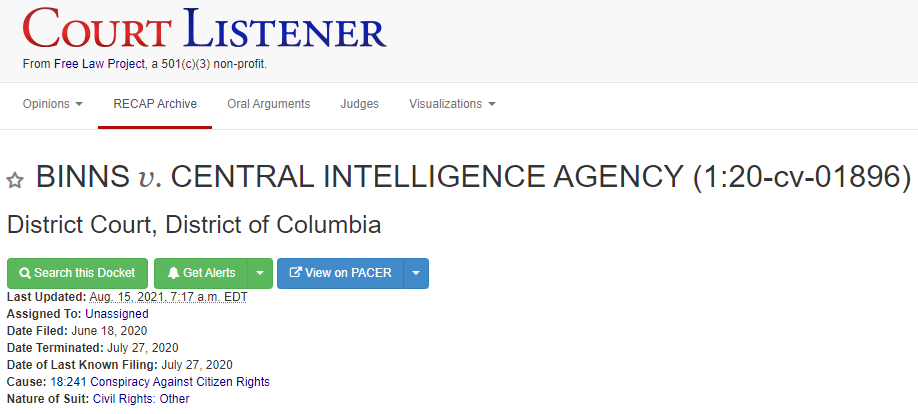
Since then, Binns has filed a flood of lawsuits naming various federal agencies — including the FBI, the CIA, and the U.S. Special Operations Command (PDF), demanding that the government turn over information collected about him and seeking restitution for his alleged kidnapping at the hands of the CIA.

from Krebs on Security https://ift.tt/3jXLSpX
via IFTTT

New Anti Anti-Money Laundering Services for Crooks

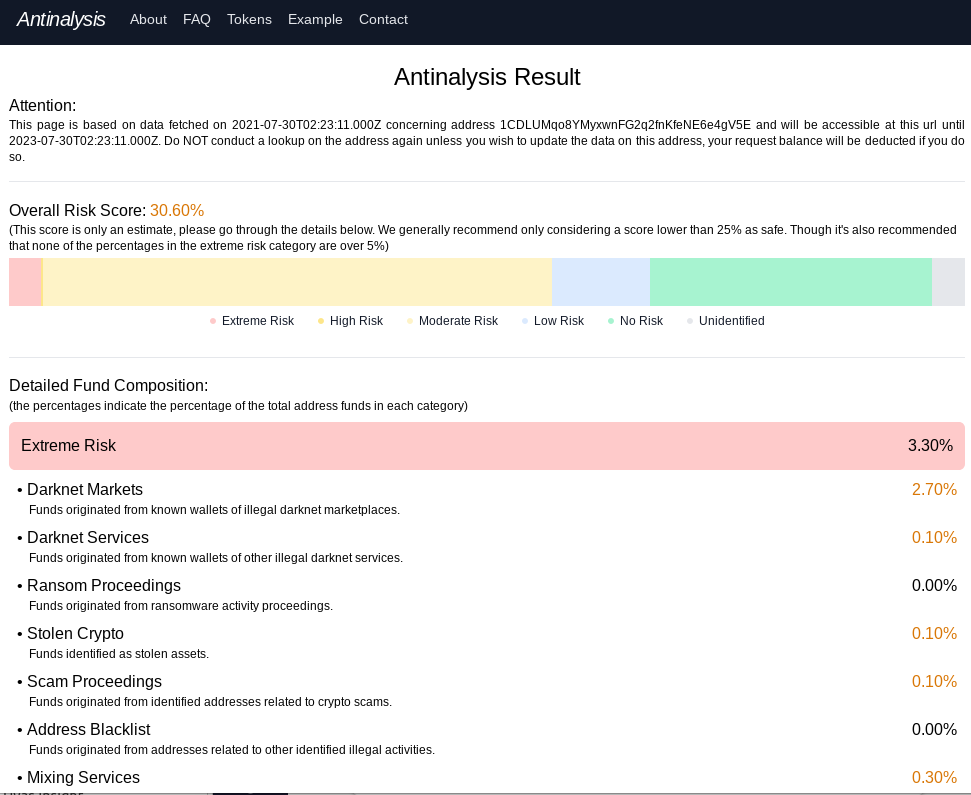
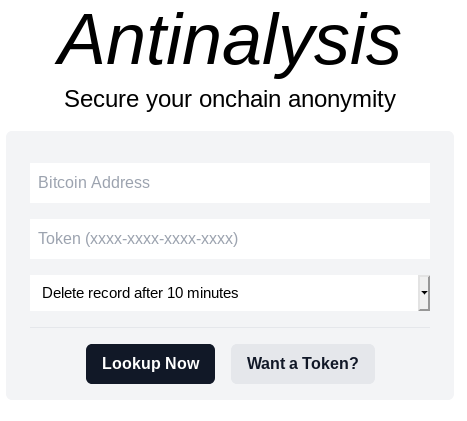
Two new dark web services are marketing to cybercriminals who are curious to see how their various cryptocurrency holdings and transactions may be linked to known criminal activity. Dubbed “Antinalysis” and “AMLBot,” the services purport to offer a glimpse into how one’s payment activity might be flagged by law enforcement agencies and private companies that try to link suspicious cryptocurrency transactions to real people.

Sample provided by Antinalysis.

“Worried about dirty funds in your BTC address? Come check out Antinalysis, the new address risk analyzer,” reads the service’s announcement, pointing to a link only accessible via ToR. “This service is dedicated to individuals that have the need to possess complete privacy on the blockchain, offering a perspective from the opponent’s point of view in order for the user to comprehend the possibility of his/her funds getting flagged down under autocratic illegal charges.”

The ad continues:

Some people might ask, why go into all that? Just cash out in XMR and be done with it. The problem is, cashing out in Monero raises eyebrows on exchanges and mail by cash method is sometimes risky as well. If you use BTC->XMR->BTC method, you’ll still get flagged down by our services labelled as high risk exchange (not to mention LE and exchanges). Our service provides you with a view from LE/exchange’s perspective of things (with similar accuracy, but quite different approach) that provides you with basic knowledge of how “clean” your address is.”

Tom Robinson, co-founder of blockchain intelligence firm Elliptic, said Antinalysis is designed to help crypto money launderers test whether their funds will be identified as proceeds of crime by regulated financial exchanges.

“Cryptoassets have become an important tool for cybercriminals,” Robinson wrote. “The likes of ransomware and darknet markets rely on payments being made in Bitcoin and other cryptocurrencies. However, laundering and cashing-out these proceeds is a major challenge.”

Cryptocurrency exchanges make use of blockchain analytics tools, he said, to check customer deposits for links to illicit activity. By tracing a transaction back through the blockchain, these tools can identify whether the funds originated from a wallet associated with ransomware or any other criminal activity.

“The launderer therefore risks being identified as a criminal and being reported to law enforcement whenever they send funds to a business using such a tool,” Robinson said. “Antinalysis seeks to help crypto launderers to avoid this, by giving them a preview of what a blockchain analytics tool will make of their bitcoin wallet and the funds it contains.”

Each lookup at Antinalysis costs roughly USD $3, with a minimum $30 purchase. Other plans go as high as $6,000 for 5,000 requests.

Robinson says the creator of Antinalysis is also one of the developers of Incognito Market, a darknet marketplace specializing in the sale of narcotics.

“Incognito was launched in late 2020, and accepts payments in both Bitcoin and Monero, a cryptoasset offering heightened anonymity,” he wrote. “The launch of Antinalysis likely reflects the difficulties faced by the market and its vendors in cashing out their Bitcoin proceeds.”

Elliptic wasn’t impressed with the quality of the intelligence provided by Antinalysis, saying it performs poorly on detecting links to major darknet markets and other criminal entities. But with countless criminals now making millions from ransomware, there is certainly a vast, untapped market for services that help those folks improve their operational security.

“It is also significant because it makes blockchain analytics available to the public for the first time,” Robinson wrote. “To date, this type of analysis has been used primarily by regulated financial service providers.”

That may not be entirely true. Nick Bax is an independent expert in tracing cryptocurrency transactions, and he said it appears Antinalysis — which launched on July 30 — may be little more than a clone of AMLBot, an anti- anti-money laundering intelligence service that first came online July 15. AMLBot’s first advertisement was in Russian, whereas Antinalysis first appeared on an English-language darknet market.

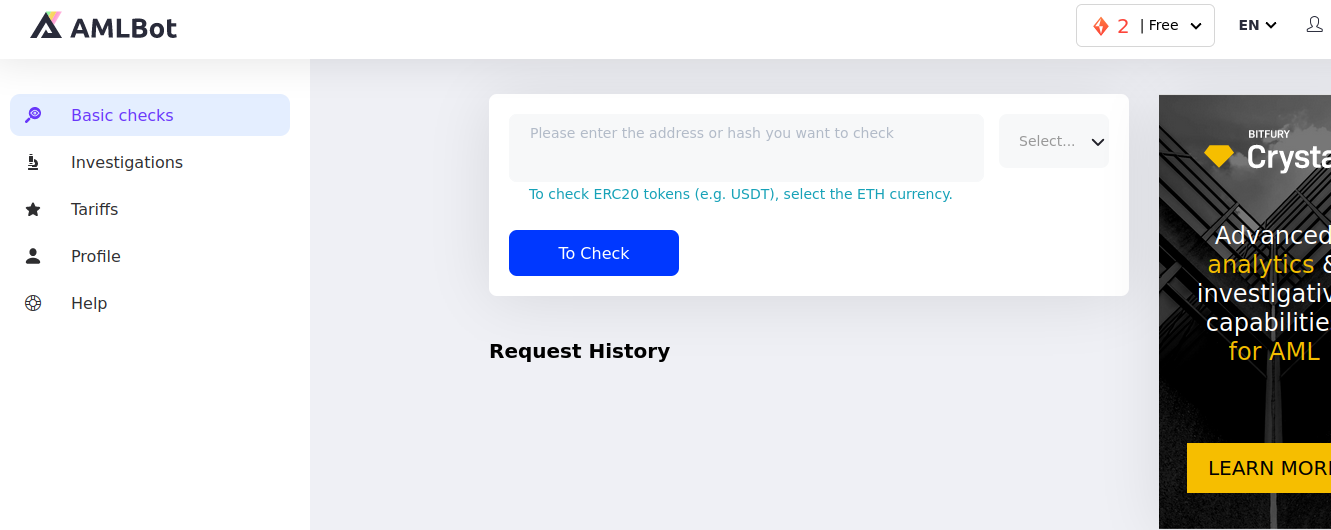
AMLBot’s user interface.

“It looks almost identical to the cheap version of AMLBot,” Bax told KrebsOnSecurity. “My guess is they’re just white-labeling that.”

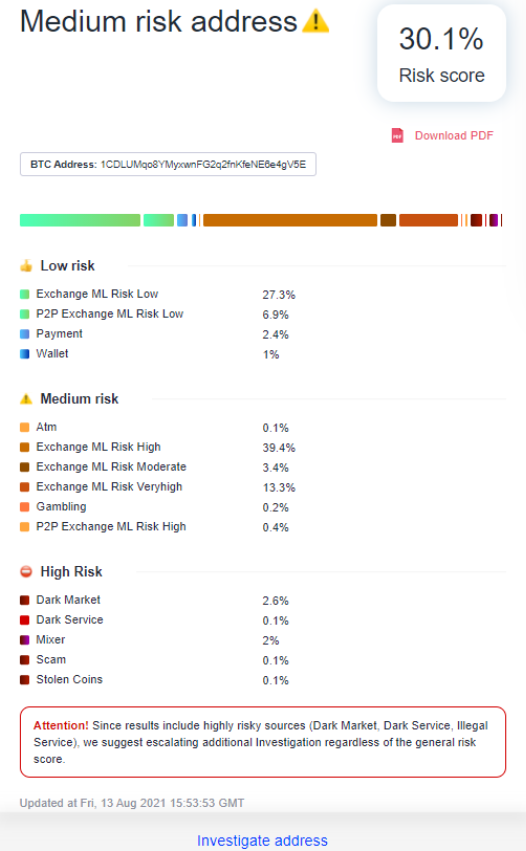
Bax said a lookup at AMLBot on the virtual currency address used in the sample provided by Antinalysis shows a near identical result. Here’s AMLBot’s result for the same crypto analysis performed by Antinalysis in the screenshot at the top of this story:

AMLBot’s response for the same cryptocurrency address provided as an example by Antinalysis.

“If you look at the breakdown the percentages are all almost identical,” Bax said. “I use AMLBot occasionally for good and righteous purposes. And it could also be useful for people who are just selling stuff online to make sure they aren’t receiving tainted funds.”

from Krebs on Security https://ift.tt/3iGmjui
via IFTTT

Microsoft Patch Tuesday, August 2021 Edition

Microsoft today released software updates to plug at least 44 security vulnerabilities in its Windows operating systems and related products. The software giant warned that attackers already are pouncing on one of the flaws, which ironically enough involves an easy-to-exploit bug in the software component responsible for patching Windows 10 PCs and Windows Server 2019 machines.

Microsoft said attackers have seized upon CVE-2021-36948, which is a weakness in the Windows Update Medic service. Update Medic is a new service that lets users repair Windows Update components from a damaged state so that the device can continue to receive updates.

Redmond says while CVE-2021-36948 is being actively exploited, it is not aware of exploit code publicly available. The flaw is an “elevation of privilege” vulnerability that affects Windows 10 and Windows Server 2019, meaning it can be leveraged in combination with another vulnerability to let attackers run code of their choice as administrator on a vulnerable system.

“CVE-2021-36948 is a privilege escalation vulnerability – the cornerstone of modern intrusions as they allow attackers the level of access to do things like hide their tracks and create user accounts,” said Kevin Breen of Immersive Labs. “In the case of ransomware attacks, they have also been used to ensure maximum damage.”

According to Microsoft, critical flaws are those that can be exploited remotely by malware or malcontents to take complete control over a vulnerable Windows computer — and with little to no help from users. Top of the heap again this month: Microsoft also took another stab at fixing a broad class of weaknesses in its printing software.

Last month, the company rushed out an emergency update to patch “PrintNightmare” — a critical hole in its Windows Print Spooler software that was being attacked in the wild. Since then, a number of researchers have discovered holes in that patch, allowing them to circumvent its protections.

Today’s Patch Tuesday fixes another critical Print Spooler flaw (CVE-2021-36936), but it’s not clear if this bug is a variant of PrintNightmare or a unique vulnerability all on its own, said Dustin Childs at Trend Micro’s Zero Day Initiative.

“Microsoft does state low privileges are required, so that should put this in the non-wormable category, but you should still prioritize testing and deployment of this Critical-rated bug,” Childs said.

Microsoft said the Print Spooler patch it is pushing today should address all publicly documented security problems with the service.

“Today we are addressing this risk by changing the default Point and Print driver installation and update behavior to require administrator privileges,” Microsoft said in a blog post. “This change may impact Windows print clients in scenarios where non-elevated users were previously able to add or update printers. However, we strongly believe that the security risk justifies the change. This change will take effect with the installation of the security updates released on August 10, 2021 for all versions of Windows, and is documented as CVE-2021-34481.

August brings yet another critical patch (CVE-2021-34535) for the Windows Remote Desktop service, and this time the flaw is in the Remote Desktop client instead of the server.

CVE-2021-26424 — a scary, critical bug in the Windows TCP/IP component — earned a CVSS score of 9.9 (10 is the worst), and is present in Windows 7 through Windows 10, and Windows Server 2008 through 2019 (Windows 7 is no longer being supported with security updates).

Microsoft said it was not aware of anyone exploiting this bug yet, although the company assigned it the label “exploitation more likely,” meaning it may not be difficult for attackers to figure out. CVE-2021-26424 could be exploited by sending a single malicious data packet to a vulnerable system.

For a complete rundown of all patches released today and indexed by severity, check out the always-useful Patch Tuesday roundup from the SANS Internet Storm Center. And it’s not a bad idea to hold off updating for a few days until Microsoft works out any kinks in the updates: AskWoody.com usually has the lowdown on any patches that are causing problems for Windows users.

On that note, before you update please make sure you have backed up your system and/or important files. It’s not uncommon for a Windows update package to hose one’s system or prevent it from booting properly, and some updates have been known to erase or corrupt files.

So do yourself a favor and backup before installing any patches. Windows 10 even has some built-in tools to help you do that, either on a per-file/folder basis or by making a complete and bootable copy of your hard drive all at once.

And if you wish to ensure Windows has been set to pause updating so you can back up your files and/or system before the operating system decides to reboot and install patches on its own schedule, see this guide.

If you experience glitches or problems installing any of these patches this month, please consider leaving a comment about it below; there’s a decent chance other readers have experienced the same and may chime in here with useful tips.

from Krebs on Security https://ift.tt/3iyiNBY
via IFTTT

Phishing Sites Targeting Scammers and Thieves

I was preparing to knock off work for the week on a recent Friday evening when a curious and annoying email came in via the contact form on this site:

“Hello I go by the username Nuclear27 on your site Briansclub[.]com,” wrote “Mitch,” confusing me with the proprietor of perhaps the underground’s largest bazaar for stolen credit and identity data. “I made a deposit to my wallet on the site but nothing has shown up yet and I would like to know why.”

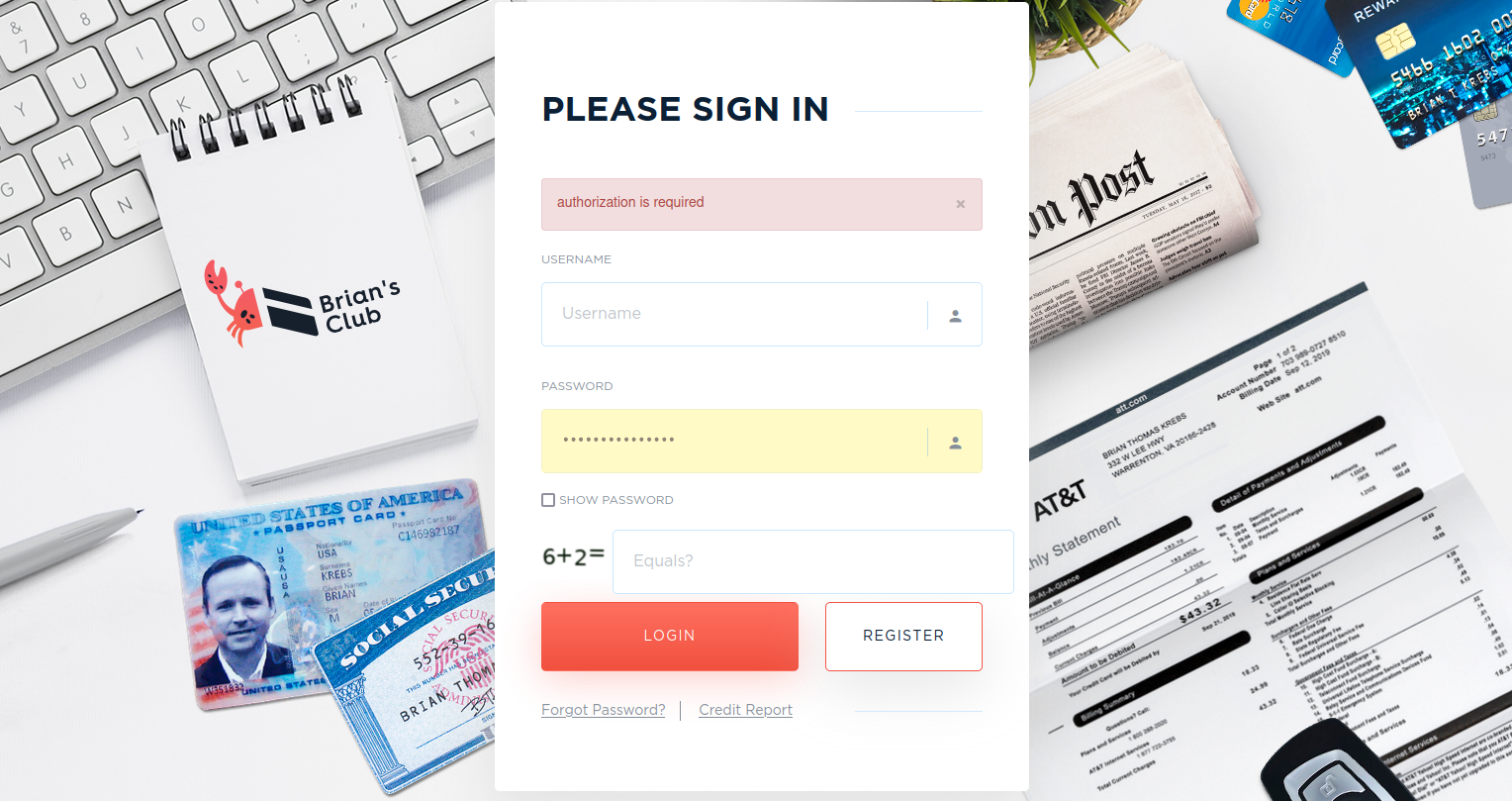
The real BriansClub login page.

Several things stood out in Mitch’s message. For starters, that is not the actual domain for BriansClub. And it’s easy to see why Mitch got snookered: The real BriansClub site is currently not at the top of search results when one queries that shop name at Google.

Also, this greenhorn criminal clearly had bought into BriansClub’s advertising, which uses my name and likeness in a series of ads that run on all the top cybercrime forums. In those ads, a crab with my head on it zigs and zags on the sand. This is all meant to be a big joke: Krebs means “crab” or “cancer” in German, but a “crab” is sometimes used in Russian hacker slang to refer to a “carder,” or a person who regularly engages in street-level credit card fraud. Like Mitch.

In late 2019, BriansClub changed its homepage to include doctored images of my Social Security and passport cards, credit report and mobile phone bill information. That was right after KrebsOnSecurity broke the news that someone had hacked BriansClub and siphoned information on 26 million stolen debit and credit accounts. The hacked BriansClub database had an estimated collective street value of $566 million, and that data was subsequently shared with thousands of financial institutions.

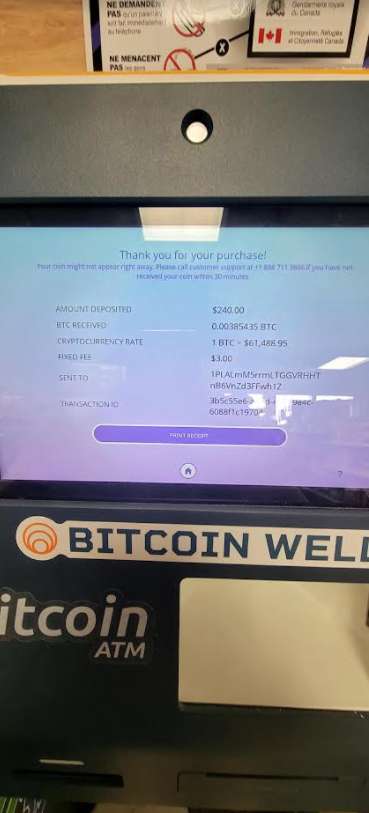
Mitch said he’d just made a deposit of $240 worth of bitcoin at BriansClub[.]com, and was wondering when the funds would be reflected in the balance of his account on the shop.

Playing along, I said I was sorry to hear about his ordeal, and asked Mitch if there were any stolen cards issued by a particular bank or to a specific region that he was seeking.

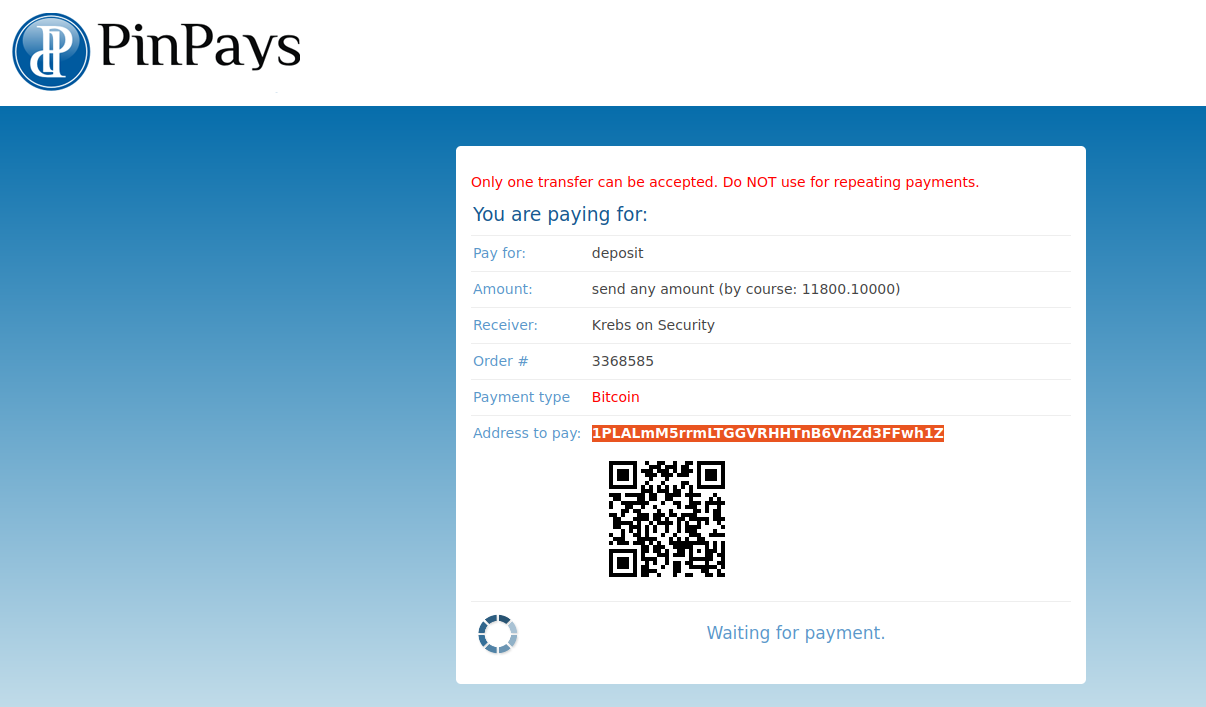
Mitch didn’t bite, but neither would he be dissuaded that I was at fault for his wayward funds. He shared a picture showing funds he’d sent to the bitcoin address instructed by BriansClub[.]com — 1PLALmM5rrmLTGGVRHHTnB6VnZd3FFwh1Zusing a Bitcoin ATM in Canada.

The real BriansClub uses a dodgy virtual currency exchange service based in St. Petersburg, Russia called PinPays. The company’s website has long featured little more than a brand icon and an instant messenger address to reach the proprietor, and that same address is active on several top Russian cybercrime forums. The fake BriansClub told Mitch the Bitcoin address he was asked to pay was a PinPays address that would change with each transaction.

The payment message displayed by the carding site phishing domain BriansClub[.]com.

However, upon registering at the phishing site and clicking to fund my account, I was presented with the exact same Bitcoin address that Mitch said he paid. Also, the site wasn’t using PinPays; it was just claiming to do so to further mimic the real BriansClub.

According to the Blockchain, that Bitcoin address Mitch paid has received more than a thousand payments over the past five months totaling more than USD $40,000 worth of Bitcoin. Most are relatively small payments like Mitch’s.

The screenshot Mitch sent of his deposit.

Unwary scammers like Mitch are a dime a dozen, as are phishing sites that spoof criminal services online. Shortly after it came online as a phishing site last year, BriansClub[.]com was hosted at a company in Moscow with just a handful of other domains phishing popular cybercrime stores, including Jstashbazar[.]com, vclub[.]cards, vclubb[.]com and vclub[.]credit.

Whoever’s behind these sites is making a decent income fleecing clueless crooks. A review of the Bitcoin wallet listed as the payment address for BriansClub[.]org, for example, shows a similar haul: 704 transactions totaling $38,000 in Bitcoin over the past 10 months.

“Wow, thanks for ripping me off,” Mitch wrote, after I’d dozed off for the evening without responding to his increasingly strident emails. “Should have spent the last money on my bills I’m trying to pay off. Should have known you were nothing but a thief.”

Deciding the ruse had gone too far, I confessed to Mitch that I wasn’t really the administrator of BriansClub, and that the person he’d reached out to was an independent journalist who writes about cybercrime. I told him not to feel bad, as more than a thousand people had been similarly duped by the carding shop.

But Mitch did not appear to accept my confession.

“If that’s the case then why is your name all over it including in the window that opens up when you go to make a deposit?,” Mitch demanded, referring to the phishing site.

Clearly, nothing I said was going to deter Mitch at this point. He asked in a follow-up email if a link he included in the message was indeed the “legitimate” BriansClub address. My only reply was that he should maybe consider another line of work before he got ripped off yet again, or the Royal Canadian Mounted Police showed up at his doorstep.

Scammers who fall for fake carding sites can expect to have their accounts taken over at the real shop, which usually means someone spends your balance on stolen cards. But mostly, these imposter carding sites are asking new members to fund their accounts by making deposits in virtual currency like Bitcoin.

In 2018, KrebsOnSecurity examined a huge network of phishing sites masquerading as the top carding stores which all traced back to a web development group in Pakistan that’s apparently been stealing from thieves for years.

As I noted in that piece, creating a network of fake carding sites is the perfect cybercrime. After all, nobody who gets phished or scammed is going to report the crime to the authorities. Nor will anyone help the poor sucker who gets snookered by one of these fake carding sites. Caveat Emptor!

The most one can hope for is that the occasional enterprising phisher is brought to justice. While it may be hard to believe that authorities would go after crooks stealing from one another, in 2017 a Connecticut man pleaded guilty to charges of phishing several criminal dark web markets in a scheme that eventually netted over $365,000 and more than 10,000 stolen user credentials.

And what about the provenance of the phishing domain briansclub[.]com? Looking closer at the original WHOIS registration records for briansclub[.]com via DomainTools (an advertiser on this site), we can see it was registered in November 2015 — several months after the real BriansClub came online. It was registered to a “Brian Billionaire,” a.k.a. Brian O’Connor, an apparently accomplished music deejay, rapper and rap music producer in Florida.

Brian Billionaire.

For several years after it came online, BriansClub[.]com and other domains apparently registered to Mr. Billionaire redirected to his main site — newhotmusic.com, which predates the carding shop BriansClub and also has a members-only section of the site called Brian’s Club.

Mr. Billionaire did not respond to multiple requests for comment, but it looks like his only crime is being a somewhat cringeworthy DJ. DomainTools’ record for briansclub[.]com says the domain was abandoned or dormant for a period in 2019, only to be scooped up again by someone in May 2020 when it became a phishing site spoofing the real BriansClub.

from Krebs on Security https://ift.tt/2VJf0Zu
via IFTTT