USB charging stations – can you trust them? What are the real risks, and how can you keep your data safe on the road?
from Naked Security https://ift.tt/t9me73d
via IFTTT

USB charging stations – can you trust them? What are the real risks, and how can you keep your data safe on the road?
from Naked Security https://ift.tt/t9me73d
via IFTTT
Investment fraud amounts for biggest share at $1.5bn, followed by remote access and payment redirection rorts
Australians lost a record amount of more than $3.1bn to scams in 2022, up from the $2bn lost in 2021, a new report from the Australian Competition and Consumer Commission has revealed.
The Targeting Scams report, which compiles data from Scamwatch, ReportCyber, major banks and money remitters, was based on an analysis of more than 500,000 reports.
Sign up for Guardian Australia’s free morning and afternoon email newsletters for your daily news roundup
from Data and computer security | The Guardian https://ift.tt/3FOL70Y
via IFTTT
Exclusive: Experts say sensitive information could potentially have been harvested and used for targeted election interference
The voting intentions of millions of Britons in local authority wards across the country could have been at risk of misuse as a result of a glitch in the Labour party’s main phone-banking system, the Guardian understands.
Experts had warned that the sensitive data could potentially have been harvested via an automated programme and used for targeted election interference by campaign groups or even hostile states.
from Data and computer security | The Guardian https://ift.tt/aTExk8j
via IFTTT
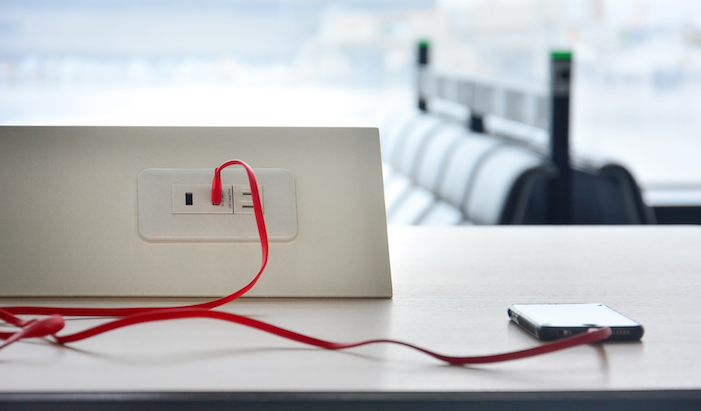
KrebsOnSecurity received a nice bump in traffic this week thanks to tweets from the Federal Bureau of Investigation (FBI) and the Federal Communications Commission (FCC) about “juice jacking,” a term first coined here in 2011 to describe a potential threat of data theft when one plugs their mobile device into a public charging kiosk. It remains unclear what may have prompted the alerts, but the good news is that there are some fairly basic things you can do to avoid having to worry about juice jacking.
On April 6, 2023, the FBI’s Denver office issued a warning about juice jacking in a tweet.
“Avoid using free charging stations in airports, hotels or shopping centers,” the FBI’s Denver office warned. “Bad actors have figured out ways to use public USB ports to introduce malware and monitoring software onto devices. Carry your own charger and USB cord and use an electrical outlet instead.”
Five days later, the Federal Communications Commission (FCC) issued a similar warning. “Think twice before using public charging stations,” the FCC tweeted. “Hackers could be waiting to gain access to your personal information by installing malware and monitoring software to your devices. This scam is referred to as juice jacking.”
The FCC tweet also provided a link to the agency’s awareness page on juice jacking, which was originally published in advance of the Thanksgiving Holiday in 2019 but was updated in 2021 and then again shortly after the FBI’s tweet was picked up by the news media. The alerts were so broadly and breathlessly covered in the press that a mention of juice jacking even made it into this week’s Late Late Show with James Corden.
The term juice jacking crept into the collective paranoia of gadget geeks in the summer of 2011, thanks to the headline for a story here about researchers at the DEFCON hacker convention in Vegas who’d set up a mobile charging station designed to educate the unwary to the reality that many mobile devices were set up to connect to a computer and immediately sync data by default.
Since then, Apple, Google and other mobile device makers have changed the way their hardware and software works so that their devices no longer automatically sync data when one plugs them into a computer with a USB charging cable. Instead, users are presented with a prompt asking if they wish to trust a connected computer before any data transfer can take place.
On the other hand, the technology needed to conduct a sneaky juice jacking attack has become far more miniaturized, accessible and cheap. And there are now several products anyone can buy that are custom-built to enable juice jacking attacks.
Probably the best known example is the OMG cable, a $180 hacking device made for professional penetration testers that looks more or less like an Apple or generic USB charging cable. But inside the OMG cable is a tiny memory chip and a Wi-Fi transmitter that creates a Wi-Fi hotspot, to which the attacker can remotely connect using a smartphone app and run commands on the device.
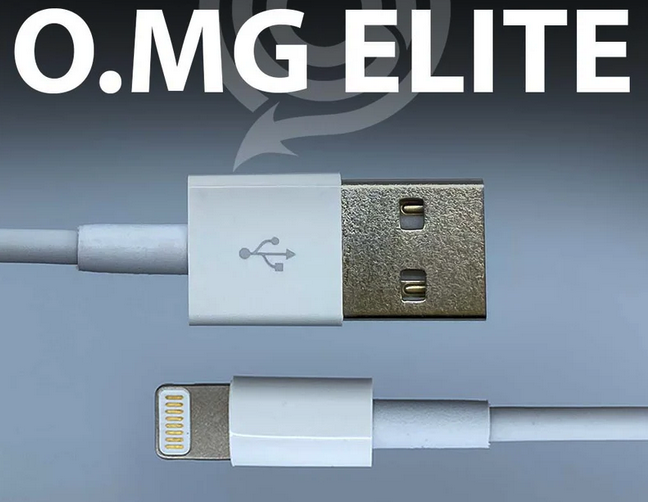
The $180 “OMG cable.” Image: hak5.org.
Brian Markus is co-founder of Aries Security, and one of the researchers who originally showcased the threat from juice jacking at the 2011 DEFCON. Markus said he isn’t aware of any public accounts of juice jacking kiosks being found in the wild, and said he’s unsure what prompted the recent FBI alert.
But Markus said juice jacking is still a risk because it is far easier and cheaper these days for would-be attackers to source and build the necessary equipment.
“Since then, the technology and components have become much smaller and very easy to build, which puts this in the hands of less sophisticated threat actors,” Markus said. “Also, you can now buy all this stuff over the counter. I think the risk is possibly higher now than it was a decade ago, because a much larger population of people can now pull this off easily.”
How seriously should we take the recent FBI warning? An investigation by the myth-busting site Snopes suggests the FBI tweet was just a public service announcement based on a dated advisory. Snopes reached out to both the FBI and the FCC to request data about how widespread the threat of juice jacking is in 2023.
“The FBI replied that its tweet was a ‘standard PSA-type post’ that stemmed from the FCC warning,” Snopes reported. “An FCC spokesperson told Snopes that the commission wanted to make sure that their advisory on “juice-jacking,” first issued in 2019 and later updated in 2021, was up-to-date so as to ensure ‘the consumers have the most up-to-date information.’ The official, who requested anonymity, added that they had not seen any rise in instances of consumer complaints about juice-jacking.”
What can you do to avoid juice jacking? Bring your own gear. A general rule of thumb in security is that if an adversary has physical access to your device, you can no longer trust the security or integrity of that device. This also goes for things that plug into your devices.
Juice jacking isn’t possible if a device is charged via a trusted AC adapter, battery backup device, or through a USB cable with only power wires and no data wires present. If you lack these things in a bind and still need to use a public charging kiosk or random computer, at least power your device off before plugging it in.
from Krebs on Security https://ift.tt/PmGTfsE
via IFTTT
Microsoft releases guidance on how organizations can check their systems for the presence of BlackLotus, a powerful threat first analyzed by ESET researchers
The post Hunting down BlackLotus – Week in security with Tony Anscombe appeared first on WeLiveSecurity
from WeLiveSecurity https://ift.tt/tFKfC1A
via IFTTT
The much-dreaded writer’s block isn’t the only threat that may derail your progress. Are you doing enough to keep your blog (and your livelihood) safe from online dangers?
The post Safety first: 5 cybersecurity tips for freelance bloggers appeared first on WeLiveSecurity
from WeLiveSecurity https://ift.tt/Nl2Re70
via IFTTT
Sielco PolyEco Digital FM Transmitter 2.0.6 – Account Takeover / Lockout / EoP
from Exploit-DB.com RSS Feed https://ift.tt/yu4l26f
via IFTTT
Sielco PolyEco Digital FM Transmitter 2.0.6 – Unauthenticated Information Disclosure
from Exploit-DB.com RSS Feed https://ift.tt/rSm06Fg
via IFTTT
Sielco PolyEco Digital FM Transmitter 2.0.6 – Radio Data System POST Manipulation
from Exploit-DB.com RSS Feed https://ift.tt/kT03yUS
via IFTTT
Sielco PolyEco Digital FM Transmitter 2.0.6 – Authorization Bypass Factory Reset
from Exploit-DB.com RSS Feed https://ift.tt/WMX0nZ4
via IFTTT
 Pacosite's Blog