A 18-year-old Tennessee man who helped set in motion a fraudulent distress call to police that lead to the death of a 60-year-old grandfather in 2020 was sentenced to 60 months in prison today.
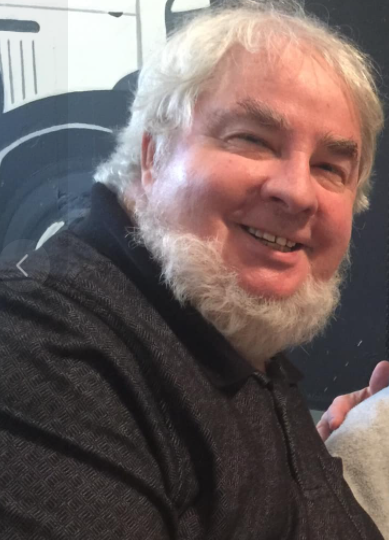
60-year-old Mark Herring died of a heart attack after police surrounded his home in response to a swatting attack.
Shane Sonderman, of Lauderdale County, Tenn. admitted to conspiring with a group of criminals that’s been “swatting” and harassing people for months in a bid to coerce targets into giving up their valuable Twitter and Instagram usernames.
At Sonderman’s sentencing hearing today, prosecutors told the court the defendant and his co-conspirators would text and call targets and their families, posting their personal information online and sending them pizzas and other deliveries of food as a harassment technique.
Other victims of the group told prosecutors their tormentors further harassed them by making false reports of child abuse to social services local to the target’s area, and false reports in the target’s name to local suicide prevention hotlines.
Eventually, when subjects of their harassment refused to sell or give up their Twitter and Instagram usernames, Sonderman and others would swat their targets — or make a false report to authorities in the target’s name with the intention of sending a heavily armed police response to that person’s address.
For weeks throughout March and April 2020, 60-year-old Mark Herring of Bethpage, Tenn. started receiving text messages asking him to give up his @Tennessee Twitter handle. When he ignored the requests, Sonderman and his buddies began having food delivered to their home via cash on delivery.
At one point, Sonderman posted Herring’s home address in a Discord chat room used by the group, and a minor in the United Kingdom quickly followed up by directing a swatting attack on Herring’s home.
Ann Billings was dating Mr. Herring and was present when the police surrounded his home. She recalled for the Tennessee court today how her friend died shortly thereafter of a heart attack.
Billings said she first learned of the swatting when a neighbor called and asked why the street was lined with police cars. When Mr. Herring stepped out on the back porch to investigate, police told him to put his hands up and to come to the street.
Unable to disengage a lock on his back fence, Herring was instructed to somehow climb over the fence with his hands up.
“He was starting to get more upset,” Billings recalled. “He said, ‘I’m a 60-year-old fat man and I can’t do that.’”
Billings said Mr. Herring then offered to crawl under a gap in the fence, but when he did so and stood up, he collapsed of a heart attack. Herring died at a nearby hospital soon after.
Mary Frances Herring, who was married to Mr. Herring for 28 years, said her late husband was something of a computer whiz in his early years who secured the @Tennessee Twitter handle shortly after Twitter came online. Internet archivist Jason Scott says Herring was the creator of the successful software products Sparkware and QWIKMail; Scott has 2 hours worth of interviews with Herring from 20 years ago here.
Perhaps the most poignant testimony today came when Ms. Herring said her husband — who was killed by people who wanted to steal his account — had a habit of registering new Instagram usernames as presents for friends and family members who’d just had children.
“If someone was having a baby, he would ask them, ‘What are your naming the baby?’,” Ms. Herring said. “And he would get them that Instagram name and give it to them as a gift.”
Valerie Dozono also was an early adopter of Instagram, securing the two-letter username “VD” for her initials. When Dozono ignored multiple unsolicited offers to buy the account, she and many family and friends started getting unrequested pizza deliveries at all hours.
When Dozono continued to ignore her tormentors, Sonderman and others targeted her with a “SIM-swapping attack,” a scheme in which fraudsters trick or bribe employees at wireless phone companies into redirecting the target’s text messages and phone calls to a device they control. From there, the attackers can reset the password for any online account that allows password resets via SMS.
But it wasn’t the subsequent bomb threat that Sonderman and friends called in to her home that bothered Dozono most. It was the home invasion that was ordered at her address using strangers on social media.
Dozono said Sonderman created an account on Grindr — the location-based social networking and dating app for gay, bi, trans and queer people — and set up a rendezvous at her address with an unsuspecting Grindr user who was instructed to waltz into her home as if he was invited.
“This gentleman was sent to my home thinking someone was there, and he was given instructions to walk into my home,” Dozono said.
The court heard from multiple other victims targeted by Sonderman and friends over a two-year period. Including Shane Glass, who started getting harassed in 2019 over his @Shane Instagram handle. Glass told the court that endless pizza deliveries, as well as SIM swapping and swatting attacks left him paranoid for months that his assailant could be someone stalking him nearby.
Judge Mark Norris said Sonderman’s agreement to plead to one count of extortion by threat of serious injury or damage carries with it a recommended sentence of 27 to 33 months in prison. However, the judge said other actions by the defendant warranted up to 60 months (5 years) in prison.
Sonderman might have been eligible to knock a few months off his sentence had he cooperated with investigators and refrained from committing further crimes while out on bond.
But prosecutors said that shortly after his release, Sonderman went right back to doing what he was doing when he got caught. Investigators who subpoenaed his online communications found he’d logged into the Instagram account “FreeTheSoldiers,” which was known to have been used by the group to harass people for their social media handles.
Sonderman was promptly re-arrested for violating the terms of his release, and prosecutors played for the court today a recording of a phone call Sonderman made from jail in which he brags to a female acquaintance that he wiped his mobile phone two days before investigators served another search warrant on his home.
Sonderman himself read a lengthy statement in which he apologized for his actions, blaming his “addiction” on several psychiatric conditions — including bipolar disorder. While his recitation was initially monotone and practically devoid of emotion, Sonderman eventually broke down in tears that made the rest of his statement difficult to hear over the phone-based conference system the court made available to reporters.
The bipolar diagnoses was confirmed by his mother, who sobbed as she simultaneously begged the court for mercy while saying her son didn’t deserve any.
Judge Norris said he was giving Sonderman the maximum sentenced allowed by law under the statute — 60 months in prison followed by three years of supervised release, but implied that his sentence would be far harsher if the law permitted.
“Although it may seem inadequate, the law is the law,” Norris said. “The harm it caused, the death and destruction….it’s almost unspeakable. This is not like cases we frequently have that involve guns and carjacking and drugs. This is a whole different level of insidious criminal behavior here.”
Sonderman’s sentence pales in comparison to the 20-year prison time handed down in 2019 to serial swatter Tyler Barriss, a California man who admitted making a phony emergency call to police in late 2017 that led to the shooting death of an innocent Kansas resident.
from Krebs on Security https://ift.tt/3Bv3ama
via IFTTT