No more turning a blind eye to algorithmic bias and discrimination if US lawmakers get their way
The post US: Your AI has to explain its decisions appeared first on WeLiveSecurity
from WeLiveSecurity https://ift.tt/fHgzIlQ
via IFTTT

No more turning a blind eye to algorithmic bias and discrimination if US lawmakers get their way
The post US: Your AI has to explain its decisions appeared first on WeLiveSecurity
from WeLiveSecurity https://ift.tt/fHgzIlQ
via IFTTT
One publicly known flaw — an elevation-of-privilege bug in Windows Kernel — was included in the patches.
from Dark Reading https://ift.tt/xkeFDE1
via IFTTT
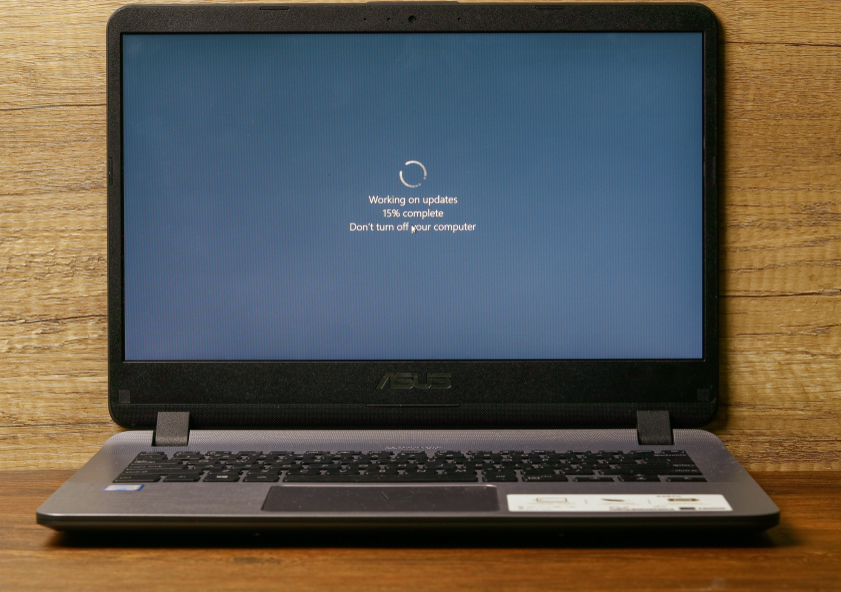
Microsoft today released software updates to plug security holes in its Windows operating systems and related software. This month’s relatively light patch batch is refreshingly bereft of any zero-day threats, or even scary critical vulnerabilities. But it does fix four dozen flaws, including several that Microsoft says will likely soon be exploited by malware or malcontents.
While none of the patches address bugs that earned Microsoft’s most dire “critical” rating, there are multiple “remote code execution” vulnerabilities that Redmond believes are ripe for exploitation. Among those is CVE-2022-22005, a weakness in Microsoft’s Sharepoint Server versions 2013-2019 that could be exploited by any authenticated user.
“The vulnerability does require an attacker to be authenticated in order to exploit it, which is likely why Microsoft only labeled it ‘Important,’” said Allan Liska, senior security architect at Recorded Future. “However, given the number of stolen credentials readily available on underground markets, getting authenticated could be trivial. Organizations that have public-facing SharePoint Servers should prioritize implementing this patch.”
Kevin Breen at Immersive Labs called attention to CVE-2022-21996, an elevation of privilege vulnerability in the core Windows component “Win32k.”
“In January we saw CVE-2022-21882, a vulnerability in Win32k that was being actively exploited in the wild, which prompted CISA to issue a directive to all federal agencies to mandate that patches be applied,” Breen said. “February sees more patches for the same style of vulnerability in this same component. It’s not clear from the release notes whether this is a brand new vulnerability or if it is related to the previous month’s update. Either way, we have seen attackers leverage this vulnerability so it’s safer to err on the side of caution and update this one quickly.”
Another elevation of privilege flaw CVE-2022-21989 — in the Windows Kernel — was the only vulnerability fixed this month that was publicly disclosed prior to today.
“Despite the lack of critical fixes, it’s worth remembering that attackers love to use elevation of privilege vulnerabilities, of which there are 18 this month,” said Greg Wiseman, product manager at Rapid7. “Remote code execution vulnerabilities are also important to patch, even if they may not be considered ‘wormable.’ In terms of prioritization, defenders should first focus on patching server systems.”
February’s Patch Tuesday is once again brought to you by Print Spooler, the Windows component responsible for handling printing jobs. Four of the bugs quashed in this release relate to our friend Mr. Print Spooler. In July 2021, Microsoft issued an emergency fix for a Print Spooler flaw dubbed “PrintNightmare” that was actively being exploited to remotely compromise Windows PCs. Redmond has been steadily spooling out patches for this service ever since.
One important item to note this week is that Microsoft announced it will start blocking Internet macros by default in Office. This is a big deal because malicious macros hidden in Office documents have become a huge source of intrusions for organizations, and they are often the initial vector for ransomware attacks.
As Andrew Cunningham writes for Ars Technica, under the new regime when files that use macros are downloaded from the Internet, those macros will now be disabled entirely by default. The change will also be enabled for all currently supported standalone versions of Office, including versions 2021, 2019, 2016, and 2013.
“Current versions of the software offer an alert banner on these kinds of files that can be clicked through, but the new version of the banner offers no way to enable the macros,” Cunningham wrote. “The change will be previewed starting in April before being rolled out to all users of the continuously updated Microsoft 365 version of Office starting in June.”
January’s patch release was a tad heavier and rockier than most, with Microsoft forced to re-issue several patches to address unexpected issues caused by the updates. Breen said while February’s comparatively light burden should give system administrators some breathing room, it shouldn’t be viewed as an excuse to skip updates.
“But it does reinforce how important it is to test patches in a staging environment or use a staggered rollout, and why monitoring for any adverse impacts should always be a key step in your patching policy,” Breen said.
For a complete rundown of all patches released by Microsoft today and indexed by severity and other metrics, check out the always-useful Patch Tuesday roundup from the SANS Internet Storm Center. And it’s not a bad idea to hold off updating for a few days until Microsoft works out any kinks in the updates: AskWoody.com usually has the lowdown on any patches that may be causing problems for Windows users.
As always, please consider backing up your system or at least your important documents and data before applying system updates. And if you run into any problems with these patches, please drop a note about it here in the comments.
from Krebs on Security https://ift.tt/c0dnsr9
via IFTTT
The online tech giant auto-enabled two-step verification for more than 150 million users, throwing up steep hurdles against scammers and attackers.
from Dark Reading https://ift.tt/qiUfGle
via IFTTT
Here’s what vendors can do to prepare in the time remaining before the final release of PCI DSS 4.0 this quarter.
from Dark Reading https://ift.tt/yUTv4nr
via IFTTT
Recent attacks involving so-called “right-to-left override” spoofing aimed at Microsoft 365 users show how attackers sometimes modify and improve old methods to try and stay one step ahead of defenders.
from Dark Reading https://ift.tt/hqZCkVQ
via IFTTT
Companies are scanning more applications for vulnerabilities — and more often.
from Dark Reading https://ift.tt/1kSTnUm
via IFTTT
With its benefits of deniability, relatively low costs, and the ability to attack from anywhere, cyber terrorism will increasingly threaten civilians everywhere.
from Dark Reading https://ift.tt/1iotCyg
via IFTTT
It’s been a long time coming, and we’re not there yet, but at least Microsoft Office will be a bit safer against macro malware…
from Naked Security https://ift.tt/eQy3AfZ
via IFTTT
Qualys Context XDR provides the security context that operations teams need to eliminate false positives and noise by triangulating risk posture, asset criticality, and threat intelligence.
from Dark Reading https://ift.tt/06hAJcV
via IFTTT
 Pacosite's Blog