Malicious emails with macro-enabled Word documents are spreading a never-before-seen remote-access Trojan, researchers say.
from Dark Reading https://ift.tt/Rc6z1v8
via IFTTT

Malicious emails with macro-enabled Word documents are spreading a never-before-seen remote-access Trojan, researchers say.
from Dark Reading https://ift.tt/Rc6z1v8
via IFTTT
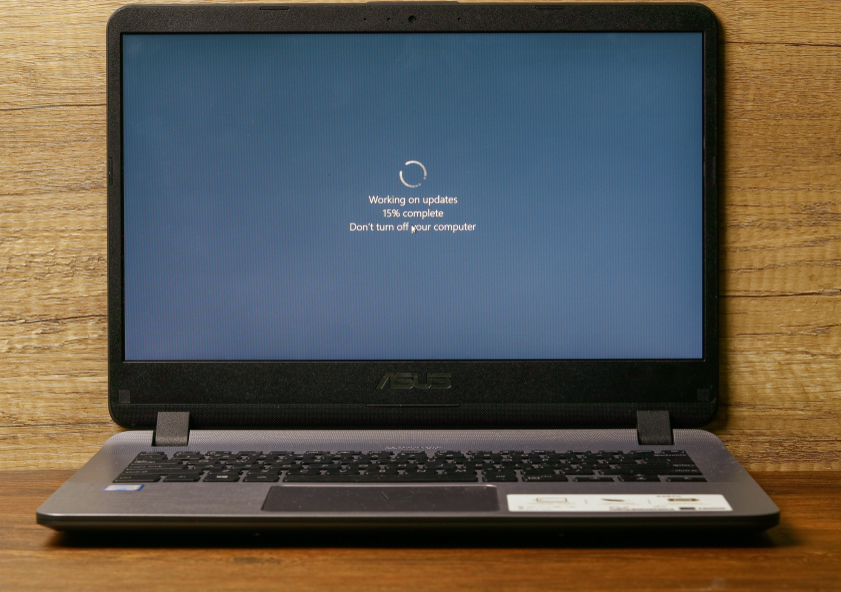
Microsoft today released updates to fix at least 74 separate security problems in its Windows operating systems and related software. This month’s patch batch includes fixes for seven “critical” flaws, as well as a zero-day vulnerability that affects all supported versions of Windows.
By all accounts, the most urgent bug Microsoft addressed this month is CVE-2022-26925, a weakness in a central component of Windows security (the “Local Security Authority” process within Windows). CVE-2022-26925 was publicly disclosed prior to today, and Microsoft says it is now actively being exploited in the wild. The flaw affects Windows 7 through 10 and Windows Server 2008 through 2022.
Greg Wiseman, product manager for Rapid7, said Microsoft has rated this vulnerability as important and assigned it a CVSS (danger) score of 8.1 (10 being the worst), although Microsoft notes that the CVSS score can be as high as 9.8 in certain situations.
“This allows attackers to perform a man-in-the-middle attack to force domain controllers to authenticate to the attacker using NTLM authentication,” Wiseman said. “This is very bad news when used in conjunction with an NTLM relay attack, potentially leading to remote code execution. This bug affects all supported versions of Windows, but Domain Controllers should be patched on a priority basis before updating other servers.”
Wiseman said the most recent time Microsoft patched a similar vulnerability — last August in CVE-2021-36942 — it was also being exploited in the wild under the name “PetitPotam.”
“CVE-2021-36942 was so bad it made CISA’s catalog of Known Exploited Vulnerabilities,” Wiseman said.
Seven of the flaws fixed today earned Microsoft’s most-dire “critical” label, which it assigns to vulnerabilities that can be exploited by malware or miscreants to remotely compromise a vulnerable Windows system without any help from the user.
Among those is CVE-2022-26937, which carries a CVSS score of 9.8, and affects services using the Windows Network File System (NFS). Trend Micro’s Zero Day Initiative notes that this bug could allow remote, unauthenticated attackers to execute code in the context of the Network File System (NFS) service on affected systems.
“NFS isn’t on by default, but it’s prevalent in environment where Windows systems are mixed with other OSes such as Linux or Unix,” ZDI’s Dustin Childs wrote. “If this describes your environment, you should definitely test and deploy this patch quickly.”
Once again, this month’s Patch Tuesday is sponsored by Windows Print Spooler, a core Windows service that keeps spooling out the security hits. May’s patches include four fixes for Print Spooler, including two information disclosure and two elevation of privilege flaws.
“All of the flaws are rated as important, and two of the three are considered more likely to be exploited,” said Satnam Narang, staff research engineer at Tenable. “Windows Print Spooler continues to remain a valuable target for attackers since PrintNightmare was disclosed nearly a year ago. Elevation of Privilege flaws in particular should be carefully prioritized, as we’ve seen ransomware groups like Conti favor them as part of its playbook.”
Other Windows components that received patches this month include .NET and Visual Studio, Microsoft Edge (Chromium-based), Microsoft Exchange Server, Office, Windows Hyper-V, Windows Authentication Methods, BitLocker, Remote Desktop Client, and Windows Point-to-Point Tunneling Protocol.
Also today, Adobe issued five security bulletins to address at least 18 flaws in Adobe CloudFusion, Framemaker, InCopy, InDesign, and Adobe Character Animator. Adobe said it is not aware of any exploits in the wild for any of the issues addressed in today’s updates.
For a more granular look at the patches released by Microsoft today and indexed by severity and other metrics, check out the always-useful Patch Tuesday roundup from the SANS Internet Storm Center. And it’s not a bad idea to hold off updating for a few days until Microsoft works out any kinks in the updates: AskWoody.com usually has the skinny on any patches that may be causing problems for Windows users.
As always, please consider backing up your system or at least your important documents and data before applying system updates. And if you run into any problems with these patches, please drop a note about it here in the comments.
from Krebs on Security https://ift.tt/z2fyUm5
via IFTTT
Microsoft’s May 2022 Patch Tuesday contains several bugs in ubiquitous software that could affect millions of machines, researchers warn.
from Dark Reading https://ift.tt/IOxwqkz
via IFTTT
US State Department outlines coordinated government effort to provide Ukraine with cybersecurity intelligence, expertise, and resources amid invasion.
from Dark Reading https://ift.tt/tRh4vkE
via IFTTT
COVID-19 and a December 2021 cyberattack combined to put the future of Abraham Lincoln’s namesake college in peril.
from Dark Reading https://ift.tt/EJNFLwy
via IFTTT
How good is your cybersecurity? Are you making the same mistakes as lots of other people? Here’s some real-life advice…
from Naked Security https://ift.tt/tBa3TdP
via IFTTT
Kaspersky researchers discovered that cybercriminals made approximately 65,000 attacks between July 2021 and April 2022.
from Dark Reading https://ift.tt/yDaTIBk
via IFTTT
New research-focused division focused on advancing innovation in the field of security operations.
from Dark Reading https://ift.tt/hDa54qn
via IFTTT
The Dark Crystal remote access Trojan (aka DCRat) breaks a few stereotypes, with coding done by a solo developer, using an obscure Web language and offering it at a frighteningly low price.
from Dark Reading https://ift.tt/KcDHO0L
via IFTTT
Company delivers new vulnerability management offering to help resource-constrained organizations combat increasing attacks on mission-critical SAP applications .
from Dark Reading https://ift.tt/QG8LCUI
via IFTTT
 Pacosite's Blog