Healthcare organizations are increasingly looking at zero trust to help deter ransomware attacks, safeguard PHI, and prevent downtime.
from Dark Reading https://ift.tt/yQHjGVXMR
via IFTTT

Healthcare organizations are increasingly looking at zero trust to help deter ransomware attacks, safeguard PHI, and prevent downtime.
from Dark Reading https://ift.tt/yQHjGVXMR
via IFTTT
One-quarter of pharmaceutical manufacturers received a failing grade on patch management, which is a vital step in heading off ransomware attacks.
from Dark Reading https://ift.tt/YSbAun94P
via IFTTT
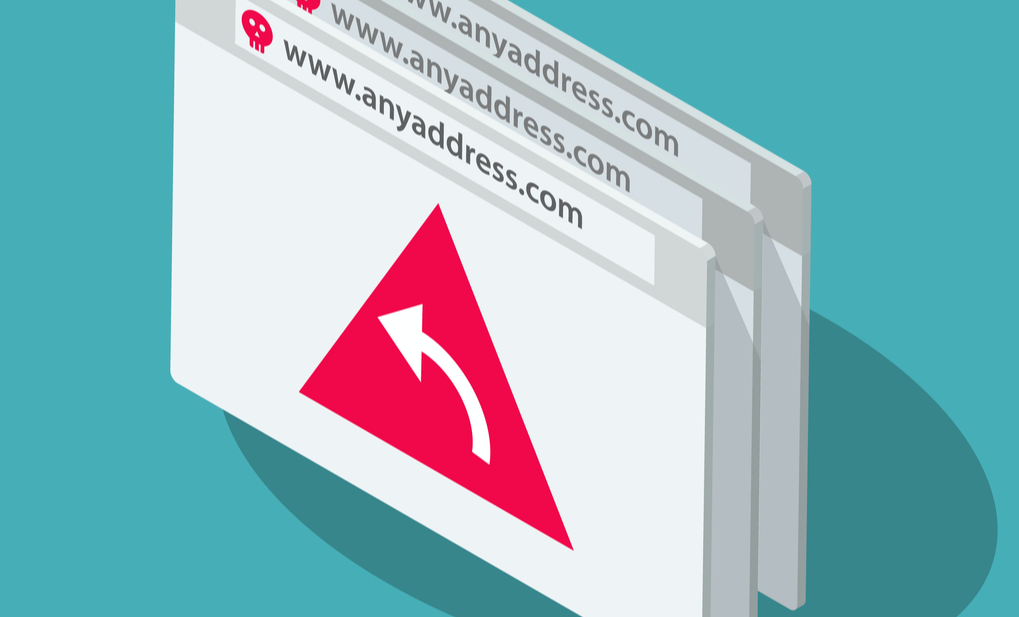
If you received a link to LinkedIn.com via email, SMS or instant message, would you click it? Spammers, phishers and other ne’er-do-wells are hoping you will, because they’ve long taken advantage of a marketing feature on the business networking site which lets them create a LinkedIn.com link that bounces your browser to other websites, such as phishing pages that mimic top online brands (but chiefly Linkedin’s parent firm Microsoft).
At issue is a “redirect” feature available to businesses that chose to market through LinkedIn.com. The LinkedIn redirect links allow customers to track the performance of ad campaigns, while promoting off-site resources. These links or “Slinks” all have a standard format: “https://ift.tt/NmG9ph8ks; followed by a short alphanumeric variable.
Here’s the very first Slink created: https://ift.tt/vFmTHIYh7, which redirects to the homepage for LinkedIn Marketing Solutions.
The trouble is, there’s little to stop criminals from leveraging newly registered or hacked LinkedIn business accounts to create their own ad campaigns using Slinks. Urlscan.io, a free service that provides detailed reports on any scanned URLs, also offers a historical look at suspicious links submitted by other users. This search via Urlscan reveals dozens of recent phishing attacks that have leveraged the Slinks feature.
Here’s one example from Jan. 31 that uses Linkedin.com links to redirect anyone who clicks to a site that spoofs Adobe, and then prompts users to log in to their Microsoft email account to view a shared document.

A recent phishing site that abused LinkedIn’s marketing redirect. Image: Urlscan.io.
Urlscan also found this phishing scam from Jan. 12 that uses Slinks to spoof the U.S. Internal Revenue Service. Here’s a Feb. 3 example that leads to a phish targeting Amazon customers. This Nov. 26 sample from Urlscan shows a LinkedIn link redirecting to a Paypal phishing page.
Let me be clear that the activity described in this post is not new. Way back in 2016, security firm Fortinet blogged about LinkedIn’s redirect being used to promote phishing sites and online pharmacies. More recently in late 2021, Jeremy Fuchs of Avanan wrote that the use of a LinkedIn URL may mean that any profession — the market for LinkedIn — could click.
“Plus, more employees have access to billing and invoice information, meaning that a spray-and-pray campaign can be effective,” Fuchs wrote. “The idea is to create a link that contains a clean page, redirecting to a phishing page.”
In a statement provided to KrebsOnSecurity, Linkedin said it has “industry standard technologies in place for URL sharing and chained redirects that help us identify and prevent the spread of malware, phishing and spam.” LinkedIn also said it uses 3rd party services — such as Google Safe Browsing, Spamhaus, Microsoft, and others — to identify known-bad URLs.
KrebsOnSecurity couldn’t find any evidence of phishers recently using LinkedIn’s redirect to phish LinkedIn credentials, but that’s certainly not out of the question. In a less complex attack, an adversary could send an email appearing to be a connection request from LinkedIn that redirects through LinkedIn to a malicious or phishous site.
Also, malicious or phishous emails that leverage LinkedIn’s Slinks are unlikely to be blocked by anti-spam or anti-malware filters, because LinkedIn is widely considered a trusted domain, and the redirect obscures the link’s ultimate destination.
Linkedin’s parent company — Microsoft Corp — is by all accounts the most-phished brand on the Internet today. A report last year from Check Point found roughly 45 percent of all brand phishing attempts globally target Microsoft. Check Point said LinkedIn was the sixth most phished brand last year.
The best advice to sidestep phishing scams is to avoid clicking on links that arrive unbidden in emails, text messages and other mediums. Most phishing scams invoke a temporal element that warns of dire consequences should you fail to respond or act quickly. If you’re unsure whether the message is legitimate, take a deep breath and visit the site or service in question manually — ideally, using a browser bookmark to avoid potential typosquatting sites.
from Krebs on Security https://ift.tt/vp6R0CjnX
via IFTTT

By BY SHIRA OVIDE
Five superpower companies — yes, even Facebook after recent news — are completely enmeshed in our world.
Published: February 3, 2022 at 11:37AM
from NYT Technology https://ift.tt/kfeKVCWYZ
via IFTTT
Latest episode – listen now!
from Naked Security https://ift.tt/hBGoZURS9
via IFTTT
Our favorite zero-drop, minimalist footwear will let you feel the ground beneath your feet.
from Gear Latest https://ift.tt/EQBFIDCUc
via IFTTT
Practical steps companies can take to defend their critical infrastructure and avoid the financial and reputational damage that could result from a breach.
from Dark Reading https://ift.tt/0pcnbDjSC
via IFTTT

By BY NEIL VIGDOR
Jack Sweeney, a freshman at the University of Central Florida, said that Mr. Musk raised privacy and security concerns about his popular Twitter account, @ElonJet.
Published: February 3, 2022 at 08:24AM
from NYT Technology https://ift.tt/NtuBqMF6Q
via IFTTT
They’re the easiest way to start building a smarter home. From Nooie and Ikea bulbs to Phillips Hue and ambient lighting kits, here are our favorites.
from Gear Latest https://ift.tt/Qmuefb01w
via IFTTT

 Pacosite's Blog