
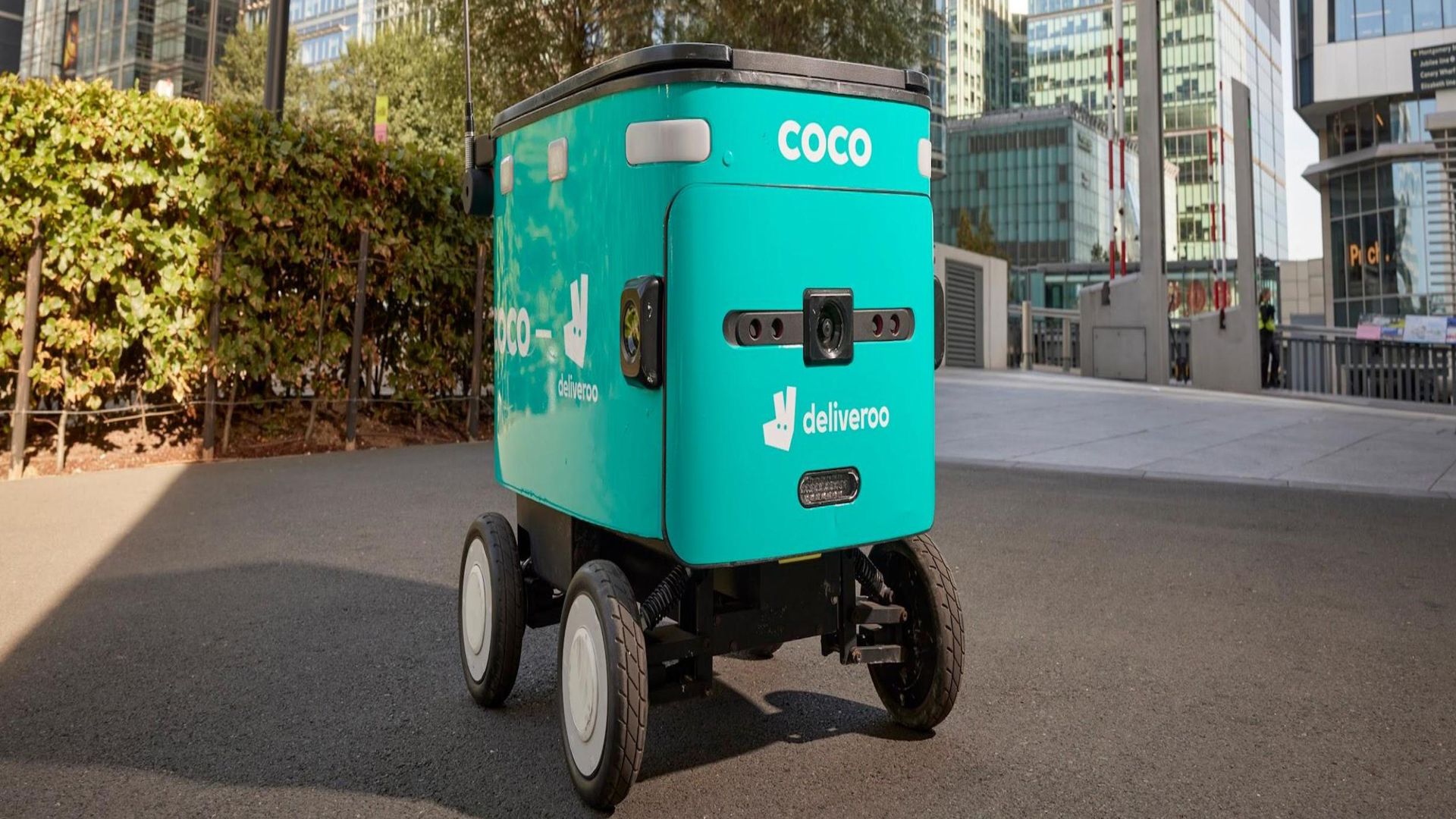
Deliveroo is expanding its delivery capabilities with the introduction of autonomous, four-wheeled robots in five UK locations, marking a significant shift in how orders may reach customers in the near future. The pilot program begins in Canary Wharf, London, with four-wheeled robots from Coco Robotics set to operate on public streets at walking pace, delivering meals from select partner restaurants.
Initially, these robotic deliveries will be limited to a curated set of merchants, including Patty & Bun, Signorelli, and Beam in Wood Wharf. Additional partners, such as Ole & Steen, are expected to join at a later stage, though a timeline has not been announced. The Canary Wharf rollout will be followed by pilots in Milton Keynes, Leeds, Stockton on Tees, and Nottingham, with the teal-colored robots arriving in the coming weeks and months.
Although this represents Deliveroo’s first deployment of autonomous delivery vehicles in the UK, the company emphasizes that the majority of orders will continue to be fulfilled by its extensive rider network. Given the current constraints of autonomous robots, human couriers are likely to remain the primary delivery method for some time.
Analysis: The delivery robots and drones are coming
The move follows a broader industry trend toward autonomous and semi-autonomous last-mile delivery. Deliveroo’s parent company, a major US-based platform, has been expanding its autonomous delivery portfolio in partnership with Coco Robotics, leveraging onboard sensors, cameras, and AI to navigate urban streets at low speeds while avoiding pedestrians and obstacles.
Beyond robots, the broader delivery ecosystem continues to experiment with aerial drones for rapid urban delivery. News from other players in the sector highlights ongoing trials and new drone designs aimed at reducing delivery times, albeit alongside ongoing concerns about noise, safety, and employment impact.
There are notable potential benefits for accessibility. Coco’s robots can feed real-time pavement hazard data into BlindSquare, a popular GPS navigation app for blind and partially sighted users, helping to identify hazards and navigate safely in shared pedestrian environments. This integration illustrates how emerging mobility technologies can intersect with accessibility tools to improve safety and independence for visually impaired pedestrians.
As these technologies evolve, the balance between efficiency, safety, urban aesthetics, and employment will continue to shape public and policy discussions. The Canary Wharf pilot and its counterparts across the UK will be closely watched by stakeholders, from city planners to delivery workers and consumers alike.
from Latest from TechRadar https://ift.tt/iaCvW51
via IFTTT IA

