
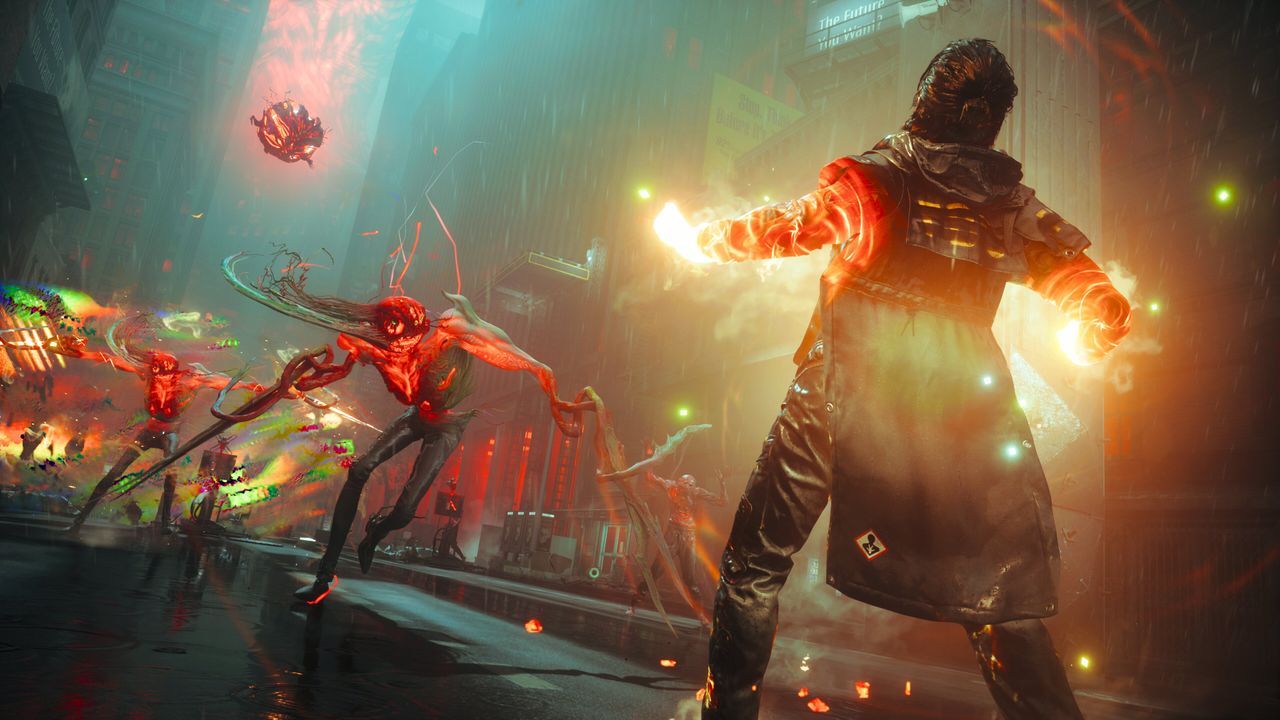
Control Resonant marks a notable milestone for Remedy, introducing melee combat into their repertoire in a way that feels fresh, tactile, and unexpectedly satisfying. The transition from gunplay to close-quarters engagement could have been a misstep, but the game treats every swing, parry, and counter with the same meticulous care that has defined Remedy’s storytelling and design philosophy.
What stands out most is how melee dynamics are woven into the game’s broader systems. The combat feels deliberate, each move carrying weight and consequence. Enemies respond with a rhythm—timed blocks, flaky openings, and opportunities for devastating counterattacks—yet the game never overwhelms you with complexity. Instead, it guides you toward a rhythm that is both brutal and precise, a dance where your choices matter just as much as your reflexes.
The setting of Manhattan, reimagined with Remedy’s signature eerie atmosphere, amplifies the impact of frontline clashes. The city’s undercurrents—neon reflections on rain-soaked streets, distant sirens, and the quiet hum of unseen forces—provide a constant reminder that danger lurks just beyond the next corner. The narration and environmental storytelling deepen this mood, turning each alley into a stage where melee duels unfold with a strange, almost ritualistic cadence.
Dylan’s presence in this world is a catalyst for both tone and tempo. There’s a distinctive creepiness to his interactions, a weirdness that makes every encounter feel personal and charged with potential. As players, we’re invited to explore not just the mechanics of combat, but the psychology of the character wielding them. The result is a protagonist who is compelling in his own right, with melee combat acting as a natural extension of his will and the game’s atmospheric storytelling.
From a design perspective, the melee system benefits from Remedy’s ability to blend storytelling with function. Combos are readable but nuanced, offering layers for both newcomers and seasoned players. Upgrades and abilities weave into combat in meaningful ways, encouraging experimentation without sacrificing clarity. This balance—between accessibility and depth—has rarely felt so instinctive in a Remedy title.
The audio-visual presentation deserves particular praise. The sound design emphasizes impact: the clang of steel, the thud of a well-placed strike, and the muffled crackle of energy when confrontations peak. Visually, the warped Manhattan environment remains faithful to the studio’s aesthetic, with lighting, shadow, and particle effects contributing to a sense of otherworldly tension that makes melee clashes feel earned rather than contrived.
In short, Control Resonant’s melee combat may be a first for Remedy, but it’s a bold, successful one. It respects the studio’s strengths—tight design, atmospheric storytelling, and a laser-focused sense of pacing—while expanding the repertoire in a way that feels inevitable in hindsight. As Dylan continues to unfold within this strange, spooky version of Manhattan, the potential for memorable, heart-pounding moments seems limitless. I’m already looking forward to deeper dives into this world, more inventive combat scenarios, and the narrative threads that will inevitably emerge from these exhilarating encounters.
from Latest from TechRadar https://ift.tt/nFT45s0
via IFTTT IA

